

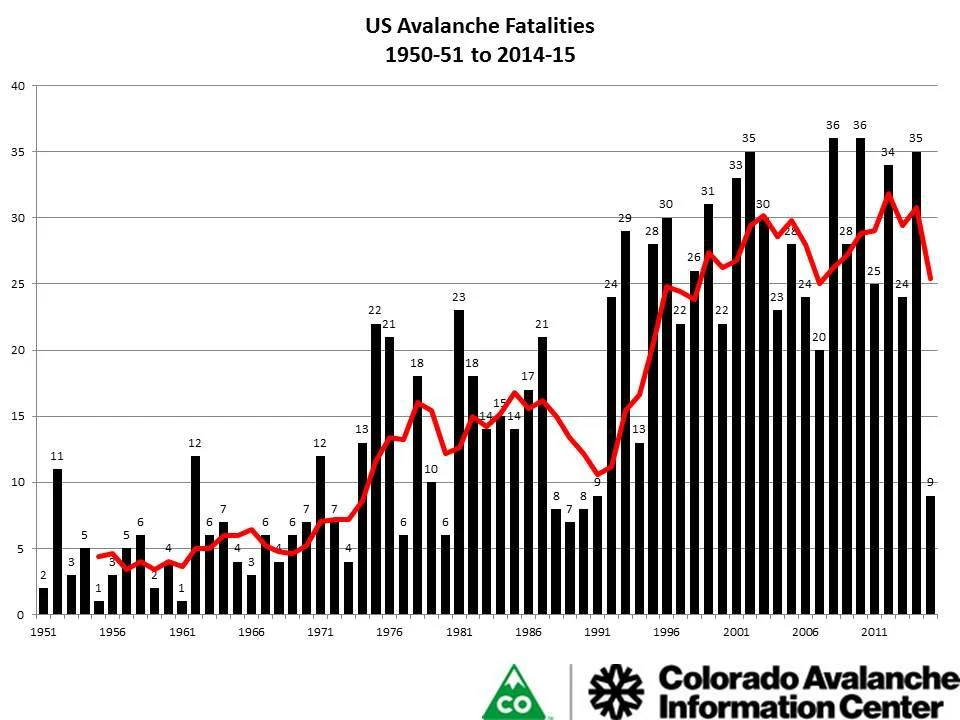
As the 2014-2015 winter season draws to an official close on April 30, preliminary data from the Colorado Avalanche Information Center (CAIC) and the United States Forest Service indicates a significant and historic decline in avalanche-related deaths across the country. Total fatalities for the season have been recorded at nine, representing the lowest annual death toll since 1991. This figure stands in stark contrast to the five-year moving average, which has consistently hovered between 25 and 30 deaths per year, despite a dramatic surge in the number of recreationists entering the backcountry. While experts caution that the season is not entirely over and spring snowpack remains a hazard, the current data offers a rare moment of optimism for the mountain safety community.
The decline is attributed to a unique convergence of meteorological conditions and a robust, multi-agency push toward public education. While any loss of life is considered a tragedy by the outdoor community, the single-digit fatality count for the 2014-2015 cycle marks a notable departure from the trends of the last two decades. For comparison, the 2013-2014 season saw 35 fatalities, making the current year’s drop-off nearly 75 percent.
Meteorological Drivers and Snowpack Stability
A primary driver behind the record-low fatality count was the anomalous weather pattern that dominated the North American continent throughout the winter of 2014-2015. Along the West Coast, particularly in the Sierra Nevada of California and the Cascades of Washington and Oregon, the season was defined by a severe lack of precipitation and historically low snowpack levels. In many regions, the "snow drought" resulted in ski resorts closing early and backcountry enthusiasts finding few opportunities to engage with high-consequence terrain. Without the presence of deep, unstable layers of snow, the physical opportunities for large-scale, fatal avalanches were geographically limited.
Further inland, across the Intermountain West and the Rocky Mountains, the weather story was characterized by unseasonably warm temperatures rather than a total lack of moisture. These warmer conditions played a critical role in snowpack metamorphosis. Typically, cold, clear nights in the Rockies create "facets"—weak, sugary grains of snow that form a persistent weak layer. When these layers are buried by subsequent storms, they create a primed "slab" avalanche hazard that can last for months. However, the 2014-2015 season saw frequent warming cycles that helped to "heal" the snowpack, promoting bonding between layers and reducing the prevalence of persistent slabs. While wet-slide avalanches became a concern during the warm spring afternoons, these are generally more predictable and easier for recreationists to avoid than the "deep persistent slab" problems that often claim lives in colder winters.
The Role of Education and Institutional Efforts
While the weather provided a favorable baseline, safety officials argue that the reduction in fatalities cannot be attributed to environmental factors alone. The 2014-2015 season saw an unprecedented level of coordination between the U.S. Forest Service avalanche centers and regional organizations such as the Colorado Avalanche Information Center (CAIC). These institutions have spent the last decade modernizing their delivery of safety information, moving from simple recorded telephone hotlines to sophisticated mobile apps, social media alerts, and high-resolution mapping tools.
The CAIC, which maintains the national database for avalanche accidents, has been at the forefront of this digital shift. By providing real-time, localized forecasts, they have allowed backcountry users to make more informed decisions before they even leave their homes. "The goal is to move beyond just providing a danger rating," noted industry analysts during the mid-season reviews. "The focus has shifted toward teaching the public how to recognize specific avalanche problems, such as wind slabs or persistent weak layers, and how to adjust their travel plans accordingly."
Furthermore, the "Know Before You Go" program—a collaborative effort between various avalanche centers and industry partners—has successfully targeted younger demographics and entry-level backcountry users. By emphasizing the five pillars of avalanche safety—get the gear, get the training, get the forecast, get the picture, and get out of harm’s way—these programs have helped normalize the use of essential safety equipment such as beacons, probes, and shovels.
A Statistical Paradox: Rising Use vs. Stable Fatality Rates
One of the most encouraging takeaways from the 2014-2015 data is the stability of the five-year moving average in the face of skyrocketing backcountry participation. Industry data from organizations like the Snowsports Industries America (SIA) indicates that sales of alpine touring (AT) boots, splitboards, and climbing skins have grown exponentially over the past 15 years. The "backcountry boom" has seen thousands of skiers and snowboarders venture outside the boundaries of controlled ski resorts in search of untracked powder and solitude.
In a direct correlation, one might expect to see a linear increase in fatalities as the number of people exposed to the hazard grows. However, the data suggests a different narrative. Despite the surge in users, the five-year moving average for fatalities has remained relatively flat, staying within the 25 to 30 range. This indicates that while more people are entering the backcountry, the percentage of users involved in fatal accidents is actually decreasing. This "safety per capita" improvement is a testament to the effectiveness of modern avalanche training and the cultural shift toward safety-conscious decision-making within the community.
Chronology of the 2014-2015 Season
The season began with a typical late-autumn concern as early October and November snows created thin base layers in the high peaks of Colorado and Utah. However, as December and January progressed, the "Ridiculously Resilient Ridge"—a high-pressure weather system—blocked major storms from hitting the West Coast, leading to a quiet mid-winter period.
- Early Season (October – December 2014): Initial fatalities occurred in the Rockies as thin, weak snowpacks were stressed by moderate storms. Safety centers issued early warnings about the dangers of "early season" conditions where the snow is deep enough to slide but thin enough to expose rocks and stumps.
- Mid-Winter (January – February 2015): This period saw a historic lull in activity. While typical winters see a spike in accidents during the January "storm cycles," the 2015 high-pressure ridge resulted in stable, if meager, snow conditions. It was during this period that the discrepancy between the 2014 and 2015 seasons became most apparent to researchers.
- Spring Cycle (March – April 2015): As temperatures rose, the focus shifted to wet-snow avalanches. While there were several close calls involving large wet-slab releases, the predictability of these events—often occurring in the heat of the afternoon—allowed most recreationists to avoid the most dangerous windows.
On April 30, the official tally of nine fatalities stands as a benchmark. Spencer Logan and the team at the CAIC, who maintain the U.S. avalanche accident database, have provided the visual data and graphics that confirm this downward trend. Their work in cataloging every incident, including "near misses," provides the raw data necessary for researchers to understand the human factors involved in avalanche accidents.
Regional Breakdown and Specific Incidents
While the national number was low, the incidents that did occur highlight the persistent nature of the threat. Colorado, which traditionally leads the nation in avalanche deaths due to its continental, unstable snowpack, saw fewer incidents than usual but remained a focal point for safety warnings. Other incidents were scattered across the mountain west, involving a mix of snowmobilers, skiers, and climbers.
Analysis of the 2014-2015 fatalities shows that "human factors" or "heuristics" continue to be a leading cause of accidents. These are psychological traps—such as the "expert halo," "social proof," or "scarcity"—that lead experienced individuals to ignore obvious physical signs of danger. Even in a low-fatality year, the reports generated by the CAIC show that many victims were well-equipped and had significant experience, proving that technology and gear are no substitute for conservative terrain choice.
Implications for the Future of Mountain Safety
The 2014-2015 season serves as a critical case study for avalanche researchers. It provides a data point that suggests fatalities can be mitigated through a combination of favorable weather and aggressive public outreach. However, experts warn against complacency. The low numbers this year were heavily influenced by a poor snow year in high-traffic areas like California; a return to "normal" or heavy winters could easily see numbers climb back toward the 30-death average.
Moving forward, the focus of the Forest Service and the CAIC will likely remain on "the human element." As avalanche gear becomes more advanced—with the increasing popularity of avalanche transition airbags and sophisticated digital transceivers—there is a risk of "risk homeostasis," where users take greater risks because they feel more protected by their equipment.
The success of the 2014-2015 season provides a blueprint for future safety campaigns. By leveraging high-quality data from experts like Spencer Logan and distributing it through accessible, modern channels, the avalanche safety community is successfully reaching a broader audience than ever before. As backcountry use continues to grow, the goal remains clear: to ensure that the trend of stable or declining fatalities persists, regardless of the challenges posed by the winter weather.
The final report for the 2014-2015 season will be published once the remaining spring snow has melted, but for now, the nine recorded fatalities represent a significant achievement in the ongoing effort to keep the public safe in the nation’s wilderness areas. The collaboration between the Colorado Avalanche Information Center, the Forest Service, and the recreating public has proven that through information and education, the inherent risks of the mountains can be managed, even as the call of the backcountry grows louder for more Americans.
