

Milan’s fashion landscape is witnessing a significant evolution for Act No. 1, the label co-founded by Galib Gassanoff and Luca Lin. Following Gassanoff’s departure in 2024 to launch his independent venture, Lin has embarked on a profound journey of creative discovery, meticulously exploring new materials, innovative techniques, and avant-garde silhouettes. This dedicated pursuit of artistic refinement is demonstrably yielding substantial results, with Act No. 1 recently being recognized as a semifinalist for the prestigious 2026 LVMH Prize. The label is now poised to present its next stage of development in Paris, a testament to its growing influence and critical acclaim within the global fashion industry.
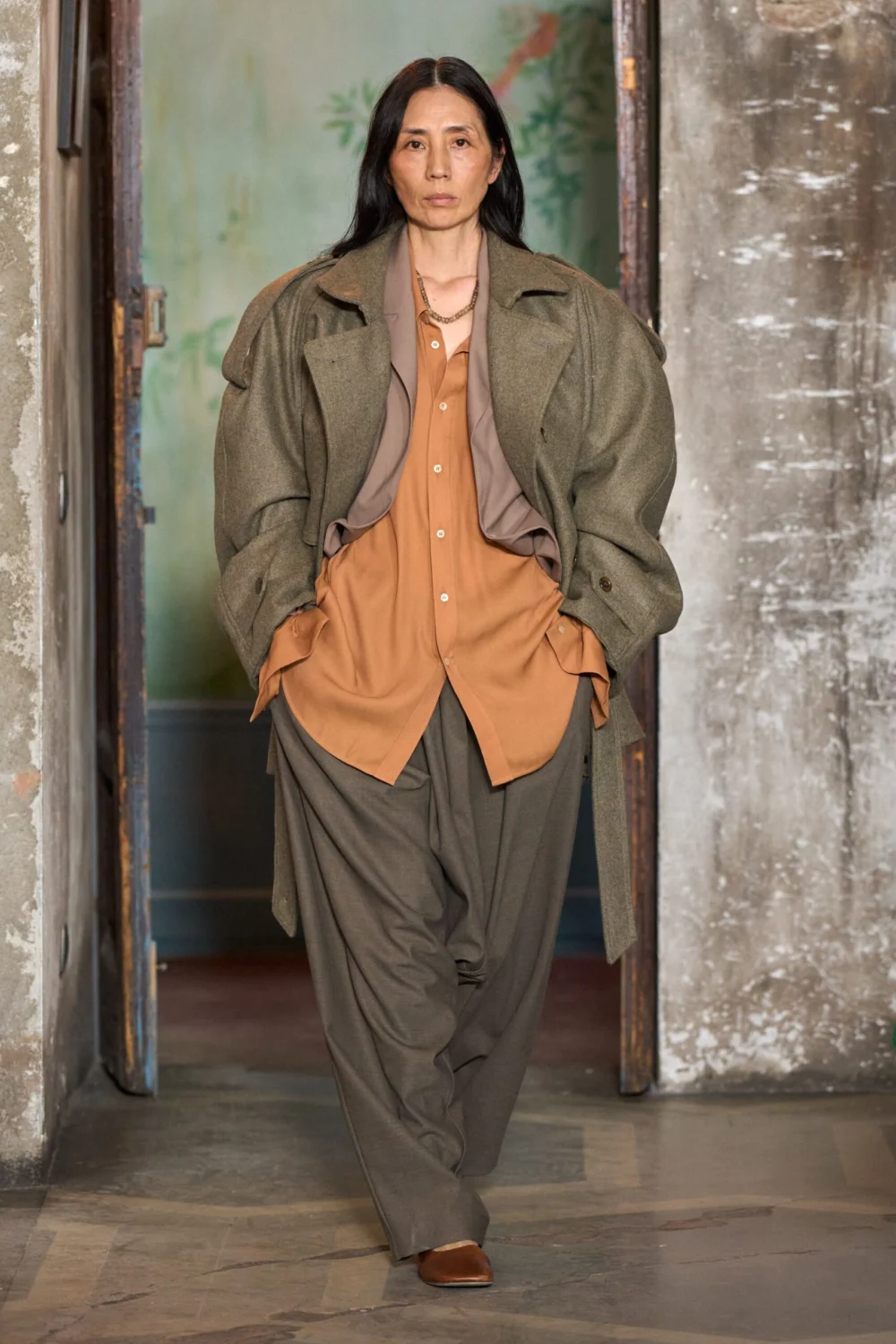
The recent Fall collection served as a pivotal showcase for Lin’s renewed creative direction. His foundational inspiration for this season’s designs was drawn from the enduring appeal of classic wardrobe staples. Lin’s approach involved a meticulous deconstruction and imaginative reinterpretation of these foundational pieces, transforming them into entirely novel forms. A hallmark of the collection was the strategic utilization of surplus fabric, artfully manipulated to engineer rounded, voluminous sleeves that exuded a sense of dramatic flair. Similarly, full-length skirts were sculpted to achieve a voluminous, bulbous silhouette, while precise folds at the waist introduced architectural interest and redefined the traditional garment structure.
The designer’s innovative spirit was further evident in the shirts, presented in a rich palette of blue, burgundy, and brown gradients. These garments showcased a sophisticated layering and fusion technique, creating singular pieces that masterfully mimicked the appearance of intricate, multi-layered styling. Lin articulated his design philosophy backstage, stating, "I had very traditional design training, so I want to take that standard and use it to mix and match and create something new." This statement underscores his commitment to honoring sartorial heritage while simultaneously pushing its boundaries through experimental design.
A Shift from Tulle to Textile Innovation
Historically, Act No. 1’s aesthetic was strongly associated with the ethereal quality of tulle, a material that naturally attracted a predominantly female clientele. However, Lin has expressed a clear intention to broaden the brand’s appeal and explore a more inclusive design narrative. "We made more feminine items, but this time I wanted to make something more [aligned] with menswear, even though we are a genderless brand," he explained. This ambition is reflected in the collection’s nuanced approach to silhouette and construction, with subtle yet significant details, such as elasticated waistbands on trousers, designed to accommodate and flatter a diverse range of body types, reinforcing the brand’s commitment to inclusivity.
Lin’s forward-looking vision extends to his material choices. While the brand’s initial creative acts were defined by its distinctive use of tulle, Lin is actively embracing new textiles. This season marked his first foray into working with wool, a material he expertly employed to create intricate intarsia knits. These knitted elements were then artfully twisted and wrapped around the waist and neck, introducing a tactile richness and unexpected dimensionality to the garments. This deliberate diversification of materials signifies a strategic move to expand the brand’s textural and aesthetic vocabulary, moving beyond its established signature.
Sustainable Practices and Heritage Integration
A significant highlight of the collection was the brand’s commitment to sustainable sourcing and material innovation. The most compelling looks featured patchwork leather jackets and coats, rendered in rich shades of brown. These pieces were meticulously constructed using offcuts salvaged from the Lineapelle leather fair, a prominent international exhibition dedicated to leather and its applications. This practice not only minimizes waste but also imbues each garment with a unique story and a conscious connection to the circular economy principles.
Further demonstrating a dedication to revitalizing existing resources, two structured tops were adorned with an elaborate hand-embroidery. This intricate embellishment incorporated over 25,000 tiny deadstock buttons, meticulously sourced from RIBL, a venerable Italian button manufacturer. "Some of the buttons are more than 50 years old," Lin revealed, emphasizing the historical significance of these reclaimed components. "It’s nice to give them a new life," he added, underscoring the emotional and environmental value of upcycling. This approach to embellishment speaks volumes about the brand’s philosophy of finding beauty and value in overlooked materials.
Lin also thoughtfully integrated elements of his Chinese heritage into the collection, adding a layer of cultural narrative to the designs. This influence was most overtly expressed on a silk shirt adorned with a vintage Chinese print of a woman. The print was digitally reworked to echo the distinctive color grading characteristic of Wong Kar Wai’s cinematic masterpieces, lending a melancholic yet sophisticated allure to the garment. In a further collaboration that bridges tradition and modernity, Lin partnered with artisans in China’s Rongjiang and Congjiang counties. Together, they developed blazers utilizing an ancient hand-weaving technique. This traditional method transforms naturally dyed cotton into a fabric with a remarkably lightweight, linen-like appearance, showcasing the enduring relevance of artisanal craftsmanship.
A Moment of Creative Flourishing and Future Prospects
The collection culminated in two striking papier-mâché sculptural looks, serving as a powerful visual statement of Lin’s dedication to exploring new forms and pushing the boundaries of fashion as an art. After a decade of dedicated effort in building the Act No. 1 brand, this period represents a significant moment of creative and critical recognition for Luca Lin. The LVMH Prize semifinalist status is a strong indicator of the industry’s belief in his vision and the brand’s potential for global growth.
The journey of Act No. 1, particularly in its post-Gassanoff phase, can be viewed through the lens of a brand recalibrating its identity and expanding its creative horizons. The emphasis on experimentation with new materials like wool, coupled with a more inclusive design approach targeting a broader demographic, signals a strategic evolution. The integration of sustainable practices, such as using leather offcuts and deadstock buttons, aligns Act No. 1 with contemporary consumer values and the growing demand for ethically produced fashion. Furthermore, the incorporation of cultural heritage through artful prints and traditional weaving techniques adds depth and a unique narrative to the brand’s offerings, differentiating it in a competitive market.
The brand’s progression is also contextualized by the broader trends within the fashion industry. The LVMH Prize, established in 2013, has become a crucial platform for identifying and nurturing emerging design talent. Being selected as a semifinalist places Act No. 1 among a cohort of innovative designers recognized for their distinct creative voices and potential to shape the future of fashion. The progression to Paris for the next round of judging signifies not just an opportunity for further exposure but also a crucial step in potentially securing the resources and mentorship that could propel Act No. 1 onto a global stage.
Lin’s personal sentiment, "I’m so excited it’s all happening. I’m really happy right now," encapsulates the palpable optimism surrounding Act No. 1. This enthusiasm is well-founded, given the brand’s recent achievements and the clear direction of its creative leadership. The Fall collection’s success, coupled with the LVMH Prize recognition, positions Act No. 1 for an exciting future, characterized by continued innovation, a broadened aesthetic, and a strong commitment to both artistry and responsible design practices. The brand is not just participating in the fashion conversation; it is actively shaping it, one meticulously crafted garment at a time.
