

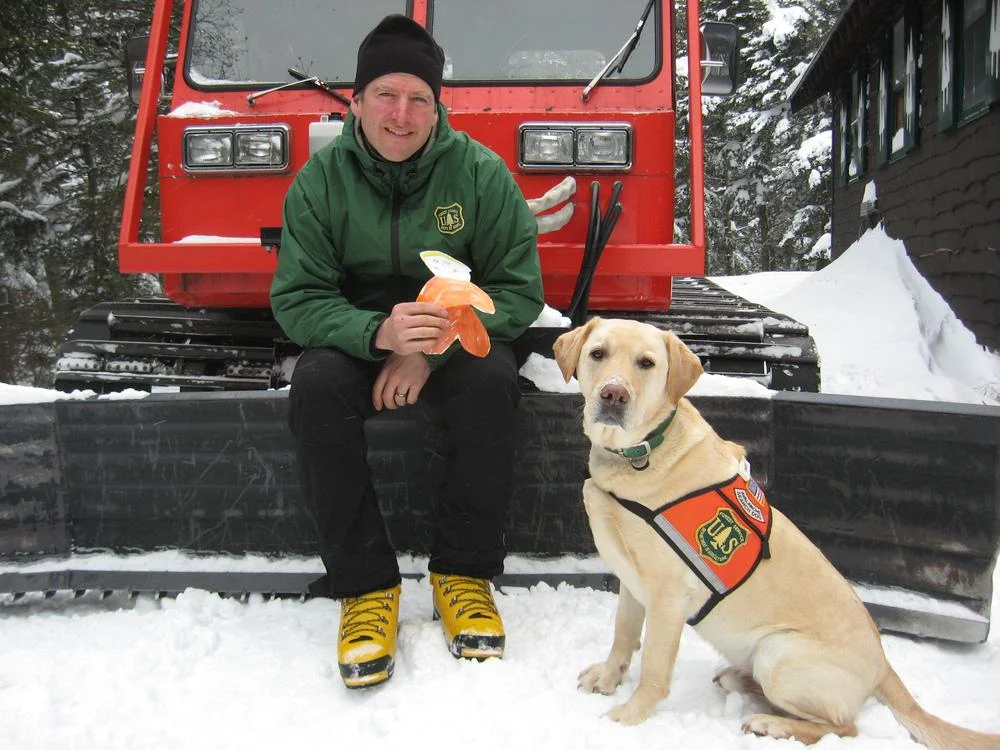
The Mount Washington Avalanche Center (MWAC) and the broader New England outdoor community are mourning the loss of Cutler, a dedicated avalanche search and rescue dog who served the White Mountain National Forest for over a decade. Cutler, who passed away at the age of 14, was a fixture of the Mount Washington landscape, spending approximately 80% of his life in active service to the public. As a vital member of the United States Forest Service (USFS) team, Cutler’s career spanned 11 years of rigorous winter operations, during which he became an essential asset in both technical rescue missions and community safety education. Working alongside Mount Washington Avalanche Center Director Chris Joosen, Cutler’s presence in the high-alpine terrain of the Presidential Range represented a critical layer of safety for the thousands of skiers, climbers, and hikers who navigate the region’s notoriously volatile winter environment.
The Life and Service of an Alpine Guardian
Cutler’s career began in the early 2000s, a period during which the Mount Washington Avalanche Center was refining its search and rescue (SAR) capabilities to meet the demands of increasing winter recreation. Throughout his 11 years on the mountain, Cutler was more than a mascot; he was a highly trained professional capable of performing tasks that human rescuers could not achieve with the same speed or efficiency. In the event of an avalanche burial, time is the most critical factor in survival. Research by international rescue organizations indicates that victims buried by an avalanche have an 80% to 90% chance of survival if recovered within the first 15 minutes. After 30 minutes, those odds drop precipitously. A trained avalanche dog like Cutler can search an area of approximately one hectare (about 2.5 acres) in 30 minutes—a task that would take a human search team with probe lines several hours to complete.
Cutler’s primary theater of operation was the eastern slopes of Mount Washington, specifically Tuckerman Ravine and Huntington Ravine. These areas are world-renowned for their steep, technical terrain and significant avalanche risk. By maintaining a constant presence at the Hermit Lake Courtyard and the surrounding high-use zones, Cutler and his handler, Chris Joosen, provided a rapid-response capability that served as a final line of defense against the mountain’s natural hazards.
Mount Washington: A High-Stakes Environment for Rescue Operations
To understand the magnitude of Cutler’s service, one must consider the unique and often deadly environment of Mount Washington. At 6,288 feet, it is the highest peak in the Northeastern United States, but its elevation belies its ferocity. The mountain is famously home to the "world’s worst weather," characterized by hurricane-force winds, sudden whiteouts, and extreme temperature fluctuations. The Presidential Range sits at the confluence of several major storm tracks, which leads to heavy snowfall and the rapid formation of wind-loaded slabs—the primary cause of avalanches in the region.
The Mount Washington Avalanche Center, established as a permanent Forest Service entity in the mid-20th century, is responsible for issuing daily avalanche advisories and managing the safety of the White Mountain National Forest. The center oversees areas where vertical drops can exceed 1,000 feet and slope angles frequently reach 40 to 55 degrees. In this high-stakes setting, the physical and mental demands on a rescue dog are immense. Cutler was required to navigate deep snow, icy traverses, and sub-zero temperatures, often being transported via snowmobile or hiking long distances into the ravines to be on standby during peak activity periods.
The Role of the Avalanche Dog in Public Education
While Cutler’s technical skills in scent detection and snow excavation were his primary functions, his impact on public relations and education was equally significant. For many visitors, the complexities of avalanche safety—such as understanding pit results, reading snowpack layers, or interpreting the five-tier danger scale—can be daunting. Cutler served as a bridge between the professional Snow Rangers and the general public.
According to Director Chris Joosen, Cutler’s presence allowed the MWAC team to engage with visitors in a way that felt approachable rather than authoritative. "Cutler excelled at public relations," Joosen noted in a retrospective on the dog’s career. By drawing people in, Cutler provided the Snow Rangers with an opportunity to deliver life-saving information about current conditions and the importance of carrying essential gear like beacons, probes, and shovels. This "ambassador" role is a recognized strategy in modern land management, where positive interactions with K9 units lead to higher compliance with safety recommendations and a more informed recreational community.
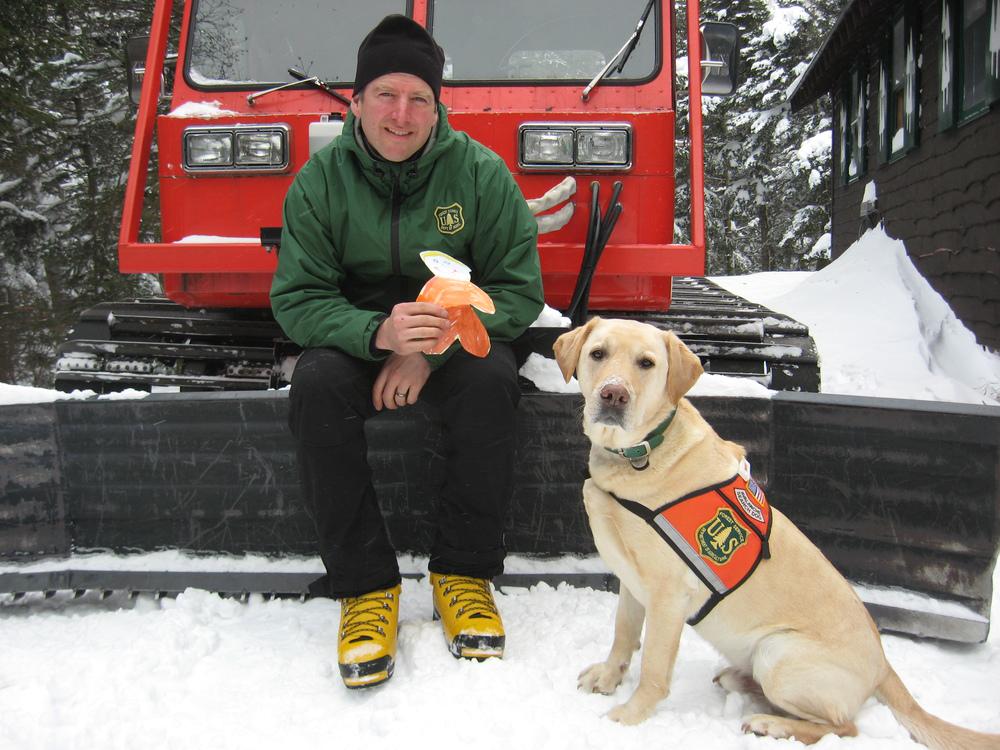
Chronology of a Career: 2001–2015
The timeline of Cutler’s life reflects a lifetime of dedication to the Forest Service mission:
- 2001: Cutler was born, beginning his early socialization and foundational training.
- 2004: By age three, Cutler had transitioned into his full-time role at the Mount Washington Avalanche Center. This period involved intensive certification processes, where he learned to distinguish human scent buried under several feet of compressed snow.
- 2004–2014: For a decade, Cutler was a daily presence on the mountain during the winter months (typically December through May). He participated in numerous "hasty" searches—immediate deployments following reports of an avalanche—and stood watch during high-risk spring skiing weekends when crowds in Tuckerman Ravine can exceed 2,000 people in a single day.
- January 2015: Following his retirement from active duty, Cutler passed away at the age of 14. His death was marked by a tribute from the MWAC, which highlighted not just his work, but the deep bond he shared with the staff and the thousands of hikers who had encountered him over the years.
The Technical Expertise of Canine Search and Rescue
The training of a dog like Cutler is an exhaustive process that relies on the animal’s natural olfactory capabilities. While a human’s sense of smell is limited, a dog possesses up to 300 million olfactory receptors. In the context of an avalanche, the dog is trained to detect "pool" scents—microscopic particles of human odor that rise through the porous snowpack and settle on the surface.
Cutler’s training would have included regular "blind" drills, where a volunteer is buried in a snow cave and the dog must locate them without any visual cues from the handler. These exercises ensure that in a real emergency, the dog remains focused despite the chaos of a rescue scene, which often includes wind noise, heavy machinery, and multiple human rescuers. The success of the MWAC K9 program under Cutler and Joosen set a standard for specialized rescue operations in the Northeast, proving that canine assets are as valuable in the rugged terrain of New Hampshire as they are in the larger mountain ranges of the American West or the Alps.
Professional Reflections and Community Impact
The loss of Cutler has resonated deeply within the mountaineering community. For regular visitors to the White Mountains, Cutler was a symbol of the mountain’s human side—a reminder that despite the harshness of the environment, there was a dedicated team (and a dog) watching over them.
Statements from the Mount Washington Avalanche Center emphasize that Cutler’s contribution cannot be measured solely in rescues performed, but in accidents prevented through his role in education. Director Chris Joosen’s tribute to his partner underscored the emotional and professional synergy required to maintain such a program. The handler-dog relationship is the cornerstone of any K9 unit; the handler must be able to read the dog’s subtle behavioral changes to determine when a scent has been found, while the dog must trust the handler to lead them safely through dangerous terrain.
The implications of Cutler’s long service extend to the future of the MWAC K9 program. His success demonstrated the viability of keeping a permanent avalanche dog on staff in the Presidential Range, influencing how the Forest Service allocates resources for winter safety. As the popularity of backcountry skiing continues to rise—with equipment sales and trailhead counts seeing double-digit growth over the last decade—the need for efficient search assets like Cutler has never been greater.
A Legacy of Safety and Service
As the Mount Washington Avalanche Center moves forward, the legacy of Cutler remains a foundational part of its history. He lived a life of purpose, defined by the 80% of his years spent in service to others. In the world of search and rescue, where the outcomes are often measured in life or death, Cutler represented hope and a commitment to public safety.
The story of Cutler is a testament to the specialized work performed by the United States Forest Service Snow Rangers and the unique partnerships they form with animals to navigate the challenges of the natural world. While the technology of avalanche safety continues to evolve with the introduction of new GPS units, radar-reflecting clothing, and advanced forecasting software, the fundamental value of a highly trained dog remains unmatched. Cutler’s 11 years of service on the "Rockpile" have left an indelible mark on the White Mountains, ensuring that his name will be remembered alongside the many legends of Mount Washington’s storied history.
