

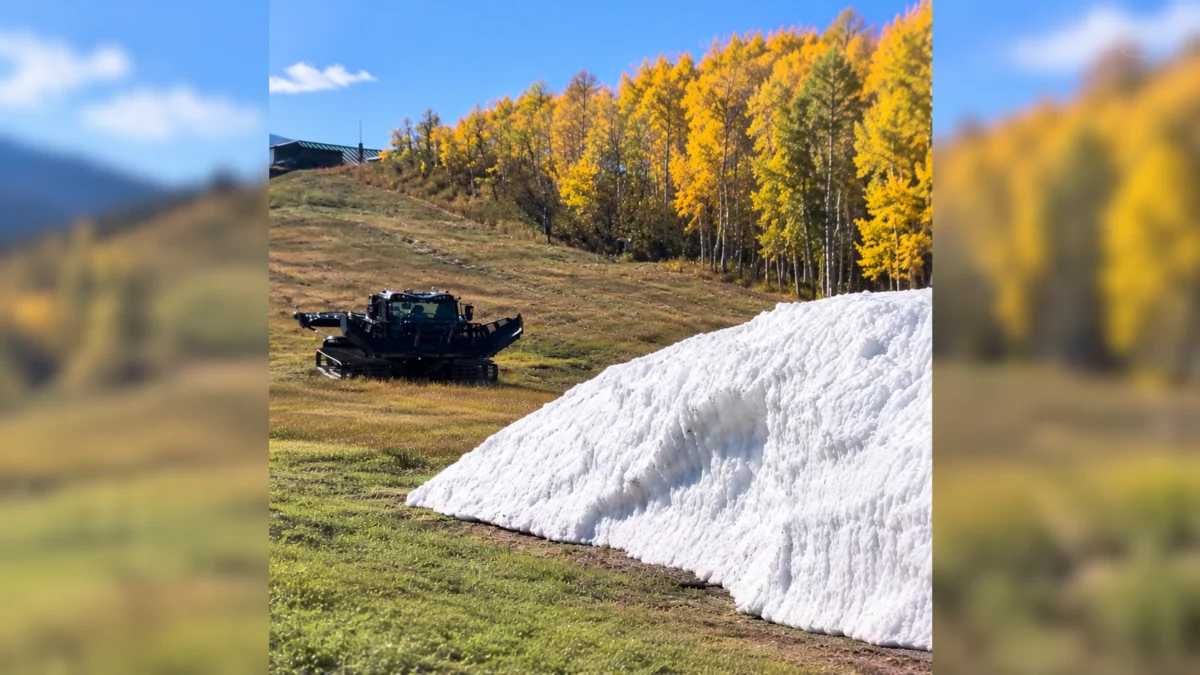
Snowmass, Colorado – In a remarkable feat of snow management and a testament to innovative winter sports preservation, Snowmass will open a limited rail park this upcoming weekend, October 3rd and 4th, utilizing snow meticulously saved from the previous season. This groundbreaking initiative allows skiers and snowboarders to experience on-snow conditions in early October, a rare occurrence in Colorado without relying on early-season storms or high-altitude conditions. The rail park, situated on approximately one acre, will be accessible to the public free of charge from 10 a.m. to 2 p.m. on both Saturday and Sunday.
This pioneering project began as an ambitious experiment by Snowmass’s operations team to extend the skiing and riding season beyond its natural conclusion. As the 2025-2026 winter season wound down, resort staff strategically gathered surplus snow, consolidating it into substantial piles across the mountain. The critical element of this preservation strategy involved the deployment of specialized insulated blankets, sourced from the Finnish company Snow Secure. These blankets were designed to create a protective barrier, shielding the snow from the sun’s rays and the ambient summer heat, thereby minimizing melt-off.
The success of this snow-saving endeavor was revealed on Thursday morning when the Snow Secure blankets were removed. Astonishingly, the operations team reported that approximately 85 percent of the snow had survived the entire summer. This figure is particularly noteworthy considering the challenging environmental conditions of the past summer. Colorado experienced one of its warmest summers on record, with average temperatures consistently elevated. Despite these warmer-than-average conditions, the temperature recorded beneath the insulated blankets during the summer period never exceeded 42 degrees Fahrenheit, a crucial factor in the high survival rate of the snowpack.
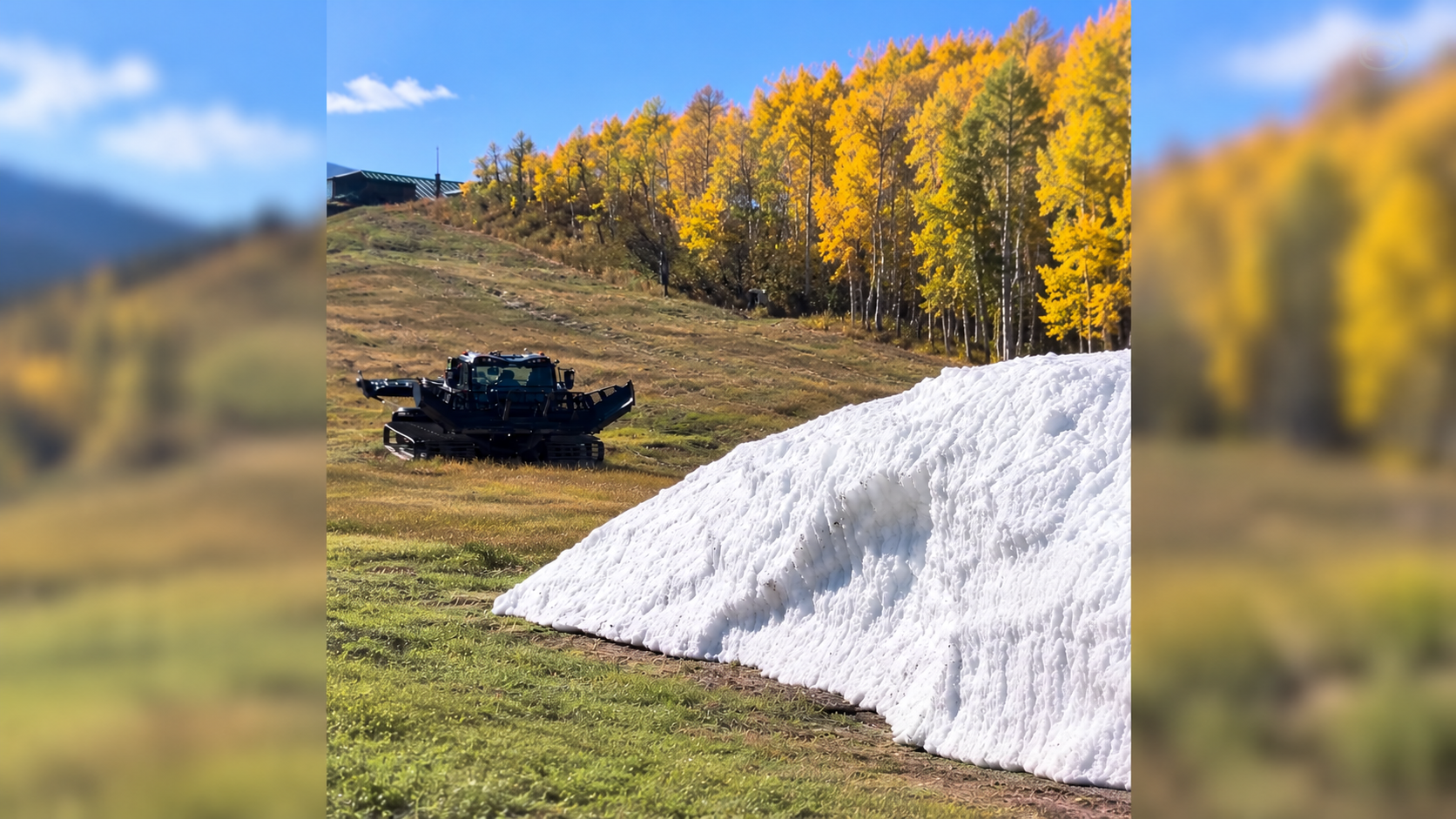
Following the removal of the blankets, the preserved snow was carefully relocated to a designated one-acre field. Here, it was consolidated into a substantial snowpack, ranging between six and twelve feet in depth, forming the foundation for the newly constructed rail park. The resort’s dedicated operations crew then meticulously sculpted this snow into a series of features, transforming the conserved winter bounty into an accessible urban-style terrain park.
A Glimpse into the Future of Snow Preservation
The decision to create a rail park from preserved snow represents a significant innovation in winter sports resort operations. Historically, early-season skiing in Colorado has been a matter of patience, often requiring either a significant trek to the highest elevations or a hopeful anticipation of early snowfall. This initiative by Snowmass offers a tangible solution, providing a unique opportunity for enthusiasts to engage with their sport months before the traditional opening of the resort.
The concept of snow preservation through covering techniques is not entirely new, but its large-scale application and subsequent transformation into an active recreational space is a notable development. Such methods have been explored in various parts of the world to mitigate the effects of climate change on ski seasons and to ensure consistent conditions. The success at Snowmass could serve as a model for other resorts facing similar challenges, particularly in regions where the winter season is becoming increasingly unpredictable.
Chronology of an Unconventional Season Opener
The journey to this early-season rail park began in the final weeks of the 2025-2026 ski season.
- Late Spring/Early Summer 2026: Snowmass operations team identified prime locations and gathered surplus snow into large piles.
- Early Summer 2026: Snow Secure insulated blankets were meticulously placed over the snow piles, creating a protective thermal layer.
- Throughout Summer 2026: The blankets shielded the snow from solar radiation and high ambient temperatures, with internal snow temperatures remaining remarkably low, peaking at 42°F.
- Late September 2026: Following the warmest summer on record for Colorado, the blankets were removed, revealing a substantial, preserved snowpack.
- Late September 2026: The conserved snow was transported and sculpted into a one-acre rail park.
- October 2nd, 2026: The resort announced the opening of the rail park for the weekend of October 3rd-4th.
- October 3rd-4th, 2026: The Snowmass Rail Park opens to the public, offering early-season snow sport opportunities.
Supporting Data and Technical Details
The efficacy of the Snow Secure blankets can be understood through basic principles of thermodynamics and material science. These blankets are typically constructed with multiple layers of insulating material, often including reflective surfaces to bounce back solar radiation and dense, low-conductivity cores to minimize heat transfer. The Finnish company Snow Secure specializes in such products, designed for applications ranging from protecting construction sites in cold weather to preserving snow for extended periods.
The reported survival rate of 85 percent is a significant achievement, especially when considering the cumulative heat exposure over several months. For context, unpreserved snow, even in shaded areas, would likely experience substantial sublimation and melt-off during a Colorado summer. The consistent temperature of 42°F beneath the blankets is crucial because it keeps the snow in a solid state, preventing the phase transition to liquid water. While some surface melt and sublimation would still occur, the insulation dramatically reduces these losses.
The transformation of the preserved snow into a rail park also involves specific engineering. The six-to-twelve-foot depth of the snowpack provides sufficient material for shaping various features. Rail parks typically incorporate elements such as rails, boxes, and jumps, requiring skilled terrain park builders to create safe and engaging obstacles. The relatively small footprint of one acre is typical for an early-season or specialized park, focusing on quality over quantity.
Official Statements and Reactions
While direct quotes from resort management are not provided in the initial report, the initiative itself speaks volumes about the resort’s commitment to innovation and guest experience. A spokesperson for Aspen Snowmass, had they been available, would likely have highlighted the resort’s forward-thinking approach to sustainability and its dedication to providing unique recreational opportunities.
"We are incredibly excited to offer this unique early-season experience to our community and visitors," a hypothetical statement might read. "This project not only demonstrates our commitment to snow conservation but also provides a fun and accessible way for people to get back on their skis and boards before the traditional opening. It’s a testament to the hard work and ingenuity of our operations team."
The success of such a project could also foster collaboration and knowledge sharing within the ski industry. Resorts worldwide are grappling with the impacts of climate change, and innovative solutions like this could become increasingly vital for the long-term viability of winter sports.
Broader Impact and Implications
The implications of Snowmass’s preserved snow rail park extend beyond a single weekend of early-season fun.
Sustainability and Resource Management: This initiative highlights a proactive approach to resource management in the face of environmental challenges. By preserving snow, resorts can reduce their reliance on early artificial snowmaking, which can be energy-intensive and water-consuming. The success of this method could encourage more widespread adoption of snow preservation techniques, contributing to more sustainable winter operations.
Economic Impact: While the rail park is free, the event draws visitors to the area, potentially boosting local economies. Early-season tourism, even for a limited event, can provide a welcome economic injection to businesses in Snowmass and the surrounding Roaring Fork Valley. This also generates buzz and anticipation for the full resort opening.
Guest Engagement and Brand Innovation: Offering such an unconventional experience can significantly enhance guest engagement and strengthen the resort’s brand as an innovator. It provides a compelling narrative and a unique selling proposition that differentiates Snowmass from its competitors. This type of initiative can foster loyalty and attract new demographics to the sport.
Advancement of Snow Management Techniques: The project serves as a valuable case study for the effectiveness of advanced snow preservation technologies like insulated blankets. The data gathered on snow survival rates, insulation effectiveness, and operational costs will be invaluable for future planning and for informing other ski resorts considering similar ventures. This could lead to further research and development in snow science and management.
Integration with Other Activities: The timing of the rail park opening coincides with the final weekend of mountain bike access to Snowmass’s trails. This presents a unique opportunity for visitors to engage in both snow sports and mountain biking at the same resort on the same day, further enhancing the appeal of an early October visit to Snowmass. This integrated approach to outdoor recreation showcases the resort’s versatility and its ability to cater to a diverse range of outdoor enthusiasts.
In conclusion, Snowmass’s innovative approach to creating an early-season rail park from preserved snow is a forward-thinking initiative that underscores the evolving landscape of winter sports. It demonstrates a commitment to resourcefulness, sustainability, and providing unique experiences for skiers and snowboarders, setting a precedent for how resorts can adapt and thrive in a changing climate.
