

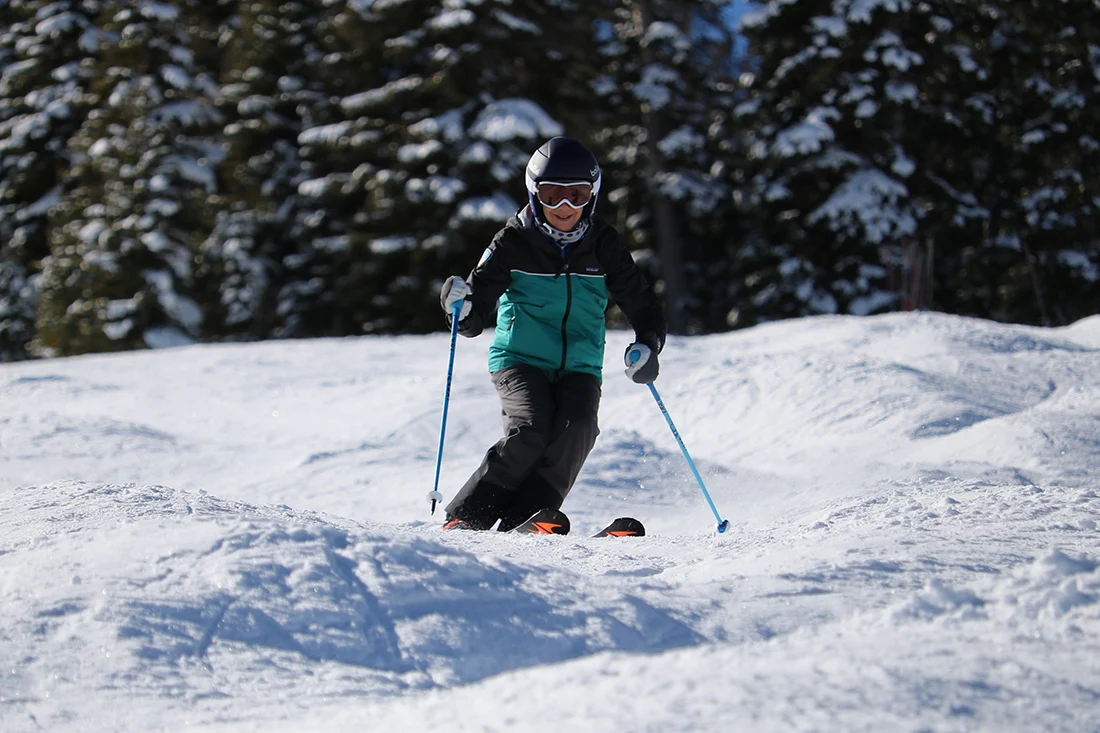
A profound insight into effective pedagogy for snowsports recently emerged from a PSIA-AASI social media post, where an instructor articulated their approach: "I like to follow [my students] and copy their movements to understand what they are doing." This concise statement perfectly encapsulates the instructional strategy known as mirroring, defined as copying someone with the deliberate intention of understanding their actions and underlying thought processes. Far from being a mere imitation, mirroring is a best practice deeply rooted in the fabric of human learning and a potent tool for advancing teaching methodologies in snowsports and beyond.
Evolutionary Foundations of Learning by Observation
The human capacity to learn through imitation and observation is not merely a pedagogical technique but a fundamental evolutionary survival strategy. Its roots stretch back millions of years, underpinning our development as a species. At its most basic level, this capacity manifests as motor resonance, an innate ability to match observed actions. This foundational capability is ancient, evolving over 100 million years ago and present in numerous vertebrate species. Examples abound in the natural world: dogs, for instance, instinctively synchronize their speed, turning, stopping, and pace changes when moving within a pack, demonstrating a fundamental coordination that ensures group cohesion and efficiency. Similarly, young songbirds learn complex vocalizations by meticulously listening to and replicating the songs of their parents, a clear example of auditory mirroring leading to skill acquisition. This neurological mechanism involves specialized mirror neurons that activate both when an individual performs an action and when they observe another performing the same action, creating an internal simulation that aids understanding and learning.
As primate evolution progressed, observational learning gained remarkable sophistication tens of millions of years ago. This advanced form of learning allowed for the transmission of complex behaviors without direct instruction. Chimpanzees famously learn termite fishing by observing their elders, mastering intricate tool use and foraging techniques. Bonobos engage in chasing games and social greetings, behaviors learned and perpetuated through observation within their social structures. These examples highlight the increasing cognitive complexity involved in understanding and reproducing observed actions, moving beyond simple motor mimicry to purposeful behavioral adoption and cultural transmission.
The pinnacle of this evolutionary trajectory, intentional teaching, is believed to have emerged within our own genus, Homo. The creation and transmission of complex stone tool technologies, such as the Acheulean handaxes dating back over 1.7 million years, serve as compelling evidence. These tools were often too intricate to be replicated solely through observation; they required deliberate demonstration, guided practice, and explicit instruction—the very essence of teaching. This marked a significant shift, indicating a cognitive leap where individuals not only learned by watching but also actively facilitated learning in others, establishing a direct lineage to modern pedagogical practices.
Modern learning theories, such as Albert Bandura’s influential Social Learning Theory, find a strong resonance with these evolutionary insights. Bandura’s framework, first articulated in the 1960s, posits that individuals learn by observing others within a social context, without necessarily experiencing direct reinforcement. His theory emphasizes four key processes: attention (paying attention to the model), retention (remembering what was observed), reproduction (reproducing the observed behavior), and motivation (the will to perform the behavior). This comprehensive model can be viewed as a contemporary psychological articulation of these ancient evolutionary mechanisms, providing a robust understanding of how individuals acquire new behaviors, attitudes, and emotional reactions by watching others. This connection underscores that the pedagogical strategy of mirroring is not a novel invention but a conscious application of deeply ingrained biological and psychological processes that have shaped learning across species for eons.
Interski 2023: A Global Showcase for Brain-Based Learning
The global significance of mirroring as a teaching tool was prominently highlighted at Interski 2023, the quadrennial international congress for ski and snowboard instructors, held from March 26 to 31 in Levi, Finland. This prestigious event brings together the world’s leading snowsports nations, comprising national demonstration teams and instructors, to share innovative teaching methodologies, technical advancements, and best practices. Levi, a renowned ski resort in Finnish Lapland, provided an ideal backdrop for this exchange of cutting-edge instructional concepts. Angelo Ross, the author and an examiner for the Eastern Alpine and Children’s Examiner, had the opportunity to attend two sessions presented by the Czech Republic National Team, renowned for their progressive approach to snowsports education, focusing specifically on brain-based learning.
Brain-based learning represents a cutting-edge educational approach that meticulously aligns instructional strategies with current neuroscience research, optimizing how the brain receives, processes, and retains information. The Czech team’s sessions were particularly impactful, demonstrating how theoretical neuroscientific principles could be translated into practical, on-snow applications designed to enhance learning efficiency and participant engagement.
During one memorable on-snow session, a diverse group of approximately 40 participants, representing various nations and instructional backgrounds, was instructed to form a large circle. The initial task was deceptively simple yet profoundly effective: identify a partner solely through eye contact, without uttering a single word. The initial moments were characterized by an awkward silence, punctuated by darting, uncomfortable glances as individuals sought connection. However, within a minute, the innate human drive for connection prevailed. Each participant successfully locked eyes with another, signaling acknowledgment through subtle, non-verbal cues. This silent communication rapidly facilitated the formation of partnerships, demonstrating the power of primal, non-verbal interaction in building rapport and reducing initial social barriers.
Ross found himself paired with Angela Cesnik from the Australian National Team (APSI). After a brief, almost identical sharing of names—a small, amusing coincidence that further lightened the atmosphere—the partners were instructed to stand face-to-face, about two feet apart. Again, without verbal communication, they were to decide who would lead an upcoming activity and who would follow. In Ross’s case, Angela instinctively assumed the leadership role, a decision made through subtle body language and mutual understanding.
The next directive added a layer of comedic insight and deep learning: leaders were tasked with silently performing their morning bathroom routine for 60 seconds, while followers were to reproduce their movements exactly, mirroring them as if they were reflections. This "reflective mirroring" required precise coordination of opposite limbs and directions. If Angela mimed brushing her teeth with her right hand, Ross had to use his left. If she turned to her left, he had to turn to his right. The scene was undeniably comical: 40 strangers silently mimicking personal, intimate routines – eliminating morning breath, applying deodorant, wiping away sleep from eyes. Yet, beneath the giggles and private decisions about the extent of their "performance," a powerful connection was forged. Participants quickly developed a sense of shared vulnerability and understanding, breaking down cultural and personal barriers. After one round, partners switched roles, deepening the interactive experience and providing both perspectives of leading and following.
Ross reflected on the rapid bond formed with Angela, a stranger from the opposite side of the globe. Within minutes, through silent selection, leadership determination, and shared, albeit mimed, personal routines, they gained superficial yet insightful details about each other. This unconventional icebreaker proved remarkably effective in fostering immediate camaraderie and trust, setting a positive tone for subsequent learning. Participants lauded the approach for its ability to foster rapid connection and empathy.
The session then progressed to an on-snow exercise: tandem mirroring. Participants now skied in the same direction, with the original leader making predictable medium-radius turns, and the follower closely trailing. The follower’s objective was to precisely replicate the leader’s movements – positioning limbs, poles, helmet, and skis to mirror the leader exactly. This required intense focus and kinesthetic awareness. At a predetermined stopping point, the follower articulated how the act of mirroring had influenced their technical performance, often revealing subtle nuances in balance, pressure, or timing that they might not have noticed otherwise. Roles were then switched for the remainder of the run. During the subsequent lift ride, Ross and Angela engaged in a deeper discussion, exploring similarities and differences in their techniques, the impact on their performance, the values of their respective associations (APSI and PSIA-AASI), and even broader topics like global politics. This rapid, high-impact experience demonstrated how mirroring could facilitate not only technical insights but also rich interpersonal connection and mutual learning in a remarkably short timeframe. The corresponding indoor session later that day provided the scientific underpinning, with Czech researchers explaining the brain-based mechanisms that made the on-snow activities so effective, underscoring mirroring’s proven ability to facilitate trust, empathy, and understanding by activating neural networks associated with social cognition.
Veterans of the Slopes: Ellen Post Foster’s Enduring Insight
The value of mirroring is not a new discovery, but rather a time-tested strategy implicitly and explicitly employed by seasoned professionals who have shaped snowsports instruction for decades. Among them is Ellen Post Foster, a towering figure whose impact on American skiing and the PSIA-AASI cannot be overstated. Her illustrious career includes being the 1973 Junior National Champion of Exhibition Skiing, a dominant force in international freestyle competition in 1975 (excelling in aerials, ballet, moguls, and combined events), an alumna of the 1980 and 1984 PSIA National Demonstration Teams, a U.S. Ski & Snowboard Hall of Famer (Class of 2016), and a Colorado Snowsports Museum Hall of Famer (2021). Beyond her athletic prowess, Foster is a prolific snowsports author, contributing significantly to the instructional canon. Her multi-faceted career highlights a deep understanding of movement, performance, and pedagogy.
Ross recounts an insightful experience skiing with Foster, known for her remarkably nimble touch and seemingly effortless movement on snow, often described as "rigged for silent running." On one occasion, Foster, small and adept, momentarily disappeared from Ross’s periphery. When she reappeared at the lift, Ross expressed concern about having been separated. Foster calmly explained that she had deliberately been skiing behind him, following to understand his skiing. This intentional act of mirroring his movements allowed her to gain a kinesthetic and observational understanding of his technique from his own perspective. After her observation, she respectfully sought his permission to share her insights and provide feedback for performance improvement—an offer Ross immediately accepted and continues to integrate into his skiing.
This anecdote vividly illustrates Foster’s deep understanding of mirroring as a diagnostic and teaching tool. As a co-author of the current Teaching Snowsports Manual for PSIA-AASI, Foster has ensured that the practice of following students to gain insight into their movements is explicitly recognized and recommended as a core teaching skill. Her approach underscores that mirroring is not just about the student copying the instructor, but equally, if not more importantly, about the instructor copying the student to truly grasp their current skill level, movement patterns, and potential areas for development from their unique perspective. This method fosters a student-centered approach, enabling highly personalized and effective coaching.
Implementing Mirroring: Practical Applications and Outcomes
Inspired by the impactful sessions at Interski Levi, Angelo Ross has actively incorporated mirroring into his instructional strategies, aiming to create more engaging and effective learning environments. His subsequent applications have yielded consistently positive results, reinforcing the versatility and efficacy of the technique across various snowsports disciplines and participant levels.
Last November, at the Rocky Mountain Telemark Education Staff Training, Ross adapted the Czech team’s format. He designed an indoor session specifically aimed at fostering rapid connection and trust between paired partners, using similar non-verbal exercises. This preliminary bonding then transitioned to an outdoor session that demanded careful observation and honest, constructive feedback between partners, much like the reflective and tandem mirroring exercises in Finland. The feedback from participants was overwhelmingly positive, with comments highlighting how quickly they felt connected, the rapid development of trust within their pairs, and the depth of learning achieved through this experiential method.
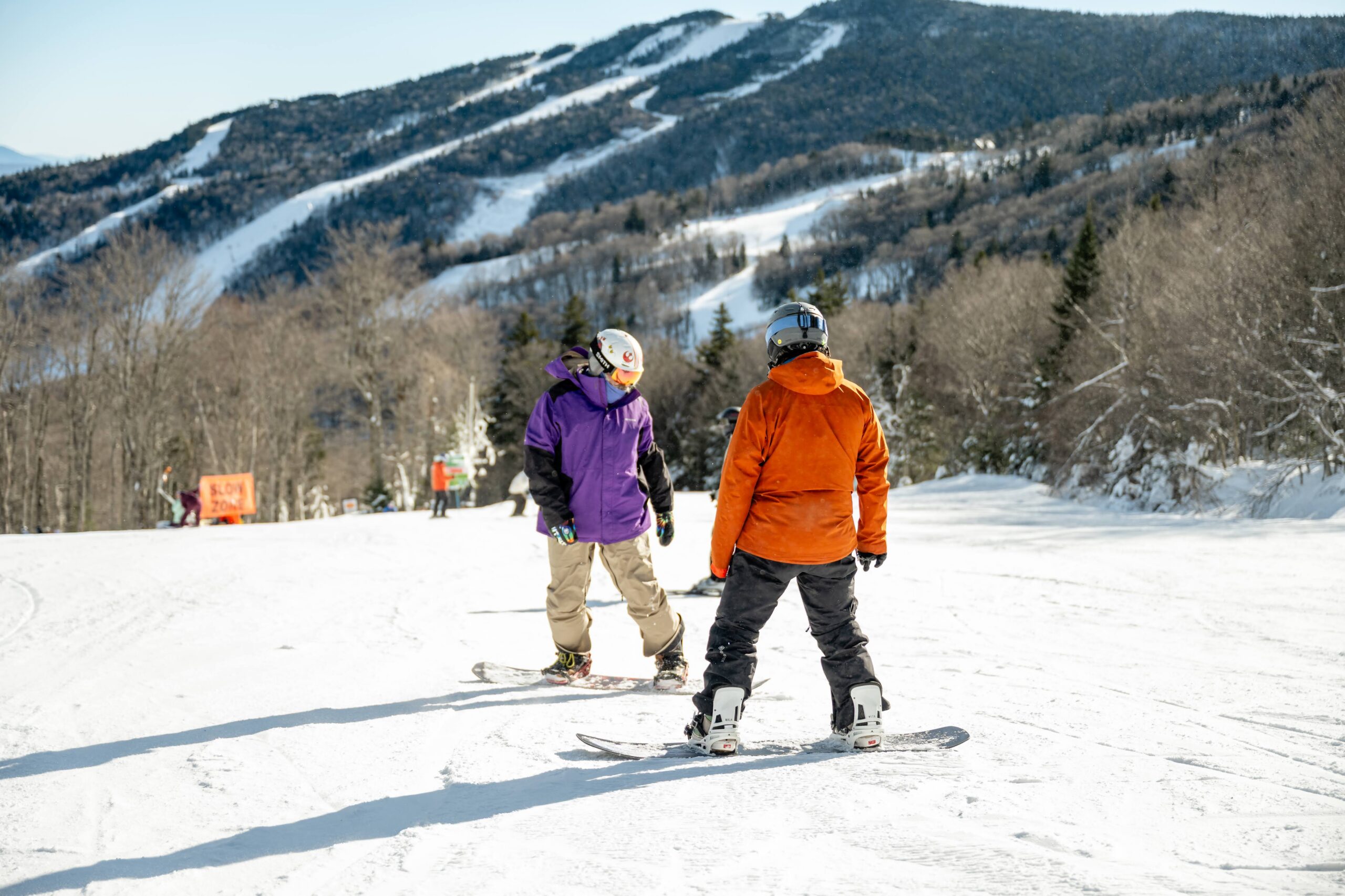
In December, Ross further modified the on-snow mirroring technique for a group of National Ski Patrol leaders during the Outdoor Emergency Transportation Conference at Killington, Vermont. In this context, the goal was not just individual skill improvement but also to facilitate partner observation and subsequent discussions on how various movement patterns could be applicable in different emergency transport circumstances, such as navigating varied terrain with a toboggan. This adaptation demonstrated mirroring’s utility beyond purely recreational instruction, showcasing its value in professional development where understanding diverse movement patterns and their practical implications is critical for safety and efficiency. Again, feedback consistently praised the approach for fostering rapid connection, developing trust within the group, and leading to profound learning experiences that translated directly to real-world scenarios.
These practical applications affirm that mirroring is a robust and adaptable strategy. It encourages instructors and students alike to explore new dimensions of observation, communication, and empathy, leading to accelerated skill acquisition and a richer understanding of snowsports mechanics. The strategy is readily accessible, with abundant information available online for those wishing to delve deeper into its research, practice, reflection, and refinement, including studies on its cognitive benefits and social impacts.
Beyond Technique: Broader Implications for Snowsports Instruction
Mirroring students offers invaluable insights into their understanding and performance of the sport, allowing instructors to literally "feel" what their students are experiencing and identify specific areas for improvement from a truly empathetic standpoint. Conversely, having students mirror the instructor encourages active communication, facilitates trust by creating a shared physical experience, and significantly enhances their understanding and skill development through kinesthetic learning. This active engagement often leads to faster progression than purely verbal instruction.
Furthermore, engaging peers in synchronized skiing and riding activities through mirroring is not only enjoyable but also profoundly insightful. It can reveal the inherent value of varied movement patterns, challenging the pervasive "one-right-way" mentality that sometimes permeates instructional associations. By experiencing different styles and approaches through mirroring, participants sharpen their observational skills and gain empirical evidence against rigid dogmas, fostering a more open-minded and adaptable approach to teaching and learning. This adaptability is crucial in a sport as dynamic and varied as snowsports, where different conditions, terrain, and individual physiologies necessitate a diverse toolkit of movements. It also promotes a culture of innovation and continuous improvement within the instructional community.
Integrating this nuanced approach into common "Follow Me" activities can dramatically increase student engagement and interest. It transforms a potentially passive activity into an interactive, collaborative learning experience. As students take turns leading and mirroring, group camaraderie flourishes, and a sense of shared discovery emerges. This natural progression can easily evolve into structured games, explorations of diverse movement patterns, and scientific-style experiments on the snow—all considered best practices in teaching and learning, and fully aligned with PSIA-AASI fundamentals which emphasize connection, exploration, and individualized, experiential instruction.
The Future of Instruction: Evolution and Innovation
The principles of mirroring—time-tested across evolutionary timescales, extensively research-backed in modern neuroscience and psychology, and deeply embedded in our species’ innate learning mechanisms—offer a powerful pathway for advancing snowsports instruction. By consciously integrating mirroring into pedagogical frameworks, instructors can help both themselves and their students evolve their understanding, refine their performance, and enhance their teaching of snowsports. It moves beyond prescriptive instruction to a more empathetic, experiential, and ultimately more effective model of learning that recognizes the complex interplay between physical action, cognitive processing, and social interaction.
As the snowsports industry continues to innovate and adapt to new challenges, methodologies that leverage fundamental human learning capacities, like mirroring, will remain at the forefront. They provide a vital bridge between ancient evolutionary wisdom and modern instructional science, ensuring that snowsports education remains dynamic, inclusive, and profoundly impactful for all participants, from novices taking their first turns to aspiring expert instructors. The ability to connect, understand, and learn through shared movement is not just a technique; it is a testament to the enduring power of human interaction and observation in mastering complex skills and fostering a lifelong passion for the mountains.
