

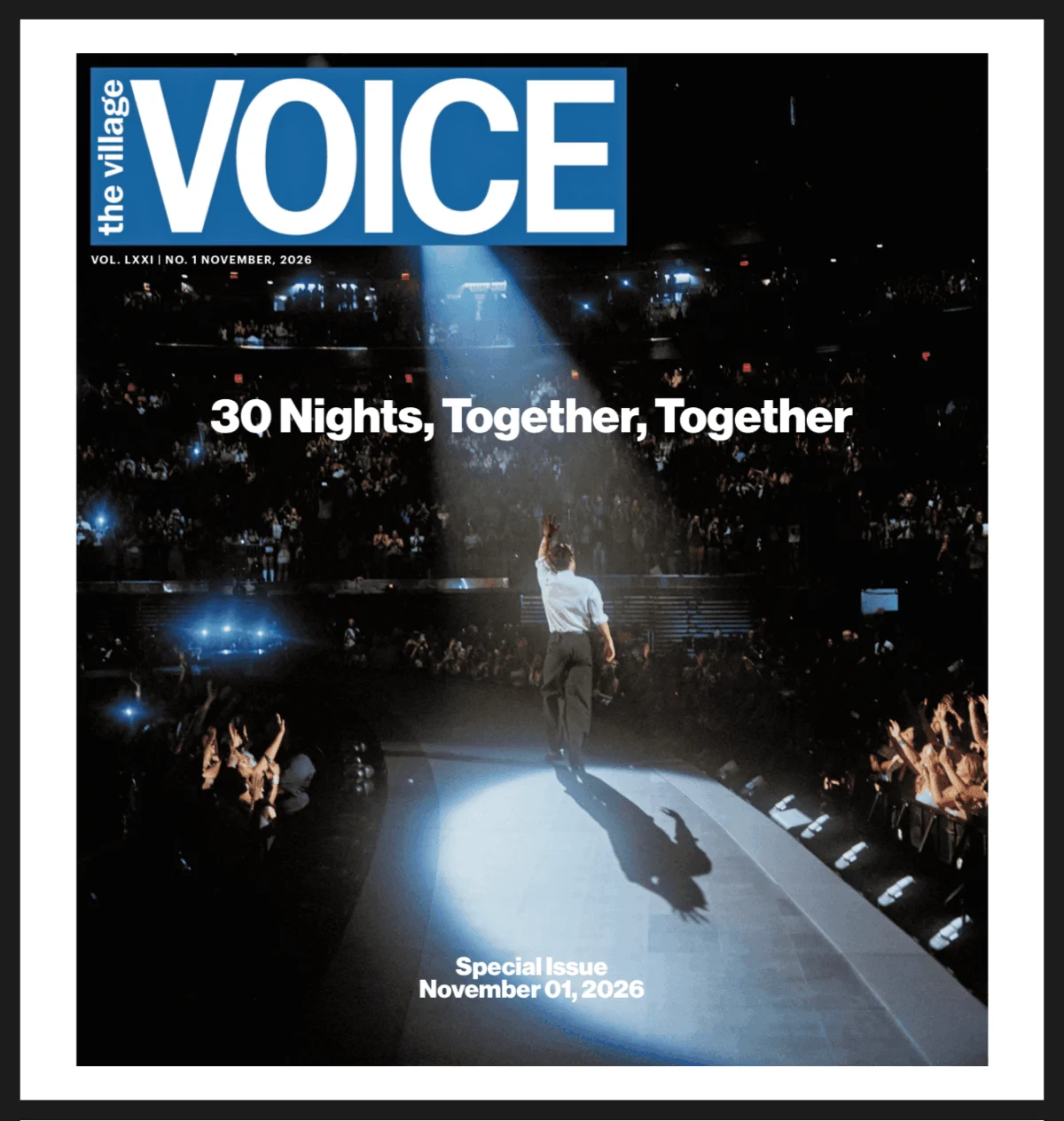
For seven decades, The Village Voice has served as a vital chronicle of New York City’s dynamic cultural landscape, capturing the pulse of the downtown arts scene and providing a platform for influential writers ranging from literary titans like James Baldwin and E.E. Cummings to contemporary voices such as Colson Whitehead. It is within this storied legacy that global music phenomenon Harry Styles has chosen to mark the conclusion of his landmark 30-night residency at Madison Square Garden. The special issue of The Village Voice, a publication that largely transitioned from its print operations in 2017, offers a poignant farewell from Styles to the city that hosted his extensive "Love On Tour" run, which officially concluded on October 31st.
The extended engagement at the iconic Madison Square Garden represented a significant commitment, spanning over a month and immersing Styles deeply within the fabric of New York City. His decision to utilize a special edition of The Village Voice for this valediction underscores the publication’s enduring significance as a cultural barometer and a repository of artistic expression. Styles, often described as a cultural institution in his own right, leveraged this unique opportunity to reflect on his time in the city and the profound impact it has had on him and his tour.
A City’s Embrace: Styles’s Three-Month Sojourn
Harry Styles’s residency at Madison Square Garden was more than just a series of concerts; it was an immersive experience that saw the artist engage with New York City on multiple levels. His opening note, addressed to "friends, strangers, citizens of New York," eloquently captures the sentiment of his extended stay. "It has been an honor to live and work in your city for the past three months," Styles wrote, emphasizing the profound connection he felt. He further elaborated on the transformative power of the city’s energy, noting, "The energy of the audiences, the openness, the dancing, the sheer joy, will never leave me; it altered me."
This period, commencing in September and concluding at the end of October, allowed Styles to become a temporary fixture in the city’s vibrant rhythm. The sheer scale of the residency, encompassing 30 nights at one of the world’s most renowned arenas, speaks to the immense demand for his performances and his deep connection with his fanbase. This sustained presence provided an unparalleled opportunity for the artist to experience the city’s diverse offerings, from its bustling streets to its storied cultural institutions, and to forge a unique bond with its inhabitants.
The Village Voice: A Chronicler of Culture and a Platform for Farewell
The choice of The Village Voice for this farewell is particularly resonant. For decades, the publication has been at the forefront of chronicling New York’s artistic and social movements, from the Beat Generation to the punk rock explosion and the burgeoning downtown art scene. Its roster of contributors reads like a who’s who of American letters and cultural commentary, solidifying its reputation as a vital voice in urban journalism.

Styles’s collaboration with the paper highlights its continued relevance, even as the media landscape has evolved. "The Village Voice has long been both a creator and unique record of the cultural life of New York City," Styles stated, acknowledging the publication’s pivotal role. He expressed his privilege in partnering with "the iconic arts paper to tell a bit of the story of 30 nights of Together, Together at Madison Square Garden." This sentiment reflects an understanding of The Village Voice’s historical significance and its capacity to encapsulate multifaceted cultural narratives.
Documenting the Spectacle: Content of the Special Issue
The special edition of The Village Voice serves as a comprehensive retrospective of Styles’s Madison Square Garden residency. It delves beyond the main performances to offer a multifaceted portrait of the entire experience. The issue includes dedicated features on the diverse array of opening acts that graced the stage each night, showcasing the breadth of musical talent that complemented Styles’s shows. These included acclaimed artists such as Tinashe, Jamie xx, Caroline Polachek, country music star Lainey Wilson, and the legendary band Tears for Fears, among others. This inclusive approach to highlighting supporting artists reflects a commitment to recognizing the collaborative nature of live music events.
Furthermore, the publication shines a spotlight on the intricate ecosystem that supports such a large-scale production. Articles dedicated to Styles’s band members and the dedicated crew working behind the scenes at Madison Square Garden offer a glimpse into the immense effort and talent required to execute a residency of this magnitude. This behind-the-scenes perspective provides valuable context, underscoring the collaborative spirit that defines the touring music industry.
Beyond the artistic and operational facets, the special issue also highlights the philanthropic endeavors associated with the tour. Styles has consistently integrated social responsibility into his "Love On Tour" platform, and this edition details the tour’s work with prominent charitable organizations. These include Planned Parenthood, which champions reproductive healthcare access; Food Bank For NYC, addressing food insecurity in the city; the voting nonprofit HeadCount, encouraging civic participation; and the humanitarian organization Choose Love, supporting refugees and those affected by conflict. The inclusion of these initiatives underscores Styles’s commitment to leveraging his platform for positive social impact, a theme that has become increasingly central to his public persona.
A significant component of the special issue is its extensive photographic coverage. The pages are filled with vibrant imagery capturing the electrifying atmosphere of Styles’s performances at Madison Square Garden. These photographs serve as visual anchors, transporting readers back to the concert experience and immortalizing key moments from the residency. For those who were unable to secure tickets or attend in person, these images, combined with the written content, offer a meticulously curated time capsule of the event.
A Chronology of a Cultural Phenomenon
Harry Styles’s residency at Madison Square Garden was a carefully orchestrated event that unfolded over several weeks, marking a significant chapter in his career and in the history of the iconic venue. The "Love On Tour" journey, which had been traversing the globe, arrived in New York City with considerable anticipation.

September 2022: The residency commenced, immediately generating significant buzz and selling out shows. Each night presented a unique concert experience, with Styles known for his spontaneous interactions with the crowd and his eclectic stage outfits. The opening acts began to be announced, signaling a diverse range of musical collaborations.
October 2022: The residency continued its impressive run, with Styles frequently engaging with the city and its inhabitants. The philanthropic initiatives began to be more prominently featured, with partnerships with local and national organizations being actively promoted during the shows and through associated campaigns. This period saw the peak of the cultural conversation surrounding Styles’s presence in New York.
October 31, 2022: The final performance of the 30-night residency took place on Halloween, a date often associated with theatricality and grand finales. This marked the official conclusion of his New York engagement. In the days following this culminating performance, the special edition of The Village Voice, detailing the entire experience, was released, providing a tangible memento for fans and a historical record for the city.
This timeline illustrates a deliberate and impactful presence in New York City, transforming a series of concerts into a sustained cultural event that resonated far beyond the confines of Madison Square Garden.
Supporting Data and Analysis
The success of Harry Styles’s Madison Square Garden residency can be contextualized by several key data points. The demand for tickets was exceptionally high, with reports of sold-out shows within minutes of their release. This reflects Styles’s status as one of the world’s most popular entertainers, with a dedicated global fanbase. The "Love On Tour" has consistently broken records, and the New York leg was a significant contributor to its overall success.
Economic Impact: A residency of this magnitude undoubtedly had a substantial economic impact on New York City. The influx of fans, both domestic and international, contributed to local businesses, including hotels, restaurants, and retail establishments. The creation of temporary jobs for venue staff, security personnel, and event production crews also added to the economic stimulus. While precise figures are difficult to ascertain without official reports, concerts of this scale typically generate millions of dollars in direct and indirect economic activity for host cities.

Cultural Significance: The choice of The Village Voice, a publication deeply intertwined with New York’s artistic history, amplifies the cultural significance of the residency. It positions Styles’s engagement not merely as a commercial event but as a moment that contributes to the city’s ongoing cultural narrative. The publication of a special issue dedicated to the tour signifies a recognition of its impact by a respected cultural arbiter.
Philanthropic Reach: The integration of charitable causes into the tour provides a quantifiable measure of its social impact. By partnering with organizations like Planned Parenthood and HeadCount, Styles’s tour reached a broad audience with important messages and facilitated tangible actions, such as voter registration drives. This approach moves beyond traditional concert promotion to incorporate a socially conscious dimension, resonating with a growing segment of the audience that values artists’ engagement with societal issues.
Broader Implications and Future Outlook
Harry Styles’s extensive residency at Madison Square Garden, culminating in a special edition of The Village Voice, offers several insights into contemporary celebrity culture and the evolving role of artists. His ability to command such sustained attention at a prestigious venue underscores his position as a dominant force in the music industry. The carefully curated narrative of his farewell, disseminated through a publication with deep historical roots in New York’s cultural scene, demonstrates a sophisticated understanding of branding and legacy.
The integration of philanthropic efforts into his tour strategy signals a trend towards artists using their platforms for social good. This approach not only enhances an artist’s public image but also provides a powerful mechanism for raising awareness and resources for important causes. The success of these initiatives suggests a growing audience appetite for artists who actively engage with social and political issues.
The collaboration with The Village Voice also speaks to the enduring power of independent media and niche publications. Even in an era dominated by digital platforms, the cultural cachet of a historically significant publication like The Voice can offer a unique and impactful way to reach a specific audience and frame a narrative. It highlights the potential for symbiotic relationships between artists and media outlets that share a common cultural resonance.
As Harry Styles continues his career, his New York residency and his thoughtful farewell through The Village Voice will likely be remembered as a significant moment, marking not just a successful tour but a deep engagement with a city and a cultural institution that have shaped the American narrative. The "Love On Tour" has concluded its New York chapter, but the echoes of its impact, documented in print and etched in the memories of attendees, will undoubtedly linger. His forward-looking statement, "I look forward to hearing your stories in the years to come, and sharing mine," suggests a continued dialogue with his audience and an anticipation of future narratives yet to unfold.
