

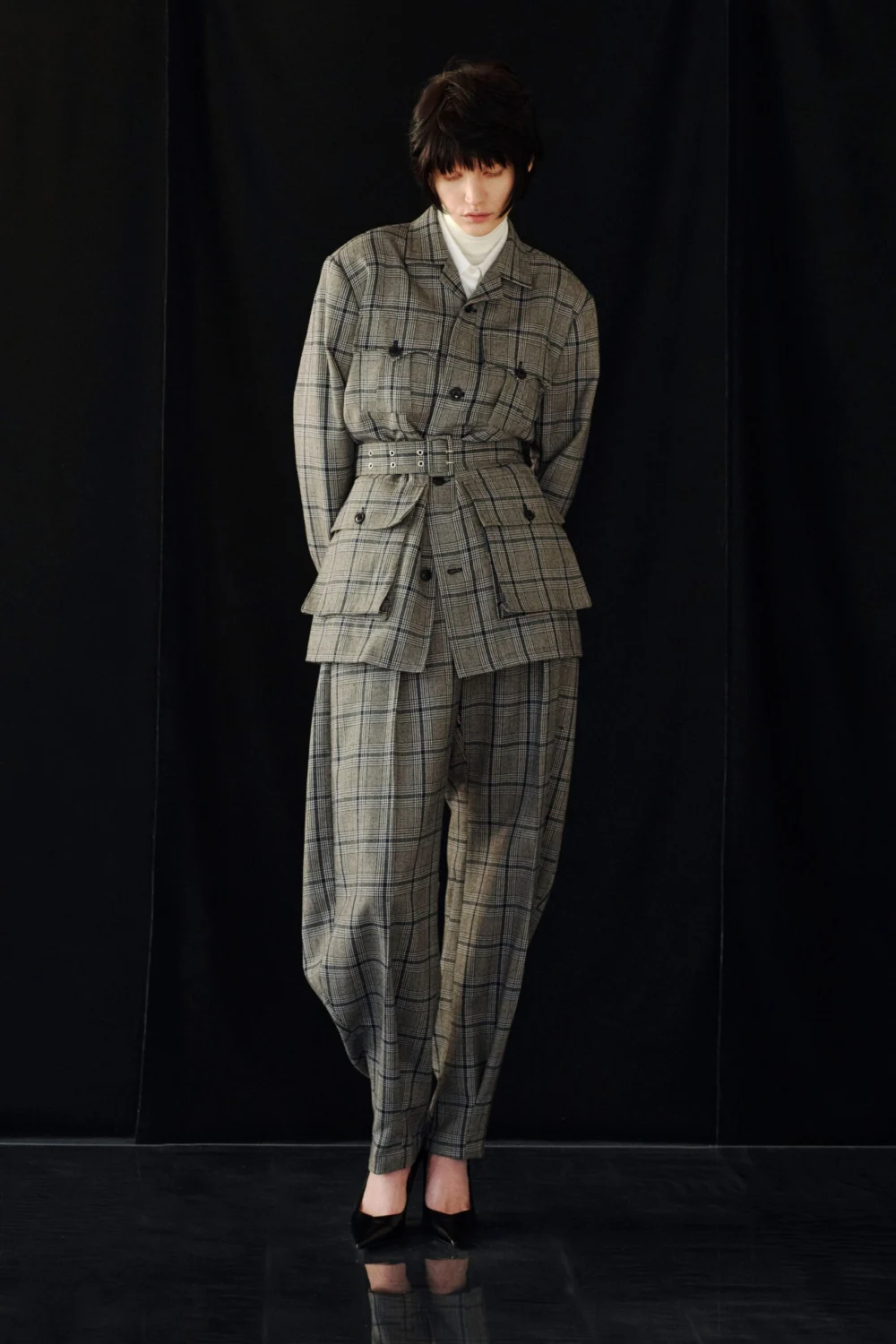
In a world grappling with geopolitical instability and the accelerating pace of technological change, the notion of fashion as a mere aesthetic pursuit often feels disconnected from the pressing realities of human experience. This palpable tension between the runway and the real world has been a central preoccupation for Tokyo-based designer Akiko Aoki, whose latest fall collection, unveiled to a discerning audience, offered a profound exploration of "communion and friction." The collection, a deeply personal reflection of the designer’s engagement with the current global zeitgeist, grappled with the inherent contrasts of our era, seeking to find meaning and beauty amidst discord.
Aoki, recognized as one of Tokyo’s more introspective and engaged fashion thinkers, articulated her creative impulse during a private showroom walkthrough. "There’s a lot going on in the world right now, and wars happening," she stated, her voice tinged with a contemplative gravity. "So I’m really feeling the contrast between fashion and the real world." This sentiment, far from being a fleeting observation, served as the foundational impetus for a collection that sought to translate complex emotional landscapes into tangible garments. The resulting pieces were not simply clothing, but rather sartorial statements that invited viewers to consider their own place within the broader human narrative.
The collection’s thematic bedrock was built upon a "marked military proposition," a clear and deliberate reference point that permeated many of the ensembles. The sleek, belted safari jackets, a recurring motif, evoked a sense of functional preparedness, yet were recontextualized through Aoki’s distinct lens. "Nowadays in Japan, military clothing is treated as fashion," Aoki explained. "It isn’t about power or soldiers; it rubs up against reality." This reinterpretation speaks to a broader cultural shift in Japan, where historical military attire has shed its overt connotations of conflict and is increasingly embraced as a stylistic element, divorced from its original martial purpose. This phenomenon, observable in street style and high fashion alike, reflects a societal detachment from direct military engagement and a fascination with the aesthetic and symbolic power of these garments.
A significant departure for Aoki this season was the inclusion of male models on her runway for the first time. This decision was a conscious effort to "dissolve the boundaries of womenswear," a move that underscored the collection’s overarching theme of inclusivity and the fluidity of identity. Aoki’s philosophy is that as long as a wearer embraces her signature "edgy, lace-lined aesthetic," their gender identification becomes secondary. This embrace of gender-neutral presentation aligns with a growing global trend in the fashion industry, where designers are increasingly challenging traditional binary notions of clothing and encouraging self-expression unbound by societal expectations. The fashion industry, as a mirror to society, is reflecting a broader societal conversation about gender identity and the desire for clothing that transcends prescribed categories.
The blurring of identities extended seamlessly into the collection’s styling, a masterful juxtaposition of high and low fashion elements that exemplified the "friction" Aoki aimed to portray. A utilitarian worker jacket, rendered in a vibrant, high-visibility yellow, was daringly paired with a shimmering silver sequined flapper skirt and sharp, pointed heels. This unexpected pairing created a visual tension, a dialogue between the mundane and the glamorous, the practical and the playful. Conversely, a voluminous, grand pleated skirt was grounded by a cropped, futuristic fleece zip-up, demonstrating how contrasting textures and silhouettes could coexist harmoniously.
The "communion" aspect of the collection manifested most poignantly through the ubiquitous presence of white lace. This delicate, often ethereal material was employed in unexpected ways, softening the collection’s more austere elements. Lace appeared as intricate sailor collars, cascading like ornate doilies over sheer blouses and structured wool blazers, adding a touch of vintage romanticism to utilitarian silhouettes. It also emerged as subtle hemlines peeking from beneath somber tailoring, offering glimpses of unexpected femininity and intricate detail. This recurring motif served as a visual thread, weaving together disparate elements and creating a sense of unexpected harmony.
Aoki’s signature deconstructivist streak was also evident in the collection’s more avant-garde pieces. Skirts with zip-down fronts offered an element of interactive design, allowing the wearer to adjust the garment’s silhouette. Stretch-jersey dresses were ingeniously "mutated" with extra sleeves that could be artfully tied at the shoulder, providing versatility and a personalized touch. These deconstructive elements not only showcased Aoki’s technical prowess but also underscored her exploration of garments as adaptable forms, capable of evolving with the wearer’s needs and desires.
Beyond the immediate visual impact of the collection, Aoki’s creative process was also informed by her contemplation of the deleterious effects of artificial intelligence (AI). This theme, seemingly disparate from the sartorial elements, provided a deeper philosophical undercurrent to her work. "We’re living in an age where it’s more difficult to find hope in fantasy, and I think that’s partly because it’s easier to create fantasy than it was in the past," she observed. This reflects a growing societal concern that the proliferation of AI-generated content, while offering novel possibilities, can also dilute the impact of genuine human creativity and emotional expression. The ease with which digital worlds can be fabricated, Aoki suggests, can make it harder to be profoundly moved by authentic experiences.
However, this perceived challenge also presented an opportunity for heightened appreciation. "It’s made it harder to be moved," she continued, "But it means that feeling—the ‘oh!’ you feel when something is real—is stronger than before." This sentiment encapsulates a crucial aspect of the collection: a yearning for authenticity and a renewed appreciation for genuine human connection and artistic expression in an increasingly digitized and artificial world. The collection, in its entirety, can be seen as a testament to this enduring human need.
Background Context: Tokyo Fashion Week and Evolving Design Philosophies
Akiko Aoki’s presentation took place within the dynamic ecosystem of Tokyo Fashion Week, a platform that consistently showcases the city’s innovative and forward-thinking design talent. Historically, Tokyo Fashion Week has been a crucible for avant-garde experimentation, often challenging Western fashion norms with a unique blend of tradition, subculture, and cutting-edge technology. In recent years, the week has seen a growing emphasis on sustainability, inclusivity, and designers grappling with socio-political issues, mirroring global trends within the industry. Aoki’s collection fits squarely within this evolving landscape, demonstrating a designer who is not only attuned to aesthetic trends but also deeply engaged with the intellectual and emotional currents of her time. The continued prominence of designers like Aoki highlights Tokyo’s role as a global fashion capital that prioritizes conceptual depth alongside sartorial innovation.
Chronology of Influence and Inspiration
While the exact timeline of Aoki’s creative process is proprietary, her stated inspirations suggest a recent engagement with several concurrent global and societal shifts. The ongoing geopolitical conflicts, which have intensified in recent years, likely spurred her initial contemplation of the "fashion versus the real world" dichotomy. The rise of AI and its implications for creative industries has been a subject of widespread discussion over the past two to three years, making it a relevant and timely consideration for artists and designers. Furthermore, the increasing visibility of gender fluidity and the broader societal discourse surrounding identity, which has gained significant momentum in the last decade, undoubtedly informed her decision to incorporate male models and challenge traditional gendered clothing categories. Her exploration of military clothing as fashion in Japan is also a more recent phenomenon, reflecting a cultural evolution in how such garments are perceived and integrated into contemporary style. This confluence of recent and ongoing societal developments provides a rich tapestry from which Aoki has drawn her inspiration.
Supporting Data: Global Fashion Industry Trends
The themes explored by Akiko Aoki resonate with broader trends observed within the global fashion industry. Data from various market research firms consistently indicates a growing consumer demand for brands that exhibit authenticity, ethical production, and a commitment to social responsibility. A 2023 report by McKinsey & Company, "The State of Fashion," highlighted that 66% of consumers consider sustainability to be an important factor when purchasing clothing. Similarly, the increasing demand for gender-neutral or gender-fluid clothing options is reflected in sales data, with brands that embrace inclusivity often reporting stronger engagement from younger demographics. Furthermore, the psychological impact of global events on consumer sentiment is well-documented. During periods of uncertainty, consumers often seek fashion that offers comfort, escapism, or a sense of empowerment. Aoki’s collection, by acknowledging these anxieties while offering a vision of thoughtful synthesis, taps into these underlying consumer desires. The integration of technological advancements, such as AI, into creative processes, while still in its nascent stages for many designers, is a recognized area of future growth and disruption within the fashion tech sector.
Official Responses and Industry Reactions (Inferred)
While direct quotes from other designers or industry critics regarding Aoki’s specific collection are not available in the provided text, the general reception of collections that tackle complex themes is often positive within informed fashion circles. Fashion week attendees, comprising buyers, journalists, and influencers, typically respond to designs that offer intellectual depth and a clear point of view. It can be inferred that Aoki’s collection would have been met with thoughtful consideration, particularly from those who appreciate designers who engage with contemporary issues. The use of male models and the exploration of gender fluidity would likely have garnered attention and praise from those advocating for greater inclusivity within the industry. The thematic resonance with current global anxieties would also likely have been recognized by critics and commentators who view fashion as a cultural barometer. The success of such collections often lies in their ability to spark conversation and encourage a deeper understanding of the designer’s intent.
Broader Impact and Implications
Akiko Aoki’s fall collection serves as a potent reminder of fashion’s capacity to transcend mere ornamentation and engage in meaningful dialogue with the world. By skillfully weaving together seemingly disparate concepts—military aesthetics and delicate lace, high fashion and utilitarian workwear, the tangible and the digital—Aoki has crafted a collection that is both aesthetically compelling and intellectually stimulating. The implications of her work extend beyond the immediate season. Her embrace of gender fluidity challenges established norms and encourages a more inclusive vision of fashion, one where individual expression takes precedence over predetermined categories. Her contemplation of AI and its impact on our perception of reality prompts a necessary conversation about authenticity and the enduring value of human experience.
In an era marked by rapid change and pervasive uncertainty, Aoki’s collection offers a nuanced perspective. It acknowledges the "friction" of our times but also celebrates the potential for "communion." By finding beauty in contrast and meaning in complexity, she provides a valuable lens through which to view our current world, suggesting that even in the face of profound challenges, there remains a powerful and resonant human capacity for connection, creativity, and hope. Her work underscores the vital role that fashion can play not only as a form of personal expression but also as a powerful medium for social commentary and philosophical inquiry, encouraging us to seek out and cherish those moments of genuine "oh!" that remind us of what is truly real and meaningful.
