

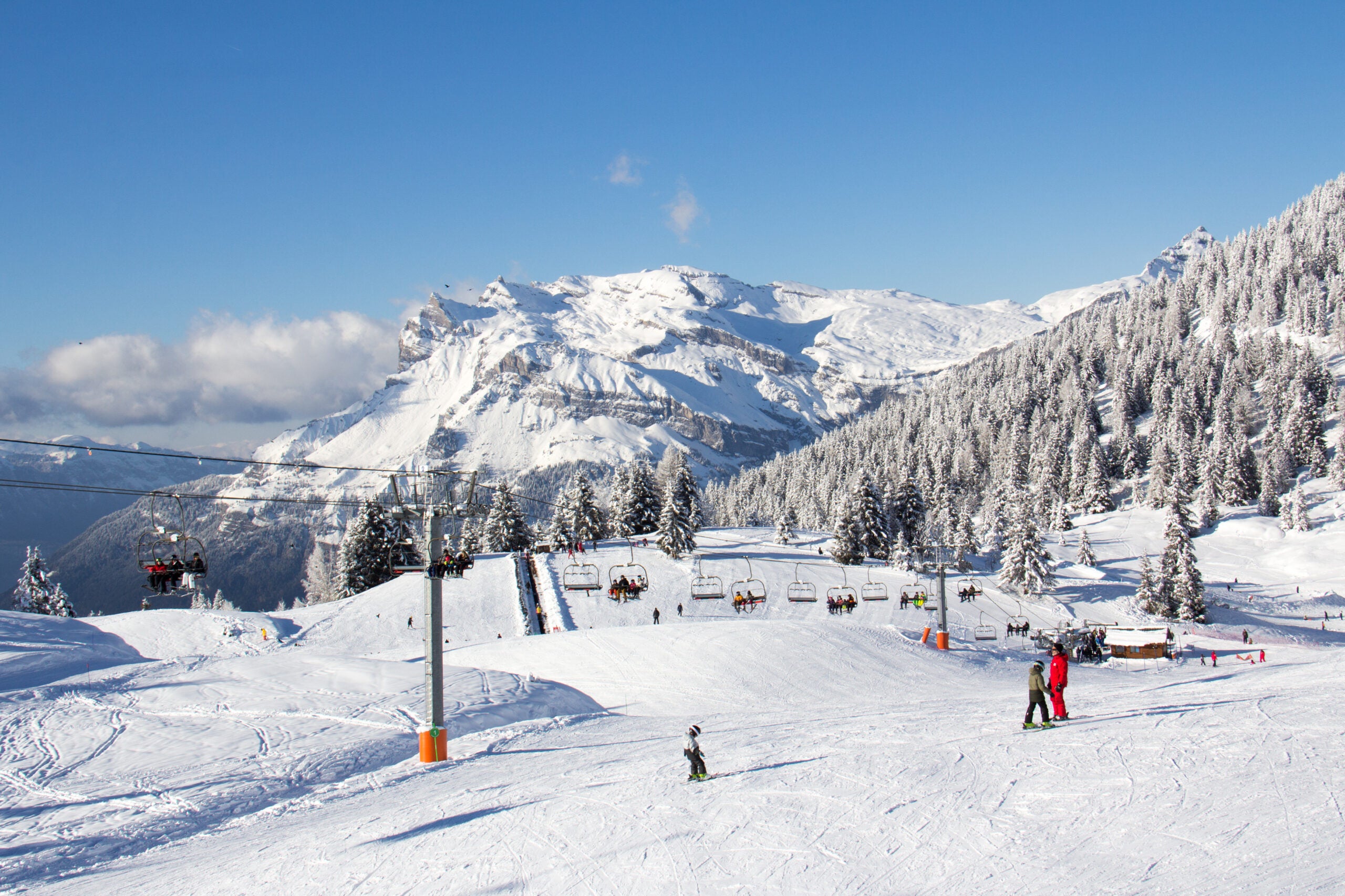
The French Alps are currently grappling with an unprecedented avalanche crisis, as a volatile combination of heavy snowfall and rapid warming has pushed the snowpack to a critical breaking point, leading to multiple large-scale slides impacting even designated ski runs. The gravity of the situation was starkly highlighted on February 24th, around midday, when a massive slab avalanche fractured in the Floria sector of La Flégère, Chamonix, engulfing three skiers who, by a stroke of extraordinary fortune and rapid intervention, were rescued safely. This incident, alongside others across the region, underscores the severe and evolving risks facing winter sports enthusiasts and resort operators in one of the world’s premier ski destinations.
A Volatile Weekend: Chronology of Incidents
The dramatic events began unfolding with the Floria avalanche in the world-renowned Chamonix valley. Originating above the top of the Floria lift, the substantial slab of snow, estimated to be up to two meters thick at its fracture line, cascaded down the mountain. It swept across sections of the Crochues red run and the Floria black run, catching three individuals unprepared for the scale of the slide within the perceived safety of marked pistes. Initial reports indicated the skiers were buried up to their necks, a testament to the sheer volume of snow involved. The immediate and highly professional response from the Peloton de Gendarmerie de Haute Montagne (PGHM), Chamonix’s elite mountain rescue unit, and local ski patrol was pivotal, ensuring all three individuals were extricated without serious injury. Their swift actions averted what could easily have been a multi-fatality incident.
Just 48 hours later, the instability proved not to be an isolated phenomenon. On February 26th, a similar event occurred at Praz de Lys Sommand, located further west in the Portes du Soleil region. Here, heavy snow loading from recent storms, coupled with rapidly rising temperatures, triggered further instability, resulting in another significant avalanche. While details regarding caught individuals were less publicized, the incident served as a stark confirmation that the precarious conditions were widespread across the French Alps. The unsettling pattern continued with reports emerging from Méribel’s Saulire sector, part of the vast Three Valleys ski area, where additional slides impacted pistes this same week. These successive incidents painted a clear picture: the mountain environment was highly unpredictable, and the traditional lines between "safe" resort terrain and dangerous off-piste were blurring.
The Science of the Slide: A "Perfect Storm" of Meteorological Factors
Avalanche forecasters and meteorologists have characterized the current crisis as a "perfect storm" of meteorological factors, an unusual convergence of conditions that has created an exceptionally dangerous snowpack. The primary catalyst was the recent passage of Storm Nils, which delivered an immense quantity of snow – in some areas, exceeding three meters – across the French Alps. This new, heavy snow fell onto an existing, highly problematic snowpack, characterized by a "fragile, persistent weak layer."
Persistent weak layers are notoriously dangerous. They typically form during periods of cold, clear weather, allowing the snow crystals near the ground or within the snowpack to metamorphose into weaker, faceted crystals (often called depth hoar or surface hoar). These layers act as a slippery interface, providing little cohesion to the snow above. When subsequent heavy snowfall accumulates on top, the immense weight exerts pressure on this weak layer. The immediate follow-up to Storm Nils was a "brutal warming" phase. Freezing levels spiked dramatically, soaring above 3,000 meters. This rapid increase in temperature caused the new snow to become heavier and wetter, further stressing the underlying weak layer. The warming also lubricates the interface, reducing friction and making it far easier for the entire slab to fracture and slide.
The incident at La Flégère exemplified this phenomenon. Experts noted that the fracture line reached an astonishing two meters tall, indicating a massive slab of snow involved. What was particularly alarming was that the avalanche occurred above remote-triggering systems – devices designed to initiate controlled avalanches from a distance for safety purposes. This suggested an inherent, widespread instability in the snowpack that defied even sophisticated mitigation efforts. Resort operators, many with decades of experience, have publicly stated that they haven’t witnessed such a widespread and volatile snowpack condition in 40 years, underscoring the exceptional nature of the current danger. This historical context highlights the severity and unpredictability of the situation, challenging even the most experienced mountain professionals.
Expert Insights and Official Responses
In response to the escalating danger, official bodies like Météo-France, the national meteorological service, have been issuing high-level avalanche bulletins, often raising the danger rating to 4 (High) or even 5 (Very High) on the European Avalanche Danger Scale. A danger level 4 signifies that avalanches are "likely on many steep slopes," and large spontaneous avalanches are possible. A level 5, the highest rating, indicates that "very large spontaneous avalanches are likely, even in moderately steep terrain." Such high ratings mandate extreme caution and often lead to widespread resort closures, particularly of high-altitude and exposed sectors.
Local authorities, including prefectures and resort management, have been working tirelessly to manage the crisis. This involves extensive closures of pistes, particularly those identified as being at risk of run-out zones from potential slides, as well as vast tracts of off-piste terrain. Mountain guides and avalanche forecasters have been vocal in their warnings, urging both residents and tourists to strictly adhere to all official advisories and closures. They emphasize that the current snowpack is not merely unstable in isolated spots but possesses a systemic weakness that makes almost any steep slope a potential trigger point. The PGHM, beyond its rescue duties, also plays a crucial role in assessing conditions and advising on safety measures, deploying personnel to monitor unstable areas and conduct preventive control work where feasible, though the scale of the current instability limits such interventions.

Rescue Operations and Near Misses: A Test of Preparedness
The rescue of the three skiers at La Flégère served as a powerful testament to the efficacy of the PGHM and local patrol’s rapid response capabilities. Details emerging from the rescue highlighted the critical importance of immediate action. When an avalanche strikes, the survival rate drops significantly after the first 15 minutes. The fact that all three individuals were rescued safely, despite being deeply buried, speaks volumes about the training, equipment, and coordination of the rescue teams. It also implicitly underscores the incredible luck of the skiers, who were in a location where a rapid response was possible.
However, these successful rescues also serve as a stark reminder of the inherent dangers. The proximity of such a massive slide to marked pistes, areas traditionally considered safer, has sent shockwaves through the skiing community. It forces a re-evaluation of perceived safety boundaries and highlights that in extreme conditions, even well-managed resort environments can present unexpected hazards. The "near miss" aspect of these incidents, where severe injury or fatality was narrowly avoided, amplifies the calls for increased vigilance and preparedness.
French vs. US Safety: The Piste Philosophy and Its Challenges
The current avalanche crisis in the French Alps has also brought into sharp focus the differing philosophies of avalanche safety management between European and North American ski resorts. For North American skiers accustomed to the "gate-to-gate" mitigation strategy, where virtually all terrain within resort boundaries is actively managed, patrolled, and made safe through extensive snow safety work (including explosive control and skier compaction), the European system can be a significant cultural shock.
In the French Alps, the "piste philosophy" generally dictates that designated, marked runs (pistes) are managed and patrolled, but the vast tracts of off-piste terrain, even immediately adjacent to runs, are considered outside the managed area and skied at one’s own risk. While efforts are made to secure pistes, the sheer scale of the mountainous environment often means a greater reliance on general warnings and closures rather than constant, active mitigation of every potential hazard. This week’s events, where danger levels hit 4 or 5, illustrate a critical vulnerability of this system: the volume and instability of the snow can cause slides to overrun the "safe" runs, breaching the traditional boundary between managed and unmanaged terrain. When a two-meter-deep slab avalanche can hit a red or black run, it fundamentally challenges the perception of safety within resort confines. This situation demands a heightened understanding from all skiers of the local conditions and the specific European approach to risk management.
Implications for Resort Operations and Skiers: Heightened Vigilance
The widespread instability and subsequent closures have significant implications for resort operations and the broader ski tourism industry. Extensive closures, while necessary for safety, lead to reduced access to terrain, potentially impacting visitor experience and resort revenues. Resort management faces the difficult task of balancing safety imperatives with operational viability, often having to make tough decisions about opening or closing entire sectors.
For skiers and snowboarders, the message is unequivocal: unprecedented vigilance is required. The notion that "the mountain doesn’t care about boundary lines" has never been more pertinent. Even within a resort setting, carrying essential avalanche safety gear – an avalanche transceiver (beacon), a probe, and a shovel – is no longer merely advisable for off-piste excursions but is becoming increasingly necessary in the Alps during periods of extreme instability. These tools are critical for rapid self-rescue or companion rescue, significantly increasing survival chances in the event of being caught. Furthermore, strict adherence to all resort signage is paramount: respecting closures, understanding the meaning of various warning flags, and never underestimating the power of a rapidly warming snowpack are non-negotiable safety tenets. The current conditions demand a profound respect for the mountain and a proactive approach to personal safety, moving beyond the assumption of universal safety on marked runs.
The Broader Context: Climate Change and Future Risks
While immediate meteorological factors are responsible for the current crisis, it’s increasingly difficult to ignore the broader context of climate change. Changing weather patterns, characterized by more intense snowfall events followed by rapid, extreme temperature fluctuations, could potentially exacerbate such "perfect storm" scenarios in the future. Warmer winters might lead to more rain-on-snow events or create weaker basal layers more frequently, while intense snowfall could still occur at higher altitudes. This creates a complex and challenging environment for avalanche forecasting and safety management. The events of this week serve as a potent reminder of the dynamic and powerful forces at play in alpine environments and the constant need for adaptation and education in the face of evolving conditions.
In conclusion, the current avalanche crisis in the French Alps is a serious and multifaceted challenge. It has tested the resilience of mountain communities, highlighted the critical work of rescue services, and underscored the inherent risks of a volatile snowpack. While the immediate danger will eventually subside with changing weather, the lessons learned – about meteorological extremes, safety philosophies, and personal responsibility – will undoubtedly shape future approaches to mountain safety, urging continued vigilance and respect for the formidable power of the alpine environment.