

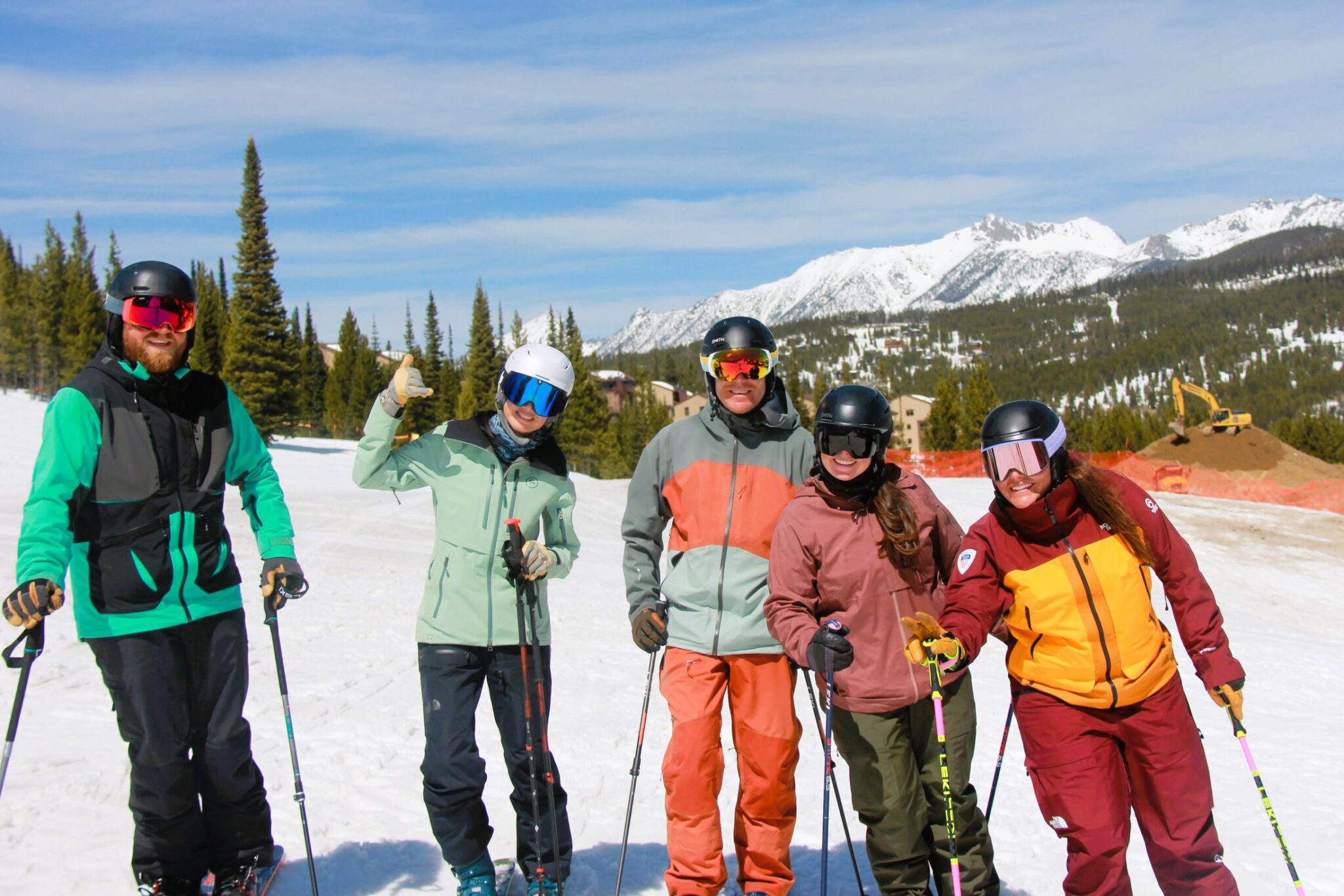
The Professional Ski Instructors of America and American Association of Snowboard Instructors (PSIA-AASI) stands at the forefront of snowsports education, continually evolving its American Teaching System (ATS) to meet the dynamic needs of learners. This comprehensive curriculum, a living body of work, undergoes continuous assessment, rigorous field-testing, and meticulous refinement to ensure its relevance and efficacy. While aligning with the high standards of the international snowsports community, the ATS distinguishes itself with a uniquely American innovation: a pioneering shift towards a student-centered approach, a philosophy championed since the 1980s. This methodology empowers instructors to cater to an expansive spectrum of student aspirations, ranging from mastering challenging terrain like bumps and big mountain environments to excelling in racing, park and freestyle, or simply enjoying on-piste and off-piste skiing and riding, serving both recreational enthusiasts and aspiring professionals.
The Evolution of Snowsports Instruction: A Historical Perspective
The journey of organized snowsports instruction in North America traces back decades, with PSIA formally established in 1961 to unify teaching standards across the country. The American Association of Snowboard Instructors (AASI) followed in 1987, reflecting the burgeoning popularity of snowboarding, with both organizations later merging to form PSIA-AASI. This foundational history set the stage for a period of introspection and innovation. Prior to the 1980s, snowsports instruction, much like many educational fields, often leaned towards a prescriptive, instructor-led model. Lessons typically followed a predetermined progression, with instructors demonstrating techniques and students attempting to replicate them, regardless of individual learning styles, personal goals, or immediate challenges.
The groundbreaking pivot in the 1980s towards a student-centered system marked a significant paradigm shift. This change wasn’t merely cosmetic; it represented a fundamental re-evaluation of how learning occurs and how instructors facilitate it. Influenced by broader trends in educational psychology and pedagogy, PSIA-AASI recognized the limitations of a one-size-fits-all approach. Instead, the focus shifted to understanding the individual learner: their motivations, expectations, prior experiences, and unique physiological and psychological attributes. This revolutionary move allowed instructors to adapt their teaching strategies, techniques, and communication styles on the fly, tailoring each lesson to maximize student engagement and accelerate learning. This flexible framework became a hallmark of the American approach, setting a precedent for adaptive and personalized education within the global snowsports instruction landscape.
The Impact of Professional Standards and Pedagogy
The commitment to a robust, student-centered curriculum is deeply rooted in best practices drawn from psychology, sociology, and education. PSIA-AASI’s People and Teaching Skills Fundamentals explicitly articulate the critical importance of effective two-way communication, fostering trust, promoting collaboration, encouraging adaptability, and cultivating reflective practices. These tenets collectively create learning environments that are supportive and responsive, enabling students to achieve their diverse snowsports goals, whatever they may be.
The societal expectation for educators is universally high: they must possess demonstrable subject-matter expertise and ethically foster student learning, safety, and personal growth through sound judgment, profound empathy, and flexible adaptability. Snowsports instructors, as a specialized subset of the broader teaching profession, are rightly held to these exacting professional standards. This constitutes a significant yet noble charge, requiring a sophisticated mindset that extends beyond mere technical proficiency.
PSIA-AASI boasts a membership of over 32,000 certified instructors and members across the United States, representing a significant force in shaping the snowsports experience. The economic impact of the snowsports industry in North America is substantial, often exceeding tens of billions of dollars annually, with instruction playing a crucial role in attracting and retaining participants. Studies in general education consistently show that student-centered learning models lead to higher engagement, better retention of skills, and increased intrinsic motivation compared to traditional, teacher-centric approaches. When applied to snowsports, this translates into more confident, skilled, and ultimately, safer participants, contributing positively to industry growth and reducing injury rates. For instance, data from the National Ski Areas Association (NSAA) often highlights the importance of lessons in improving skier/rider safety, with beginners who take lessons significantly less prone to accidents.
Endorsing Excellence: Perspectives on Instructor Development
The continuous evolution of the ATS and the emphasis on the instructor’s mindset are frequently highlighted by PSIA-AASI leadership. "Our commitment to continuous evolution ensures that PSIA-AASI instructors remain at the cutting edge of snowsports education, equipped to inspire and empower learners of all levels," stated a representative from the organization’s Education Development team, emphasizing the iterative process of curriculum development. Ski resort operators across North America consistently underscore the invaluable contribution of PSIA-AASI certified instructors to enhancing the guest experience. "The professionalism and adaptive teaching skills of PSIA-AASI certified instructors are pivotal in fostering guest satisfaction and encouraging repeat visits," noted a director of a prominent Western U.S. ski school, adding that such instructors are key to nurturing long-term participation in snowsports. Experts in adult learning theory further reinforce the profound benefits of the student-centered model, citing its alignment with principles of self-directed learning and experiential education, which are particularly effective for physical skill acquisition in dynamic environments. This concerted endorsement from various stakeholders underscores the critical role of instructor quality in the overall health and growth of the snowsports industry.

Core Pillars of the Snowsports Educator’s Mindset
Bookended between a global community of expertise and a student-centered curriculum on one hand, and the diverse motivations, expectations, and goals of students on the other, a specific mindset best serves a teacher—including a snowsports teacher—to excel and positively impact all stakeholders. This mindset comprises several interdependent pillars:
Curiosity
As an intrinsic orientation toward learning, curiosity provides the essential spark that compels both the instructor and the student to delve deeper. For snowsports educators, this can manifest in various ways. An instructor might choose to examine a single discipline with profound vertical depth, for instance, by declaring, "I want to fully understand cross-country skiing, including its history, specialized vocabulary, intricate equipment, precise technique, tactical approaches, training methodologies, nuanced movement patterns, optimal terrain use, waxing and preparation techniques, evolving fashion and clothing options, and rich cultural traditions—everything it offers participants." Alternatively, an instructor might opt to study multiple disciplines horizontally, seeking to understand the commonalities and distinctions in efficient technique across every snowsports discipline. A combination of these approaches is also common: "I want to know everything about cross-country skiing and enough about the other snowsports disciplines and pedagogy to confidently work with any student who comes to our snowsports school." Curiosity, frequently expressed through insightful questions, is a potent indicator of intrinsic motivation. Recognizing and nurturing this quality, both in oneself and in students, is fundamental to fostering a vibrant learning environment.
Empathy
As an orientation specifically toward students, empathy is the cornerstone that facilitates genuine connection, effective cooperation, and productive collaboration. Empathy demands active, attentive listening, a keen emotional awareness and regulation of one’s own feelings, and the crucial ability to step outside one’s own perspective to understand another’s. Its effectiveness is severely diminished by manifestations of ego and self-absorption, the impulse for identity protection (defending one’s own self-image to always be "right"), making sweeping assumptions about others, and engaging in attribution errors (incorrectly blaming students for a perceived lack of learning, often with dismissive thoughts such as, "They’re not athletic," "They don’t care," or "They’re not trying"). Empathy is also significantly challenged by external pressures like time constraints and high cognitive load, particularly when instructors feel rushed, overly busy, or distracted. Conversely, empathy is profoundly augmented by the practice of mindfulness, which grounds the instructor in the present moment. Drawing directly from PSIA-AASI’s People Skills Fundamentals, instructors must be adept at identifying, understanding, and managing their own emotions and actions. This self-awareness is critical to engaging in meaningful, two-way communication, which in turn enables them to recognize and positively influence the behaviors, motivations, and emotions of others, ultimately leading to the development of relationships built on a foundation of mutual trust.
Presence
As both a cultivated mindset and a consistent habit, presence denotes the ability to be fully immersed in the current moment, with one’s emotions effectively regulated and one’s attention acutely attuned to what is directly in front of them. This state of presence allows for unwavering composure, exceptionally clear perception, and sound, timely decision-making. When an instructor is truly present, they become far more aware of subtle signals and cues emanating from their students—a flicker of hesitation, a slight shift in balance, a look of understanding. Functioning in real-time, they are also significantly more likely to engage authentically with others. The ability to cultivate presence can be developed through consistent mindful practice and deliberate strategies. These include purposeful pausing (consciously slowing down one’s pace and thought process) and anchoring attention to a specific focal point, such as one’s own breathing, the precise words students are using, or the exact path and orientation of students’ skis or snowboards when assessing their performance. Cognitive clutter, the mental noise of distractions and overthinking, actively precludes presence; therefore, instructors are encouraged to adopt a "less is more" philosophy, simplifying goals and instructional language to create mental space for enhanced attention and more responsive observations.
Responsiveness
In a prior exploration, the distinction between merely "presenting" and truly "teaching" was highlighted. Consider the role of a tour guide: they deliver information with often little regard—beyond answering occasional questions—for the specific interests, motivations, or individual goals of the tourists before them. While this effectively serves the function of a tour, where the objective is implied by the ticket purchase, teaching, as meticulously described in the PSIA-AASI Teaching Snowsports Manual and reinforced by National Standards, Teaching Skills Fundamentals, and Performance Guides, represents an entirely different caliber of interaction. Teaching, in this context, is defined as a cooperative art. It is fundamentally intended to create learning outcomes through collaborative engagement with others, standing in contrast to operative arts like playing an instrument, woodworking, or even the performance of skiing and snowboarding, where skill predominantly depends on individual competence. Even if some students might initially perceive themselves as "tourists" seeking information, the snowsports teacher’s mindset dictates treating them as active students throughout their time on the snow—listening intently, assessing their needs, and responding appropriately to facilitate their learning journey.
Reflection
The act of objectively and honestly looking back on one’s own performance and behaviors is exceedingly difficult and can often be emotionally unsettling. It inherently challenges one’s sense of competence and self-worth by compelling an acknowledgment of mistakes or shortcomings. Individuals are frequently prone to focusing on aspects of their performances that merely confirm their existing biases, a phenomenon that can manifest in two distinct ways. The Dunning-Kruger effect, for instance, demonstrates the tendency of those with lower skill levels to overestimate their own competence, while highly skilled individuals often tend to underestimate theirs. To increase the accuracy of a performance assessment, constructive feedback from diverse sources—friends, loved ones, students, and especially qualified trainers and mentors—is indispensable. It is at this juncture that the real work of improvement truly begins. While it may be comfortable to retreat behind an indignant, "Well, that’s how I do it," the teacher’s mindset demands a willingness to dig in, prepare for intellectual and practical challenges, and consistently strive for improvement. This commitment is central to genuine professional development, prioritizing personal growth and embodying the spirit of a true student of one’s subject matter.
Humility
As a foundational mindset, humility involves maintaining a modest view of oneself, a perspective that paradoxically liberates the instructor to fully focus on students’ goals, unique experiences, and ultimate takeaways. Expertise, no matter how profound, is inherently provisional and fleeting if not diligently maintained through continuous effort, honest self-work, and dedicated practice. In the teacher’s mindset, one never truly "arrives"; there is always more to learn, always someone who possesses a deeper insight or a more refined skill. For every student an instructor has successfully "hooked" into the joy of snowsports, humility demands reflection on those who "got away." It prompts a critical examination of how one’s decisions and behaviors might have negatively impacted their experience and compels the instructor to take proactive steps to prevent recurrence. Humility never brags, never attacks, and never engages in trolling behavior. It fosters open-mindedness, the willingness to frankly admit, "I don’t know," coupled with the drive to actively seek and learn the answer, and to graciously receive and constructively respond to feedback from all sources—peers, mentors, and, crucially, students themselves.
Stewardship
The American Teaching System, much like any established canon of knowledge, does not belong to any single individual. Our curriculum has been developing for an impressive 65 years, building upon foundations from other systems that predate it by decades, if not longer. Countless individuals have contributed to its refinement, including the hundreds of dedicated volunteers who presently donate thousands of hours of combined effort to our national alignment processes. As practitioners, teachers—including snowsports instructors—bear the vital responsibility of preserving and passing on this accumulated body of knowledge. Concurrently, as association members, they possess the inherent right to question and critically refine the body of knowledge, coupled with the responsibility to actively engage in its evolution and advocate for improvements. Teachers are, in essence, stewards—the diligent caretakers—of content, ensuring its integrity, relevance, and continuous enhancement for future generations.
Professionalism
There is an unequivocal expectation for all teachers to consistently exercise sound judgment, act with unyielding integrity, and prioritize student safety, learning, and growth above personal convenience, ego, or individual preference. Professionalism manifests in meticulous preparation, unwavering reliability, and absolute accountability. It is reflected in making decisions that are consistently aligned with established best practices. For snowsports instructors, this encompasses a profound understanding of body mechanics, human development across different age groups, advanced pedagogical techniques, and the intricate design and function of snowsports equipment, all framed within the unique context of their respective sports. Professionalism also extends to impeccably representing the profession, the association, and their employers—whether on snow, off snow, or in online interactions—understanding that their words and behaviors profoundly influence how students, colleagues, and the wider skiing and riding public perceive and value them.
These preceding tenets do not constitute an exhaustive list or a definitive description of "good teaching," nor do they provide a comprehensive account of every instructional technique. Rather, they serve as aspirational goals and guiding principles—lofty targets that empower snowsports educators to prepare effectively, perform with excellence, and reflect deeply on their practice, ultimately elevating the entire profession. The continuous pursuit of these mindsets ensures that PSIA-AASI instructors not only impart technical skills but also foster a love for snowsports and inspire lifelong learning in their students.