

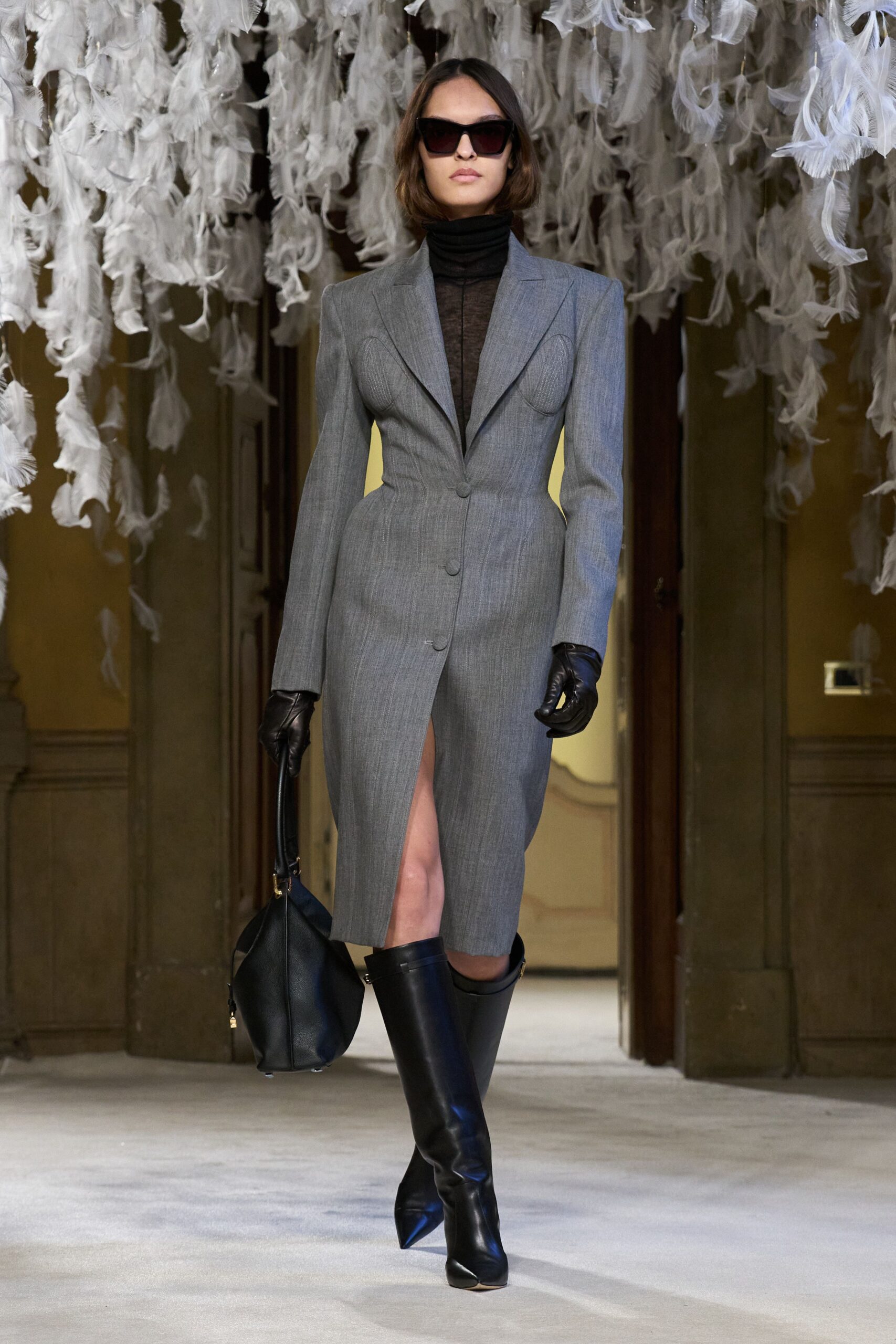
The historic Palazzo Acerbi, a testament to Milanese grandeur and once the esteemed residence of Marquis Ludovico Acerbi in the sixteenth century, provided a uniquely evocative backdrop for Elisabetta Franchi’s Fall 2026 ready-to-wear collection. The opulent Baroque corridors, steeped in centuries of history, seemed to hum with an ethereal resonance, setting a tone of lavish gatherings and intimate affairs that mirrored the diverse expressions within the collection itself. This season, Franchi sought to weave a narrative that acknowledged the multifaceted nature of modern womanhood, drawing inspiration from the austerity of the Victorian era while infusing it with a contemporary sensibility that felt distinctly her own. The resulting presentation was a compelling dialogue between sensuality and discipline, romance and an underlying current of mystery, all orchestrated within the heart of Milan’s fashion district.
The atmosphere was palpable from the outset. The show commenced with Juno Francis’s performance of "Fading Memories," a piece that underscored the collection’s thematic depth. As the haunting melody filled the palatial space, a breathtaking cascade of white feathers drifted from the ornate ceilings, creating a dreamlike tableau that immediately captivated the audience. This artistic overture served as a visual and auditory prelude, hinting at the delicate yet powerful aesthetic that was to unfold on the runway. The finale, amplified by the resonant intensity of "Aria" by Argy and Omnya, further cemented the collection’s dramatic flair, leaving a lasting impression of refined elegance and artistic curation.
Architectural Silhouettes and Victorian Undercurrents
Elisabetta Franchi’s Fall 2026 collection masterfully translated the historical echoes of the Palazzo Acerbi into a contemporary wardrobe. The design philosophy revolved around an intricate interplay between structured silhouettes and fluid textures, a juxtaposition that defined the collection’s unique character. Architectural forms, directly referencing the restrictive yet empowering aesthetic of 19th-century corsetry, were a prominent feature. This influence was most strikingly observed in the strategic use of bustier belts, which were artfully layered over coats, jackets, and dresses. These pieces not only served as a stylish accent but also alluded to the internal construction of garments, at times padded and sculpted to redefine the female form and accentuate the coveted hourglass silhouette. This deliberate emphasis on structure aimed to empower the wearer, offering a sense of control and refined poise.
However, this disciplined sharpness was thoughtfully balanced by softer, more enveloping elements. Luxurious outerwear and sumptuously knitted pieces provided a sense of comforting warmth, creating a harmonious contrast with the more tailored components. Weightless georgette blouses offered a whisper of sensuality, their delicate fabric drifting with the models’ movements. These were paired with taffeta skirts adorned with cascading flounces, adding a touch of playful romance and voluminous elegance. This careful calibration of opposing forces – structure and softness, austerity and romance – allowed for a dynamic and engaging collection that spoke to the complexities of contemporary female identity.
Brand DNA: A Fusion of Enduring Codes
Throughout the collection, Elisabetta Franchi’s signature aesthetic codes remained undeniably present, a testament to the brand’s consistent vision and appeal. Masculine tailoring, a cornerstone of the brand’s identity, was evident in impeccably cut blazers and sharp trousers, providing a foundation of sophisticated strength. These elements were seamlessly integrated with lingerie-inspired inflections, seen in delicate lace trims and subtle sheer panels, which added a layer of intimate allure. The brand’s penchant for glittering embellishments, from subtle sequin accents to more overt crystal detailing, continued to infuse the garments with a sense of glamour and occasion. Furthermore, the exploration of animal textures, a recurring motif in Franchi’s designs, added a touch of daring sophistication.
A notable departure from the collection’s dominant palette was the striking introduction of red leather, meticulously treated to mimic the luxurious texture of pony hair. This bold material choice provided a vibrant punctuation mark within a chromatic scheme that otherwise progressed from classic black and white, through sophisticated shades of gray and brown, to a unifying, serene blue. The red leather pieces, with their rich hue and tactile appeal, offered a powerful statement of individuality and confident self-expression.
Innovation and Future Directions
Beyond the sartorial offerings, the Fall 2026 collection also marked a significant milestone for the brand with the preview of its inaugural sunglass design. This strategic expansion into accessories signals a clear intention to diversify the Elisabetta Franchi lifestyle offering. The sunglasses, yet to be formally launched in the coming months, represent a new frontier for the brand, aiming to capture the same essence of sophisticated glamour and contemporary relevance that defines its ready-to-wear collections. This move into eyewear is a calculated step to enhance brand visibility and cater to a broader consumer base seeking head-to-toe styling solutions from a trusted designer.

Contextualizing the Show: Milan Fashion Week and the Designer’s Trajectory
The presentation of the Fall 2026 collection took place during Milan Fashion Week, a pivotal event in the global fashion calendar. This esteemed week, held biannually, draws designers, buyers, media, and fashion enthusiasts from around the world to the Italian fashion capital. For Fall 2026, the focus was on showcasing collections that balanced innovation with commercial viability, often reflecting on current societal trends and consumer desires. Elisabetta Franchi, a well-established name in Italian fashion, has consistently used Milan Fashion Week to present collections that embody femininity, luxury, and a strong sense of Italian craftsmanship. Her brand, founded in 1996, has grown significantly, evolving from its early focus on knitwear to encompass a comprehensive range of apparel and accessories. The Fall 2026 collection can be seen as a continuation of this trajectory, demonstrating a mature understanding of her brand’s core values while embracing new creative avenues.
The choice of Palazzo Acerbi for this particular show was not merely aesthetic; it was a deliberate narrative choice. The palazzo’s historical significance and architectural grandeur provided a tangible link to the past, a concept that Franchi explored through her Victorian-inspired designs. This historical resonance, coupled with the contemporary styling and music, created a multi-layered experience that resonated with the audience. The brand’s strategic use of evocative settings for its shows is a well-documented aspect of its marketing approach, aiming to create memorable and immersive brand experiences that extend beyond the garments themselves.
The Designer’s Vision: A Personal Statement on Womanhood
Moments before the show commenced, Elisabetta Franchi articulated the core philosophy behind her Fall 2026 collection: "This collection once again embodies an awareness of womanhood. We wanted to evoke the austerity of the Victorian era, but in a way that felt authentic to us." This statement is crucial to understanding the collection’s nuances. The "austerity" of the Victorian era, often associated with strict social codes and repressed sensuality, is reinterpreted through a modern lens. Franchi’s approach is not about replicating historical constraints but about extracting their aesthetic power and recontextualizing it for today’s empowered woman. The "authenticity" she refers to lies in the brand’s ability to translate these historical inspirations into wearable, desirable fashion that resonates with contemporary female experiences.
The collection’s success hinges on this delicate balance. The structured elements, while referencing historical corsetry, are presented as tools of empowerment rather than restriction. The sensuality is not overt but implied, woven into the fabrics and silhouettes with a sophisticated restraint. This approach speaks to a modern understanding of femininity, one that embraces strength, intelligence, and individuality alongside grace and allure. The "discreet affair" mentioned in relation to some models’ looks suggests an understated confidence, while those poised for a "grand soirée" embody a more outward expression of glamour. The "office" look, infused with the "self-assured energy of someone who had lived a memorable night," highlights the collection’s versatility and its ability to cater to the multifaceted lives of modern women.
Analysis of Implications and Broader Impact
The Fall 2026 collection from Elisabetta Franchi offers several points of analysis regarding its implications for the brand and the wider fashion landscape. Firstly, the continued emphasis on signature brand codes, such as masculine tailoring and lingerie inflections, reinforces brand loyalty and recognition among its existing customer base. This consistency is vital in a competitive market, ensuring that consumers can always identify and rely on the core aesthetic of Elisabetta Franchi.
Secondly, the foray into sunglasses signifies a strategic diversification that could broaden the brand’s market reach and revenue streams. The accessory market, particularly eyewear, is a significant growth area for fashion houses, allowing for brand visibility at a more accessible price point. The success of this new venture will depend on the design’s appeal and the brand’s ability to leverage its established reputation for quality and luxury.
Thirdly, the collection’s thematic exploration of Victorian austerity reinterpreted for modern womanhood reflects a broader trend in fashion. Designers are increasingly looking to historical periods for inspiration, not to replicate the past, but to understand and adapt its enduring aesthetic principles to contemporary values and lifestyles. This trend taps into a consumer desire for fashion that carries meaning and narrative, moving beyond mere trend-following. Franchi’s interpretation, focusing on empowerment and authentic self-expression, aligns well with contemporary discussions around female identity and agency.
Finally, the choice of venue and the artistic elements incorporated into the show underscore the growing importance of experiential marketing in fashion. Milan Fashion Week is not just about presenting clothes; it’s about creating a complete brand narrative. The evocative setting of Palazzo Acerbi, combined with the artistic performances, served to immerse the audience in the collection’s story, fostering a deeper emotional connection with the brand. This approach is crucial for differentiating brands in a saturated market and for building a lasting brand legacy. The successful execution of this strategy for Fall 2026 suggests that Elisabetta Franchi remains adept at navigating the evolving landscape of the fashion industry, balancing heritage with innovation, and tradition with contemporary relevance.