

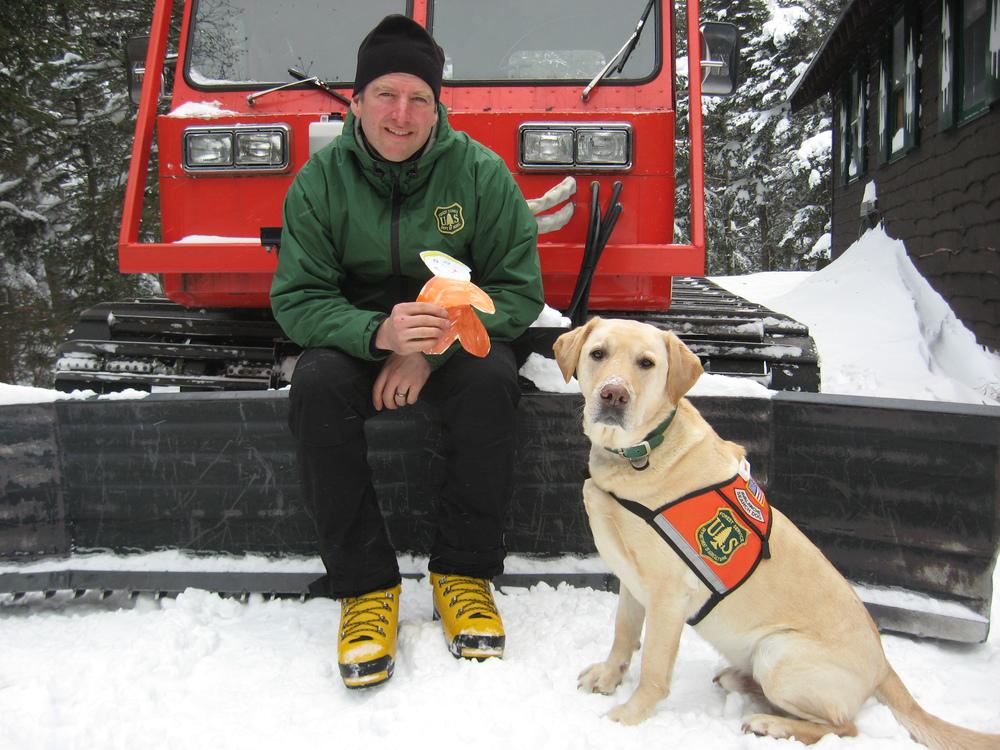
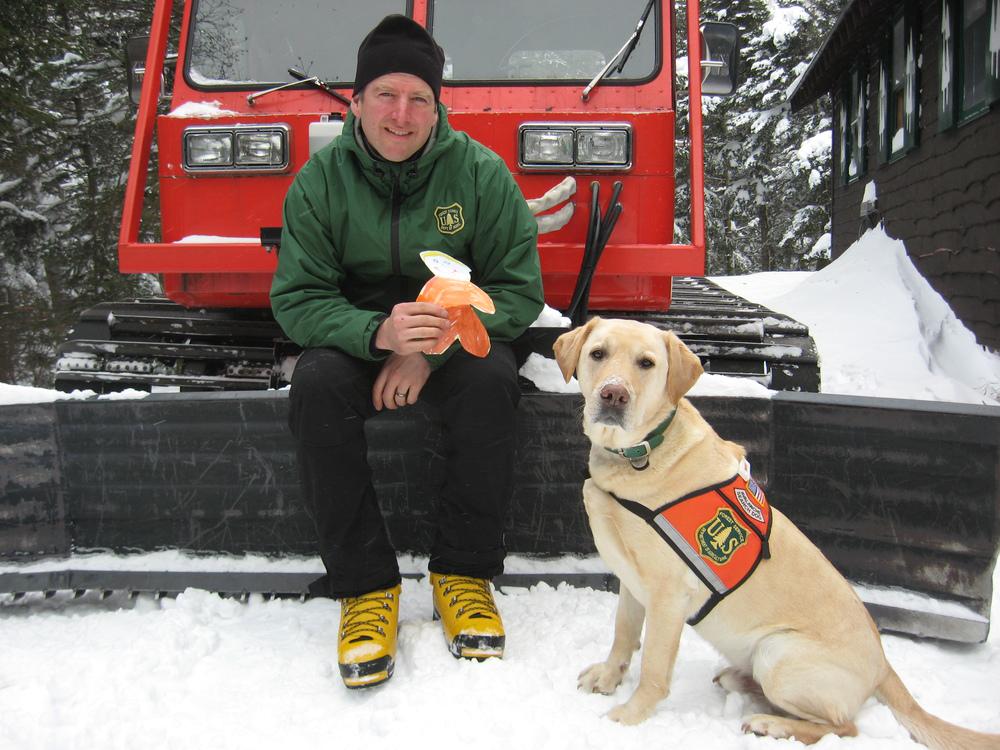
The Mount Washington Avalanche Center (MWAC) and the broader New England outdoor community are mourning the loss of Cutler, a dedicated avalanche rescue dog who served the White Mountain National Forest for over a decade. Cutler, a canine integral to the safety operations on the highest peak in the Northeastern United States, passed away recently after a distinguished 11-year career. Throughout his tenure, Cutler became a fixture of the Mount Washington landscape, spending approximately 80% of his life working in some of the most challenging alpine conditions in North America. His service not only provided a critical safety net for backcountry skiers and hikers but also fundamentally transformed the way the United States Forest Service (USFS) engages with the public regarding mountain safety and avalanche awareness.
A Career Defined by Service and Dedication
Cutler’s career began during a period of increasing interest in backcountry winter recreation. As more visitors flocked to the steep ravines of Mount Washington, the need for rapid response capabilities became paramount. For 11 years, Cutler worked alongside Mount Washington Avalanche Center Director Chris Joosen, forming a partnership that became the cornerstone of the center’s search and rescue (SAR) operations.
The primary role of an avalanche dog is to locate individuals buried under snow far more quickly than human searchers using traditional probe lines. In the context of Mount Washington, where the weather can deteriorate in minutes, the speed and efficiency provided by a trained canine like Cutler are often the difference between a successful rescue and a recovery operation. Experts in mountain safety note that the "golden hour" for avalanche survival—the first 15 to 30 minutes after burial—is incredibly tight; a dog’s ability to clear a large debris field in a fraction of the time it takes a human team is a vital asset.
The Harsh Environment of Mount Washington
To understand the magnitude of Cutler’s service, one must consider the environment in which he worked. Mount Washington is frequently cited as the "Home of the World’s Worst Weather." It sits at the convergence of several major storm tracks, resulting in hurricane-force winds on more than 100 days per year and some of the highest recorded wind speeds on Earth.
The White Mountain National Forest, particularly Tuckerman Ravine and Huntington Ravine, serves as a focal point for extreme winter sports. These glacial cirques are prone to significant snow accumulation and high avalanche danger due to wind-loading. Cutler’s presence in these areas was not merely symbolic; he was a working professional trained to navigate technical terrain, endure sub-zero temperatures, and maintain focus amidst the chaotic environment of a rescue scene. By spending nearly 80% of his life on the mountain, Cutler became exceptionally acclimated to the unique snowpack and atmospheric conditions of the Presidential Range.
The Mechanics of Avalanche Search and Rescue (SAR)
The technical proficiency required of an avalanche dog is immense. Training begins in puppyhood and involves rigorous socialization and scent-work. Unlike many other types of search dogs, avalanche dogs are trained to detect the "human scent pool" that rises through the snow from a buried person. This requires an acute sense of smell and the stamina to dig through dense, often ice-crusted avalanche debris.
Cutler’s training followed the strict protocols established for elite K9 SAR units. This included regular drills in Tuckerman Ravine, where he and Chris Joosen would practice finding "buried" volunteers to maintain peak operational readiness. Data from national search and rescue organizations suggest that a single avalanche dog can search an area equivalent to what 20 humans can cover in approximately one-eighth of the time. In the high-stakes environment of the White Mountains, Cutler represented a force multiplier for the small team of Snow Rangers tasked with patrolling the vast wilderness.
Beyond the Rescue: Cutler as a Public Relations Ambassador
While his primary function was rescue, Cutler’s secondary impact was arguably just as significant. He served as the public face of the Mount Washington Snow Rangers. The presence of a friendly, highly trained dog provided a bridge between the authoritative figure of a Forest Service Ranger and the general public.
Education is a primary pillar of avalanche safety. The MWAC works tirelessly to inform the public about snow stability, weather forecasts, and the necessity of carrying proper gear such as beacons, probes, and shovels. However, reaching a diverse audience of skiers, climbers, and tourists can be challenging. Cutler excelled at public relations, drawing people in and allowing Snow Rangers to initiate conversations about safety that might otherwise have been ignored. By humanizing the safety mission, Cutler helped the MWAC reach thousands of visitors, potentially preventing accidents before they occurred through increased awareness and education.
Chronology of a Life on the Slopes
The life of Cutler can be viewed through the lens of the evolution of the Mount Washington Avalanche Center itself. Born approximately 14 years ago, Cutler joined the center at a time when backcountry skiing was beginning its rapid ascent in popularity.
- Initial Training (Circa 2001-2003): Cutler underwent intensive K9 SAR training, focusing on obedience, agility, and scent detection in alpine environments.
- Active Service (2004-2015): Over 11 years, Cutler was on call for every major winter season. He participated in numerous missions, patrols, and public demonstrations.
- Technological Integration: During his service, Cutler worked alongside evolving technologies, from improved avalanche transceivers to the digitization of the MWAC’s daily avalanche bulletins.
- Retirement and Passing: Having spent the vast majority of his life in the service of the public, Cutler’s health eventually led to his retirement. His passing marks the conclusion of a 14-year life, 11 of which were spent in active duty.
National Context and Statistical Overview
The loss of a service animal like Cutler is felt deeply within the national avalanche community. In the United States, avalanche dogs are relatively rare compared to other types of working dogs due to the highly specialized nature of their environment and the significant investment required for their training and upkeep.
According to data from the American Avalanche Association and the Colorado Avalanche Information Center (CAIC), the U.S. sees an average of 27 avalanche fatalities per year. While many of these occur in the Western U.S., the Northeast, and Mount Washington in particular, presents a unique set of challenges due to high visitor density and the extreme variability of the snowpack. The presence of a dedicated K9 unit at the MWAC is a testament to the Forest Service’s commitment to mitigating these risks in one of the most visited backcountry areas in the country.
Institutional Responses and the Bond of the Handler
Director Chris Joosen, who served as Cutler’s handler and companion, has highlighted the profound impact the dog had on both the professional operations of the center and the personal lives of the staff. In a commemorative blog and photo album, Joosen reflected on the 14 years of companionship and the 11 years of professional partnership.
The bond between a handler and an avalanche dog is unique. They live together, train together, and face life-threatening conditions together. This level of trust is essential for operational success; the handler must be able to "read" the dog’s signals instantly, while the dog must remain obedient to the handler even in high-stress situations involving helicopters, snowmobiles, and large crowds.
Statements from the Mount Washington community have poured in, with many visitors recalling encounters with Cutler at the Hermit Lake Shelters or on the floor of Tuckerman Ravine. These testimonials reinforce the idea that Cutler was more than a tool for search and rescue; he was a beloved member of the mountain culture.
Broader Impact and Implications
The legacy of Cutler extends beyond his individual rescues. His career underscores the importance of the K9 program within the United States Forest Service. As winter recreation continues to grow—with backcountry equipment sales seeing double-digit growth in recent years—the role of avalanche dogs is likely to become even more critical.
Cutler’s success as a public relations ambassador also provides a blueprint for other SAR organizations. The "Cutler model" shows that safety education is most effective when it is approachable and community-focused. By utilizing a service animal to engage the public, the MWAC was able to foster a culture of safety that emphasizes personal responsibility and informed decision-making among backcountry users.
As the Mount Washington Avalanche Center moves forward, the influence of Cutler’s 11 years of service will remain. He helped set the standard for avalanche dog operations in the Northeast and left an indelible mark on the White Mountain National Forest. While technology such as RECCO reflectors and advanced GPS beacons continues to improve, the biological capabilities and the "public face" provided by dogs like Cutler remain irreplaceable components of mountain safety infrastructure.
The passing of Cutler is a reminder of the silent guardians who work behind the scenes—and in the deepest snow—to ensure that those who seek adventure in the mountains can do so with a greater margin of safety. His 14 years of life and 11 years of service stand as a testament to the enduring partnership between humans and canines in the pursuit of saving lives.