

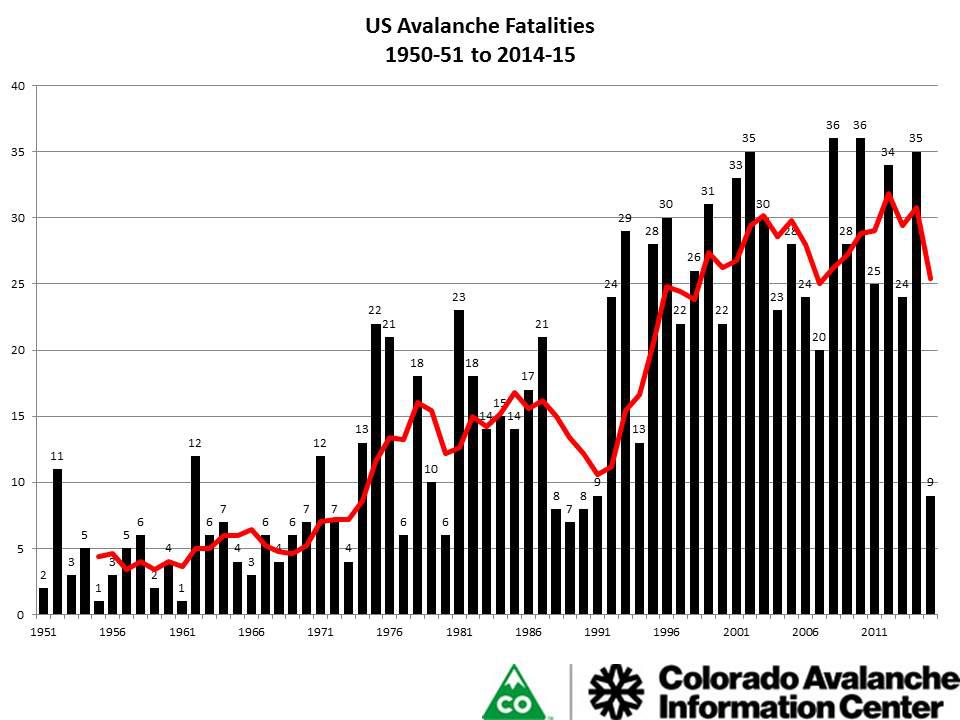
As the 2014-2015 winter season draws to a close on April 30, preliminary data from the United States avalanche centers reveals a significant and historic decline in backcountry fatalities. With only nine recorded deaths across the nation, this season stands as the safest for winter recreationists since 1991. This figure represents a stark departure from the five-year moving average, which typically sees between 25 and 30 fatalities annually. While experts at the Colorado Avalanche Information Center (CAIC) and the United States Forest Service (USFS) emphasize that even a single loss of life is a tragedy, the single-digit total provides a moment of reflection for safety advocates, meteorologists, and the growing community of backcountry enthusiasts.
The record-low numbers are being attributed to a complex intersection of meteorological anomalies and increasingly effective public safety campaigns. Throughout the 2014-2015 cycle, weather patterns across the Western United States deviated sharply from historical norms. A combination of a profound "snow drought" along the West Coast and unseasonably high temperatures in the Intermountain West created a snowpack that, while disappointing for skiers and snowboarders, proved significantly less volatile than in previous years. Simultaneously, the persistent efforts of regional avalanche centers to provide real-time, high-quality data appear to be influencing the decision-making processes of those venturing into uncontrolled terrain.
A Convergence of Meteorological Factors
The primary driver behind the reduction in avalanche-related deaths this season was the unconventional weather pattern that dominated the North American winter. In the Pacific Northwest and the Sierra Nevada of California, the season was characterized by a lack of significant precipitation. This "snow drought" meant that many high-elevation slopes, which typically hold massive, unstable slabs of snow, remained bare or under-developed for much of the winter. Without the accumulation of heavy "slabs"—the cohesive layers of snow that slide during an avalanche—the physical requirements for large-scale disasters were largely absent in these regions.
Further inland, across the Rocky Mountains and the Great Basin, the challenge was not necessarily a lack of moisture but a surplus of heat. The 2014-2015 season saw several periods of record-breaking warmth that extended deep into the winter months. In typical years, the interior snowpack is prone to developing "persistent weak layers," such as depth hoar or faceted snow, which act like ball bearings beneath heavier layers. However, the warm temperatures during this cycle facilitated a process known as sintering, where snow grains bond together more effectively, and the overall snowpack settles and stabilizes more rapidly.
The "Pineapple Express" and other warm-core storm systems also brought rain-on-snow events to higher elevations than usual. While rain can initially spike avalanche danger, it often leads to a subsequent "lock-up" of the snowpack once temperatures drop, creating a frozen, stable mass that is much less likely to slide. These conditions, while detrimental to the quality of the "powder" experience sought by many, created a naturally safer environment for those traveling in the backcountry.
Evolution of Public Education and Safety Infrastructure
While the weather provided a natural buffer against disaster, officials from the U.S. Forest Service and the Colorado Avalanche Information Center point to the maturation of the avalanche safety industry as a critical factor. Over the last decade, the infrastructure for disseminating life-saving information has undergone a digital revolution. The CAIC, in particular, has been at the forefront of this movement, maintaining the national avalanche accident database and providing granular, daily forecasts that are easily accessible via smartphones and social media.
Spencer Logan, a prominent researcher at the CAIC, has noted that the availability of this information allows backcountry users to perform more rigorous risk assessments before they ever leave their homes. The 2014-2015 season saw a high level of engagement with these platforms. Forecast centers have transitioned from offering broad regional summaries to providing specific "avalanche problems" (such as wind slab, persistent grain, or wet loose alerts), which help users understand exactly what kind of danger they might face.
Furthermore, the "Know Before You Go" program and other educational initiatives have successfully permeated the mainstream. Avalanche safety is no longer viewed as a niche concern for elite mountaineers but as a fundamental requirement for anyone entering the winter backcountry. The increased enrollment in Level 1 and Level 2 American Avalanche Association (A3) certified courses indicates a cultural shift toward personal responsibility and proactive education.
Analyzing the Five-Year Stability Paradox
One of the most intriguing aspects of the 2014-2015 data is how it fits into long-term trends. Over the past 15 years, the number of people venturing into the backcountry—including alpine touring skiers, splitboarders, and snowmobilers—has increased exponentially. Industry reports from organizations like the Snowsports Industries America (SIA) show that sales of backcountry-specific gear, such as climbing skins, tech bindings, and avalanche beacons, have outpaced traditional resort gear sales in several recent seasons.
Logically, a massive increase in the number of people exposed to avalanche terrain should lead to a corresponding increase in fatalities. However, the data suggests a different reality. The five-year moving average for avalanche deaths has remained remarkably stable, hovering between 25 and 30 per year. The 2014-2015 season’s dip to nine fatalities is an outlier on the low end, but it reinforces the trend that the "fatality rate per user" is likely decreasing.
This stability suggests that as the community grows, it is also becoming more educated. The widespread adoption of safety technology—such as avalanche transceivers, probes, shovels, and more recently, avalanche airbag packs—has undoubtedly saved lives that would have been lost in previous decades. Airbag packs, which help a victim stay on the surface of a moving slide, have transitioned from expensive prototypes to standard equipment for many enthusiasts, significantly improving the chances of survival in the event of an accident.
Chronology of a Unique Season
The 2014-2015 season began with early-season concerns in October and November when light snowfalls in the Rockies began to facet, creating the "weak base" that often leads to a deadly mid-winter cycle. However, as December and January progressed, the expected heavy loading of these layers did not occur in many regions.
By mid-February, the contrast between the East and West was stark. While the Northeastern U.S. was buried under record-breaking snowfall, the West remained unseasonably warm. During this period, avalanche centers issued frequent "moderate" or "low" danger ratings, a rarity for the peak of winter. The few fatalities that did occur were often the result of localized instabilities or specific high-consequence terrain choices rather than widespread, catastrophic cycles.
In March and April, the transition to a "spring-like" snowpack happened earlier than usual. This shift typically brings "wet slide" concerns, but because the overall snow volume was lower, the resulting avalanches often lacked the mass required to be fatal. By the time the reporting period drew to a close on April 30, the tally remained at nine, a figure that provides both relief and a baseline for future safety goals.
Institutional Responses and Future Implications
The low fatality count has been met with cautious optimism by the U.S. Forest Service and its partner organizations. In informal statements, officials have expressed that while the 2014-2015 season is a "win" for public safety, it must not lead to complacency. The primary concern among safety experts is that a "safe" year might embolden inexperienced users to take greater risks in future seasons when the snowpack may be far more precarious.
"The numbers this year are a testament to both luck with the weather and the hard work of our forecasting teams," noted a representative involved in national avalanche safety coordination. "But we must remember that the snowpack is a fickle entity. Next year could easily bring a return to the ‘deep slab’ problems that are much harder to predict and much more deadly."
The implications of this season also extend to the study of climate change. As winters become more variable, avalanche centers are having to adapt their forecasting models to account for more frequent rain-on-snow events and prolonged warm spells. The 2014-2015 season serves as a case study in how "low snow" years impact human behavior and safety outcomes. It also highlights the necessity of continued federal and state funding for avalanche centers. These organizations operate on relatively small budgets, yet their impact on public safety—as evidenced by the stable fatality rates despite increased usage—is profound.
Conclusion: A Benchmark for the Future
As the final reports for the 2014-2015 season are filed, the data will be used to refine educational curricula and forecasting tools. The nine lives lost remain a somber reminder of the inherent risks of mountain travel, but the broader statistical trend offers hope. Through a combination of meteorological fortune and a robust, information-driven safety culture, the United States has navigated its safest winter in nearly a quarter-century.
The challenge moving forward will be to maintain this momentum. As backcountry use continues to skyrocket, the reliance on organizations like the CAIC and the Forest Service avalanche centers will only grow. The 2014-2015 season has proven that with the right information and a bit of help from the elements, the risks of the backcountry can be managed, providing a blueprint for a future where "zero fatalities" becomes an achievable, if elusive, goal. For now, the community looks toward the 2015-2016 season with the knowledge that while they cannot control the weather, they can control their preparation, their education, and their respect for the power of the mountains.