

Following a weekend excursion to Mountain Creek in New Jersey, the Skibum EV, piloted by veteran journalist Kim Brown, known as The Scribe, arrived on Monday in a parking lot in McHenry, Maryland, poised for an immersive visit to WISP Resort. This destination holds a unique distinction as Maryland’s sole surviving ski resort, a testament to its enduring appeal and strategic operations within the Mid-Atlantic winter sports landscape. The journey itself presented an unexpected revelation of the region’s topography, characterized by a strikingly mountainous southern tier of Maryland. The drive was marked by significant ascents and descents, with undulating hills extending into the distance, a far cry from common perceptions of the state’s geography. Much of the picturesque route traced the renowned Great Allegheny Passage (GAP) and the Chesapeake & Ohio (C&O) Canal Towpath, arguably the most celebrated long-distance bike route in the Eastern United States. Traversing this path, one crosses the Eastern Continental Divide, a geographical feature less widely recognized than its Western counterpart but equally significant in shaping regional watersheds, before arriving at the winter haven of WISP Resort.
The Strategic Route to WISP: Navigating the Eastern Continental Divide
The transition from the bustling slopes of New Jersey to the serene, yet surprisingly rugged, landscape of Western Maryland underscored the diverse geographical tapestry of the Mid-Atlantic. The journey to WISP is more than a mere drive; it is an immersion into a region rich in natural beauty and historical pathways. The Great Allegheny Passage, stretching 150 miles from Cumberland, Maryland, to Pittsburgh, Pennsylvania, seamlessly connects with the 184.5-mile C&O Canal Towpath, which extends to Washington D.C. Together, these trails form a continuous, nearly flat, 335-mile recreational corridor, drawing cyclists, hikers, and history enthusiasts from across the nation. This route, once a vital artery for commerce and transportation in the 19th century, now serves as a scenic gateway, offering panoramic views of the Appalachian foothills and winding rivers.

The crossing of the Eastern Continental Divide, while less dramatic in elevation than its western cousin, signifies a crucial hydrological boundary. Here, waters on the eastern side flow towards the Atlantic Ocean, while those on the western flank ultimately drain into the Gulf of Mexico via the Ohio and Mississippi River systems. This geographical feature underscores the area’s elevated terrain, which, combined with cold air masses, makes it conducive for winter sports, a rarity in this latitude. The "very cool drive," as described by The Scribe, was not merely a descriptor of temperature but an appreciation for the impressive natural contours that set the stage for Maryland’s premier ski destination.
WISP Resort: A Mid-Atlantic Alpine Surprise
Upon arrival, the initial impression of WISP Resort immediately challenged any preconceived notions about Mid-Atlantic ski areas. Similar to observations made during the previous day’s adventure at Mountain Creek, these regional resorts often possess a scale that belies their geographical location. From the base area parking lot, multiple chairlifts and a network of trails visibly spread across the mountainside. The Scribe quickly ascertained that WISP boasts 132 acres of skiable terrain, a considerable footprint for a resort in this part of the country. While the vertical drop is a modest 700 feet, the summit elevation of 3,115 feet offers expansive and impressive views of the surrounding Allegheny Mountains, a picturesque backdrop that enhances the overall skiing experience. This combination of acreage, elevation, and diverse trail offerings positions WISP as a significant player in the regional winter tourism sector.
The resort’s infrastructure, designed to accommodate a substantial number of visitors, includes multiple chairlifts efficiently transporting skiers and riders to the summit. With 34 distinct trails, WISP caters to a wide range of skill levels, from gentle beginner slopes to challenging black diamond runs, ensuring a varied experience for all guests. The ability to spread out across numerous trails helps manage crowd distribution, a critical factor during peak visitation periods.

President’s Week Dynamics: A Hub of Winter Activity
The visit coincided with President’s Week, traditionally one of the busiest periods for winter resorts across the nation. This national holiday week typically sees a surge in family travel, school breaks, and an increased demand for outdoor recreational activities. Consequently, The Scribe found himself amidst a vibrant and diverse crowd, all eager to experience the slopes of Maryland. The base lodge area, a natural gathering point, buzzed with activity, and the lift closest to it predictably sported the longest queues.
During an ascent, The Scribe shared a chairlift with two eighth-grade students from Washington, D.C., who were also on their inaugural visit to WISP. Their conversation provided a microcosm of the resort’s broad appeal: one student, embarking on only his second ski run ever, received encouraging words from his friend, a testament to the supportive and accessible atmosphere WISP cultivates for beginners. This interaction highlighted the resort’s role as a vital entry point for many to the sport of skiing and snowboarding, particularly for those residing in nearby metropolitan areas with limited access to winter sports facilities. The presence of such diverse visitors, from first-timers to seasoned skiers, underscores WISP’s significance as a regional winter sports destination.
Exploring the Summit: Terrain and Conditions

Reaching the relatively flat summit area, The Scribe observed a large, frozen pond, a distinctive feature offering scenic beauty and sometimes ice skating opportunities. Four different chairlifts converged at this point, efficiently delivering skiers and riders from various parts of the mountain. With 34 trails available, the options for descent were plentiful. Mindful of the crowds at the main base lift, The Scribe strategically headed towards one of the flanking lifts, seeking a less congested route.
The winter season leading up to this visit had been unusually snowy for the region, providing WISP with a generous blanket of natural snow. This allowed The Scribe the unique opportunity to descend a trail covered entirely by Mother Nature’s bounty, a rare treat in a region often reliant on machine-made snow. The slope, while gentle, offered a pristine experience, and notably, The Scribe was the sole individual opting for this natural snow trail at that moment. Reaching the bottom, the desired outcome was achieved: an empty lift line, enabling quick access back to the summit.
This strategic choice led to further exploration on the far side of the summit area, a decision that proved highly rewarding. Arriving at the top of Chair 5, The Scribe discovered "Main Street," a black diamond rated trail boasting excellent pitch. The snow conditions were exceptional for the season, resembling "spring snow." With mid-40s temperatures, the surface remained firm and fast, crucially avoiding the slushy conditions often associated with warmer spring days. For The Scribe, fresh off a particularly cold stretch at his home hills of Stowe, this run offered the exhilarating first taste of spring skiing, prompting an immediate second lap on Chair 5.
The Power of Snowmaking and Deep Creek Lake’s Bounty

During the subsequent ride up Chair 5, The Scribe engaged in conversation with a fellow skier from Austin, Texas, visiting WISP for a family reunion. The discussion naturally turned to the impressive snow cover on "Main Street," which measured a robust 8-10 feet thick. This remarkable depth is largely attributable to WISP’s formidable snowmaking operation, a critical asset for any ski resort operating in the Mid-Atlantic climate. Over 90% of WISP’s trails are protected by this advanced machine-made snow system, ensuring consistent and reliable conditions throughout the winter season, irrespective of natural snowfall variability.
The success of WISP’s snowmaking is intrinsically linked to its abundant water resources. Not only does the resort utilize a large reservoir at the summit, but it also benefits from its proximity to Deep Creek Lake, a vast 3,900-acre man-made lake forming a significant part of the resort’s lower boundary. This lake, the largest in Maryland, provides an inexhaustible supply of water crucial for snow production. Beyond water, the resort also leverages modern energy solutions, with summit-sited wind turbines visible in the distance. These turbines represent a commitment to sustainable energy, providing a clean and reliable power source essential for operating the extensive snowmaking machinery and other resort facilities. The confluence of readily available water, sufficient power, and the region’s periodic cold weather patterns creates an ideal microclimate for sustaining a successful ski operation in the "South." This integrated approach to resource management is a cornerstone of WISP’s long-term viability and operational excellence. Deep Creek Lake itself is a year-round recreational hub, further enhancing the appeal of the Garrett County area.
Deep Creek Lore and a 70-Year Legacy
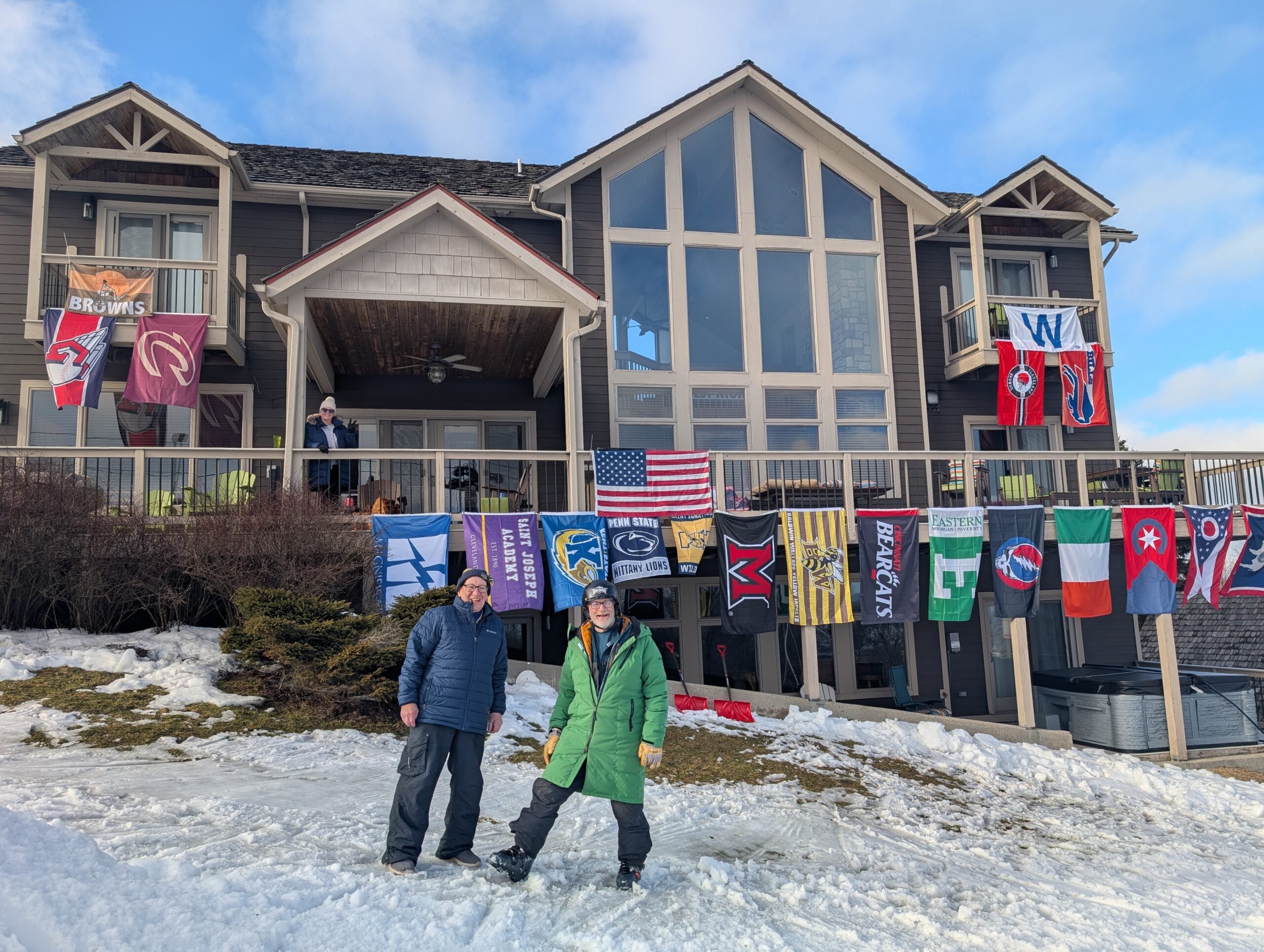
Further exploration led The Scribe to a slopeside condominium adorned with a vibrant display of flags, representing everything from the Cleveland Browns and Buffalo Bills to various colleges. This eye-catching façade prompted a visit, revealing a family reunion in full swing. A trio, including an 83-year-old gentleman named Hayden, greeted The Scribe. The group, predominantly from Cleveland but with members hailing from across the country, embodied the communal and festive spirit often found at ski resorts. Despite friendly invitations to join their revelry, The Scribe politely declined, eager to continue his exploration of WISP.

As the day neared its end, The Scribe, still on the lookout for a quintessential "Skibum," ventured into the resort’s expansive base lodge. This quest led him to the office of Clay Carlton, WISP’s IT manager and a veteran employee with 34 years of dedicated service to the resort. The Scribe’s first inquiry centered on the resort’s distinctive name. While it might intuitively suggest "Winter Sports," Carlton clarified that this was not the case.
WISP Resort is currently celebrating its 70th anniversary, tracing its origins back to 1955 when it was founded by a German couple, Helmuth Heise and his wife Evelyn. This makes WISP one of the oldest operational ski areas in the Southern United States, a remarkable feat given the regional climate challenges. The Heises chose the name "WISP," but the precise etymology and the specific reasoning behind their selection remain shrouded in a charming bit of local lore. During their conversation, Carlton proudly shared a fascinating anecdote: a gentleman who still skis almost daily at WISP acquired his first season pass during the 1956-57 winter. This individual, with nearly seven decades of loyalty to the resort, undoubtedly embodies the spirit of WISP’s "number one ski bum," a living testament to the resort’s enduring charm and community.
The Everbright Pacific Connection and Broader Industry Implications
En route to Carlton’s office, The Scribe noticed a Jay Peak poster displayed prominently in a stairwell, sparking curiosity. Carlton soon clarified the connection: WISP, along with Wintergreen (The Scribe’s next planned stop on the "Ski the South Tour"), is owned by Everbright Pacific, a Utah-based company. This firm recently acquired Jay Peak Resort in Vermont, bringing it out of receivership. This acquisition highlights a growing trend of consolidation within the ski industry, where larger entities are expanding their portfolios to create multi-resort passes and leverage economies of scale. For WISP, being part of a larger resort group like Everbright Pacific can bring strategic investments, shared operational best practices, and broader market reach, potentially enhancing its stability and future development.

WISP offers a flexible operational schedule, including night skiing on select days and daytime lift service until 5 p.m. throughout the rest of the week, maximizing opportunities for guests to enjoy the slopes. After turning a dozen laps and thoroughly experiencing the resort’s offerings, The Scribe concluded his day. A final conversation in the parking lot with a British visitor from D.C., lounging in his SUV with his family, provided a fitting capstone. This interaction reaffirmed WISP’s widespread appeal, drawing visitors from various demographics and geographic locations across the Mid-Atlantic region and beyond. The journey through Maryland’s unique mountainous terrain and the comprehensive visit to WISP Resort served as a compelling chapter in The Scribe’s ongoing "Ski the South Tour," with Wintergreen, Virginia, next on the itinerary. WISP stands not just as a ski resort, but as a vibrant community hub and a testament to the resilience and ingenuity required to foster winter sports in a challenging climate, all while honoring its seven-decade heritage.