

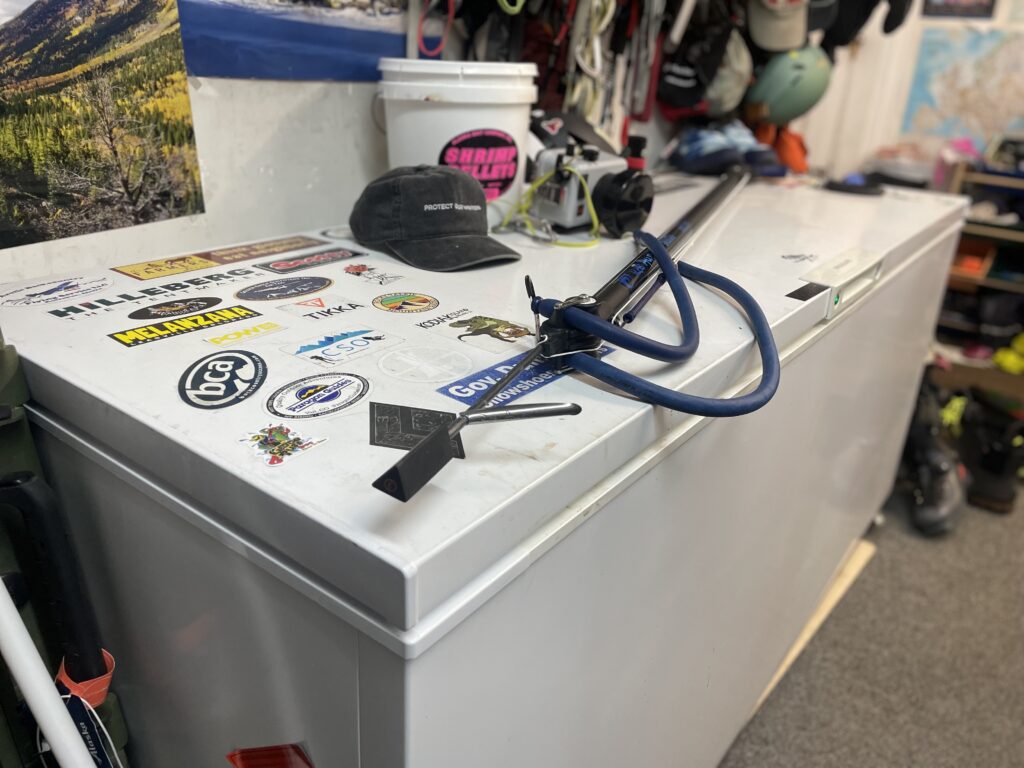
The household chest freezer, an ubiquitous fixture in Alaskan garages from Anchorage to the Brooks Range, serves as a silent sentinel of the state’s food security, cultural identity, and ecological health. For residents of the 49th state, these appliances are far more than mere storage units for surplus groceries; they are repositories of seasonal labor, communal ethics, and a direct link to the fluctuating health of the North Pacific ecosystem. As the circumpolar north warms at a rate significantly higher than the global average, the contents of these freezers—fluctuating between the scarcity of late spring and the abundance of late summer—provide a tangible record of how climate change is reshaping the relationship between Alaskans and their primary protein sources.
The Seasonal Cycle of the Alaskan Larder
The rhythm of life in Alaska is dictated by the "ebb and flow" of the seasons, a cycle reflected in the inventory of the domestic freezer. In the urban center of Anchorage, the transition from winter to summer is marked by a shift from anxiety to renewal. By April, many households face "scarcity creep," as stocks of salmon, halibut, and moose from the previous year begin to dwindle. This period of depletion creates a psychological and logistical urgency that coincides with the return of the midnight sun and the thawing of the state’s massive river systems.

As the ice breaks, the "largess of the North" begins. The chronology of the harvest is precise: early summer brings the arrival of white fish, such as Pacific cod and halibut. By July, the focus shifts to "red fish"—the various species of Pacific salmon that move from the ocean to their natal streams to spawn. This period is characterized by a state-wide "fish flurry," an intense window of activity where streets, forests, and waters become bustling corridors of human and animal migration. For residents, the freezer represents the successful navigation of this window, transforming from an empty vault of "hopes and worries" into a "coffer of promise" filled with vacuum-sealed fillets and smoked delicacies.
The Social Contract: Salmon as a Communal Resource
In Alaska, salmon is classified as a communal resource, a designation that transcends its role as an economic engine for the state’s multi-billion dollar commercial fishing industry. The relationship between Alaskans and fish is governed by an "unspoken social contract" that prioritizes sustenance and community over individual hoarding. This cultural framework suggests that the fish in the freezer are "borrowed from the water," carrying a debt of gratitude that is repaid through responsible stewardship and communal sharing.
This social ethic is particularly visible in the practice of sharing the catch. It is a common social norm that if a neighbor’s freezer is empty, those with a surplus will readily offer their stocks. This tradition bridges the gap between rural and urban residents, creating a shared identity centered on the harvest. Even in Anchorage, which maintains the infrastructure of a modern city, the proximity to the wild is constant; it is not uncommon for residents to manage their fish stocks while simultaneously dealing with local wildlife, such as grizzly bears, that are drawn to the same resources.
Climate Change and the Vulnerability of Salmon Stocks
The primary threat to this way of life is the rapid environmental transformation of the North Pacific Ocean and the Alaskan interior. The North Pacific is currently warming faster than any other ocean basin on the planet, a phenomenon that has dire implications for salmonid species. Scientific data indicates that warmer waters often correlate with a lower pH—a process known as ocean acidification.
Increased acidity in the ocean has been shown to:
- Decrease Growth Rates: Juvenile salmon in more acidic environments exhibit slower growth, making them more vulnerable to predation.
- Disrupt Navigation: Salmon rely on a complex olfactory and chemical sensing system to navigate from the open ocean back to their specific natal spawning streams. Changes in water chemistry can impair this "homing" ability.
- Destabilize Food Sources: The stability of the pteropods and other small organisms that form the base of the salmon’s food chain is threatened by shifting ocean temperatures and chemistry.
Furthermore, the terrestrial ecosystem of the circumpolar north is warming more rapidly than any other on Earth. The thawing of permafrost is altering the hydrology of spawning streams, causing water temperatures to rise and river systems to become increasingly unpredictable. While sockeye salmon runs have remained relatively strong in recent years, other species are in a state of precipitous decline. King salmon (Chinook) stocks have seen a steady downward trend, leading to severe fishing restrictions. More recently, Southcentral Alaska has seen significant restrictions on the retention of coho (Silver) salmon, signaling that the pressures of a warming ocean and human take are reaching a critical juncture.
Methods of the Harvest: From Dipnetting to Spearfishing
The "apex" of the Alaskan fishing season for many is the practice of dipnetting. This unique harvest method involves using a large-diameter net on an aluminum pole to catch sockeye salmon as they move upstream in high densities. Two of the most prominent locations for this activity are the Copper River and the Kenai Peninsula.
The Copper River dipnetting experience is often described as precarious, involving treks down abandoned railroad grades and the use of climbing ropes to descend steep canyon walls to reach the churning glacial water. In contrast, the Kenai Peninsula offers a more "civilized" but crowded scene, where hundreds of residents line up shoulder-to-shoulder on the beaches to catch fish on the incoming tides.
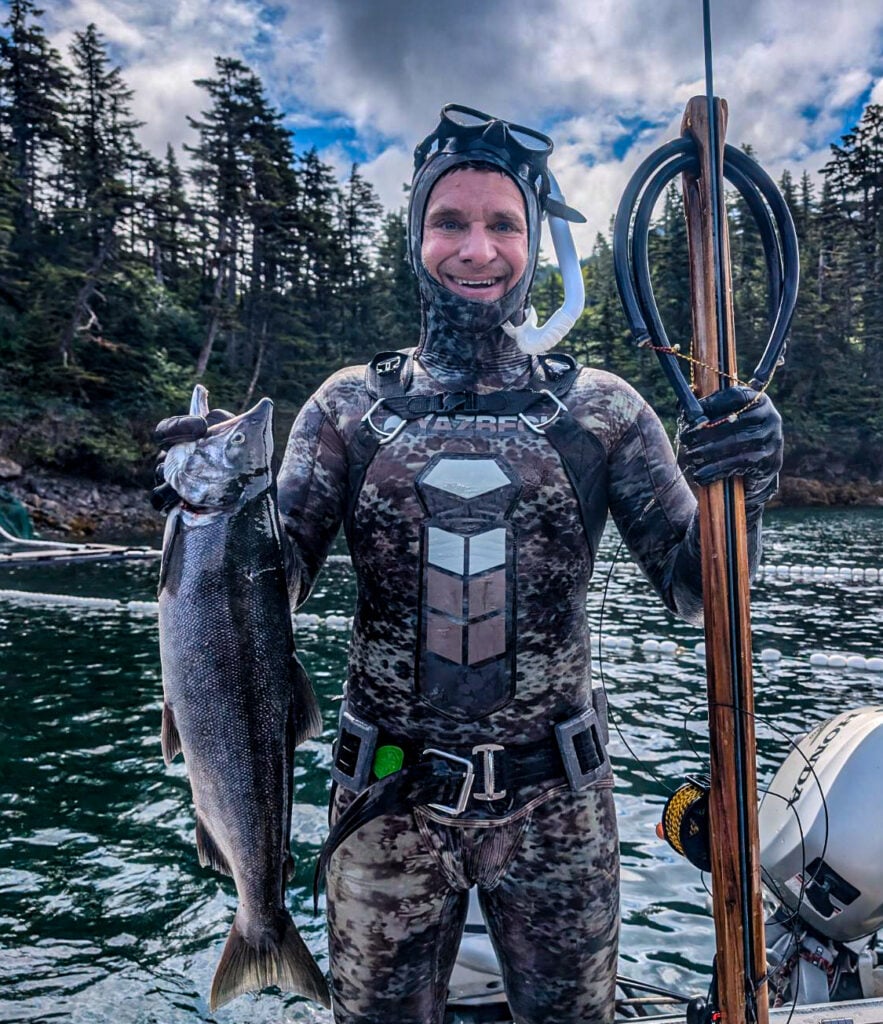
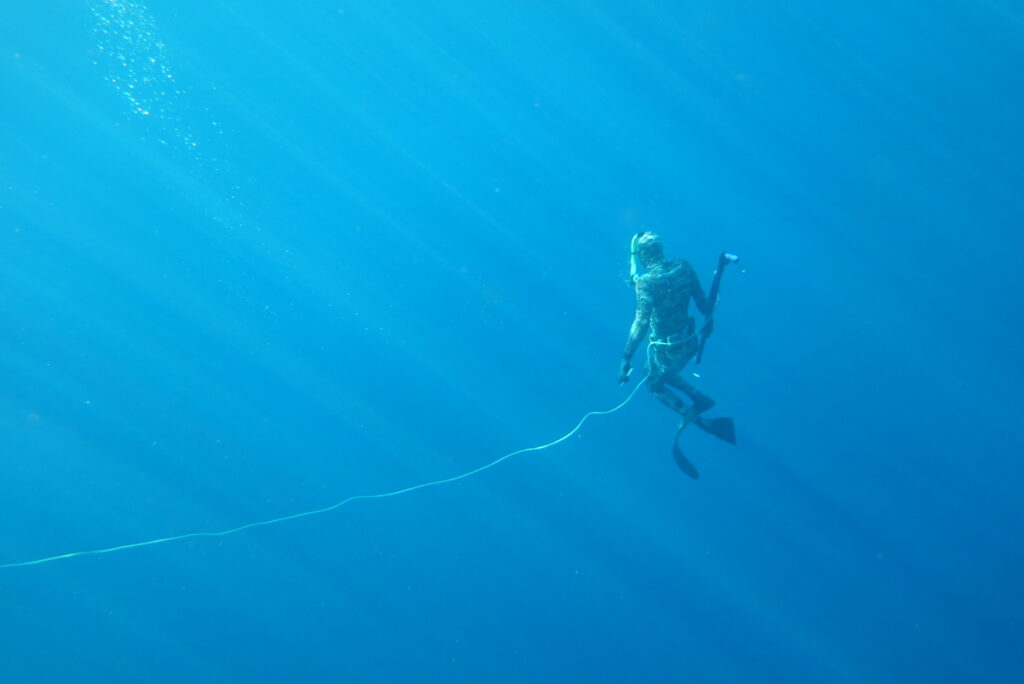
In recent years, some Alaskans have turned to alternative methods to fill their freezers, such as freediving and spearfishing. Using thick wetsuits to combat frigid saltwater temperatures, spearfishing allows for a "spectral experience" beneath the surface. This method provides a different perspective on the salmon runs, allowing the harvester to witness "walls of darting salmon" in the silty, cold water of the northern Pacific. For many, this immersive approach offers a reprieve from the stresses of modern life, focusing entirely on the heartbeat, the tide, and the movement of the fish.
Economic and Policy Implications
The health of the salmon runs is inextricably linked to Alaska’s identity and economic stability. The Alaska Department of Fish and Game (ADF&G) is tasked with the complex challenge of managing these stocks amidst "increasingly dynamic pressures." Management decisions—such as closing certain rivers to retention or limiting the gear types allowed—have immediate impacts on the food security of thousands of households.
The decline of the King salmon, in particular, has had a ripple effect through the state’s economy, impacting sport fishing guides, tourism, and local businesses that depend on the annual influx of anglers. The "stalwart but delicate" nature of the salmon runs means that policy decisions must balance economic necessity with the long-term biological survival of the species. As Alex Lee, an Associate Professor of Philosophy at Alaska Pacific University and a member of the Protect Our Winters (POW) Science Alliance, notes, "Our ethic shapes our future. If one day my freezer runs empty, it will not be the fishes’ fault."
The Intergenerational Debt and Future Outlook
The Alaskan freezer also serves as a tool for intergenerational education. For many families, "fish" is among the first words spoken by children, who grow up watching the process of harvesting, processing, and storing food. This upbringing instills a "love of fish" and a "love of fishing," but it also passes down a sense of "withdrawal" from the natural world that must be managed.

The ethical framework presented by Alaskans like Lee suggests that humans "manage the world as we have received it and pass down the world with our withdrawals outstanding." This concept of environmental debt emphasizes that the future of the fish is the future of the people who rely on them.
As the summer runs slow down and the weather shifts toward winter, the focus of the Alaskan garage shifts from the freezer to the ski bench. However, the freezer remains the "ethical center" of the home throughout the dark months. It holds approximately 20 to 22 cubic feet of food, but more importantly, it holds the stories of the season, the labor of the community, and the hope that the North Pacific will continue to provide for the generations to come. The resilience of the Alaskan way of life depends on the continued health of the "red fish" and the ability of the state to adapt to a rapidly changing climate. For now, as long as the freezer is full, the "social contract" of the North remains intact.