

Published February 23, 2026 05:05PM
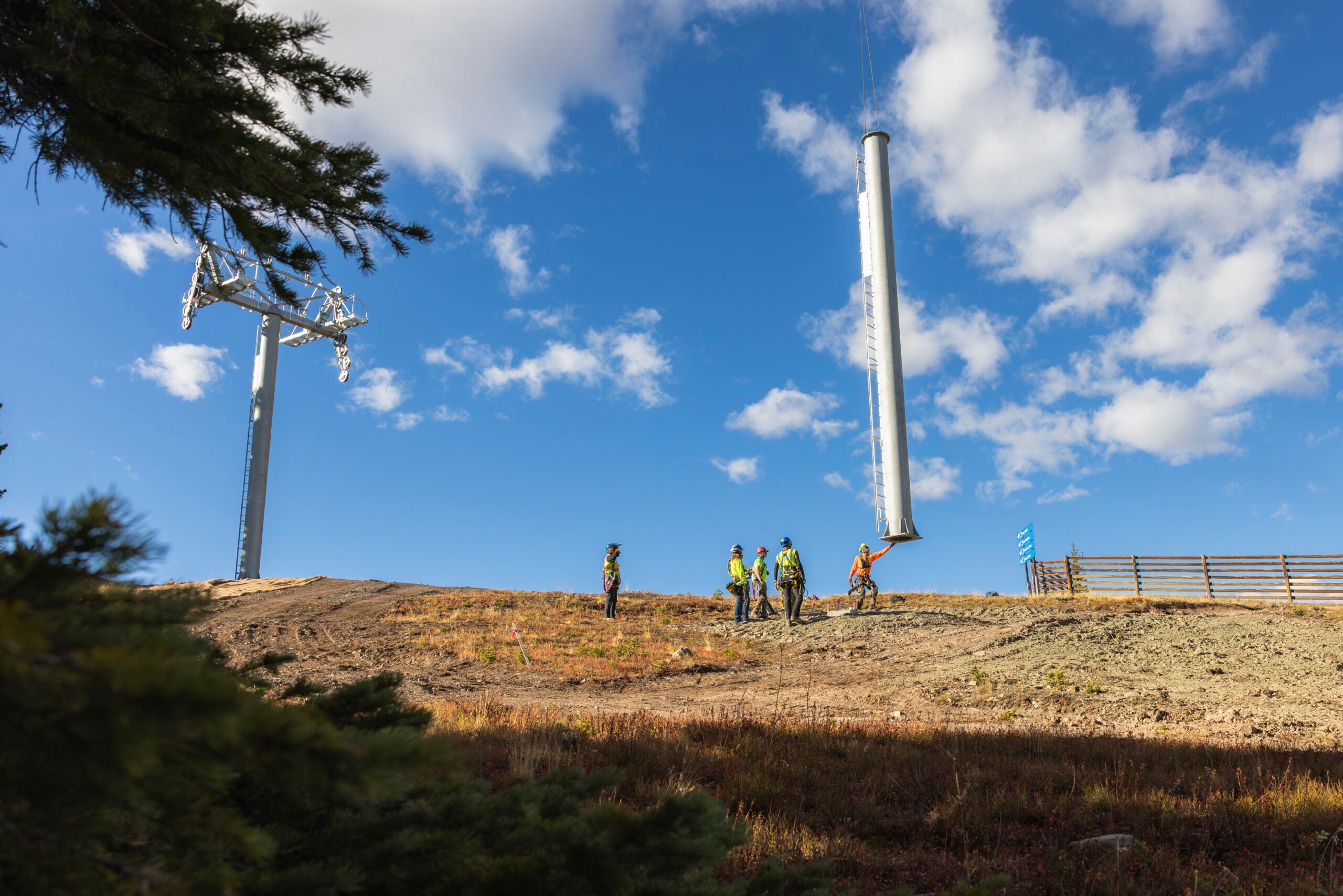
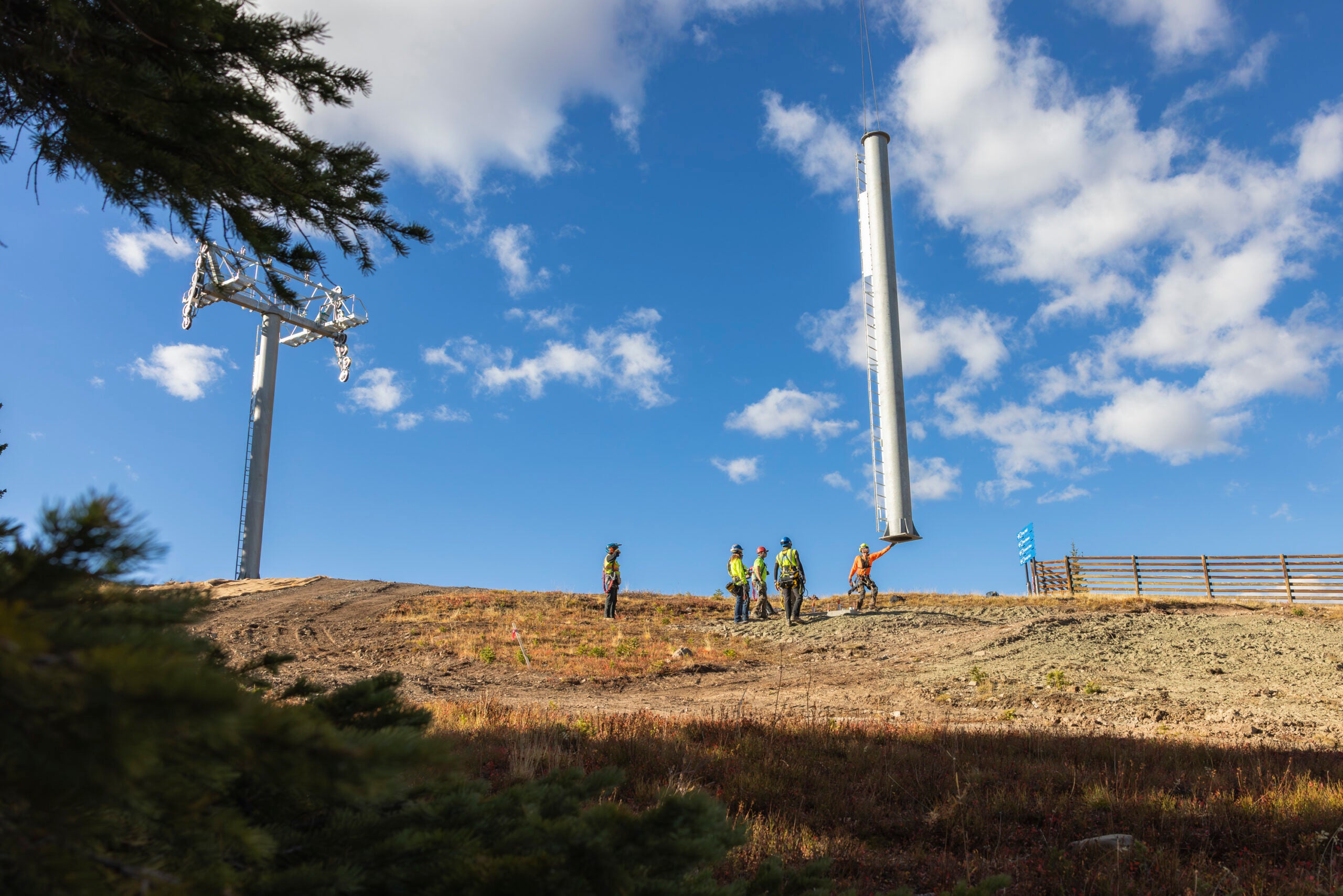
The crisp mountain air of Aspen Snowmass, even at a brisk 40 degrees Fahrenheit in early September, crackled with a unique blend of anticipation and focused intensity. Before the first chairlift rider would ever grace its cables, the foundation for the Elk Camp lift’s transformation was being laid, not with shovels and earthmovers, but with the calculated precision of a Black Hawk helicopter and the unwavering coordination of a ground crew. Pilot Adam, his voice sharp and clear over the rotor wash, issued a directive that underscored the delicate dance about to unfold: "You need to talk to me in inches out there." This was no ordinary construction project; it was a high-stakes aerial ballet, a symphony of engineering and human effort designed to replace an aging artery of the resort with a modern, high-capacity lifeline.
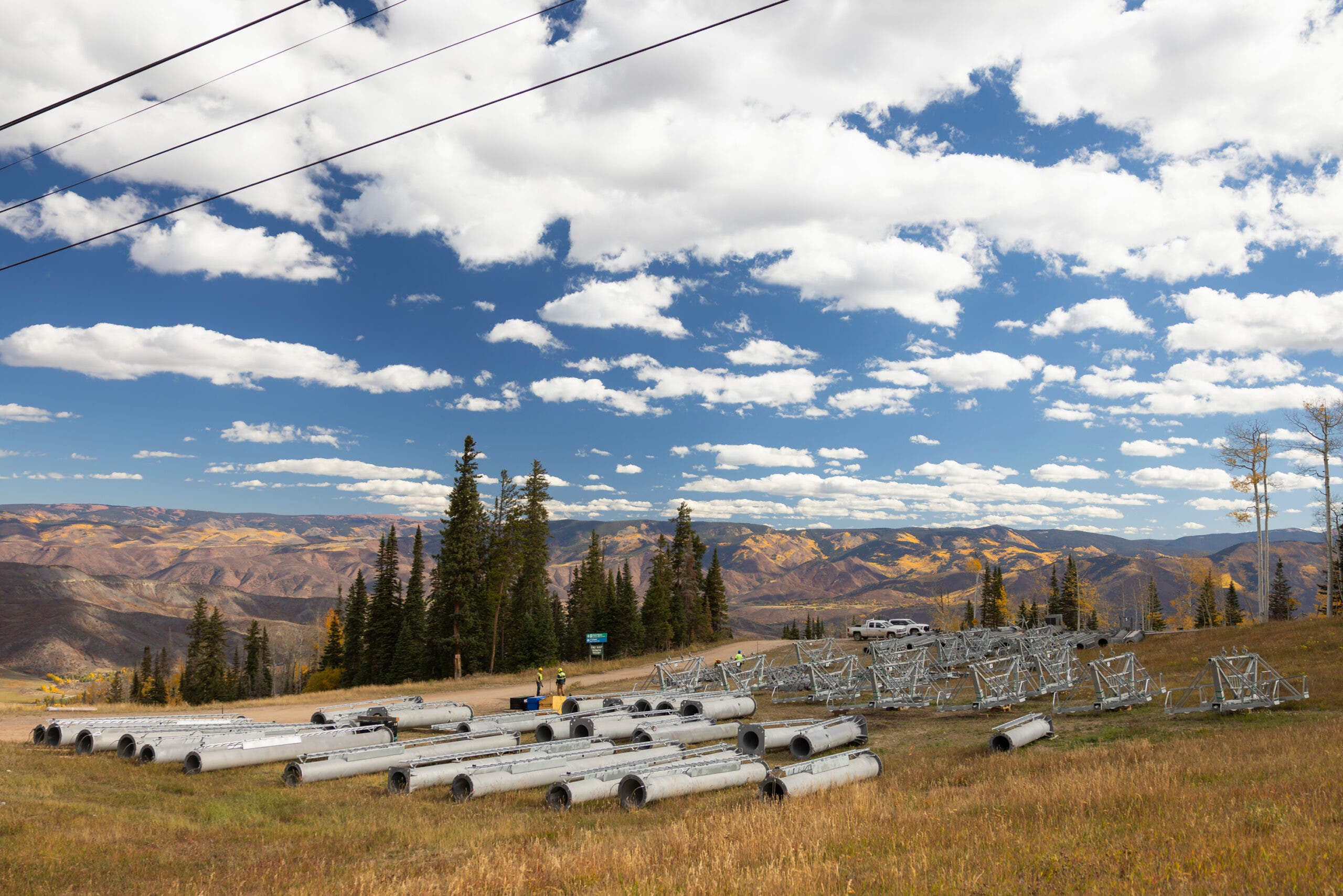
Within minutes, Adam was at the controls of the formidable Black Hawk, a machine capable of lifting an impressive 9,000 pounds. For three hours, he navigated the skies above Aspen Snowmass, a crucial mission underway: delivering 21 chairlift towers, their accompanying cross-arms, and the vital sheaves that would guide the cable into place. Each component was destined for threaded bolts with tolerances measured in fractions of an inch, demanding an almost surgical level of accuracy from both pilot and ground crew.
"If you’re not between the bird and the rig, it won’t get ya," project manager Bruce Meinzer stated with a cool, measured tone to the assembled group. This assembly, comprising about twenty individuals, predominantly men clad in high-visibility jackets and fueled by energy drinks, was divided into two "catching teams." Their role was critical: to manually guide the massive, 30- to 40-foot towers and their components into their exact positions as the helicopter precisely maneuvered them from above. This operation, occurring in October, marked a pivotal stage in the upgrade of the Elk Camp lift, originally constructed in 1995. The modernization project aimed to transition the lift from a quad to a more efficient six-pack configuration, a testament to Aspen Snowmass’s commitment to enhancing the skier experience and operational capacity.
The Long Road to a Modern Lift
The Elk Camp lift’s upgrade is far from an isolated event. It represents one of approximately 20 similar installations undertaken annually by Leitner-POMA, a manufacturing and installation company headquartered in Grand Junction, Colorado. This figure highlights the continuous investment required to maintain and enhance the infrastructure of major ski resorts across the United States.
John Mauch, sales manager at Leitner-POMA, elaborated on the typical lifecycle of such projects. "Most of the work building the lift takes four to five months getting manufactured in our factory in Grand Junction, Colorado, not in field construction," Mauch explained. "The above-ground work happens late in the process and executes fast." This phased approach underscores the intricate planning and off-site fabrication that precede the dramatic on-mountain assembly.
Engineering for Terrain and Capacity
The bespoke nature of ski lift design cannot be overstated. "No two chairlifts are the same, and the engineering and construction must be adapted to the specific terrain and carrying capacity requirements," Mauch emphasized. The process of replacing an existing lift, as with the Elk Camp project, presents a distinct set of challenges compared to establishing a new lift in an undeveloped area. "It’s one of the biggest capital investments a ski area will make," Mauch continued. "More than a restaurant, lodge, parking, snowmaking, and grooming equipment. It’s very permanent, and you can’t really move it when it’s in." This permanence underscores the strategic long-term vision required for such infrastructure decisions.
Navigating Bureaucracy: A Six-Year Journey
The path from concept to operation for a new ski lift is a labyrinth of planning, approvals, and environmental reviews. The development of the Elk Camp lift serves as a microcosm of this complex process. Aspen Snowmass initiated its master-planning phase for the new Elk Camp lift in 2019, a year before construction even began. This comprehensive planning is often necessitated by the fact that many U.S. ski areas operate, at least partially, on leased Forest Service land.
The subsequent years were filled with critical milestones:
- 2019: Master-planning initiated by Aspen Snowmass.
- 2022: Documentation of consensus achieved.
- 2023: Forest Service acceptance letter secured.
- 2024: Local approval granted.
- 2024-2025: National Environmental Policy Act (NEPA) environmental review conducted.
- 2025 (April): Contract signing finalized, paving the way for construction.
- September-October 2025: On-mountain assembly, including helicopter-assisted tower placement.
- December 12, 2025: Elk Camp lift officially opened to the public.
"From drawing a line on a page to the actual first person riding a chair, that journey was a six-year process," stated Mak Keeling, Vice President of Mountain Planning at Aspen Skiing Company, illustrating the extensive timeline involved. This protracted period highlights the significant lead time and multi-agency coordination required for such large-scale infrastructure projects in the United States.
A Tale of Two Continents: Innovation and Investment
The landscape of ski lift development in the United States presents a notable contrast to that of Europe, where innovation in lift technology often appears more rapid and adventurous. This divergence can be attributed, in part, to differing ownership and funding models.
"In Europe, typically the region or city owns the ski area land," Mauch explained. "Everyone in the city that profits from the ski area is taxed to help improve it. The value-added tax allows them to build a lot bigger, fancier machines, and that’s how they get by with cheaper lift tickets – they make the revenue from businesses that have to contribute, and they might have two to three lift companies competing on one resort." This integrated approach, where the broader economic ecosystem of a region directly contributes to ski resort infrastructure, fosters a different environment for investment and technological advancement.
Geoff Buchheister, CEO of Aspen Skiing Company, further elaborated on the European model. "In Europe, a 1,000-acre ski resort could be on 20 different owners’ land," Buchheister said. "A short lift on a farmer’s hillside with a cool heated bubble design up a steep cliff that gets him more skier scans generates more revenue, so you’ll see some independent, creative decisions made to appreciate someone’s personal property." Buchheister views these European lifts as inspirational, marveling at their "outside-the-box thinking" and seeing them as benchmarks for potential emulation in the U.S.
The Art of Aerial Installation
Despite the bureaucratic hurdles and differing economic models, the on-mountain execution of a ski lift installation remains a spectacle of engineering prowess. As the Elk Camp lift took shape, the pilot Adam skillfully maneuvered the massive towers, guided by the ground crew and their specialized "snakes"—guiding tubes that assisted in aligning the components with the pre-set circular pads of threaded bolts. The helicopter, a powerful aerial puppeteer, articulated its movements with a precision that belied its immense size and power.
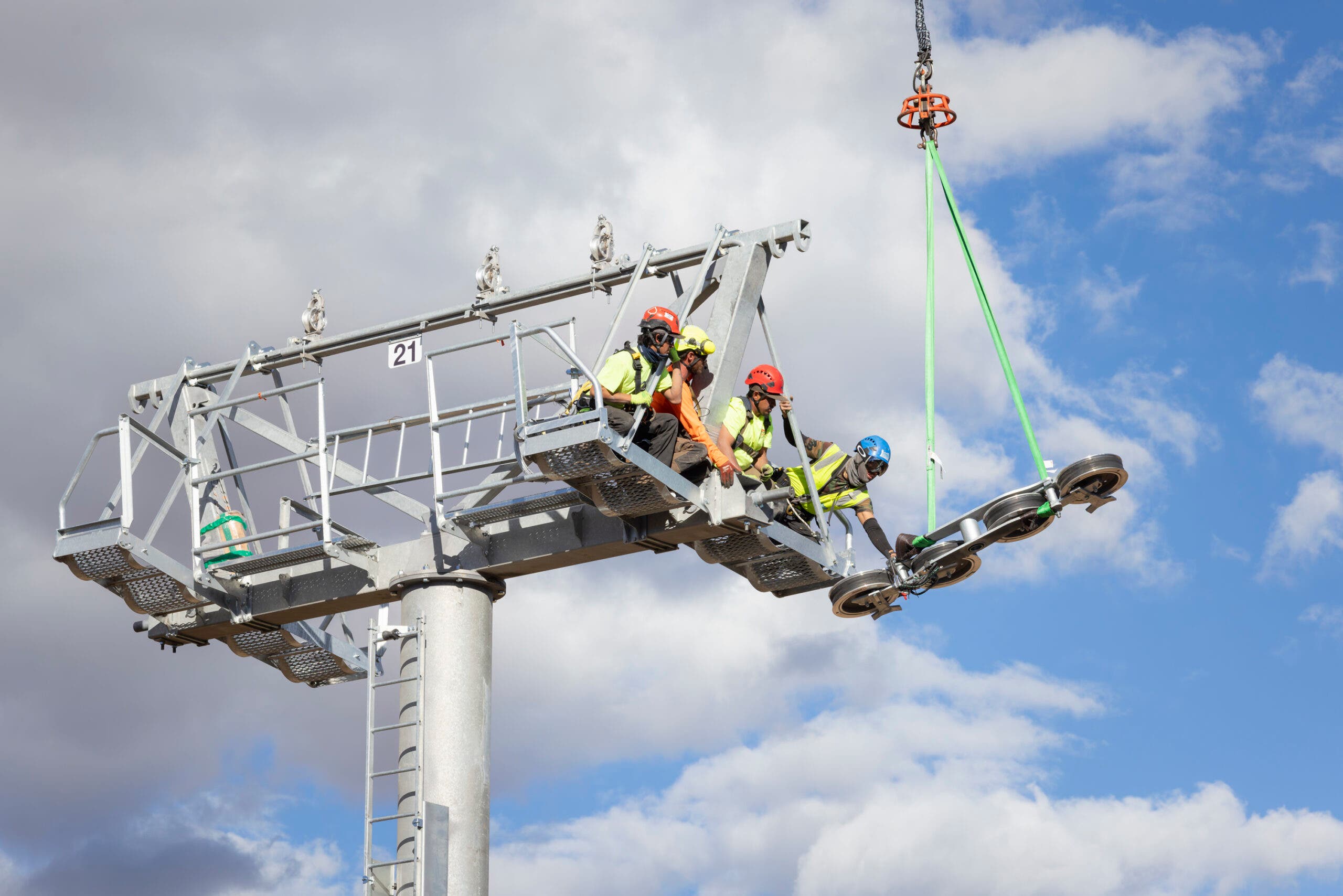
The work on the ground was equally demanding and fraught with inherent risks. "Keep your fingers on top!" a veteran installer cautioned, a stark reminder of a recent incident in Summit County where a worker lost a fingertip, described as having "popped like a grape," while guiding a tower. Following the helicopter’s precise placement, the ground crew hand-tightened the bolts. Moments later, they scrambled up the tower to install crossbars and sheaves, their efforts illuminated by the bright, high-visibility gear that stood out against the rugged mountain backdrop. The rotor wash, a constant force, kicked up dust and debris, a testament to the raw power being harnessed.
Longevity and Future Planning
The investment in a new ski lift is a long-term commitment. "The rule of thumb is generally that a new ski lift is likely usable for around 40 years before it needs to be upgraded," Buchheister stated. Aspen Skiing Company, with its extensive network of 40 chairlifts across its four mountains, faces a recurring need for infrastructure renewal. This means that the ambitious planning and precise execution witnessed during the Elk Camp lift installation are not one-off events, but rather a continuous cycle of improvement and adaptation to meet the evolving demands of the ski industry and its patrons.
Dreaming Big, Building Precisely
The process of envisioning and developing new lifts is a source of considerable professional satisfaction. Buchheister recounted one of his most memorable days as CEO: "skiing around all four mountains with Mak, white sheeting the whole area and asking each other, ‘what if we did this here or that there?’" These collaborative brainstorming sessions, fueled by a passion for the mountains and a desire to innovate, explore possibilities ranging from aerial transit systems to alleviate traffic congestion to creative ways of connecting different parts of the resort for enhanced skier flow. Yet, even the most ambitious visions ultimately hinge on the tangible, precise execution of engineering feats, like a 12,000-pound helicopter delivering a steel pole onto a designated spot with pinpoint accuracy.
The tension of the October installation day was palpable, but the installers’ movements were fluid and practiced. "Building ski lifts is fun!" one of the crew members exclaimed, a sentiment that encapsulated the demanding yet rewarding nature of their work. Once the bolts were secured with powerful drills, the next phase involved the arrival of six semi-trucks laden with chairs, ready to be attached to the tensioned cable. Finally, engineers conducted rigorous load-testing to ensure the lift’s safety and capacity before its grand debut.
The culmination of this meticulous process was the opening day ribbon-cutting ceremony on December 12, 2025. It marked not just the launch of a new chairlift, but a celebration of the collective effort, the dedication, and the technical expertise that transform ambitious plans into modern marvels of mountain transportation, ready to serve skiers and snowboarders for decades to come.