

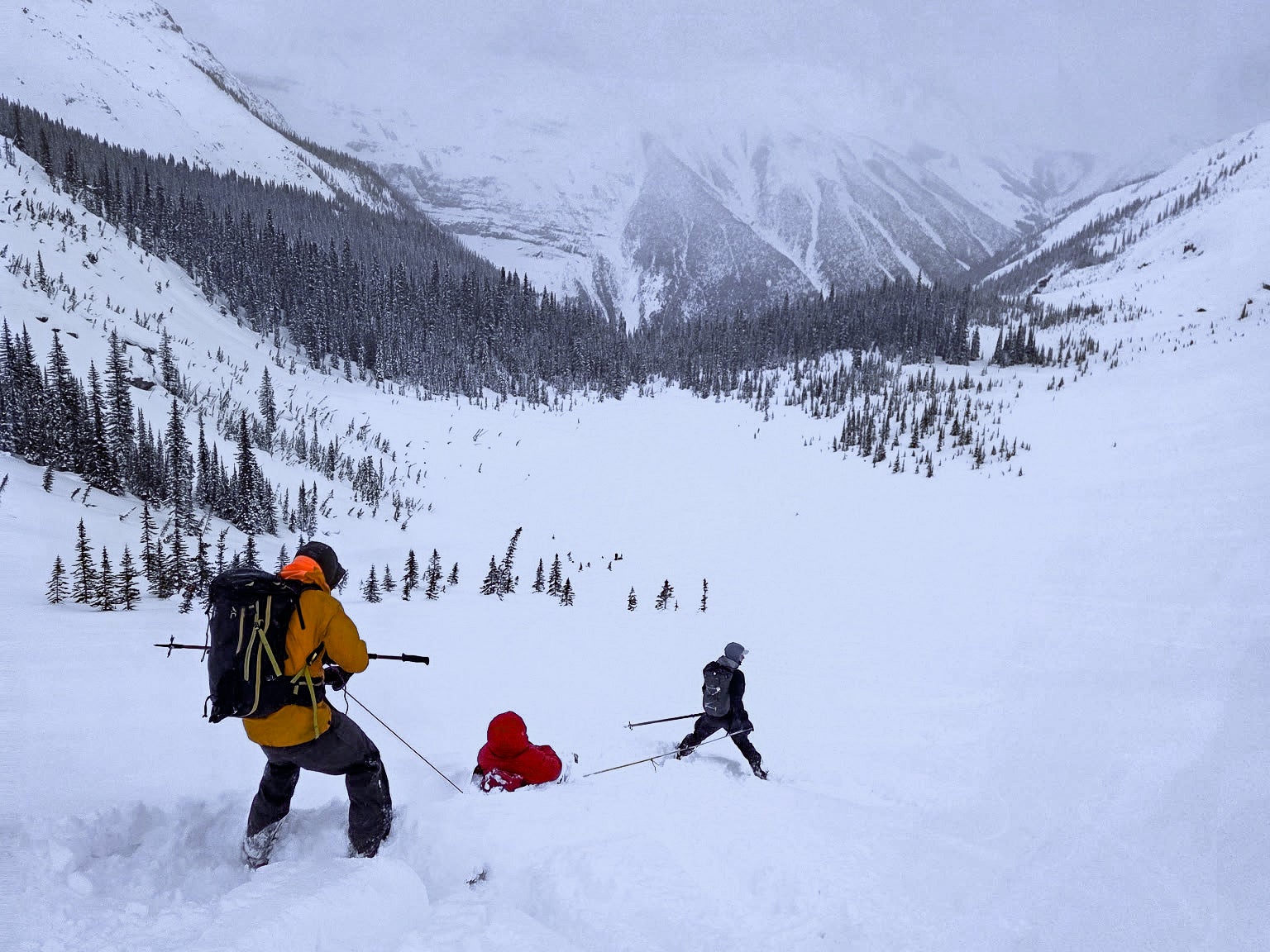
The stark reality of backcountry skiing often hinges on preparedness, and while avalanche transceivers, probes, and shovels are standard safety equipment, a simple yet profoundly effective tool is increasingly being recognized as indispensable: the rescue sled. Far from being mere "guide gear," these durable tarps with integrated rigging are proving to be the critical difference between a prolonged, complex, and potentially fatal rescue operation and a self-sufficient extraction, allowing skiers to regain control of their own emergency.
The Underestimated Utility of the Rescue Sled
The conversation surrounding backcountry safety has long emphasized avalanche rescue techniques. However, a significant blind spot exists for the immediate aftermath of an incident, whether it be an avalanche burial, a severe injury, or incapacitation due to environmental factors. Richard Bothwell, a seasoned ski guide and avalanche instructor with three decades of experience in the Tahoe and Lassen regions, highlights this critical gap. "In 30 years of guiding skiing, I’ve unburied one person from an avalanche," Bothwell stated in a recent interview. "But I’ve used my rescue sled dozens of times." This statistic underscores a crucial point: while avalanche burials are the most dramatic and feared scenarios, other forms of incapacitation are far more common and necessitate efficient extrication.
A rescue sled, at its core, is a robust tarp constructed from high-tensile strength materials such as Dyneema. Equipped with reinforced grommets, it allows for the attachment of cordage, transforming it into a makeshift sled capable of transporting an injured individual. The applications are varied: moving a patient to a safer, more sheltered location; facilitating access to a helicopter landing zone; or, for the most physically capable, dragging a victim all the way back to a vehicle or base camp.
A Shift in Backcountry Preparedness
The author’s personal experience reflects a growing awareness within the backcountry community. After years of pushing the boundaries of steep skiing and venturing deeper into the Eastern Sierra backcountry, the need for enhanced rescue capabilities became apparent. This led to recertification in Wilderness First Responder (WFR) and the acquisition of a rescue sled. While fortunate enough to have never needed to deploy their own sled for an emergency, Bothwell’s expectation of using his at least once per season, whether for his own group or another less-prepared party, emphasizes its practical necessity.
Bothwell posits that a pervasive mindset among some backcountry enthusiasts is an over-reliance on external rescue services. "I think there’s a mindset that a lot of backcountry skiers have that ‘I’m going to hit my InReach and the cavalry is going to come screaming over the ridge top’," he explained. "It’s too late to take a WFR course when your ski partner has just run into a tree." This perspective highlights the crucial importance of self-sufficiency and immediate on-site response capabilities.
Beyond Avalanche Rescue: A Broader Scope of Emergency Response
The current emphasis in avalanche education, while vital, can inadvertently create a perception that all backcountry rescue scenarios are akin to a beacon search. Bothwell clarifies this distinction: "That’s a valuable skill that people should have, but it’s not the same thing as avalanche rescue." The critical difference lies in the condition of the rescued individual. After an avalanche burial, if the victim is alive, they are often severely debilitated and require immediate extrication and medical attention. This is where the rescue sled’s utility extends far beyond the immediate aftermath of an avalanche.
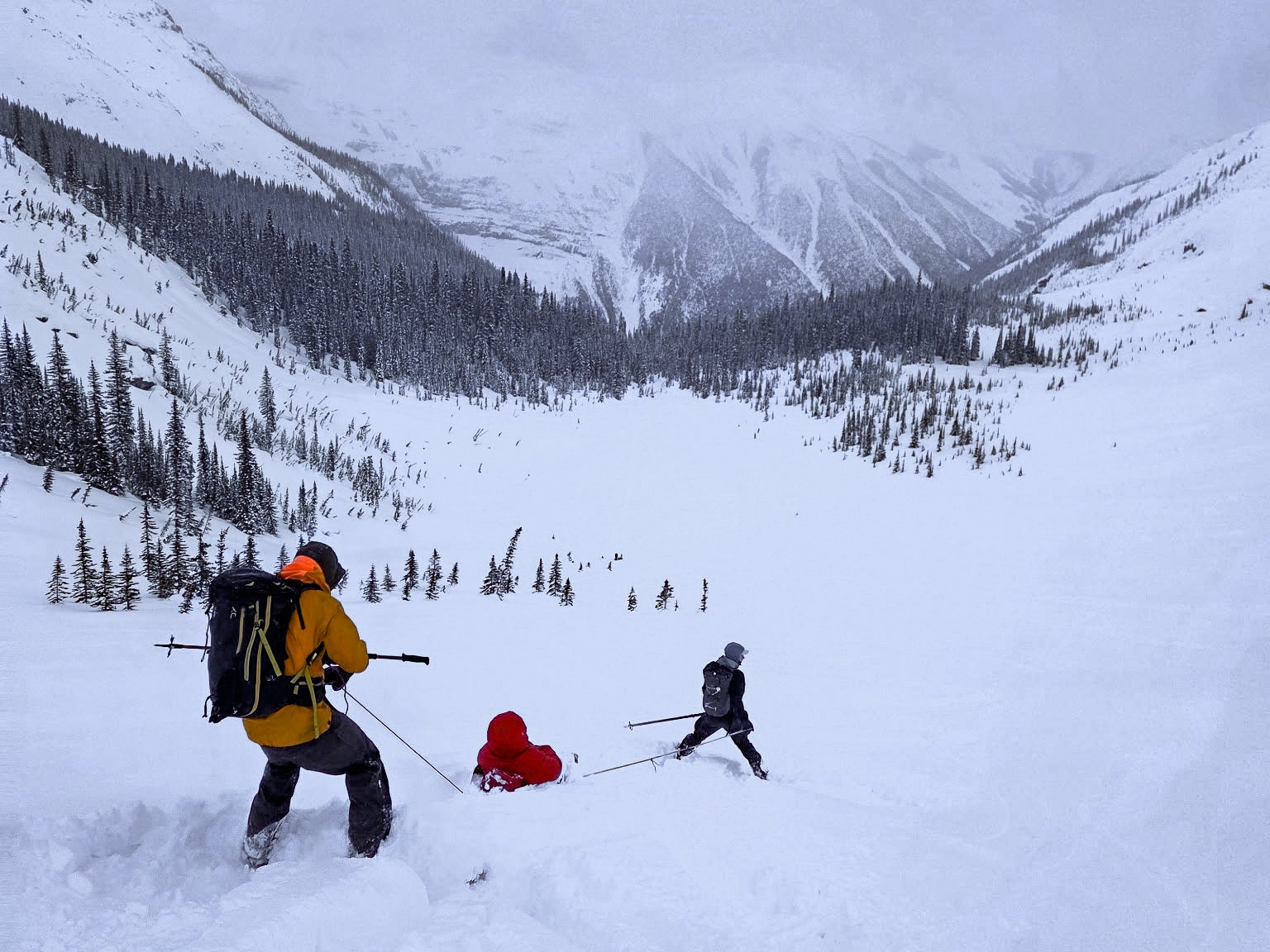
The terminology surrounding these devices has also played a role in their adoption. Historically referred to as "guide gear," this nomenclature inadvertently excluded recreational backcountry skiers from recognizing their own potential need. Bothwell argues this is a disservice, as skiers of all experience levels are susceptible to injuries like torn ACLs or fractured tibial plateaus, which necessitate patient transport.
The Emergence of Modern Rescue Sleds
The outdoor gear market is now witnessing a surge in innovation and accessibility for rescue sleds. Mark Smiley, an IFMGA guide renowned for his gear modifications and sharing them online, has introduced the "Bruce Wayne Rescue Tarp." This ultralight version, priced around $125, offers a sleek, minimalist design reminiscent of tactical gear. Similarly, Hyperlite Mountain Gear has released a sophisticated rescue tarp crafted from advanced composite fabrics, signaling a growing industry recognition of this essential equipment.
These modern iterations are not only improving the performance of rescue sleds but also reinforcing their multi-functional nature. Many skiers, caught up in the technicalities of rigging a sled, overlook the fundamental utility of the device itself: it is, after all, a tarp. This simple realization unlocks a multitude of applications. It can serve as a windbreak or the foundation for an impromptu lean-to shelter. It can be used to wrap a hypothermic individual, providing crucial insulation. Placed either beneath or on top of a patient (especially when sleeping pads are unavailable), it can facilitate first aid administration while keeping the individual off the cold snow.
Real-World Applications and the Cost of Inaction
The efficacy of these devices is not merely theoretical. Mark Smiley recently experienced the practical benefits of his Bruce Wayne tarp firsthand. On January 29th, while guiding near the Hilda Hut in British Columbia, a client suffered a severe knee injury during a slow, backward fall. Smiley and his fellow guides were able to quickly deploy the tarp and transport the injured skier over 1,400 vertical feet back to the hut. "We had a lot in our favor—fall line, not too far from the hut—but the tarp worked really, really well," Smiley reported.
When questioned about the alternative, Smiley candidly stated, "I would have had to call a helicopter." The reliance on helicopter evacuations in backcountry scenarios is a complex issue. For those who have never required such assistance, helicopters can appear as an immediate, all-encompassing solution. However, for those who have experienced the process, they represent a resource subject to unpredictable factors. Search and Rescue (SAR) operations in remote areas, such as the Eastern Sierra backcountry, can range from a few hours to over 24 hours, depending on numerous variables. In the harsh winter environment, this extended exposure time can be perilous for individuals unprepared for prolonged periods in extreme conditions.
A Call to Action: Prepare or Hope
The message from experienced professionals is unequivocal: backcountry skiers must be equipped with the knowledge and tools to manage emergencies effectively. Richard Bothwell encapsulates this sentiment with a stark dichotomy: "If you’re a backcountry skier, you have two options," he advised. "You need to either recognize that you’re well prepared, or that hope is your strategy."
The implications of this preparedness extend beyond individual safety. A well-equipped and skilled group can mitigate the burden on professional rescue services, allowing them to focus on more complex or widespread incidents. The investment in a rescue sled, coupled with the commitment to learning its proper deployment, represents a proactive step towards responsible backcountry stewardship. It acknowledges that while the allure of untouched powder and remote landscapes is powerful, the potential for unexpected challenges is inherent, and preparedness is not an option, but a necessity. The rescue sled, often overlooked, stands as a testament to the principle that sometimes, the most effective solutions are the simplest, provided we are willing to carry them and know how to use them.