

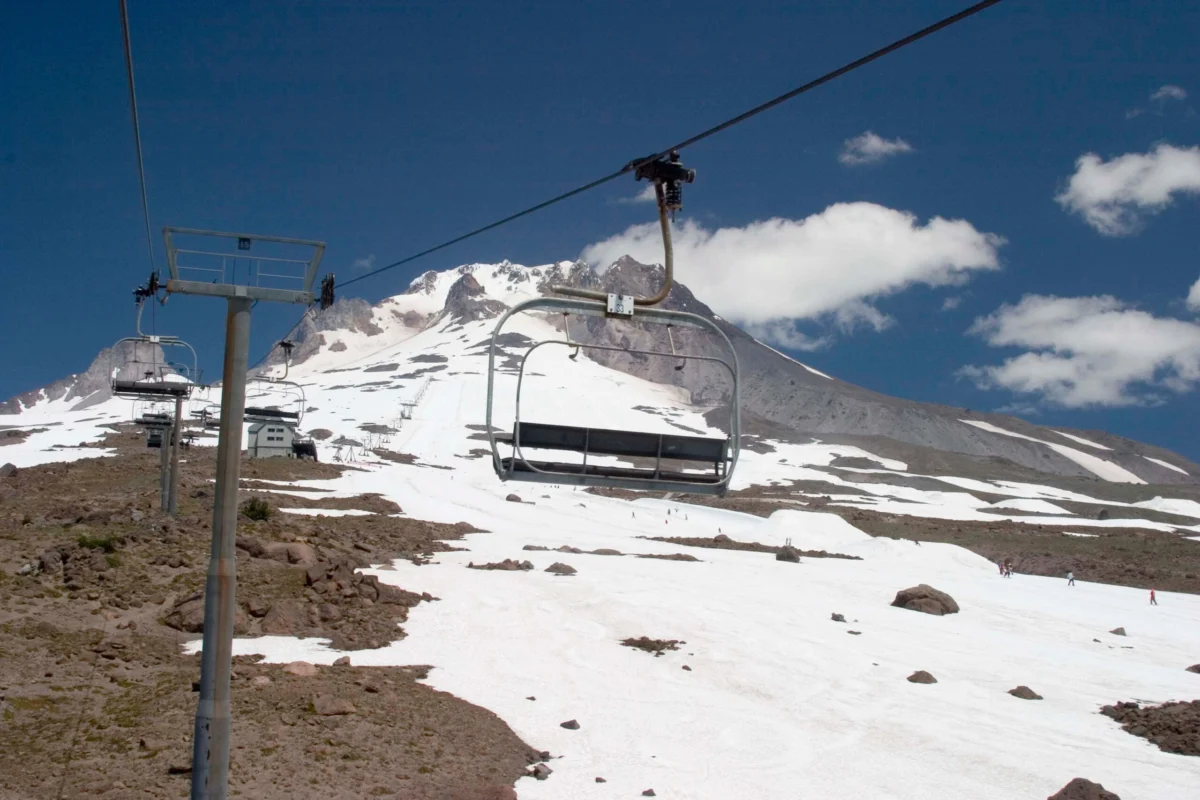
The summer ski season at Timberline Lodge, a renowned destination for warm-weather snow sports on Mount Hood, is projected to conclude by mid-July, significantly earlier than its traditional August closing date. This anticipated early shutdown is attributed to a diminished snowpack, a direct consequence of a winter season characterized by below-average snowfall. The Palmer Snowfield, the only portion of Timberline accessible for summer skiing, relies entirely on natural snowfall for its operation, as the resort does not utilize artificial snowmaking capabilities. This dependency makes the snowpack’s depth and longevity critical factors for the duration of its summer operations.
The Unfolding Scenario: A Shorter Summer on the Snow
This year’s projection for a July 19th closure, as indicated by updates from Mt. Hood Summer Ski Camps, represents a notable departure from the lodge’s typical operational schedule. Historically, Timberline Lodge has managed to keep its summer ski operations open well into August, providing a consistent training and recreational venue for skiers and snowboarders from around the globe. The current forecast suggests that the available snow coverage will recede at an accelerated rate throughout the spring and early summer months, rendering the terrain unskiable much sooner than anticipated. This premature melt-off will necessitate an earlier transition for the mountain’s activities, shifting focus from snow sports to the burgeoning summer pursuits of hiking and mountain biking.
Historical Context of Summer Skiing on Mount Hood
Mount Hood, the highest peak in Oregon, has a long-standing history as a summer skiing destination. The Palmer Snowfield, situated at an elevation of approximately 8,500 feet, is particularly conducive to retaining snow well into the warmer months. This unique geographical advantage has established Timberline Lodge as a premier location for summer ski camps, professional athlete training, and recreational skiing for enthusiasts seeking to extend their season. For decades, the Palmer Snowfield has been a consistent fixture for the international ski community, offering a rare opportunity to hone skills on challenging alpine terrain during the summer. The lodge itself, a historic landmark built in the 1930s, adds to the allure of the location, drawing visitors not only for its skiing but also for its architectural significance and breathtaking natural surroundings. The summer ski season typically commences in late May or early June, following the spring melt, and concludes when the snow depth becomes insufficient to support safe skiing operations.
Analyzing the Snowpack Deficit: Data and Contributing Factors
The current predicament stems from a winter season that failed to deliver the expected snowfall. While precise figures for the 2025-2026 winter season’s total snowfall at Timberline Lodge are not publicly detailed in the provided text, the declaration of a "below-average snowpack" implies a significant shortfall compared to historical averages. For context, typical winter snowfall at higher elevations of Mount Hood can range from hundreds of inches annually. For instance, in a strong winter, ski resorts on Mount Hood can accumulate upwards of 500 inches of snow. A deficit in this accumulation directly translates to less snow available to sustain the Palmer Snowfield through the spring and summer melt.
Several factors can contribute to reduced snowfall in a given winter. These can include shifts in atmospheric patterns, such as the influence of El Niño or La Niña phenomena, which can alter the jet stream’s path and affect precipitation levels in the Pacific Northwest. Changes in overall climate patterns, leading to warmer winter temperatures, can also result in more precipitation falling as rain rather than snow at lower elevations, and can accelerate snowmelt even when snowfall is adequate. Without access to specific meteorological data for the 2025-2026 winter, a definitive cause-and-effect analysis remains speculative, but the outcome is a starkly reduced snow base.
The Operational Reality: Reliance on Natural Snow
Timberline Lodge’s operational model for summer skiing is fundamentally tied to the natural snow accumulation on the Palmer Snowfield. Unlike many ski resorts that invest in extensive snowmaking systems to supplement natural snowfall, Timberline’s summer operations are entirely dependent on the winter’s bounty. This reliance presents a vulnerability, particularly in years with suboptimal winter weather. The snowpack on the Palmer Snowfield must be substantial enough to withstand the increasing solar radiation and ambient temperatures of spring and early summer. As the season progresses, the snow surface begins to melt and consolidate, and if the initial accumulation was insufficient, this process can lead to the exposure of bare ground and rock much earlier than desired. The depth of the snowpack is not merely about covering the terrain; it is also about the density and integrity of the snow layers, which are crucial for maintaining a consistent and safe skiing surface.

Impact on Athletes and Training Programs
The early closure of the Palmer Snowfield has direct implications for the athletes and training programs that rely on this unique summer venue. Mt. Hood Summer Ski Camps and other specialized training facilities, such as Windells Camp, utilize the Palmer Snowfield to provide athletes with an extended period of on-snow training and development. This is particularly crucial for competitive skiers and snowboarders who aim to refine their techniques, practice new tricks, and prepare for the upcoming winter season.
The Kai Jones Signature Session with Atomic & TGR at Windells Camp, scheduled for July 12-18, highlights the compressed timeframe for such opportunities. This session, designed to foster progression and skill development, will now take place within a significantly tighter window. For aspiring athletes, this means that the opportunity to train alongside professionals and benefit from the high-altitude conditions of the Palmer Snowfield is more limited than in previous years. The urgency to maximize training time becomes paramount as the projected closure date looms. This scenario underscores the importance of these summer camps and the challenges they face when natural conditions are less than ideal.
Broader Implications for the Region and Tourism
The early conclusion of the summer ski season at Timberline Lodge can have broader implications for the regional tourism economy. While Timberline is a significant draw for skiers and snowboarders, the mountain also attracts visitors for its hiking trails and scenic beauty during the summer months. An earlier cessation of ski operations could potentially affect businesses that cater to the ski community, including lodging, dining, and retail establishments in the surrounding areas.
However, the shift in focus to other summer activities like hiking and mountain biking may also present alternative economic opportunities. Mount Hood National Forest offers extensive trail networks that are popular with outdoor enthusiasts. The lodge and its associated businesses may pivot to emphasize these activities, potentially mitigating some of the economic impact of a shortened ski season. The success of this pivot will depend on marketing efforts and the inherent appeal of these alternative recreational pursuits.
Furthermore, this event serves as a pertinent case study regarding the vulnerability of climate-dependent tourism operations. As weather patterns become more variable and potentially more extreme due to climate change, destinations that rely on specific natural conditions, such as consistent snowfall, may face increasing challenges in maintaining their traditional operational schedules. This could necessitate strategic planning and investment in diversification or adaptation measures for such enterprises.
Official Statements and Future Outlook
While the provided text does not include direct quotes from Timberline Lodge management or official spokespersons regarding the current season’s projections, the information disseminated through Mt. Hood Summer Ski Camps serves as a strong indicator of the prevailing conditions and anticipated operational timeline. The resort’s long-standing commitment to summer skiing suggests that every effort would be made to extend the season as long as feasible and safe.
The absence of snowmaking for summer operations is a deliberate choice, likely rooted in the historical abundance of natural snow and potentially in environmental considerations or cost-effectiveness. However, this year’s circumstances highlight the inherent risks associated with such a model in an era of changing climate. Looking ahead, Timberline Lodge, like many other mountain destinations, may need to consider strategies for resilience in the face of unpredictable weather patterns. This could involve exploring options for enhanced snow preservation techniques, diversifying the year-round appeal of the resort, or adapting operational plans to accommodate greater variability. The focus on July 19th as the projected closing date underscores the immediate challenge, and the broader conversation about climate adaptation in the outdoor recreation industry will undoubtedly continue.
