

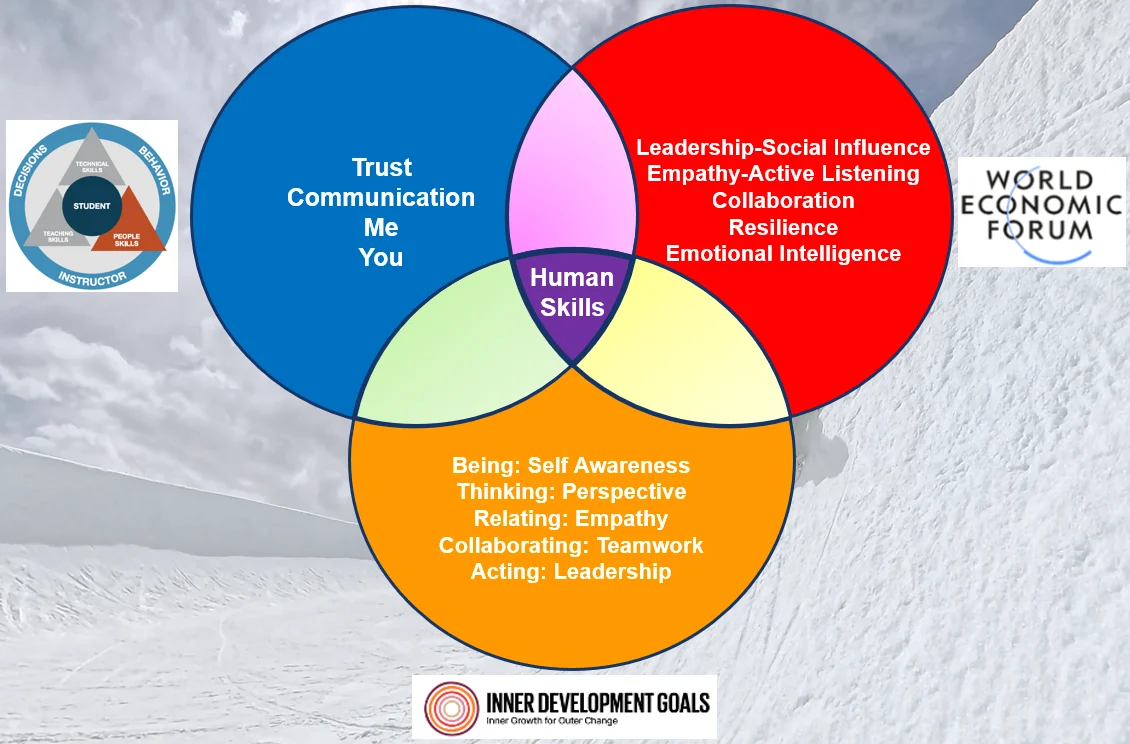
Kranjska Gora, Slovenia – In an increasingly technologically advanced world, the value of uniquely human capabilities such as empathy, communication, and adaptability is surging, not only in specialized fields like snowsports instruction but across the global professional landscape. This critical intersection was the central theme of a compelling presentation by Dave Schuiling, PSIA-AASI Director of Education & Credentialing, at the 6th SPE Balkan Ski Conference in Kranjska Gora, Slovenia, an event co-sponsored by the International Association of Education in Science and Snowsports (IAESS). Schuiling’s address, titled “Making People Skills Visible,” underscored a profound shift in professional development paradigms, advocating for the intentional cultivation of interpersonal competencies as essential for both exceptional instruction and thriving in the rapidly evolving future of work.
The Evolution of Instructional Excellence: From Tacit to Explicit
For decades, the bedrock of professional snowsports education, particularly within organizations like PSIA-AASI (Professional Ski Instructors of America and American Association of Snowboard Instructors), rested firmly on three foundational pillars: technical performance, teaching skills, and a comprehensive professional knowledge of the sport. These domains, encompassing everything from mastering carving techniques to understanding snow science and pedagogical methods, were, and continue to be, critically important for effective instruction. However, a crucial dimension often remained in the background—the intrinsic human element that transforms a good instructor into a truly exceptional one. Qualities such as the ability to forge genuine connections with students, build trust, communicate effectively under varied conditions, and adapt instruction to individual needs were recognized implicitly, celebrated anecdotally, but rarely clearly defined, articulated, or systematically integrated into training and assessment frameworks.
This implicit understanding of "people skills" began to undergo a significant transformation with the introduction of the Learning ConnectionSM framework by PSIA-AASI. This innovative model marked a pivotal moment, consciously elevating "People Skills" to a distinct and equally vital domain, positioned alongside "Teaching Skills" and "Technical Skills." By explicitly identifying and categorizing these interpersonal competencies, the framework provided a much-needed lexicon to describe the nuanced behaviors that underpin strong human interaction in a learning environment. This paradigm shift was not merely a semantic exercise; it represented a strategic commitment to holistic instructor development, acknowledging that mastery extends beyond technique and theory to encompass the profound impact of human connection.
Defining the Human Element: Core People Skills in Focus
The formal articulation of "People Skills" within the Learning ConnectionSM framework brought a host of previously uncodified behaviors into sharp focus. While the original article did not list them, typical examples of these vital competencies include:
- Active Listening: The ability to fully concentrate on, understand, respond to, and remember what is being said, both verbally and non-verbally.
- Empathy: The capacity to understand or feel what another person is experiencing from within their frame of reference, walking in their shoes.
- Rapport Building: The skill of establishing a harmonious and trusting relationship with students, creating an atmosphere of mutual understanding and respect.
- Clear Communication: The ability to convey information, instructions, and feedback in a concise, understandable, and encouraging manner, adapting language to the student’s level.
- Emotional Intelligence: Recognizing, understanding, and managing one’s own emotions, and recognizing, understanding, and influencing the emotions of others.
- Adaptability: The flexibility to adjust teaching strategies, communication styles, and lesson plans in real-time based on student progress, mood, and environmental factors.
- Motivation and Encouragement: The capacity to inspire confidence, foster a growth mindset, and provide positive reinforcement, especially during challenging moments.
- Feedback Delivery: Providing constructive criticism and praise in a way that is supportive, actionable, and promotes learning rather than discouragement.
- Conflict Resolution: Effectively addressing misunderstandings or frustrations that may arise, maintaining a positive learning environment.
The act of making these behaviors visible has profound implications. Once articulated, these skills transition from abstract concepts to tangible, measurable competencies. This visibility enables intentional practice, allowing instructors to actively work on improving their interpersonal interactions with the same rigor they apply to perfecting a turn or explaining a concept. It facilitates clear discussion among peers and mentors, fostering a culture of continuous improvement in human connection. Crucially, it also allows for more consistent and objective assessment, providing a standardized benchmark for evaluating an instructor’s overall effectiveness, moving beyond subjective impressions to concrete behavioral indicators.
The Evidence: Resonating Beyond the Slopes
The intuitive power of "people skills" is often revealed through simple yet profound exercises. At the SPE Balkan Ski Conference, Schuiling initiated the session with a straightforward question: "What skills or behaviors did your favorite teacher or coach have?" The responses, collected from a diverse audience of snowsports professionals, were remarkably consistent and illuminating. Words like "empathy," "patience," "humor," "belief in the student," "trust," "communication," and "passion" dominated the feedback. What was striking was the almost complete absence of technical ability in these answers. Rarely did participants laud their favorite instructor for their flawless carving or perfect jump; instead, they remembered how that individual made them feel and how they interacted with them as human beings.
This exercise powerfully underscores a universal truth: while technical expertise is foundational, it is the human connection that truly leaves a lasting impact on a learner. It highlights that the most effective educators are not just masters of their craft, but also masters of human interaction. This insight is not unique to snowsports; it resonates deeply across all educational disciplines and, as Schuiling’s presentation meticulously detailed, holds significant implications for the broader professional world.
The SPE Balkan Ski Conference and IAESS: A Platform for Progress
The 6th SPE Balkan Ski Conference provided an ideal international platform for this discussion. Organized by the Ski Instructors and Trainers Association of Slovenia (ZUTS) and hosted in the picturesque setting of Kranjska Gora, the conference annually convenes leading snowsports educators, researchers, and industry professionals from across the Balkan region and beyond. Its primary objective is to foster the exchange of knowledge, innovative teaching methodologies, and scientific research related to snowsports education and safety. The International Association of Education in Science and Snowsports (IAESS), an organization dedicated to advancing scientific understanding and educational standards in snowsports, played a significant role as a co-sponsor, lending its academic gravitas to the event.

Such conferences are crucial for disseminating best practices and driving evolution within the industry. Schuiling’s presentation, representing PSIA-AASI’s advanced educational philosophy, served as a testament to the organization’s commitment to pushing the boundaries of instructor development. By sharing the Learning ConnectionSM framework and its emphasis on "people skills," PSIA-AASI reinforced its leadership position in defining what constitutes comprehensive excellence in snowsports instruction, influencing practices globally. The event’s international scope meant that these concepts would resonate with and potentially inspire similar educational reforms in other national and regional snowsports associations.
Credentialing and Consistency: Elevating Professional Standards
The formal integration of "People Skills" into the educational framework has had a transformative impact on PSIA-AASI’s credentialing system. By using the Learning ConnectionSM as a foundational blueprint, the organization has been able to define explicit learning outcomes and assessment criteria that transcend specific snowsports disciplines. This standardization ensures a remarkable level of consistency in how instructor skills are developed and evaluated, whether an individual is teaching alpine skiing, snowboarding, telemark, or adaptive snowsports.
This consistent approach to credentialing offers several benefits. It provides clear pathways for instructor development, allowing candidates to understand precisely what is expected of them in terms of interpersonal competencies. It enhances the objectivity and fairness of assessments, moving beyond subjective interpretations to evaluate observable behaviors. Moreover, it elevates the overall professional standard of snowsports instruction, assuring students that their instructors are not only technically proficient and pedagogically sound but also skilled in creating supportive, engaging, and empathetic learning environments. This alignment across disciplines strengthens the professional identity of snowsports instructors and reinforces the value of their expertise.
The Paradox of Progress: Human Skills in a Digital Age
A deeper realization emerged from this focused work on "people skills": these competencies—communication, empathy, adaptability, collaboration—are not acquired instantaneously. They demand time, consistent effort, self-reflection, constructive feedback, and real-world experience. Their development often involves struggle, patience, and persistence—qualities encapsulated by what we might simply call grit. This inherent developmental timeline presents a fascinating paradox in our contemporary world.
We inhabit an era characterized by unparalleled speed and an insatiable appetite for immediate results. Technological advancements accelerate at an exponential pace, with information accessible instantaneously and artificial intelligence capable of summarizing, building, and generating complex answers in mere seconds. Yet, simultaneously, the skills that organizations globally are increasingly prioritizing are precisely those that resist instant gratification: communication, emotional intelligence, collaboration, and leadership. These are not algorithms to be programmed or data points to be processed; they are deeply human attributes that mature through sustained practice and lived experience.
Global Consensus: People Skills as Future-Proof Assets
The convergence of snowsports education’s focus on "people skills" with the broader discourse on the future of work is striking and undeniable. Global workforce research consistently highlights human-centered capabilities as indispensable for navigating the complexities of the coming decades. Prominent institutions and initiatives worldwide echo this sentiment:
- World Economic Forum (WEF): A leading international organization for public-private cooperation, the WEF has repeatedly identified a core set of emerging skills critical for 2030 and beyond. These include adaptability, empathy, emotional intelligence, collaboration, leadership, resilience, and curiosity (which underpins lifelong learning). The WEF’s extensive research, drawing on insights from industry leaders, policymakers, and academics, underscores that as automation and AI handle routine and analytical tasks, the demand for uniquely human attributes will intensify.
- Inner Development Goals (IDG) Initiative: This relatively newer framework, launched by a global collective of researchers, experts, and practitioners, provides a roadmap for cultivating inner capacities essential for sustainable development and societal well-being. The IDG framework describes similar capacities across five dimensions: "Being" (e.g., inner compass, integrity), "Thinking" (e.g., critical thinking, perspective-taking), "Relating" (e.g., empathy, compassion, cultural intelligence), "Collaborating" (e.g., communication, co-creation), and "Acting" (e.g., courage, optimism). The profound alignment between the IDG’s emphasis on inner growth and the "People Skills" identified by PSIA-AASI is remarkable.
When one steps back to observe these diverse frameworks—from the specialized needs of snowsports education to the macro-level demands of the global economy—the overlap is not merely coincidental; it is foundational. The qualities that define an outstanding snowsports instructor are precisely the human skills that are increasingly valued, sought after, and rewarded across virtually every profession and industry.
Beyond the Slopes: Cultivating Transferable Capabilities for a Rapidly Changing World
This profound alignment carries significant implications. It does not suggest that snowsports instruction is primarily about preparing individuals for corporate careers; rather, it highlights a powerful and often underestimated facet of instruction and experiential education more broadly. When organizations like PSIA-AASI invest in helping instructors develop robust "people skills," they are accomplishing far more than merely improving the quality of a ski lesson. They are actively cultivating a suite of highly transferable human capabilities that extend far beyond the confines of the mountain slopes.
In an era where technology continues its relentless march forward, automating routine tasks and augmenting human intellect, the unique attributes of human connection, understanding, and collaboration will only grow in importance. The more advanced our tools become, the more invaluable our inherently human skills—our capacity for empathy, our ability to inspire, our flexibility in the face of the unknown—will prove to be. Snowsports education, by making these "people skills" visible, teachable, and assessable, is inadvertently positioning itself as a vital incubator for the very competencies that will define success and resilience in the rapidly changing world of tomorrow. It stands as a testament to the enduring power of human connection in learning, growth, and professional excellence.
