

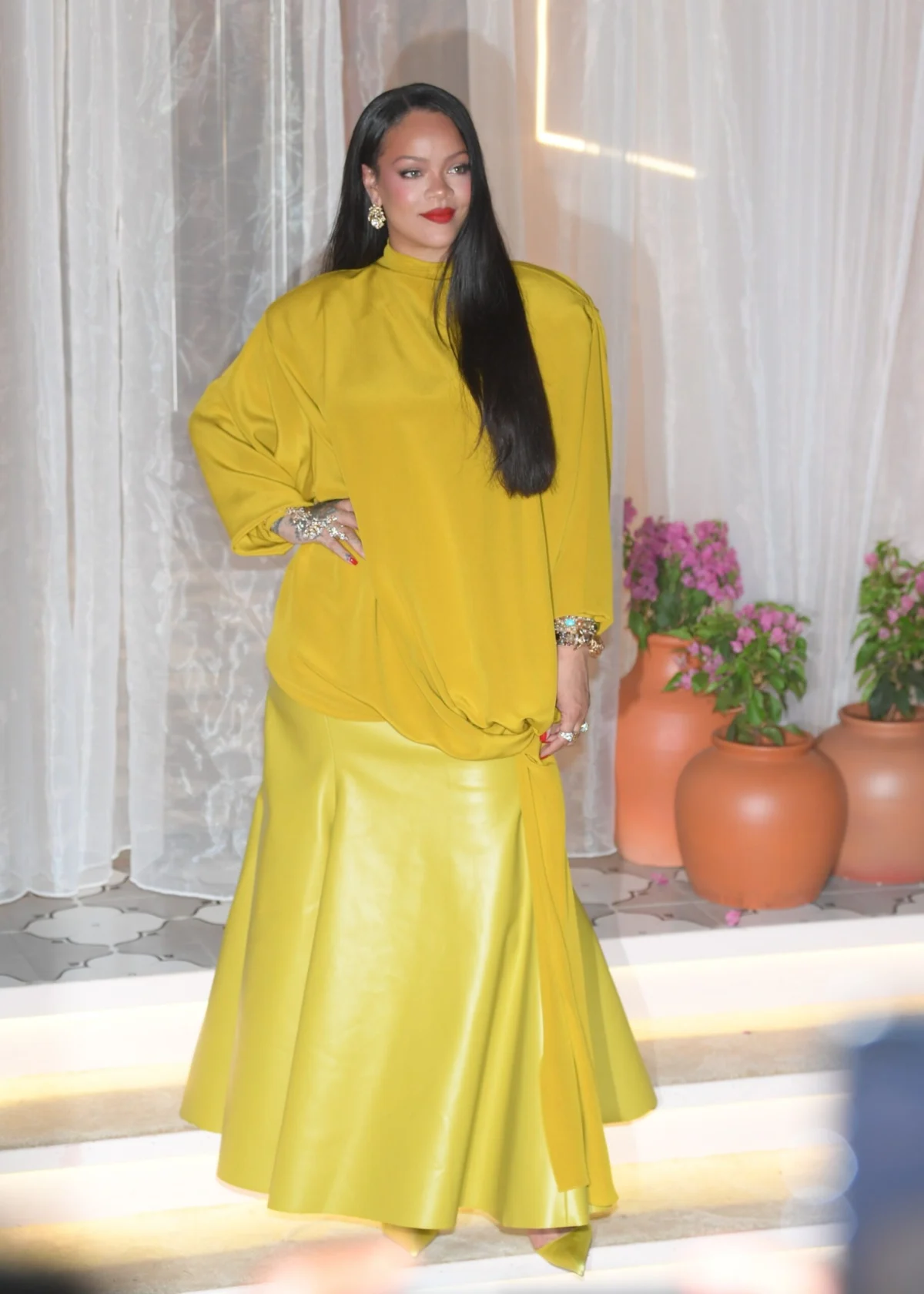
Rihanna, the global icon and beauty mogul, has decisively signaled a shift away from the pervasive pastel trend, embracing a vibrant and audacious chartreuse hue for her recent appearance in Mumbai, India. The fashion world, which has been captivated by the soft, buttery tones of yellow for several seasons, now finds itself presented with a powerful counterpoint, championed by an artist renowned for her trend-setting influence. This striking sartorial choice, made during a Fenty Beauty pop-up event, not only showcased Rihanna’s fearless approach to color but also paid a thoughtful homage to her host country through carefully selected accessories.
A Vibrant Arrival in Mumbai
The Fenty Beauty pop-up event in Mumbai marked a significant moment for the brand’s expansion into the Indian market, a region with a rich and diverse cultural heritage, particularly in its appreciation for vibrant colors and intricate adornments. Rihanna’s arrival was met with considerable anticipation, and her chosen ensemble immediately became a focal point of discussion and admiration. Eschewing the gentle, almost timid, butter yellow that has dominated fashion runways and street style alike, Rihanna opted for a commanding chartreuse.
Her outfit consisted of a flowing, mock-neck long-sleeved top paired with a dramatically flared, ankle-length leather skirt. Both pieces are reported to be from the Fall 2026 collection of Mugler, under the creative direction of Sébastien Meyer and Arnaud Vaillant. This particular collection, showcased earlier in the year, has been noted for its bold silhouettes and a confident reinterpretation of the brand’s iconic aesthetic. The choice of such a contemporary and avant-garde design underscores Rihanna’s commitment to pushing fashion boundaries. Completing the monochromatic look, she wore point-toe asymmetrical heels in the identical, electrifying shade of chartreuse, creating a seamless and impactful visual statement.
A Nod to Indian Craftsmanship and Heritage
Beyond the striking modernity of her Mugler attire, Rihanna demonstrated a profound respect for Indian artistry by incorporating exquisite jewelry from the renowned designer Manish Malhotra. The selection was not merely an accessory choice but a deliberate tribute to the host country’s rich tradition of craftsmanship. She adorned herself with heaps of gold bracelets, each intricately inlaid with a vibrant spectrum of cabochon gemstones, reflecting a kaleidoscope of colors. Complementing these were elaborate earrings that dangled with artisanal precision, and a traditional gold hathphool, a piece of jewelry that gracefully winds its way up the hand, a symbol of elegance and cultural significance.
Manish Malhotra, a name synonymous with Bollywood fashion and the celebration of Indian textiles and embellishments, has consistently championed the preservation and modern interpretation of traditional Indian crafts. His collaboration with Rihanna for this event further cemented the fusion of global fashion with local artistry, highlighting the enduring appeal and versatility of Indian jewelry design on an international stage. This thoughtful integration of local elements into her high-fashion ensemble resonated deeply, demonstrating a sophisticated understanding of cultural exchange.

The Shifting Sands of Color Trends
The dominance of butter yellow in fashion over the past several seasons has been undeniable. It has graced countless red carpets, permeated everyday wardrobes, and been a consistent presence in designer collections. Its appeal lies in its softness, its inherent optimism, and its versatility, pairing well with a wide range of skin tones and other colors. However, fashion is a cyclical and dynamic landscape, constantly seeking new expressions and palettes.
While butter yellow has enjoyed a prolonged moment in the spotlight, other hues have been steadily gaining traction, signaling a potential recalibration of the color hierarchy. Cobalt blue, with its intense saturation and regal aura, has emerged as a powerful statement color. Similarly, nuanced greens, such as the "split pea soup green" noted in emerging trends, offer a sophisticated alternative to brighter shades. Royal purple, a color historically associated with luxury and power, has also been making a strong comeback.
Rihanna’s bold embrace of chartreuse, a vivid and energetic shade of green, can be interpreted as a definitive move to challenge the established pastel order. Chartreuse, often perceived as a more daring and avant-garde choice, possesses a unique vibrancy that demands attention. Its inclusion in Rihanna’s wardrobe at such a prominent event suggests that it is poised to ascend from a niche trend to a mainstream contender, potentially eclipsing the softer yellows that have held sway for so long.
A History of Yellow Advocacy
It is crucial to note that Rihanna’s relationship with the color yellow is not new; it is, in fact, deeply intertwined with her most iconic fashion moments. Her appearance at the 2015 Met Gala, themed "China: Through the Looking Glass," remains etched in fashion history. For this prestigious event, she wore a breathtaking Guo Pei gown, a creation of imperial yellow silk that featured an elaborate, floor-sweeping train. This ensemble was not merely a dress; it was a statement of power, artistry, and a profound engagement with the theme, all rendered in a commanding shade of yellow.
This particular gown, celebrated for its sculptural form and intricate embroidery, solidified Rihanna’s reputation as a fashion innovator and a fearless champion of bold color choices. It is no exaggeration to say that this singular moment amplified the appreciation for yellow, particularly its richer and more opulent iterations, on a global scale. Her past embrace of the color, therefore, makes her current pivot all the more significant. By moving from a majestic marigold to a zesty chartreuse, she is not abandoning yellow but rather evolving its narrative, pushing its boundaries into more daring and unexpected territories.
Implications for the Fashion Industry
Rihanna’s sartorial pronouncements carry immense weight within the fashion industry and among consumers. Her endorsement of a particular color or style can significantly influence purchasing decisions and subsequent design trends. The shift from butter yellow to chartreuse, if adopted widely, could signal a broader movement towards more vibrant and assertive color palettes in upcoming collections.

Brands that have heavily invested in pastel yellow may need to consider diversifying their offerings to incorporate bolder hues. Retailers will likely see increased demand for chartreuse and similar energetic shades, prompting them to adjust their inventory accordingly. Furthermore, this move could encourage consumers to experiment more with color, stepping outside their comfort zones and embracing more adventurous fashion choices. The psychological impact of color is well-documented, with brighter, more saturated tones often associated with increased energy, confidence, and optimism. Rihanna’s embrace of chartreuse might tap into a collective desire for a more vibrant and uplifting post-pandemic fashion landscape.
The timing of this shift is also noteworthy. As fashion continues to navigate the post-pandemic era, there is a palpable desire for renewed optimism and a departure from the muted tones that may have previously reflected a more subdued collective mood. Vibrant colors like chartreuse offer a sense of exuberance and a forward-looking spirit, aligning with a global sentiment of re-emergence and celebration.
The Fenty Beauty Context
The Fenty Beauty pop-up in Mumbai is more than just a promotional event; it represents Fenty Beauty’s strategic expansion into one of the world’s most dynamic and rapidly growing consumer markets. India, with its burgeoning middle class and a strong appreciation for beauty and cosmetics, presents a significant opportunity for global brands. Rihanna’s personal connection and careful consideration of local culture, as evidenced by her choice of Manish Malhotra jewelry, demonstrate a commitment to authentic engagement rather than superficial market entry.
Fenty Beauty has consistently been lauded for its inclusivity, offering a wide shade range that caters to diverse skin tones. This philosophy of inclusivity extends beyond product offerings to encompass brand messaging and cultural representation. Rihanna’s choice to embrace a bold, globally recognized designer alongside a celebrated Indian jewelry artisan exemplifies this approach, showcasing a vision that is both international and locally sensitive. The success of this pop-up and Rihanna’s impactful appearance are likely to set a precedent for future brand activations in the region, reinforcing Fenty Beauty’s reputation for thoughtful and impactful market penetration.
In conclusion, Rihanna’s bold statement in chartreuse in Mumbai is a powerful indicator of evolving fashion trends. It serves as a sartorial declaration that the era of subtle pastels may be giving way to a more vibrant and audacious future. Her ability to seamlessly blend high fashion with cultural homage, while simultaneously influencing global color trends, reaffirms her position as a singular force in the realms of beauty, fashion, and cultural influence. The fashion world will undoubtedly be watching closely to see if chartreuse, propelled by Rihanna’s influence, will indeed dethrone the reign of butter yellow.
