

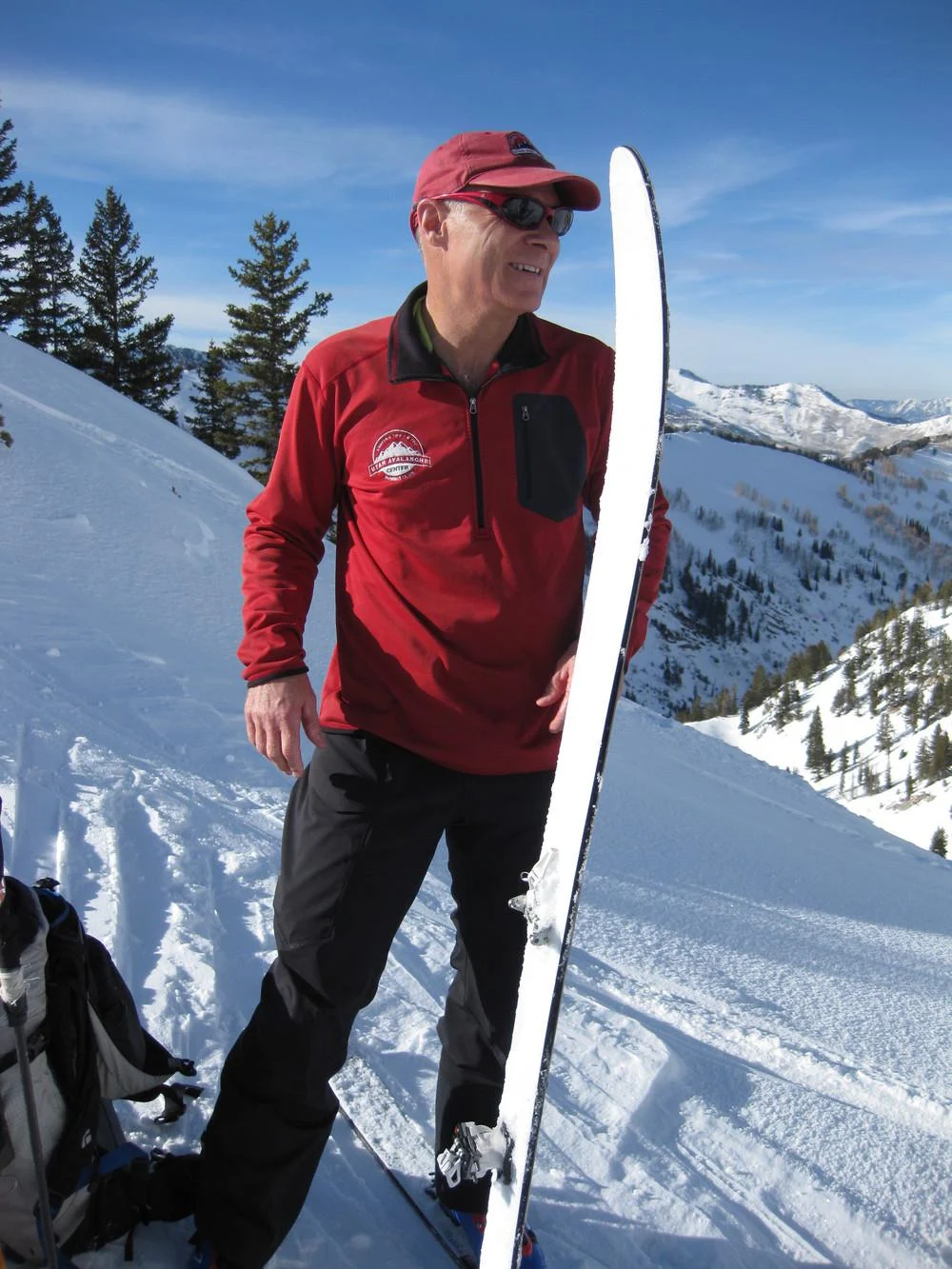
The landscape of mountain safety in the United States is set for a significant transition as the U.S. Forest Service confirms the retirement of Bruce Tremper, the long-standing Director of the Utah Avalanche Center. Tremper, whose name has become synonymous with avalanche education and backcountry safety over the past 29 years, will officially step down from his post at the end of August. His departure marks the end of an era for the Wasatch Range and the broader international avalanche community, where his contributions have fundamentally reshaped how the public understands and interacts with snowy terrain. Following a rigorous selection process, the Forest Service also announced that Mark Staples, an experienced forecaster from the Gallatin National Forest Avalanche Center, will succeed Tremper as the new Director, ensuring a continuity of expertise for one of the most active avalanche centers in the world.
A Legacy Rooted in Science and Fieldwork
Bruce Tremper’s career in snow science began far from the steep couloirs of the Wasatch. A native of Montana, Tremper’s academic foundation was laid at Montana State University, where he earned a Master of Science degree. During his time in Bozeman, he studied under the tutelage of Dr. John Montagne, a pioneer in the field of geomorphology and snow science. This academic rigor provided Tremper with a deep understanding of the mechanical properties of snow crystals and the metamorphic processes that lead to slope instability.
However, Tremper was never content to remain solely in the laboratory. He quickly transitioned his theoretical knowledge into practical application, working on the front lines of avalanche mitigation. His early professional years saw him performing high-stakes avalanche control work at Bridger Bowl and Big Sky Resort in Montana. These roles required not only physical stamina but also the ability to make split-second decisions regarding explosives and terrain management to ensure the safety of thousands of resort guests.
Before arriving in Utah, Tremper expanded his horizons to the rugged landscapes of Alaska. Working alongside legendary figures in the field such as Doug Fesler, Jill Fredston, and Jim Woodmency, he served as an avalanche forecaster at the Alaska Avalanche Center. This period was instrumental in honing his ability to communicate complex risks to the public, a skill that would define his later career. In 1986, Tremper was appointed Director of the Utah Avalanche Center (UAC), a role he would hold for nearly three decades, guiding the organization through a period of unprecedented growth in winter backcountry recreation.
Revolutionizing Public Safety Communications
When Tremper first assumed leadership of the UAC in the mid-1980s, the primary method for delivering avalanche information to the public was via recorded telephone messages. These "hotlines" were limited in scope and accessibility. Recognizing the rapid evolution of technology and the increasing number of people venturing into the backcountry, Tremper became a driving force behind the modernization of avalanche forecasting.
Under his direction, the UAC became an early adopter of internet-based products, transforming the way data was visualized and consumed. One of Tremper’s most significant contributions to the industry was the introduction of standardized icons and the conceptualization of "Avalanche Problems." Rather than simply providing a single danger rating (such as "Moderate" or "High"), Tremper and his team developed a system that identified the specific nature of the threat—whether it was wind-drifted snow, persistent weak layers, or wet snow instabilities. This nuanced approach allowed backcountry users to make more informed decisions based on the specific type of danger present on a given day.
Tremper’s influence extended into the creation of the North American Avalanche Danger Scale. In 2010, he was a key member of the working group that refined the conceptual model of avalanche danger, ensuring that the terminology used by forecasters across the continent was consistent, clear, and scientifically grounded. This standardization has been credited with saving countless lives by reducing confusion among recreators who travel between different mountain ranges.
The 2002 Winter Olympics and Global Outreach
The pinnacle of Tremper’s administrative career came in 2002, when Salt Lake City hosted the Winter Olympic Games. The eyes of the world were on the Wasatch Mountains, and the responsibility for ensuring the safety of the backcountry areas surrounding the Olympic venues fell largely on Tremper’s shoulders. He was tasked with coordinating a massive safety operation that integrated various agencies and ensured that the influx of international visitors and media remained safe in a high-risk environment.
Throughout his tenure, Tremper also served as a primary spokesperson for the U.S. Forest Service regarding winter safety. His ability to distill complex atmospheric and geological data into digestible information made him a frequent guest on national and international news outlets. Whether explaining the mechanics of a tragic accident or providing a seasonal outlook, Tremper maintained a professional, objective, and reassuring presence that bolstered the public’s trust in the Forest Service.
Educational Contributions and Literary Impact
Beyond his operational duties, Tremper has been a prolific educator and author. For six years, he served as the editor of The Avalanche Review, the professional journal of the American Avalanche Association. His written work has reached a global audience, most notably through his books, including Staying Alive in Avalanche Terrain. Often cited as the "bible" of backcountry safety, the book transformed the way avalanche education was taught, focusing on human factors and decision-making heuristics as much as snow science.
For decades, Tremper has also been a cornerstone of the National Avalanche School, mentoring the next generation of professional forecasters and ski patrollers. His teaching style, which emphasizes humility and constant learning, has influenced thousands of professionals worldwide. Even in retirement, Tremper has indicated that he will remain active in the community, continuing to write, teach, and contribute to specialized safety projects.

Chronology of Leadership and Key Milestones
To understand the scale of Tremper’s impact, one must look at the timeline of his career and the evolution of the UAC under his watch:
- 1970s – Early 1980s: Academic training at Montana State University and field experience at Bridger Bowl and Big Sky.
- 1984 – 1986: Forecasting in Alaska, developing the foundations of public safety communication.
- 1986: Appointment as Director of the Utah Avalanche Center.
- 1990s: Transition from analog phone advisories to early digital platforms.
- 2002: Leadership of backcountry safety for the Salt Lake City Winter Olympics.
- 2004: Publication of Staying Alive in Avalanche Terrain, which became a definitive text in the field.
- 2010: Collaborative development of the North American Avalanche Danger Scale.
- 2015: Announcement of retirement and transition of leadership to Mark Staples.
Passing the Torch: Mark Staples and the Future of the UAC
The appointment of Mark Staples as the incoming Director represents a strategic move by the Forest Service to maintain the high standards of the UAC. Staples brings a pedigree that mirrors Tremper’s own blend of academic excellence and field experience. Like his predecessor, Staples holds a Master of Science degree in Engineering from Montana State University, where his research focused specifically on snow avalanche mechanics.
Staples’ professional background includes extensive work as a ski patroller and snow safety officer at Big Sky Ski Area. Most recently, he spent eight seasons as a backcountry forecaster at the Gallatin National Forest Avalanche Center in Bozeman. His experience in the intermountain snowpack of Montana—known for its complex layering and persistent instabilities—makes him uniquely qualified to manage the similarly challenging conditions of the Wasatch.
Staples has also contributed to several national-level projects for the National Avalanche Center, demonstrating a capacity for leadership that extends beyond local forecasting. As he takes the helm, Staples inherits a "top-notch" team at the UAC that has been seasoned by years of working under Tremper’s mentorship.
Data and Implications: The Growing Importance of the UAC
The retirement of Bruce Tremper comes at a time when the importance of avalanche forecasting has never been higher. Over the last three decades, the number of winter backcountry users in Utah has grown exponentially. According to data from the outdoor industry, the Wasatch Range is one of the most heavily used backcountry areas in the world.
Statistical analysis of avalanche fatalities over the past 30 years shows that while the number of people entering the backcountry has skyrocketed, the rate of fatalities has not followed the same vertical trajectory. Many experts attribute this decoupling to the increased availability of high-quality, real-time avalanche information and the widespread adoption of the educational principles championed by Tremper.
The UAC currently provides daily advisories for eight different regions in Utah, reaching hundreds of thousands of users each season via their website, social media, and mobile apps. The transition in leadership occurs as the center continues to face new challenges, including the effects of climate change on snowpack stability and the increasing pressure of "crowdsourcing" in the digital age, where social media posts can sometimes conflict with professional forecasts.
Official Responses and Community Sentiment
While the Forest Service operates with a focus on institutional continuity, the personal impact of Tremper’s retirement is felt deeply across the industry. Colleagues have noted that Tremper’s wife, Susi, has been an integral part of his journey, and the couple is expected to spend their newfound free time continuing to explore the Wasatch backcountry on skis.
In statements regarding the transition, the Forest Service emphasized the "positive light" in which Tremper always presented the agency. His ability to navigate the politics of land management while maintaining a laser focus on public safety has been cited as a model for public service.
Mark Staples, in his initial comments following the announcement, expressed a deep respect for the foundation Tremper built. "Mark is looking forward to joining the top-notch UAC team," the announcement noted, signaling a commitment to the collaborative culture that Tremper fostered.
Conclusion: A Lasting Impact on Mountain Safety
As Bruce Tremper prepares to ski into the next chapter of his life, his legacy remains etched into the very way we perceive the mountains in winter. He transformed the Utah Avalanche Center from a local advisory service into a global leader in snow safety innovation. Through his writing, his teaching, and his tireless commitment to the science of snow, he has provided the tools for generations of skiers, snowboarders, and snowmobilers to return home safely.
The transition to Mark Staples’ leadership ensures that the Utah Avalanche Center will continue to evolve, meeting the challenges of a changing climate and a growing population of outdoor enthusiasts. While the face of the UAC may be changing, the mission remains the same: to provide the public with the knowledge and data necessary to navigate the beautiful but deadly terrain of the high mountains. Bruce Tremper’s retirement is not just the conclusion of a distinguished career; it is a celebration of a life dedicated to the safety and education of the mountain community.
