

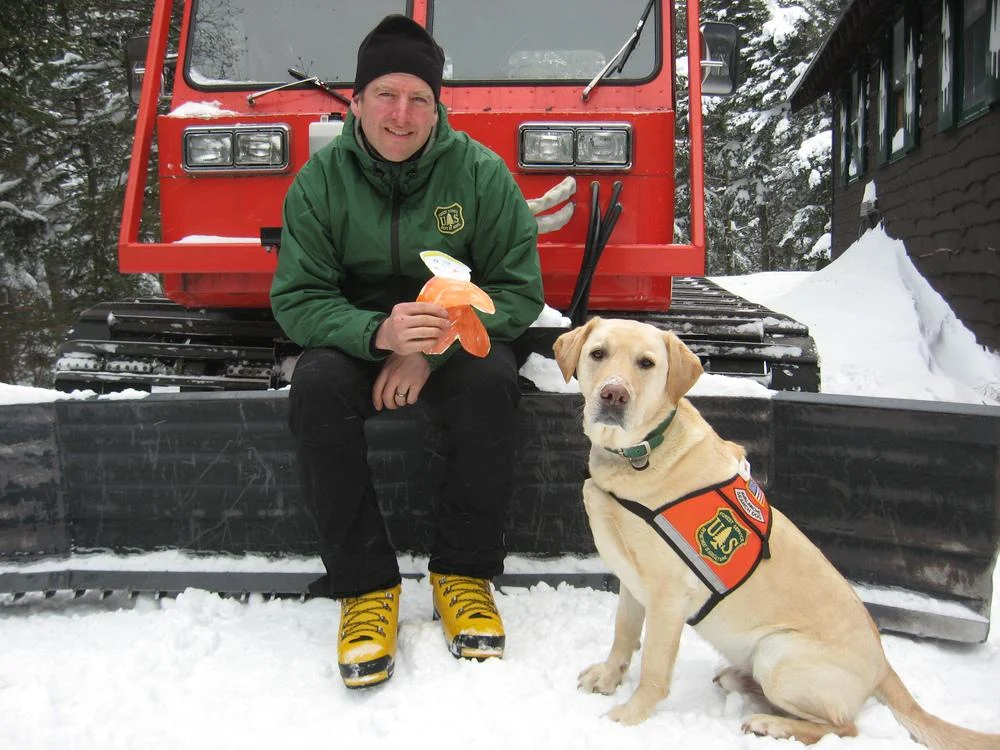
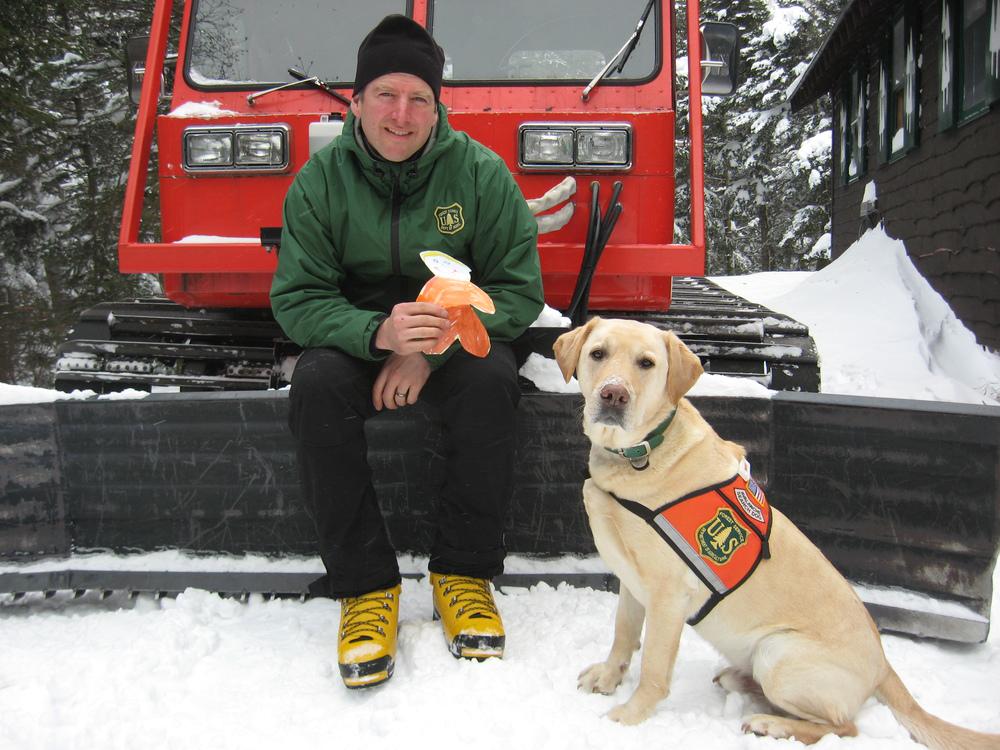
The Mount Washington Avalanche Center and the broader search and rescue community of the White Mountain National Forest are mourning the loss of Cutler, a dedicated avalanche rescue dog who served the region with distinction for over a decade. Cutler, a canine integral to the safety operations on the highest peak in the Northeastern United States, passed away recently at the age of 14. Having spent 11 years in active service, Cutler’s career represented a significant portion of his life—nearly 80 percent—dedicated to the protection of hikers, skiers, and mountaineers who frequent the often-treacherous slopes of Mount Washington. Working alongside Mount Washington Avalanche Center Director Chris Joosen, Cutler was more than a search asset; he was a cornerstone of the center’s public safety and education initiatives, bridging the gap between technical rescue operations and public engagement.
The Life and Career of a Specialized Search Asset
Cutler’s journey into the world of alpine search and rescue began during a period of evolving safety protocols within the White Mountain National Forest. Born into a lineage suited for high-endurance outdoor work, Cutler was trained to navigate the specific, often extreme, environmental conditions of the Presidential Range. His career spanned from the mid-2000s through the early 2010s, a period that saw a marked increase in winter recreation in the White Mountains.
For 11 years, Cutler was a constant presence at the Mount Washington Avalanche Center (MWAC). His primary duty was to be at the ready for "hasty searches"—the immediate response required when an avalanche occurs and victims are suspected to be buried. In the world of avalanche rescue, time is the most critical factor; the probability of survival for a buried victim drops precipitously after the first 15 to 30 minutes. While human searchers utilize probes and electronic transceivers, a trained avalanche dog like Cutler can scent a human through several feet of packed snow, covering an area in minutes that would take a human "probe line" hours to clear.
Throughout his tenure, Cutler was frequently deployed to Tuckerman Ravine, a glacial cirque on the southeast face of Mount Washington known for its steep terrain and significant snow accumulation. Tuckerman Ravine is a magnet for "extreme" skiers and hikers, often attracting thousands of visitors during the spring skiing season. The complexity of this terrain, combined with the volatile weather patterns of Mount Washington, necessitated a search and rescue asset that was both agile and highly reliable. Cutler filled this role, becoming a symbol of the "Snow Ranger" presence on the mountain.
The Strategic Importance of Avalanche Dogs in the White Mountains
The deployment of Cutler was not merely a matter of tradition but a strategic necessity dictated by the geography of the Presidential Range. Mount Washington, despite its relatively modest elevation of 6,288 feet compared to Western peaks, is home to some of the most severe weather on the planet. The observatory at the summit has recorded wind speeds of 231 miles per hour, and the combination of high winds and heavy snowfall creates a unique avalanche environment.
Avalanche dogs are considered the most effective tool for finding un-beaconed victims—those who head into the backcountry without an avalanche transceiver. Data from search and rescue organizations across North America indicates that a single trained dog can search a one-hectare area (approximately 2.5 acres) in approximately 30 minutes. In contrast, it would take a team of 20 human searchers approximately four hours to cover the same ground using traditional probing methods. Cutler’s presence at the MWAC ensured that the Forest Service had the most efficient means of victim detection available during the critical "golden hour" of rescue.
Beyond the physical search capabilities, Cutler served a vital role in the psychology of mountain safety. His presence at the Hermit Lake Shelters or at the base of the ravine served as a visual reminder to visitors of the inherent risks of the terrain. Chris Joosen, who handled Cutler throughout his career, noted that the dog was an unparalleled ambassador for the Snow Rangers. People who might otherwise be intimidated by uniformed federal officers were often drawn to Cutler, providing the Rangers with an opening to discuss current snow conditions, stability assessments, and safety gear.
A Chronology of Service and Education
Cutler’s career can be viewed through several distinct phases of contribution to the New Hampshire backcountry community:
- The Formative Years (Training and Certification): Cutler underwent rigorous training to meet the standards required for search and rescue dogs in alpine environments. This included scent discrimination, obedience in high-stress environments (such as near helicopters or heavy machinery), and endurance training to handle the sub-zero temperatures of the White Mountains.
- Active Deployment (The Peak Years): For over a decade, Cutler was a fixture of the winter season. He was transported via snowcat and snowmobile into the higher elevations, often working in visibility-limiting "whiteout" conditions. His work in Tuckerman and Huntington Ravines provided a layer of security for the thousands of seasonal visitors.
- The Public Relations Era: As Cutler aged and gained experience, his role in public education expanded. He became the face of the MWAC’s social media and blog updates, helping to disseminate avalanche bulletins to a wider audience. This educational outreach is credited with fostering a more safety-conscious culture among the New England skiing community.
- Retirement and Legacy: Upon reaching the age where the physical demands of the mountain were no longer feasible, Cutler transitioned into a well-earned retirement. Even in his later years, his legacy continued to influence the training of subsequent K9 units within the region.
Official Responses and the Impact of Cutler’s Passing
The passing of a service animal often resonates deeply within the tight-knit community of mountain professionals. Chris Joosen, the Director of the Mount Washington Avalanche Center, expressed profound gratitude for Cutler’s 14 years of life and 11 years of service. In a tribute posted to the center’s official channels, Joosen highlighted the unique bond between a handler and a search dog—a partnership that requires absolute trust in life-and-death situations.
The U.S. Forest Service, which oversees the White Mountain National Forest, recognizes the role of K9 units as essential to their mission of "caring for the land and serving people." While Cutler was a working animal, the emotional impact of his loss is felt by the many Snow Rangers who shared the "Ready Room" with him during long winter shifts.
Community members and frequenters of the White Mountains have also shared their reflections. For many, Cutler was a comforting sight during a grueling ascent or a reminder of the professionalism of the crews who keep the ravines safe. His ability to perform at a high level in one of the most hostile environments in North America earned him the respect of professional mountaineers and casual hikers alike.
Broader Implications for Avalanche Safety Programs
The story of Cutler underscores the evolving nature of avalanche safety in the United States. While technology—such as RECCO reflectors, digital transceivers, and smartphone GPS apps—has advanced significantly, the biological "technology" of a dog’s nose remains an irreplaceable asset. Cutler’s career serves as a case study for the effectiveness of integrating K9 units into federal land management safety programs.
Furthermore, Cutler’s success in public relations highlights a shift in how safety organizations interact with the public. Modern avalanche centers, such as the MWAC, now place a heavy emphasis on "human factors" and behavioral science. By using a relatable and beloved figure like Cutler to deliver safety messages, the center was able to lower the barrier to entry for safety education, potentially preventing accidents before they occurred.
As the Mount Washington Avalanche Center moves forward, the lessons learned from Cutler’s tenure will continue to inform their operations. The need for high-altitude search dogs remains constant as winter recreation continues to grow in popularity. The investment in training and maintaining these animals is significant, but as Cutler’s 11-year career demonstrated, the return on that investment is measured in lives saved and a more informed public.
Conclusion: A Final Watch
Cutler’s life was defined by the rugged landscapes of the Presidential Range and the cold winds of the White Mountains. At 14 years old, he had lived a full life, the majority of which was spent in the service of others. He leaves behind a legacy of safety, education, and an enduring bond between the people of New Hampshire and the mountains they call home.
The Mount Washington Avalanche Center has invited the public to view a photo album and blog post dedicated to Cutler’s memory, documenting his years in the snow and his many interactions with the community. As the winter seasons continue to cycle through the ravines of Mount Washington, the impact of Cutler’s work will remain—a testament to the vital role of the avalanche dog and the dedication of those who work to keep the mountains safe. Cutler’s watch has ended, but his contributions to the safety of the White Mountain National Forest will not be forgotten.
