

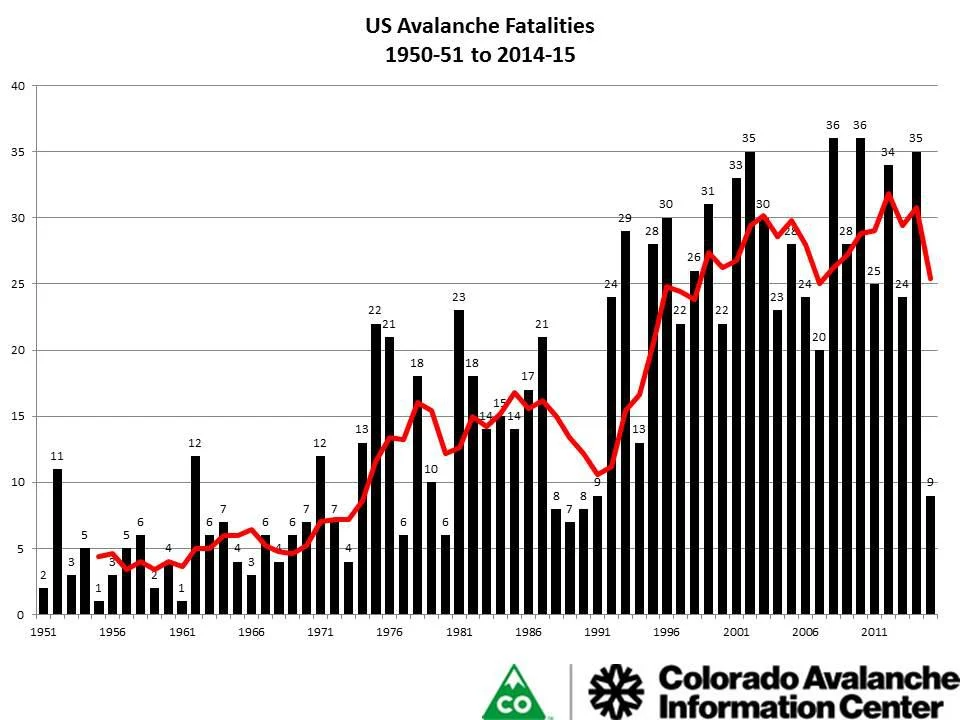
As the 2014-2015 winter season reaches its traditional conclusion on April 30, data compiled by national monitoring agencies reveals a significant and encouraging decline in avalanche-related deaths across the United States. With nine recorded fatalities, this season marks the lowest death toll attributed to avalanches since 1991. This sharp decrease comes as a relief to safety officials and outdoor enthusiasts alike, particularly when contrasted with the decadal averages that have seen annual fatalities frequently hovering near thirty. While experts caution that the season is not yet entirely over, as high-altitude spring skiing and climbing continue into May and June, the current figures represent a historic low in the modern era of backcountry recreation.
The reduction in fatalities is attributed to a complex interplay of environmental factors and human intervention. Primary among these is the anomalous weather pattern observed throughout the winter of 2014-2015, which saw record-low snowfall in several key mountainous regions. Additionally, a concerted effort by the United States Forest Service (USFS) avalanche centers and the Colorado Avalanche Information Center (CAIC) to expand public outreach and real-time safety reporting has been credited with influencing safer decision-making among backcountry travelers.
Environmental Context and the 2014-2015 Snowpack
The 2014-2015 winter was characterized by stark climatological contrasts that directly influenced snow stability and, consequently, the frequency of slide events. Along the West Coast, particularly in the Sierra Nevada of California and the Cascade Range of Washington and Oregon, the season was defined by a "snow drought." Record-high temperatures and below-average precipitation resulted in a shallow snowpack that, in many areas, failed to reach the depths necessary to produce large-scale slab avalanches. In California, the April 1 snow water equivalent—a key metric for snowpack density—was measured at just 5 percent of the historical average, the lowest since records began in 1950.
Further inland, in the Intermountain West and the Rocky Mountains, the weather patterns were characterized by unusually warm temperatures. While these regions did receive precipitation, the warmth frequently facilitated a faster stabilization of the snowpack. In a typical "continental" snowpack, such as those found in Colorado, Utah, and Montana, cold temperatures often preserve weak layers of faceted snow near the ground, creating a precarious foundation for future storms. However, the 2014-2015 season saw several warming cycles that helped "heal" these weak layers through melt-freeze metamorphism, creating a more cohesive and stable base.
While these conditions were detrimental to the ski industry from a commercial perspective, they created a paradoxically safer environment for backcountry travelers. With less snow available to slide and more frequent stabilization of the layers that did exist, the natural "hazard" level remained lower than average for significant portions of the peak winter months.
Historical Fatality Data and the 1991 Benchmark
To understand the significance of the nine fatalities recorded this season, one must look at the historical trajectory of avalanche accidents in the United States. Since the early 1950s, when the Forest Service began formal tracking, there has been a general upward trend in fatalities, largely mirroring the growth of winter recreation.
The 1991 season, which saw seven fatalities, has long stood as the modern benchmark for a "low-fatality" year. In the years following 1991, numbers began to climb as equipment technology—such as fat skis, splitboards, and high-powered snowmobiles—allowed more people to access steeper and more remote terrain. The early 2000s were particularly deadly; the 2007-2008 season, for instance, recorded 36 fatalities, and the 2009-2010 season saw 35.
The drop to nine deaths in 2014-2015 is especially noteworthy because it occurs during a period of unprecedented participation in backcountry sports. Industry data suggests that sales of alpine touring and "tech" bindings have grown by double digits annually over the last decade. The fact that fatalities dropped to a 24-year low while the number of people in the "line of fire" reached an all-time high suggests that factors beyond mere weather are at play.
The Role of Education and Information Systems
A critical component in the downward trend of fatalities is the professionalization and expansion of avalanche forecasting. The Colorado Avalanche Information Center (CAIC) and the network of Forest Service avalanche centers (such as those in Utah, Idaho, and the Northwest) have transitioned from simple advisory roles to sophisticated data-driven organizations.
Spencer Logan, a prominent researcher with the CAIC who maintains the U.S. avalanche accident database, has emphasized the importance of high-quality, accessible information. Throughout the 2014-2015 season, these centers utilized social media, mobile applications, and localized "Know Before You Go" campaigns to reach a younger and more diverse demographic of backcountry users.
These efforts have focused on three primary pillars of safety:
- Forecast Awareness: Encouraging users to check daily bulletins that categorize risk from "Low" to "Extreme."
- Rescue Gear: Normalizing the carriage of beacons, probes, and shovels, as well as the emerging use of avalanche airbags.
- Formal Training: The proliferation of American Institute for Avalanche Research and Education (AIARE) certified courses, which provide recreationalists with the tools to perform their own snow stability tests and manage group dynamics in high-risk terrain.
The CAIC, in particular, has been a leader in this field, providing detailed accident reports that allow the community to learn from the mistakes of others without the stigma often associated with backcountry accidents. By humanizing the data, these organizations have fostered a culture of safety that prioritizes avoidance over rescue.
Analyzing the Five-Year Moving Average
While the single-season drop to nine fatalities is a headline-grabbing statistic, safety experts often point to the five-year moving average as a more accurate barometer of safety trends. This metric smooths out the "noise" created by exceptionally heavy or light snow years.
Despite the skyrocketing popularity of backcountry skiing, snowboarding, and snowmobiling over the past 15 years, the five-year moving average for avalanche fatalities has remained remarkably stable. Since the mid-2000s, this average has fluctuated between 25 and 30 deaths per year. This stability is viewed by many as a victory for the avalanche safety community. In a purely statistical model, a massive increase in participants should lead to a corresponding increase in accidents. The fact that the fatality rate has plateaued—and in years like 2014-2015, plummeted—indicates that the "safety per capita" is improving.
The 2014-2015 data will exert a downward pressure on this five-year average, potentially signaling a new era where the combination of better forecasting and more educated users begins to consistently decouple participation rates from fatality rates.
Regional Impacts and Notable Incidents
Though the national number was low, the fatalities that did occur provided somber reminders of the inherent risks of mountain travel. The season saw tragic incidents in states including Colorado, Utah, and Montana. Each event was meticulously documented by the CAIC and local centers to determine the specific snowpack failures involved.
In many of these cases, the accidents occurred during "moderate" or "considerable" danger ratings, rather than "high" or "extreme." This is a known phenomenon in avalanche science; users tend to be more cautious when the danger is obvious, but may let their guard down when the risks are more nuanced. The 2014-2015 season reinforced the "human factor" or "heuristic traps"—the psychological tendencies that lead people to ignore physical warning signs in favor of social pressures or familiar terrain.
Broader Implications and Future Outlook
The success of the 2014-2015 season provides a blueprint for future safety strategies, but it also raises questions about the future of the backcountry. As climate change continues to alter winter weather patterns, the "typical" avalanche season is becoming harder to define. Shorter winters with more volatile temperature swings may create new types of instabilities that current forecasting models will need to adapt to.
Furthermore, the low fatality count this year may create a "false sense of security" for the 2015-2016 season. Experts warn that a heavy snow year following a dry one often leads to significant "deep slab" cycles, where new heavy snow sits on top of old, weak layers from the previous year. The challenge for organizations like the CAIC and the USFS will be to maintain the current momentum of education and vigilance when the environmental conditions become more hostile.
In conclusion, while the nine lives lost this season are a tragedy for the families and communities involved, the broader statistical trend of the 2014-2015 season is a testament to the efficacy of modern avalanche mitigation. Through a combination of favorable weather and a robust, well-funded safety infrastructure, the United States has seen its safest winter in over two decades. Moving forward, the goal for the avalanche safety community will be to ensure that the lessons learned during this low-fatality year are carried into more dangerous winters to come, ensuring that the growth of backcountry recreation does not come at an ever-increasing human cost.
