

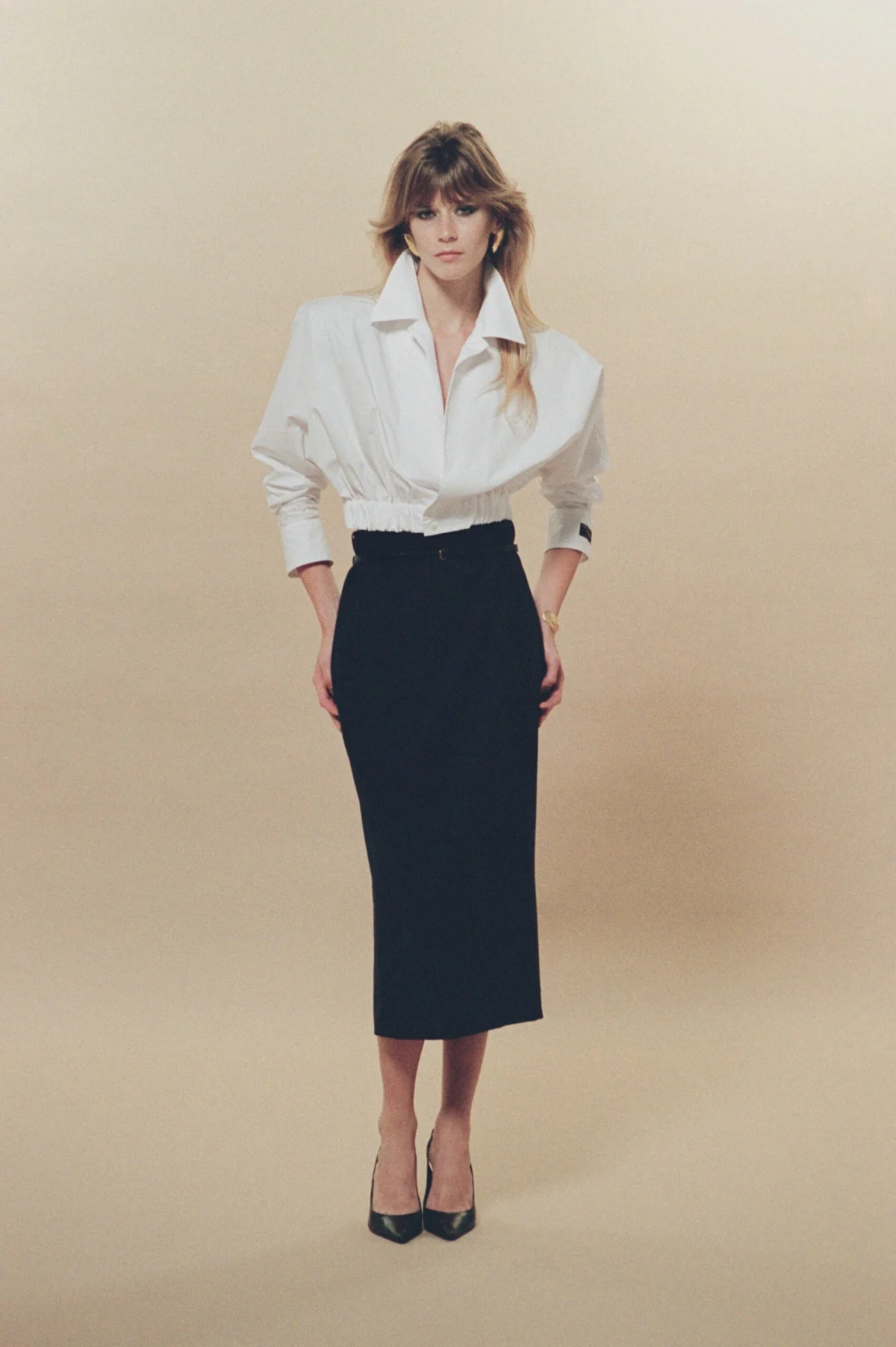
The scent of ambition, once a palpable perfume wafting from the gleaming facades of grand department stores, now feels like a nostalgic whisper for many, particularly for a generation that witnessed its slow dissolution. Keisuke Yoshida, a designer whose formative years were shaped by the aspirational allure of these retail temples, is undertaking a profound mission: to reclaim and reintroduce the essence of accessible high fashion to a contemporary audience. His latest collection, presented within the hallowed, and soon-to-be-departed, halls of the Seibu Shibuya department store, serves as a potent testament to this endeavor, a sartorial dialogue between the opulent past and the pragmatic present.
Yoshida’s journey into the heart of fashion began not in a sterile studio, but on the familiar path to school, a route punctuated by the imposing presence of a luxury department store. The sharp, almost architectural lines of mannequins, adorned in the coveted designs of Donna Karan and Ralph Lauren, represented a tangible, albeit aspirational, vision of style. This was not an unattainable dream, but a carefully curated fantasy that felt within reach, a sentiment that has become increasingly rare in today’s economic landscape.
“Back when I was a student, a Dries [van Noten] shirt cost around 30,000 yen—something you could manage to buy if you really tried,” Yoshida reflects, his voice tinged with a gentle melancholy. “But now, that’s impossible. I felt a sense that high fashion has slipped out of reach for the average person, and so I wanted to figure out how to pass on the kind of fashion I had enjoyed to the next generation and to share that richness.” This personal observation underscores a broader economic shift. The average price of a designer shirt, even from established mid-tier luxury brands, has significantly outpaced inflation and wage growth for many consumers. For instance, according to industry reports from the early 2020s, a comparable designer shirt can now easily command prices exceeding ¥50,000 to ¥100,000, a substantial increase that solidifies Yoshida’s assertion of its diminishing accessibility.
Yoshida is quick to clarify that his latest collection is not an exercise in mere nostalgia, a wistful longing for bygone days. Instead, it is a deliberate and thoughtful reimagining, an attempt to imbue modern dress with the lost spirit of fashion’s more inclusive era. His design process involved a deep dive into the visual lexicon of the 1980s and 1990s, eras characterized by the bold silhouettes of power blazers and the casual rebellion of souvenir T-shirts. These sartorial touchstones were then interwoven with the signature "businesslike eroticism" that has become Yoshida’s hallmark.
The collection’s aesthetic is defined by a masterful manipulation of form. Safari jackets and crisp office shirts, staples of professional and adventurous wardrobes alike, were reinterpreted through a lens of heightened femininity and sophistication. Waists were cinched with deliberate precision, creating exaggerated V-shaped silhouettes that alluded to the broad-shouldered power dressing of the past, yet with a decidedly contemporary sensibility. “By tweaking the shape or adding a subtle touch, I wanted to elevate them into something more elegant and sophisticated,” Yoshida explains. This approach reflects a nuanced understanding of how subtle design interventions can dramatically alter the perception and wearability of a garment, making it both statement-making and approachable.
A notable departure from his previous work is the removal of the throat-clasping scarves that had become a distinctive element of his recent collections. This decision, Yoshida suggests, was an intentional move to allow the garments to "breathe." Instead, shirts were unbuttoned daringly to the navel, revealing glimpses of skin and imbuing the looks with a relaxed yet alluring confidence. The collars, often popped with an almost defiant attitude, further accentuated this sense of effortless cool. This shift signifies a move towards a more uninhibited and perhaps less overtly structured form of dressing, aligning with a contemporary desire for comfort and self-expression.
The Symbolic Stage: Seibu Shibuya’s Swan Song
The choice of venue for this collection’s presentation was not incidental; it was deeply symbolic. The event unfolded within the Seibu Shibuya department store, a landmark that once stood as a beacon of Tokyo’s fashion retail landscape. Specifically, the presentation took place in a space that was formerly an Hermès boutique, now repurposed as a disused gallery. This juxtaposition—a luxury brand’s former retail space serving as a canvas for a designer championing accessible luxury—added layers of meaning to the event.
The Seibu Shibuya department store itself is slated to close its doors in September after an impressive 58-year run. Its impending closure marks the end of an era, consigning it to the growing "graveyard of fashion’s golden age," a poignant metaphor for the seismic shifts occurring within the retail industry. The decline of such iconic department stores is a global phenomenon, mirroring the struggles of counterparts like Barneys New York, which shuttered in 2019, and the ongoing challenges faced by many established brick-and-mortar retailers worldwide. These closures are often attributed to a confluence of factors, including the rise of e-commerce, changing consumer habits, and the economic pressures of maintaining large, physical retail footprints.
A Generational Divide in Fashion Economics
The economic realities that Yoshida addresses are not unique to Japan. Globally, the cost of entry into high fashion has steadily climbed. The price of a designer handbag, a staple of aspirational wardrobes, can now easily exceed $2,000 USD for entry-level luxury items, and easily reach $5,000-$10,000 for more established pieces. This makes ownership a significant financial undertaking, pushing it beyond the realm of everyday aspiration for many.
This escalating price point creates a distinct generational divide in how fashion is perceived and consumed. While older generations may have had the opportunity to invest in timeless designer pieces as a form of economic stability and personal expression, younger consumers, particularly millennials and Gen Z, are often faced with a choice between fast fashion, secondhand markets, or saving for years for a single coveted item. This has fueled the growth of the resale market, which has become a significant force in fashion, with platforms like The RealReal and Vestiaire Collective reporting substantial year-on-year growth, indicating a strong consumer desire for luxury goods, albeit through different acquisition channels.
Yoshida’s Vision: Bridging the Gap
Yoshida’s approach is to bridge this widening chasm. By drawing inspiration from the aesthetics of the past and reinterpreting them with modern sensibilities and a focus on attainable quality, he aims to democratize luxury. His designs, while imbued with the sophistication of high fashion, are crafted with an understanding of contemporary price points and wearability. This is not about mass-producing designer items, but about offering a more considered and elevated alternative to fast fashion, without the prohibitive price tag of traditional luxury.
The implication of Yoshida’s work extends beyond his personal brand. It speaks to a broader potential for designers to innovate within the existing economic framework of the fashion industry. This could involve exploring new material sourcing, optimizing production processes, or fostering direct-to-consumer models that reduce overheads. Furthermore, it highlights the enduring appeal of well-crafted, thoughtfully designed clothing that offers both aesthetic pleasure and a sense of enduring value.
Reactions and Industry Implications
While direct statements from other designers or industry leaders concerning Yoshida’s specific collection are not publicly available, the sentiment he expresses resonates with ongoing discussions within the fashion community. Many designers and critics have voiced concerns about the increasing stratification of the industry, with a widening gap between ultra-luxury brands and the rest of the market. There is a growing recognition of the need for brands to find ways to connect with a broader consumer base without compromising their creative integrity or perceived value.
The closure of Seibu Shibuya is a stark reminder of the challenges facing traditional retail. However, for designers like Yoshida, it also represents an opportunity. The spaces left vacant by these behemoths can become incubators for new ideas and experiences. The presentation within the department store’s former boutique space suggests a deliberate attempt to reclaim and redefine the retail experience, transforming it from a transactional space into a cultural one.
The broader impact of Yoshida’s philosophy is the potential to foster a more inclusive and sustainable relationship with fashion. By offering pieces that are both desirable and relatively accessible, he encourages consumers to invest in quality over quantity, to appreciate the craftsmanship and design behind each garment, and to build wardrobes that have longevity. This ethos stands in direct opposition to the disposable culture often associated with fast fashion, advocating for a more mindful and enduring appreciation of style.
Keisuke Yoshida’s latest collection is more than just a series of garments; it is a statement of intent. It is a designer’s response to a changing world, a testament to the enduring power of fashion to inspire and uplift, and a quiet but determined effort to ensure that the richness of style remains within reach, not just for a privileged few, but for all who appreciate its transformative power. As the iconic department stores of yesteryear fade into history, designers like Yoshida are forging new paths, ensuring that the spirit of fashion, in all its accessible glory, continues to evolve and thrive.
