
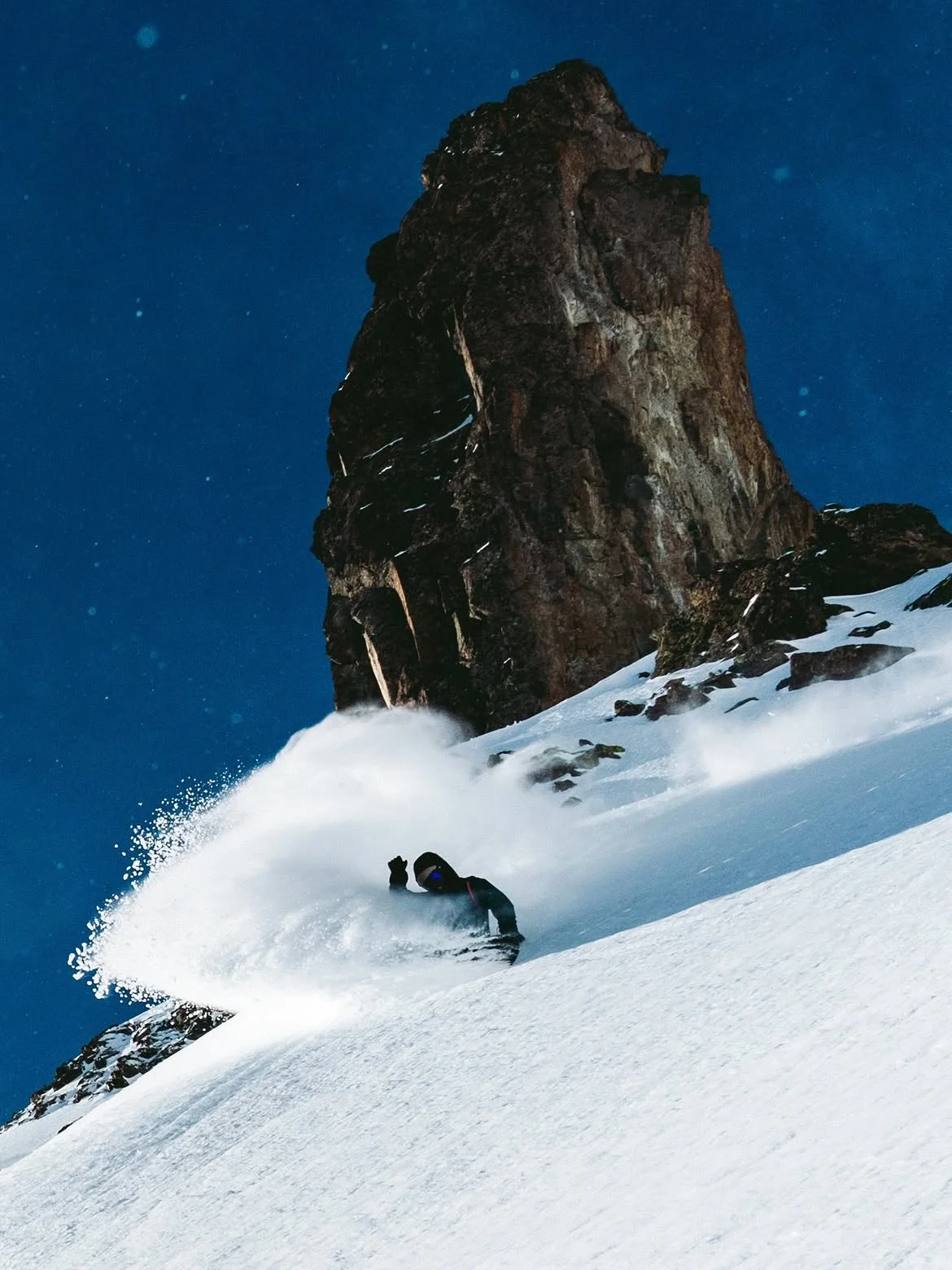
For over two decades, Nick Russell has carved a unique and revered path in the world of big mountain snowboarding, establishing himself as one of freeriding’s most trusted and respected voices. His journey, spanning iconic ranges from California’s Sierra Nevada to the vastness of the Andes, Alaska, and the formidable Himalaya, has never been about conquering mountains but rather about an evolving relationship with them—a pursuit defined by growth, mindful engagement, and the profound search for flow. Russell’s philosophy, deeply rooted in the belief that "stagnation is the death of evolution," reveals an athlete less interested in proving something and more invested in the continuous process of learning and adapting within the dynamic high-alpine environment. His recent reflections underscore a seasoned wisdom, emphasizing objective decision-making, the irreplaceable value of camaraderie, and an enduring appreciation for the ephemeral "magic" of perfect conditions, especially in an era of unpredictable climate patterns.
A Career Forged in the Wild: A Chronology of Exploration
Nick Russell’s ascent to prominence in big mountain snowboarding is a testament to consistent dedication and an unwavering exploratory spirit. His career began in the formidable terrain of California’s Sierra Nevada, a crucible for many renowned alpinists and snowboarders. Here, he honed his technical skills and developed an innate understanding of snow science and mountain safety. From these initial proving grounds, Russell expanded his horizons, systematically seeking out new challenges and diverse environments.

His expeditions have taken him across continents, each trip contributing to a rich tapestry of experience. The Andes, with their vast, unclimbed faces and unpredictable weather, provided early lessons in adaptability and self-sufficiency. Alaska, known for its colossal peaks and steep, technical lines, became a regular haunt, offering opportunities for first descents and pushing the boundaries of what was considered rideable. More recently, his ventures into the Himalaya represent the pinnacle of high-altitude big mountain exploration, where the physical and mental demands are immense, and the margins for error are razor-thin. These expeditions are not merely about ticking off peaks; they are meticulously planned undertakings involving extensive reconnaissance, advanced meteorological analysis, and a deep commitment to understanding the nuances of each mountain system. Over the years, Russell has developed a reputation not just for his audacious lines but for his meticulous preparation and pragmatic approach to risk, traits that have earned him the respect of peers and industry veterans alike.
The Evolution of a Freerider: Beyond Conquest
Central to Russell’s ethos is a profound rejection of the traditional "man versus mountain" narrative often pervasive in adventure sports media. For him, the relationship with the mountain is collaborative, not confrontational. "Anyone that spends enough time out there, for the right reasons, knows that’s definitely not the case," he states, emphasizing a philosophy of moving with nature rather than attempting to dominate it. This perspective has fundamentally shaped his approach, fostering a remarkable patience and a deep respect for the mountain’s inherent power and unpredictability. It’s a viewpoint increasingly echoed by a new generation of alpinists who prioritize symbiotic engagement over a purely conquest-driven mentality.
-
The "Magic" in a Changing Climate
Russell describes freeriding as "magic," a term that has only grown more meaningful with time. This heightened appreciation is directly linked to the increasingly "fickle" nature of winter seasons, a palpable impact of global climate change. Scientific reports, such as those from the Intergovernmental Panel on Climate Change (IPCC), consistently highlight alarming trends: decreasing snowpacks, shorter winter durations, and more extreme weather events globally. For a big mountain rider, these shifts translate into fewer opportunities for optimal conditions and a greater need for vigilance. Russell observes, "When it does line up with the right conditions, it really is magic." This scarcity transforms perfect powder days and stable snowpacks into precious, almost sacred, occurrences. The recognition of these environmental challenges underscores a poignant truth: the pursuit of big mountain snowboarding is becoming more complex, demanding greater adaptability and a profound sense of gratitude for moments of sublime natural harmony. This changing reality has only intensified his resolve, making every early morning, every long approach, and every unridden line a part of a larger, more meaningful journey.
-
Strategic Patience and Risk Mitigation
Experience has not diminished Russell’s ambition but has profoundly refined his approach to risk. His decision-making process has evolved from an emotional pursuit to an objective, calculated one. "I’m feeling a lot more comfortable taking a step back and looking at the situation a little bit more objectively and leaving a little bit of emotion out of my decision making," he explains. This strategic patience is paramount in environments where a single miscalculation can have catastrophic consequences. He actively seeks "the safest, but also the raddest, thing I can do," a philosophy that prioritizes longevity and calculated risk over impulsive glory. This maturity is most evident in his increased willingness to "walk away" from an objective if conditions don’t feel right. "I’m a lot more content these days bailing off of something if it doesn’t feel right than maybe I was five or six years ago," he asserts. This capacity to separate ego from objective assessment is a hallmark of truly experienced big mountain athletes, reflecting a deep understanding that the mountain will always be there, and personal safety is non-negotiable.
Defining Progression: Personal Milestones and Mentorship
For Russell, progression is not a standardized metric but a deeply personal endeavor: "I just want to do something I’ve never done before." This could manifest as a first descent—a challenging and often dangerous feat that involves pioneering a new route down a mountain—or exploring a previously unvisited range. It might also involve a "new link-up," connecting different lines or features in an innovative way. However, progression is not solely about novelty. His return to Denali after several years, for instance, offered a different, equally profound form of growth. Seeing familiar terrain through more experienced eyes allowed for a fresh perspective, highlighting how one’s understanding and appreciation for a place can evolve with personal development.
- The Chouinard Effect: A Guiding Principle
Russell’s philosophy on personal satisfaction found powerful reinforcement from an unexpected mentor: Yvon Chouinard, the legendary climber and founder of Patagonia. Chouinard’s advice—that "it’s cool to be the first person to do something, regardless of what it is; whether it’s riding a mountain or coming up with a recipe to cook"—resonated deeply. This emphasizes that true innovation and personal fulfillment stem from unique endeavors, irrespective of external validation. Chouinard’s own career, marked by pioneering climbs and an unwavering commitment to environmental ethics and quality, provides a strong parallel to Russell’s independent spirit and dedication to authenticity in his craft. This mentorship underscores the importance of intrinsic motivation and the profound satisfaction derived from charting one’s own course, whether on a remote mountain face or in everyday life.
Freeriding’s Shifting Landscape: Soul vs. Spectacle

The world of freeriding is at a pivotal juncture, with its highly anticipated Olympic debut slated for 2030. This development signals a significant step towards mainstream recognition for a discipline traditionally defined by its wild, unscripted nature. However, Russell draws a clear distinction between competitive freeriding and what he considers the true essence of the sport. For him, freeriding transcends judges’ scores and podium finishes. "Freeriding is more of a soulful expression. It’s a style of riding. It involves flow and creativity and longer pitches. It doesn’t necessarily rely on whether there’s cameras out or not," he explains. This perspective highlights the ongoing tension between the inherent freedom of adventure sports and the structured demands of organized competition.
- The Enduring Spirit of Backcountry
While the competitive landscape of freeriding continues to evolve, Russell remains confident that the core spirit of the sport will endure. He envisions "dark horses" – individuals driven solely by passion, venturing into the backcountry, far from the gaze of cameras or the pressures of social media. These are the riders who embody the unadulterated "love of the sport," finding their purest expression in untracked powder and challenging lines, valuing personal experience over public acclaim. This resilience of the backcountry ethos suggests that even as freeriding gains Olympic status and commercial appeal, its fundamental roots in exploration, self-reliance, and a deep connection to nature will continue to thrive in parallel, ensuring that the soulful pursuit remains vibrant and untamed.
The Flow State: A Deep Connection
The elusive "flow state" is a recurring theme in Russell’s narrative, not as an ultimate goal, but as a hard-earned reward. He describes it as "a perk of the process," a synergistic blend of emotional, physical, and sensory experiences. This state of complete immersion, where self-consciousness fades and action feels effortless, is often cited by athletes and artists as the pinnacle of their craft. In big mountain snowboarding, achieving flow means an almost intuitive communion with the terrain, where decisions are made instantly, and movements are fluid and precise. Russell notes its rarity: "Once you tap into that flow state, there’s something inherently about it that draws us back because it’s such a rare moment that you don’t get in other aspects of life." These moments of absolute presence are what continuously draw him back to the mountains, year after year, reinforcing a sense of being truly alive and connected to the world around him. "We’re the lucky ones that get to experience moments like that and embody full presence," he reflects, underscoring the profound privilege he feels.
Preparation: The Unseen Foundation of Success

From an external perspective, big mountain snowboarding often appears to be a series of split-second, high-stakes decisions made in perilous terrain. However, Russell reveals that the reality is far more nuanced, built upon months of rigorous preparation. "The whole season is minimizing risk," he states, emphasizing that successful expeditions are the culmination of deliberate, systematic effort. This preparation encompasses multiple facets, extending far beyond physical conditioning.
- Mastering the Controllables
Fitness is foundational, ensuring the physical endurance required for long days of ascent and descent in challenging environments. Riding skills are continuously refined, allowing for adaptability across varied snow conditions and terrain types. Crucially, extensive avalanche education and decision-making training are paramount. This involves understanding snow science, terrain assessment, group dynamics, and rescue protocols. Riders like Russell undergo advanced training, often involving certifications from organizations like the American Avalanche Association (AAA), to interpret snowpack stability and make informed choices. This mental training, coupled with a gradual ramp-up in the scale of objectives throughout the season, ensures that when a major objective presents itself, the team is as prepared as possible. Yet, even with meticulous planning, Russell acknowledges the inherent unpredictability of the mountains: "You do what you can to control the controllables. Everything else is left to chance or luck or fate." This blend of diligent preparation and humble acceptance of external forces defines the mindset of an experienced big mountain rider.
Lessons Beyond the Snow: Life’s Broader Perspective
The extreme environments in which Russell operates have imparted lessons that extend far beyond the realm of snowboarding, profoundly shaping his approach to everyday life. "The most common lesson I’ve learned that’s crossed over is not stressing on the trivial hiccups in life," he shares. When one regularly confronts situations that demand life-or-death decisions, the mundane frustrations of daily existence naturally recede in importance. Traffic jams, minor inconveniences, or petty disagreements simply lose their capacity to provoke significant stress. "When you’re faced with pretty extreme situations, it puts things into perspective. You realize it’s not really necessary to get super pissed off if there’s traffic or whatever it may be," he explains. This invaluable perspective, forged in the crucible of the mountains, offers a powerful antidote to modern life’s incessant demands, allowing for a more serene and grounded existence off the slopes.
The Indispensable Role of Partners: Building Bonds in the Backcountry

For someone who has spent a significant portion of his career exploring some of the world’s most remote mountain ranges, Russell emphasizes that the most indelible memories often stem not from the riding itself, but from the human connections forged during these arduous expeditions. The selection of partners is therefore critical, and Russell prioritizes attitude above all else. "A positive attitude is the number one attribute," he states unequivocally. Expeditions often involve weeks confined in tents, enduring harsh weather, navigating uncertainty, and facing setbacks. In such conditions, a negative mindset can quickly erode morale and compromise the entire team. "I want to spend a couple weeks in a tent with someone and not have any negative energy rub off onto the rest of the team," he clarifies.
Beyond attitude, preparedness is also highly valued. Russell recalls his own formative years, striving to be self-sufficient and never be a burden: "When I was coming up, the last thing I wanted was to be the last person out of camp or the last person ready. I never wanted anyone waiting on me." This reciprocal expectation of competence and consideration fosters trust, which is the bedrock of safety and success in the backcountry. Ultimately, these shared experiences, pushing physical and mental limits together, become the foundation of lifelong friendships. "The most memorable trips that I’ve had have been because of the crew that I’ve been with. It’s way more fun to go have an adventure in the mountains with your friends than it is by yourself," he concludes, highlighting the profound communal aspect of his solitary pursuit.
The Unfolding Horizon: A Continuous Pursuit of Growth
Nick Russell doesn’t operate with a rigid checklist of mountains to conquer. Instead, he maintains a fluid sense of direction, always equipped with "contingency plans. Plan A, B, and C." This adaptable mindset is crucial in dynamic mountain environments where conditions can change rapidly. His motivation isn’t a finite goal but a perpetual drive for new experiences and personal development. "I feel lost if I don’t have a project or goal to work towards," he admits, clarifying that this "project" isn’t always a specific trip, but often "a broader vision of the type of mission I want to do."

After more than two decades immersed in the mountains, his motivation has not dwindled but has sharpened into a clearer, more refined purpose. He continues to seek out unseen places, chase those elusive moments of complete presence, and surround himself with partners who enrich the journey. His enduring conviction remains unwavering: standing still, embracing stagnation, is the only true impediment to progress. As he reiterates, encapsulating his life’s philosophy, "Stagnation is the death of evolution. For me, it’s necessary to keep moving and trying to keep looking around the corner and seeing what’s out there." This commitment to continuous learning, adaptation, and exploration ensures that Nick Russell’s journey through the world’s great mountains will remain a compelling narrative of growth, humility, and the profound, soulful connection between human and wilderness.
- A Vision for the Future of Freeriding
Russell’s holistic philosophy offers a powerful counter-narrative to the increasingly commercialized and competitive aspects of extreme sports. His emphasis on intrinsic satisfaction, environmental stewardship, and genuine human connection provides a timeless model for aspiring freeriders. As the sport gains global recognition, his voice serves as a vital reminder of its origins and core values—a testament to the enduring allure of wild places and the transformative power of a life lived in harmony with nature. His perspective suggests that the future of freeriding, regardless of its competitive trajectory, will always find its truest expression in the personal journey, the shared experience, and the continuous pursuit of growth in the heart of the mountains.
