

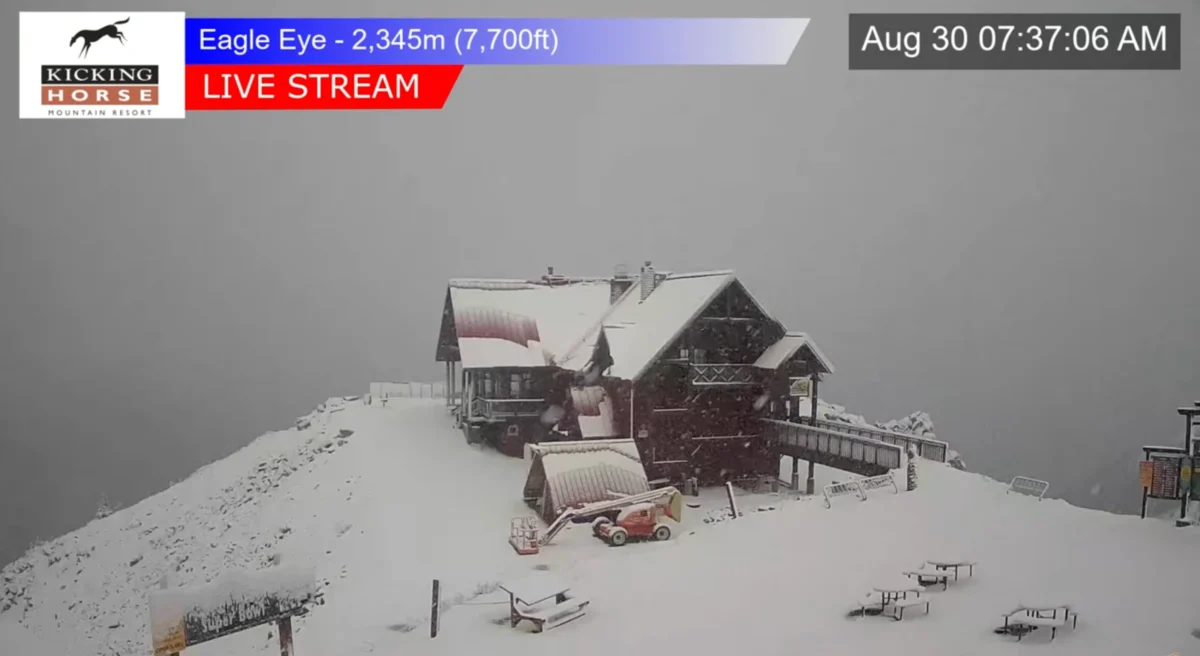
The transition from summer’s lingering warmth to winter’s crisp embrace received an emphatic declaration in late August 2026, as two prominent North American ski destinations, Crystal Mountain in Washington and Kicking Horse Mountain Resort in British Columbia, recorded their inaugural snowfalls of the approaching 2026/27 winter season. This early dusting, brought about by a sudden cold Pacific trough, has sent ripples of excitement through the alpine community, signaling the imminent return of colder temperatures and deep snowpacks. While resort operations are still firmly rooted in summer activities, the sight of white-capped peaks has shifted collective focus towards waxing skis and tuning boards.
High-Elevation Powder Preview at Crystal Mountain
In the Cascade Range of Washington, Crystal Mountain, renowned as the state’s largest ski resort, awoke to a pristine blanket of white on its upper reaches. The snowfall, observed across high-alpine terrain, was particularly notable around Silver King Peak, which towers at an elevation of 7,012 feet (2,137 meters). Areas adjacent to Chair 6, Northway, and Mountain Top also received a significant coating, transforming the rugged summer landscape into a nascent winter wonderland. This early-season event, occurring in late August, is a powerful visual reminder for skiers and snowboarders that the long-awaited winter is indeed on the horizon. While the resort’s lifts are currently operating for scenic rides and summer recreation, the high-elevation snow served as an undeniable precursor to the months of deep powder that enthusiasts hope will follow. The immediate impact was primarily psychological, invigorating the regional ski community and prompting early discussions about season passes and gear readiness.
Kicking Horse Joins the Early Winter Party in the Canadian Rockies
Simultaneously, across the international border in the majestic Canadian Rockies, Kicking Horse Mountain Resort in British Columbia experienced its own taste of early winter. Located near the town of Golden, BC, Kicking Horse, celebrated for its challenging steeps and abundant expert terrain, reported fresh snow blanketing its high-alpine areas overnight. The iconic Eagle Eye restaurant, perched at a breathtaking elevation of 7,700 feet (2,347 meters), found itself adorned with a fresh layer of white, a stark contrast to the verdant slopes below. Despite the resort’s downhill bike trails still buzzing with activity, the sight of snow on the Purcells—the mountain range in which Kicking Horse is situated—underscored the swift approach of colder weather. This dual occurrence across distinct yet interconnected mountain ranges highlights a broader weather pattern affecting the Pacific Northwest and the Canadian interior.
Meteorological Context: The Influence of a Cold Pacific Trough
The synchronized early snowfall events at Crystal Mountain and Kicking Horse Mountain Resort can be attributed to a significant meteorological phenomenon: a cold Pacific trough. A trough, in meteorological terms, is an elongated region of relatively low atmospheric pressure. When a "cold" trough moves inland from the Pacific Ocean, it brings with it colder air masses, often combined with moisture. As this moist, cold air is forced upwards by the mountain topography (a process known as orographic lift), it cools further, leading to condensation and precipitation. At the high elevations of Crystal Mountain and Kicking Horse, these conditions were ripe for snow rather than rain, even in late August.
While late August snowfalls are not entirely unprecedented in the highest reaches of these mountain ranges, their widespread and noticeable nature, affecting two prominent resorts simultaneously, garners particular attention. Typically, significant and sustained snow accumulation that impacts lower elevations and resort operations doesn’t begin until much later in the fall, often October or November. This early event, therefore, acts as an outlier, an early "teaser" that can either herald an exceptionally snowy season or merely serve as an isolated cold snap before summer truly gives way. Meteorologists are now closely monitoring subsequent weather patterns to ascertain if this early cold front is indicative of a broader trend for the upcoming winter or a transient anomaly.
Historical Perspective and Average Season Starts
To fully appreciate the significance of this late August snowfall, it’s helpful to consider the typical winter season timelines for these regions. Both Crystal Mountain and Kicking Horse Mountain Resort generally aim for opening dates in mid-to-late November, with some variability depending on snow conditions. For instance, Crystal Mountain often targets the week of Thanksgiving, while Kicking Horse typically opens closer to early December. Achieving these opening dates relies heavily on consistent cold temperatures and several feet of natural snowfall, supplemented by extensive snowmaking operations at lower elevations.

An early dusting in August, while exciting, rarely translates directly into an earlier opening. The ground at these elevations is still relatively warm from summer, and subsequent warm spells can easily melt away these initial accumulations. However, early snowfalls contribute to ground cooling, which can be beneficial for subsequent snow events and for building a strong base later in the season. Over the past decade, climate patterns have introduced increased variability, with some seasons experiencing delayed starts due to warm, dry falls, and others benefiting from early cold fronts. This 2026 event falls into the latter category, providing a morale boost even if its immediate practical impact on early-season skiing is limited. Historically, strong El Niño or La Niña cycles can influence Pacific Northwest and Canadian Rockies snowfall, with La Niña often favoring colder, wetter conditions in these regions. While it’s premature to link this single event directly to a large-scale climate phenomenon, it contributes to the complex tapestry of pre-season weather observations.
Resort Readiness and Operational Outlook
The appearance of snow, even a dusting, prompts an intensified focus on winter preparations for resort management. While lifts are still ferrying hikers and mountain bikers, the operations teams at Crystal Mountain and Kicking Horse Mountain Resort are undoubtedly accelerating their pre-season checklists. This includes comprehensive maintenance checks on chairlifts, grooming machines, and snowmaking equipment. Snowmaking systems, critical for ensuring reliable early-season coverage on popular trails, require meticulous inspection and calibration. Water lines, pumps, and snow guns must be fully operational, ready to capitalize on any sustained cold temperatures that allow for artificial snow production.
Representatives from both resorts, while not issuing formal statements directly on this early snow, would likely convey a message of cautious optimism. A spokesperson for Crystal Mountain might emphasize that "while it’s too early to predict the full scope of the winter, this early snowfall is a fantastic sight and certainly gets everyone excited. Our teams are diligently working to prepare for a successful 2026/27 season, focusing on infrastructure readiness and guest experience." Similarly, Kicking Horse Mountain Resort management might highlight their commitment to providing world-class skiing, stating that "seeing the high peaks dusted white reminds us of the incredible winter ahead. Our focus remains on preparing our mountain and facilities to welcome skiers and riders when the time is right." These early snowfalls also serve as a reminder for staff recruitment, training programs, and fine-tuning guest services in anticipation of the winter rush.
Community Engagement and Economic Ripples
The psychological impact of early snow on the ski and snowboard community is profound. Social media platforms immediately buzz with shared photos and excited comments, transforming the mundane end of summer into a vibrant anticipation for winter. Ski shops report increased foot traffic, with enthusiasts beginning to consider new gear purchases, tune-ups, and season pass renewals. The sight of snow-capped peaks creates a tangible shift in collective mood, fostering a sense of camaraderie and shared excitement among those who live for the winter months.
For the local economies surrounding these resorts, early snow, even if transient, offers a valuable psychological and minor economic boost. Businesses reliant on winter tourism—hotels, restaurants, retail outlets—see an uptick in inquiries and early bookings. Real estate agents in mountain towns like Enumclaw (near Crystal) or Golden (near Kicking Horse) might note renewed interest in seasonal rentals or property purchases. While the direct economic impact of a late August dusting is minimal, the heightened anticipation it generates translates into an intangible but powerful marketing advantage, reinforcing the brand image of these resorts as premier winter destinations. This early visual cue helps to build momentum long before the first official opening day.
Broader Implications for the 2026/27 Season
The early snowfalls at Crystal Mountain and Kicking Horse Mountain Resort, while isolated events, offer a tantalizing glimpse into the potential variability of the upcoming 2026/27 winter season. They serve as a powerful reminder that mountain weather can be unpredictable and dynamic, often delivering surprises outside of typical seasonal expectations. For the broader Pacific Northwest and Canadian Rockies ski industry, such early occurrences are generally welcomed. They generate positive media attention, stimulate early engagement from the ski community, and reinforce the regions’ reputations as reliable destinations for winter sports.
While it is crucial not to extrapolate a full season’s forecast from a single late-August snowfall, this event undeniably sets an optimistic tone. It suggests that the atmospheric conditions capable of producing snow are already present at higher elevations, offering hope for sustained cold and ample precipitation as the calendar progresses into fall and winter. As meteorologists continue to refine their long-range forecasts, the ski community will closely watch for further signs, hoping that this early powder preview is merely the prelude to a deep and memorable 2026/27 winter season. The race to winter has officially begun, and the mountains have fired the starting gun.
