

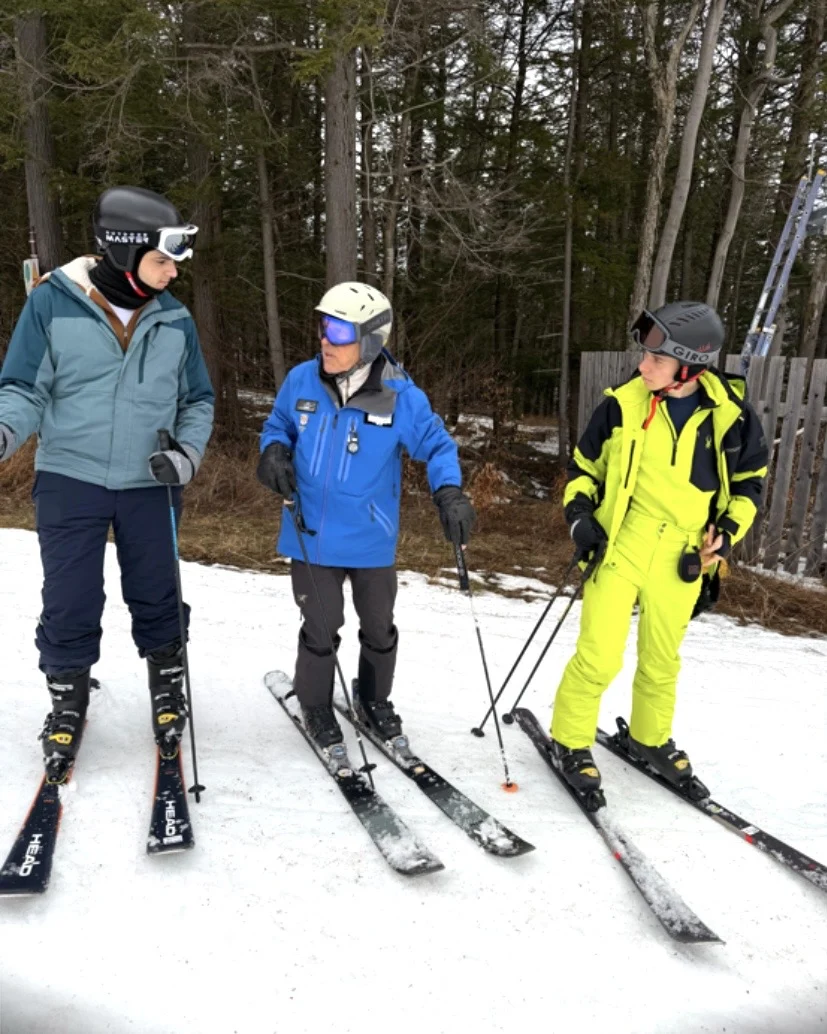
On a frigid winter day, as a piercing shot of wind swirled snow across the summit, the Otis Quad’s unloading ramp at Hunter Mountain, New York, became the stage for an extraordinary celebration of resilience and enduring passion. The jacket thermometer registered a stark -5°F, with biting winds driving the wind chill down to a formidable -30°F. Most guests sought refuge in the warmth of the lodge, some vying for a coveted spot near the fireplace. Yet, amidst the harsh conditions, Ralph Perlberger, a seasoned ski instructor, stood ready for his run, his skis squeaking on the cold, dry snow. This was no ordinary ski day; it was Ralph’s 95th birthday, and true to his unwavering philosophy of embracing every snow condition and weather challenge, he was preparing to descend the mountain with his wife, Carol, and two admiring ski instructor friends, David Raindorf and Steve Cohen. Leslie Surprenant, an Alpine Level II and Children’s Specialist 1 instructor at Hunter Mountain, who authored the original piece in the Spring 2026 issue of the SnowPro, the official publication of the Professional Ski Instructors of America Eastern/Education Foundation, introduced Perlberger to the women from her weekly clinic, proudly highlighting his remarkable grit. David Raindorf, a colleague, encapsulated the sentiment shared by many: “When I grow up, I want to be Ralph.” Steve Cohen echoed this admiration, stating, “Ralph is my idol.” As the group sang “Happy Birthday,” their voices muffled by frozen face masks, Ralph grinned, accepting their well wishes before leading the way down West Side Glide, an intermediate trail winding gracefully among pines and hemlocks. Victoria Mercado, the senior manager of Hunter Mountain’s Ski and Ride School, articulated the profound impact Perlberger has on the community: “Ralph is an inspiration. He’s not only skiing, but teaching! Skiing and riding keep you young. When I watch Ralph ski, I can’t believe he’s 95. His energy, skill, and passion on the mountain defy his age. It’s an absolute pleasure to work alongside him.” Perlberger’s enduring presence on the slopes serves as a testament to the power of an active lifestyle and an indomitable spirit, drawing admiration from both peers and students alike.
A Life Forged in Adversity: From Amsterdam to Liberation
Ralph Perlberger’s journey to the slopes of Hunter Mountain is underscored by a profound history of survival and resilience, beginning in the tumultuous years of World War II. Born in 1931, Ralph spent his early childhood in Amsterdam, Netherlands, a vibrant European capital that would soon be engulfed by the horrors of war. In 1940, as Nazi Germany intensified its aggression across Europe, Ralph’s father, foreseeing the imminent danger, departed for New York City to arrange for his family’s immigration to the United States. Tragically, he arrived on May 10, the very day Nazi forces launched their invasion of the Netherlands, severing immediate communication and leaving the family trapped.
The following year, the Perlberger family’s precarious existence in occupied Amsterdam was shattered. In a brutal wave of round-ups that swept through the Jewish community, 9-year-old Ralph, his mother, and his two older brothers were forcibly removed from their home. Their first destination was Westerbork transit camp in the northeastern Netherlands, a site that served as a cruel way station for Dutch Jews destined for extermination camps further east. Westerbork, though not an extermination camp itself, was notorious for its weekly transports to Auschwitz and Sobibor. The conditions were harsh, designed to dehumanize and break the spirit, but for a period, it offered a temporary, albeit grim, reprieve from immediate extermination.
In February 1944, the family was transferred by railroad cattle car, a harrowing journey in cramped, unsanitary conditions, to the Bergen-Belsen concentration camp in Germany. Bergen-Belsen, particularly in its later stages, became synonymous with unimaginable suffering, overcrowding, starvation, and disease. Ralph endured the camp’s brutal realities, including contracting both typhus and typhoid fever, diseases that ravaged the weakened prisoner population and claimed countless lives. Despite the overwhelming despair that pervaded the camp, Ralph clung to an extraordinary sense of hope. He credits his parents for instilling in him an unshakeable confidence and security, even in the face of such extreme adversity. Remarkably, during those dark years, he harbored the youthful belief that he would survive and eventually have a compelling story to share with friends once the war concluded. This incredible optimism, a testament to the human spirit’s capacity for hope, undoubtedly played a crucial role in his endurance.
Unbeknownst to Ralph and his family, his father in New York City spent agonizing years without knowing if his loved ones had survived. As the war drew to a close in the spring of 1945, a faint glimmer of hope emerged. At war’s end, he learned that his family was among the survivors, found in the Russian-occupied village of Tröbitz, Germany. Their journey to Tröbitz was itself another chapter of peril: they were on the infamous “Lost Transport” train. This was one of three trains on which the Nazis, in a desperate and cynical ploy, sent approximately 7,500 Jewish prisoners, intending to exchange them for German prisoners held by the Allies. The “Lost Transport” traveled for two weeks, a torturous odyssey across war-torn Germany, constantly stopping and rerouting due to destroyed tracks and the advancing Allied armies. It never reached its intended destination, finally halting on a destroyed bridge over the Elster River, just outside Tröbitz. On April 23, 1945, Russian troops liberated the train’s emaciated and traumatized prisoners. Hundreds had already succumbed to typhus, typhoid, and starvation during the harrowing journey.
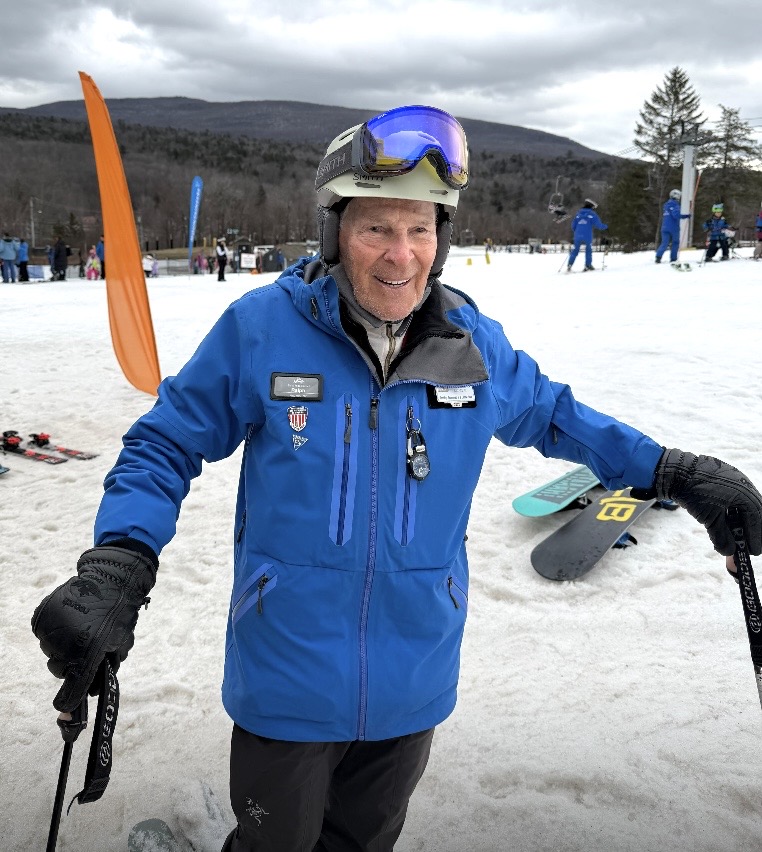
The period immediately following liberation remained challenging. While awaiting the processing of their visa applications to the United States, which spanned five months, Ralph’s father, through the Red Cross, sent vital packages of food and hygiene products, providing crucial sustenance and comfort after years of deprivation. Finally, in February 1946, Ralph, his two brothers, and his mother immigrated to the United States, reuniting with his father in New York City. The family began the arduous process of rebuilding their lives. Ralph quickly adapted, learning English and excelling in school, while his father grappled with the emotional and psychological complexities of reconnecting with a family he had feared lost forever. This period marked not only a physical transition but also a profound psychological healing, laying the groundwork for a life characterized by resilience, dedication, and an unyielding zest for living.
From Ivy League to Instructor: A Skiing Life Takes Shape
Ralph Perlberger’s love affair with skiing began not in his childhood, but during his university years, a testament to the idea that passion can ignite at any stage of life. While studying economics at Stanford University, his father, keen to expose his sons to new experiences and perhaps a sense of normalcy after the war, sent Ralph and his two older brothers to Sun Valley, Idaho, during a winter break. Sun Valley, a pioneering destination for American ski culture, captivated Ralph. He was immediately "hooked," embracing the sport with an intensity that would define much of his later life. This nascent passion continued even as he pursued a demanding law degree at Harvard University, finding opportunities to ski whenever possible, balancing rigorous academic pursuits with exhilarating days on the slopes.
For decades, skiing remained a cherished pursuit. Ralph honed his skills at various world-renowned destinations, including the challenging terrain of Taos, New Mexico, the iconic resorts of Europe, and eventually, the familiar slopes of Hunter Mountain. It was in 2002, long after establishing a successful career and raising a family, that a pivotal opportunity arose. An advertisement caught Ralph’s eye: for $85, he could participate in a weekend of instructor training and candidate selection at Hunter. If selected as an instructor candidate, an additional weekend of training and final selection would be free. Driven by a desire to share his love for the sport and deepen his understanding, Ralph embraced the challenge. He was among those chosen to become instructors, a testament to his innate skiing ability and passion, yet he humbly recognized that he had much to learn about the art of teaching.
Over the subsequent years, Ralph dedicated himself to mastering the pedagogical aspects of ski instruction, progressing through the ranks of the Professional Ski Instructors of America (PSIA). He achieved PSIA Level II Alpine Instructor certification, a significant accomplishment that denotes a high level of technical skill, teaching proficiency, and professional commitment. The PSIA certification system, renowned for its rigorous standards, ensures instructors possess comprehensive knowledge of ski technique, safety protocols, and effective communication strategies. Ralph often recounts the best advice he received during his training, a concise but profound insight from fellow ski instructor and PSIA alpine examiner Charlie Knopp: “Lift your inside hip!” This seemingly simple instruction, aimed at promoting proper body mechanics and efficient turn initiation, became a cornerstone of his own teaching philosophy.
Ralph’s colleagues at Hunter Mountain’s ski and ride school community hold him in immense esteem, expressing awe and appreciation for his dedication and the wisdom he imparts. Luca Arrigoni, a member of the Eastern Alpine Development Team, shared a particularly poignant reflection: “Ralph has a special place in my heart. I shadowed him as a new instructor and was inspired by his patient, gentle, and knowledgeable way with beginners. He still proudly wears the Hunter uniform, which shows his love for, and dedication to, the sport and teaching.” This sentiment underscores not only Ralph’s technical expertise but also his profound impact as a mentor and a beacon of commitment.
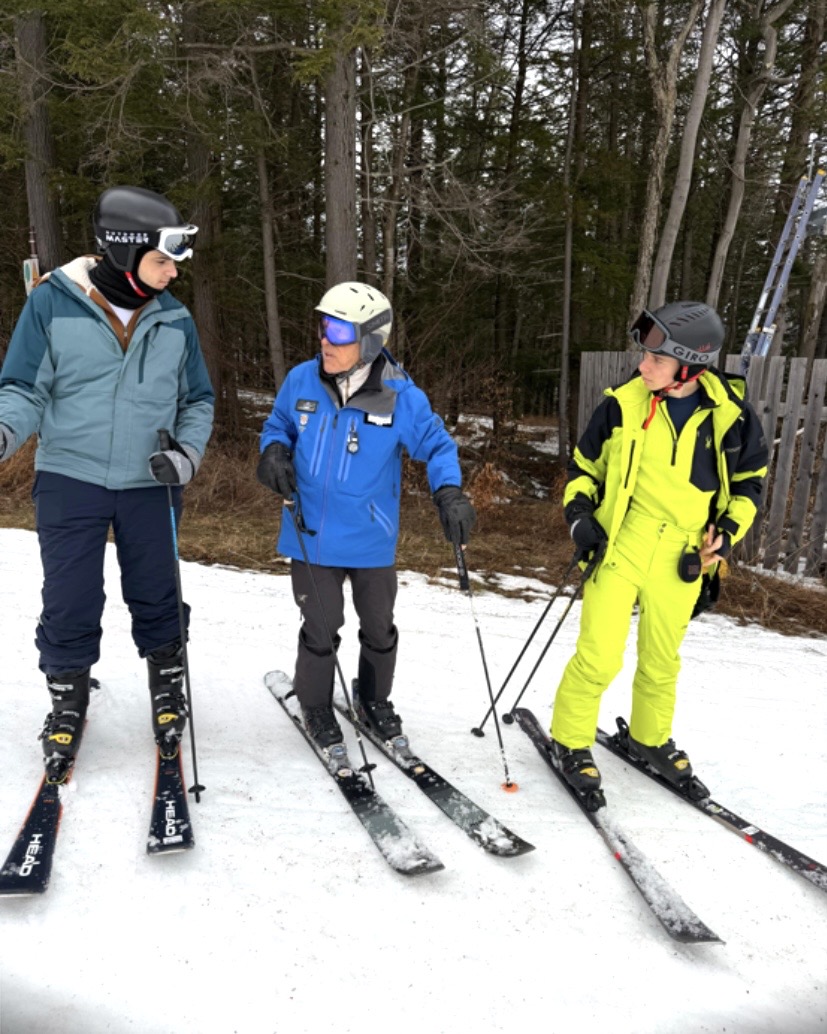
Ralph particularly enjoys helping adult intermediate skiers, a demographic often struggling with ingrained habits. His approach is methodical and empathetic. He typically begins by asking students to describe how they make their skis turn. A common response, he notes, is “I don’t know, I just turn,” highlighting a lack of conscious awareness of their movements. Ralph observes that many intermediate skiers primarily rely on leg rotation on flat skis, a technique that limits control and efficiency. He identifies fundamental gaps in their understanding, particularly regarding maintaining their center of mass (CM) over their base of support (stance), directing pressure effectively to their outside skis, and controlling edge angles. His coaching focuses on developing these foundational skills. For instance, he frequently directs skiers to consciously feel their shins against the tongue of their boots throughout all phases of a turn, promoting a forward, athletic stance. When he notices skiers leaning back, a common issue that leads to fatigue and loss of control, he prompts them to stop and articulate how their quadriceps feel. Most respond with “tired” or “burning.” He then guides them to recognize where their bodies are in relation to their feet, gently reminding them to maintain shin contact with the front of their boots. Through this patient, analytical, and hands-on method, Ralph consistently ensures that every student improves their technique, has fun, and ultimately leaves the lesson expressing their gratitude. His teaching is not just about technique; it is about fostering a deeper understanding and enjoyment of the sport.
An Enduring Legacy on the Slopes
Ralph Perlberger’s continued presence and active instruction at Hunter Mountain offer a compelling narrative that transcends the sport of skiing itself, embodying principles of active longevity, resilience, and the profound benefits of lifelong engagement. At 95, having recently completed his 24th season of instructing, he stands as a living testament to the potential for vitality and purpose well into advanced age. His advice to the youngest instructors, whose ages span eight decades below his own, is both simple and profound: “Keep at it and don’t give up! Don’t let anything stop you. Ski in all conditions and all weather.” This philosophy, forged in the crucible of his early life experiences, extends beyond the snowy slopes, serving as a powerful metaphor for navigating life’s challenges.
Perlberger’s story offers valuable insights into the broader implications of an active lifestyle. Research consistently demonstrates the physical and cognitive benefits of regular exercise, especially activities that engage multiple muscle groups and require balance and coordination, such as skiing. For seniors, maintaining physical activity can significantly improve cardiovascular health, bone density, muscle strength, and flexibility, while also reducing the risk of chronic diseases. Beyond the physical, the mental stimulation of learning and teaching, combined with the social interaction inherent in a ski school environment, contributes significantly to cognitive health and overall well-being. Ralph’s ability to not only ski but actively teach complex techniques suggests a remarkable preservation of both physical and mental acuity, making him an exceptional role model.
His resilience, honed by the unimaginable hardships of the Holocaust, manifests clearly in his unwavering dedication to skiing and teaching, even in the most challenging weather conditions. This personal history adds a layer of depth to his "don’t give up" mantra, transforming it from mere advice into a profound life philosophy. It suggests that overcoming immense adversity can imbue an individual with an extraordinary capacity for perseverance and a heightened appreciation for every moment of life.
Hunter Mountain, a prominent ski resort in the Catskill Mountains of New York, benefits immensely from Perlberger’s presence. He is not just an instructor; he is an institution, a source of inspiration, and a unique selling point that underscores the inclusive and multi-generational nature of the ski community. His story resonates deeply with guests, fellow instructors, and management alike, reinforcing the idea that skiing is a sport for all ages and that passion knows no retirement age. The PSIA, which sets the standards for ski and snowboard instruction, can also highlight Perlberger as an exemplary figure, showcasing the enduring careers possible within the profession and the diverse experience levels of its certified instructors.
Ralph Perlberger’s narrative extends beyond a feel-good story; it’s a powerful statement about human potential and the choices we make to live a full life. He has no plans to stop doing what he loves, attributing his continued vitality to perhaps a higher power watching over him, and drawing inspiration from the timeless wisdom of Baseball Hall of Famer Satchel Paige: “Don’t look back; something might be gaining on you.” For the thousands of skiers who grace the slopes of Hunter Mountain each season, that “something” might just be Ralph Perlberger himself, gliding gracefully past, a testament to a life lived with passion, purpose, and an unyielding spirit, forever inspiring those who witness his remarkable journey.
