

The allure of Grand Teton National Park’s majestic peaks, pristine alpine lakes, and dramatic canyons draws millions of visitors annually, yet securing backcountry permits often feels like an insurmountable challenge, akin to winning a lottery. Fortunately, a lesser-known, yet equally spectacular, 20-mile point-to-point connector route offers an alternative, circumventing the highly competitive permit zones while delivering all the iconic high-alpine views, remnants of ancient glaciers, and breathtaking canyon scenery that define the Tetons. This strategic traverse, commencing from the tranquil Idaho side of the range, ascends through vibrant wildflower meadows of Teton Canyon, crests the formidable Hurricane Pass, and ultimately descends into the serene heart of Cascade Canyon on the Wyoming side.
The Challenge of Access: Grand Teton National Park Permits
Grand Teton National Park, established in 1929 and expanded in 1950, spans over 310,000 acres of unparalleled wilderness in northwestern Wyoming. Renowned for its dramatic mountain range, which rises abruptly from the valley floor without foothills, it attracts over 3.4 million visitors annually. A significant portion of these visitors seeks to experience the park’s backcountry through multi-day hiking and camping excursions. However, the popularity of these pristine areas has necessitated a stringent permit system to manage human impact, protect fragile ecosystems, and ensure wilderness experiences. Backcountry camping permits within Grand Teton National Park are notoriously difficult to obtain, with a highly competitive advance reservation system and a limited number of walk-up permits often claimed within minutes. This rigorous system, while essential for preservation, often frustrates aspiring adventurers.
The described 20.4-mile route offers a strategic circumvention of this bottleneck. By initiating the journey in the Jedediah Smith Wilderness on the Idaho side of the Teton Range, hikers access the park’s iconic features without requiring a Grand Teton National Park backcountry permit for the initial overnight stay. The overnight camp at Sunset Lake, situated within the Jedediah Smith Wilderness, falls under U.S. Forest Service jurisdiction, which, while still requiring adherence to wilderness ethics, does not impose the same competitive reservation system for individual campsites. This allows hikers to experience the breathtaking transition from the western slopes to the eastern heart of the Tetons, including the renowned Teton Crest Trail (TCT) segment, a coveted section often integrated into longer park traverses.
Expedition Overview: Metrics and Logistics
This two-day, one-night expedition, typically undertaken between mid-July and late August, is categorized as moderate to strenuous due to its significant elevation changes and distance. The route entails a total distance of 20.4 miles, with an elevation gain of approximately 3,800 feet and a descent of 4,000 feet. The ideal window for this trek is when high-alpine snowpacks have largely melted, and wildflowers are in full bloom, usually from mid-July through August, offering both optimal trail conditions and unparalleled scenic beauty.

A critical logistical component for any point-to-point traverse is shuttle coordination. Given Grand Teton National Park’s restrictions on overnight parking without permits at most trailheads, a carefully planned vehicle drop-off is paramount. For this specific route, the expedition utilized a two-car system: a "recovery car" was left on the Jackson side of the park, specifically at the Leigh Lake trailhead near String Lake, to serve as the end point. This vehicle was coordinated with a friend who dropped it off the following morning, allowing the hikers to drive around to the Idaho side and begin their trek from Teton Canyon. This meticulous planning ensures a smooth transition at the journey’s conclusion, eliminating the need for complex and time-consuming public transport or hitchhiking options in remote areas.
Day 1: Ascending Teton Canyon to Sunset Lake
The journey commenced at 11:00 AM from Teton Canyon on the Idaho side, a deliberately late start that still allowed ample time to reach the first night’s camp before dusk. The initial miles of Teton Canyon offered a gradual, gentle ascent through verdant, expansive meadows. In mid-July, the landscape was a vibrant tapestry of color, with local wildflowers just beginning their peak bloom. Species such as lupine, Indian paintbrush, columbine, and various aster varieties adorned the slopes, creating a picturesque foreground to the towering Teton peaks. This section provides a gentle introduction, allowing hikers to find their rhythm and soak in the relative solitude of the western flank.
The true physical challenge of Day 1, however, emerged towards the latter part of the hike: the strenuous final push to Sunset Lake. This segment demanded a formidable ascent of approximately 1,000 feet in a single mile, following an already demanding six miles of hiking. This section, often exposed to the afternoon sun, tests endurance and resolve. Hikers are strongly advised to heed a crucial water management tip: replenish all water bottles at the final creek crossing in Teton Canyon before embarking on this steep climb. The trail diverges from reliable water sources during this exposed ascent, and dehydration can quickly become a concern in the high-alpine environment, especially during summer heatwaves.
Upon conquering this challenging climb, the expedition arrived at Sunset Lake around 5:00 PM. The lake, nestled dramatically amidst rugged peaks, offered breathtaking views, particularly as the evening light began to cast long shadows and paint the sky with hues of orange and purple. This pristine setting, situated outside the immediate park boundaries but within the Jedediah Smith Wilderness, provided an ideal location for the night’s encampment.

Wilderness Ethics, Bear Safety, and Camp Protection
Camping at Sunset Lake, while free from the stringent Grand Teton National Park permit requirements, still necessitates strict adherence to established wilderness rules and Leave No Trace principles. These regulations are designed to protect the fragile alpine environment and ensure the safety of both humans and wildlife. A primary rule dictates that campers must establish their sites at least 200 feet away from lakes and streams. This buffer zone is crucial for preventing water contamination, minimizing shoreline erosion, and allowing wildlife undisturbed access to water sources.
The Jedediah Smith Wilderness, like much of the Greater Yellowstone Ecosystem, is prime habitat for both Grizzly and Black Bears. Consequently, proper food storage is not merely a recommendation but a mandatory requirement for personal safety and to prevent habituation of bears to human food sources, which often leads to dangerous encounters and necessitates wildlife removal. The "Bermuda Triangle Rule" for camp setup is a widely accepted best practice in bear country:
- Sleeping Area: Your tent and sleeping bags.
- Cooking/Eating Area: Where you prepare and consume food.
- Food Storage Area: Where all food, scented items (toiletries, trash), and cooking gear are stored in a bear-resistant canister or hung from a tree using a bear bag system.
These three points should form a triangle, each located at least 100 yards (90 meters) from the others, minimizing the risk of a bear investigating your sleeping area if attracted to food smells. Carrying bear spray and knowing how to use it is also strongly recommended.
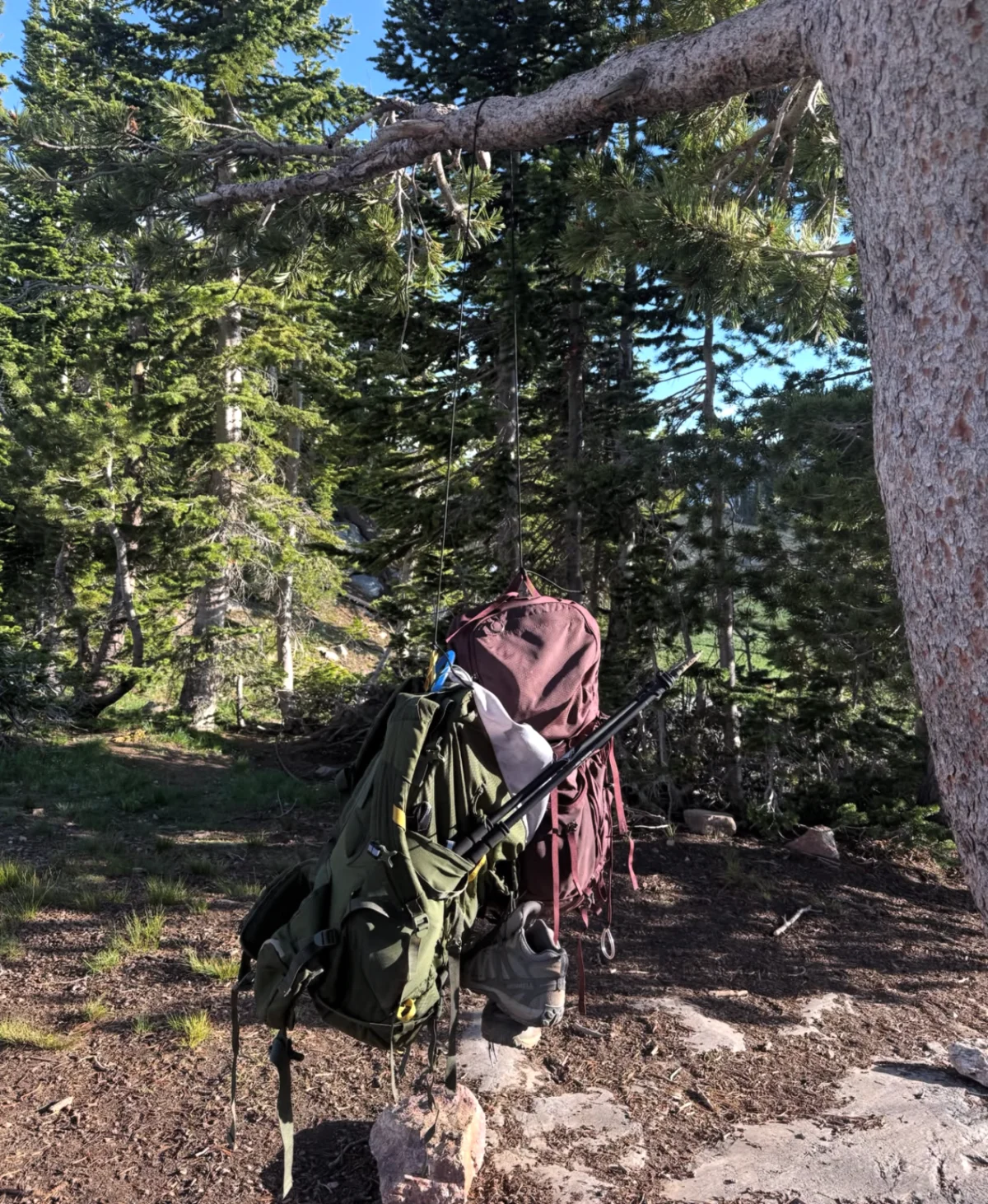
Beyond bears, the local marmot population at Sunset Lake proved to be notably active. These robust rodents are notorious for their attraction to salt, often found in human sweat on clothing and gear. Hikers reported that marmots would readily chew through backpacks and other equipment to access the salty residue. To mitigate this, a mandatory protective measure is to hang all empty backpacks and any other gear that might contain salty odors from a sturdy tree branch before turning in for the night. This simple precaution can prevent costly damage to essential equipment. Adhering to these wilderness safety protocols ensures a secure and responsible backcountry experience, protecting both the hikers and the unique ecosystem they are visiting.
Day 2: Over Hurricane Pass and Into Cascade Canyon
To counter the anticipated brutal summer heatwave and maximize the experience of the high-alpine environment, the expedition commenced Day 2 with an early 5:45 AM wake-up call, timed to coincide with sunrise. Before departing Sunset Lake, all water containers were refilled, a vital step given the sustained effort required for the day’s journey. The early start proved highly beneficial, providing cooler temperatures for the initial climb out of Sunset Lake and onto the Teton Crest Trail (TCT) towards Hurricane Pass.

Hurricane Pass, standing at an elevation of 10,330 feet, is one of the most iconic viewpoints in the Teton Range, offering panoramic vistas of the towering Cathedral Group, including the Grand Teton itself, Mount Owen, and Teewinot Mountain. Hikers expressed initial apprehension regarding early-season snowpack, a common concern for high-elevation passes in mid-July. However, recent warmer temperatures had accelerated the snowmelt, leaving only two manageable, soft snowfields that required careful navigation.
A crucial Leave No Trace pro-tip for navigating around snowfields emphasizes minimizing environmental impact: detours should only be made if solid rock or gravel can be traversed. Stepping on delicate heather or wildflowers causes irreparable damage to the fragile alpine flora, which has a short growing season. The expedition successfully navigated around the snow by utilizing boulder fields and rock scrambles, allowing for safe passage without leaving any discernible trace.
Shortly after cresting Hurricane Pass, the trail offers a spectacular view of the Schoolroom Glacier, a small cirque glacier nestled beneath the pass. This geological feature serves as a stark reminder of the powerful glacial forces that sculpted the Teton landscape. From the pass, the long descent into the majestic Cascade Canyon began. The trail itself was remarkably clear of snow, though numerous white patches still clung tenaciously to the higher, shaded slopes, creating a dramatic contrast with the verdant valley below.
The descent into Cascade Canyon, one of Grand Teton’s most renowned glacial canyons, was a continuous feast for the senses. The trail winds alongside Cascade Creek, offering views of towering granite walls and cascading waterfalls. Along this section, the hikers were rewarded with a close-up encounter with a local moose, observed feeding placidly in the dense brush. Wildlife sightings are common in this rich ecosystem, with deer, elk, and various bird species frequently spotted.

As the expedition progressed further down Cascade Canyon and approached the vicinity of Jenny Lake, the peaceful wilderness gradually transitioned into a bustling hub of tourists and day hikers. Jenny Lake is a popular destination accessible by road and boat shuttle, and its surrounding trails experience high foot traffic. Recognizing this, and having their shuttle car strategically parked at the Leigh Lake trailhead, the hikers opted for a scenic detour above Jenny Lake. This final stretch involved hiking past String Lake, a tranquil, shallow lake, offering a serene conclusion to the stellar 20-mile traverse and avoiding the most congested areas around Jenny Lake.
Essential Gear for a Fast & Light Traverse
Undertaking a 20-mile traverse, especially during warmer months, necessitates a "fast and light" approach to gear. Minimizing pack weight is crucial for comfort, speed, and endurance over challenging terrain. While a comprehensive gear list would be extensive, key categories and considerations include:
- Backpack: Lightweight, appropriately sized for a one-night trip (30-45 liters).
- Shelter: Ultralight tent, tarp, or bivvy sack suitable for alpine conditions.
- Sleeping System: Lightweight sleeping bag or quilt (appropriate temperature rating for summer alpine nights) and a compact sleeping pad.
- Cooking System: Minimalist stove, fuel, small pot, and dehydrated meals.
- Water Management: Water filter/purifier (e.g., Sawyer Squeeze, Katadyn BeFree) and sufficient water bottles/reservoirs (minimum 2-3 liters capacity, especially for dry stretches).
- Navigation: Topographic map, compass, and GPS device/smartphone app with downloaded maps.
- Safety & First Aid: Comprehensive first-aid kit, emergency shelter, headlamp, fire starter, multi-tool, bear spray.
- Clothing: Layered system including moisture-wicking base layers, insulating mid-layer (fleece/puffy), waterproof/windproof outer shell, hiking pants/shorts, sun hat, gloves.
- Footwear: Sturdy hiking boots or trail runners with good ankle support and grip, spare socks.
- Sun Protection: Sunscreen, sunglasses, wide-brimmed hat.
- Other: Toiletries, trowel for catholes, trash bags, camera.
The emphasis on lightweight gear significantly contributes to the overall enjoyment and feasibility of such a demanding route.
Broader Implications and Sustainable Recreation
This "backdoor" route into the heart of Grand Teton National Park highlights a growing trend in outdoor recreation: the search for alternatives to popular, permit-restricted areas. While offering incredible access to stunning landscapes, it also underscores the delicate balance between visitor access and wilderness preservation. Routes like this, which leverage adjacent wilderness areas, can help disperse visitor impact, reducing pressure on the most heavily used corridors within the national park system. However, they also shift the burden of management and conservation onto other land agencies, such as the U.S. Forest Service, which may have different resources and regulations.

The increasing popularity of such traverses necessitates a heightened commitment to Leave No Trace principles from all users. Responsible recreation, including proper waste disposal, minimizing camp impacts, respecting wildlife, and staying on designated trails, becomes even more critical when routes traverse multiple jurisdictions and experience growing traffic. The preservation of these pristine environments for future generations depends not only on effective park and wilderness management but also on the informed and ethical choices of every individual adventurer.
In conclusion, for those seeking the unparalleled high-alpine grandeur of Grand Teton National Park – with its monumental canyon walls, remnants of glaciers, and shimmering lakes – but without the competitive headache of the national park permit system, this 20-mile traverse from the Jedediah Smith Wilderness offers an exceptional solution. By meticulously planning logistics, timing water refills, diligently practicing bear safety, and adhering to wilderness ethics, adventurers can achieve an unforgettable, full-spectrum Teton experience. This route is a testament to the enduring magic of the Tetons, accessible through thoughtful planning and a deep respect for the wild.
