

Copenhagen Fashion Week has once again provided a platform for designers to showcase their unique visions, and Freya Dalsjø’s latest collection, unveiled during the recent event, offered a compelling study in duality. The show presented a fascinating juxtaposition of meticulously crafted, almost austere pieces with moments of striking visual drama. This collection, according to Dalsjø herself, was born from a desire to create more “wearable, everyday pieces,” forming a foundational wardrobe that she, as a designer, would personally covet. This commitment to functional elegance was evident throughout the presentation, characterized by an almost ritualistic pacing of the models, allowing for a profound appreciation of the materials and the intricate craftsmanship that defines Dalsjø’s aesthetic.
The Philosophy of Slow Fashion and Ritualistic Presentation
Freya Dalsjø’s approach to fashion is deeply rooted in the principles of slow fashion, a movement that prioritizes quality, durability, and ethical production over fleeting trends. This philosophy was palpable in the deliberate and unhurried cadence of her models on the runway. This choice, while perhaps draining immediate vibrancy, served a crucial purpose: to draw the audience’s attention to the tactile qualities of the fabrics and the painstaking detail embedded in each garment. In an industry often characterized by rapid consumption and disposability, Dalsjø’s show was a quiet rebellion, an invitation to slow down and engage with the artistry of clothing on a deeper level. The almost monastic atmosphere created by this deliberate pacing encouraged viewers to savor the visual narrative, allowing the subtle nuances of texture and form to take center stage.
The designer’s stated intention to build a wardrobe of "wearable, everyday pieces" is a significant pivot, signaling a move towards greater accessibility without compromising her signature design ethos. This collection aims to equip the modern woman with versatile garments that can transition seamlessly from professional settings to more relaxed occasions. The emphasis is on longevity and inherent style, pieces that can be integrated into existing wardrobes and cherished for seasons to come. This aligns with a broader consumer shift towards mindful purchasing and a desire for clothing that offers both aesthetic appeal and enduring utility.
Redefining the Everyday: Innovative Shirting and Ethereal Silhouettes
Central to Dalsjø’s concept of an everyday wardrobe was her reinterpretation of the classic shirt. Moving beyond conventional interpretations, she introduced shirts with innovative button placements on the sleeves and center back. These seemingly minor adjustments offered a surprising degree of customization, allowing wearers to alter the silhouette and fit of the garment. More profoundly, these details served to blur the lines between skin and fabric, and even between the "inside and outside" of the garment, creating a sense of intrigue and a subtle exploration of the body. This innovative approach to a staple garment injected an element of playfulness and individuality, transforming a basic item into a statement piece.
The collection also featured a striking lightness, embodied by a wispy black dress that seemed to come alive with movement, its ethereal quality a testament to Dalsjø’s mastery of fabric manipulation. This was complemented by a liquid tank/slip dress that evoked the iconic minimalism of Calvin Klein in the 1990s, a period synonymous with understated sensuality and clean lines. These pieces offered a counterpoint to the more substantial garments, demonstrating the breadth of Dalsjø’s design vocabulary and her ability to evoke different moods and sensations through her creations. The contrast between these delicate pieces and the more structured outerwear underscored the collection’s thematic exploration of duality.
The Tactile Power of Cashmere and Architectural Forms
In stark contrast to the diaphanous dresses, the collection showcased luxurious toppers crafted from double-faced cashmere. The density of the pile on these pieces was so profound that it evoked the soft, velvety texture of suede, offering a rich tactile experience. These opulent materials were sculpted into both slim, tailored coats and capacious cocoon silhouettes, emphasizing the interplay between form and volume. Trousers featuring skewed waistlines at both the front and back added an unexpected architectural element, further pushing the boundaries of conventional garment construction.
A particularly noteworthy piece was a long swathe of sand-colored fabric that ingeniously folded back upon itself to create a unified vest and blazer. This innovative design exemplified Dalsjø’s talent for transforming simple fabric into complex, yet effortlessly wearable, garments. The autumnal palette of these pieces resonated with Dalsjø’s commitment to a seasonless approach to fashion, a philosophy that encourages consumers to invest in pieces that transcend seasonal trends and can be worn year-round. This approach not only promotes sustainability but also fosters a more considered and enduring relationship with clothing.
A Mature Aesthetic for All Ages
Freya Dalsjø’s design process is deeply personal, as she works closely with her mother. This familial collaboration infuses her work with a sense of inherited craft and a consideration for designing for women across different age groups. The collection exhibits a maturity that, at times, can be interpreted as seriousness. This purity of design aligns her with contemporary designers who are focused on carrying forward established legacies of refined craftsmanship and intellectual design, rather than those who cater to more fleeting, trend-driven aesthetics. The comparison to Dušan Paunović, who is seen as upholding the legacy of Zoran, further situates Dalsjø within a lineage of designers who prioritize substance and enduring style over ephemeral fashion statements.
Pushing the Boundaries of Textile Innovation: The Woven Masterpiece
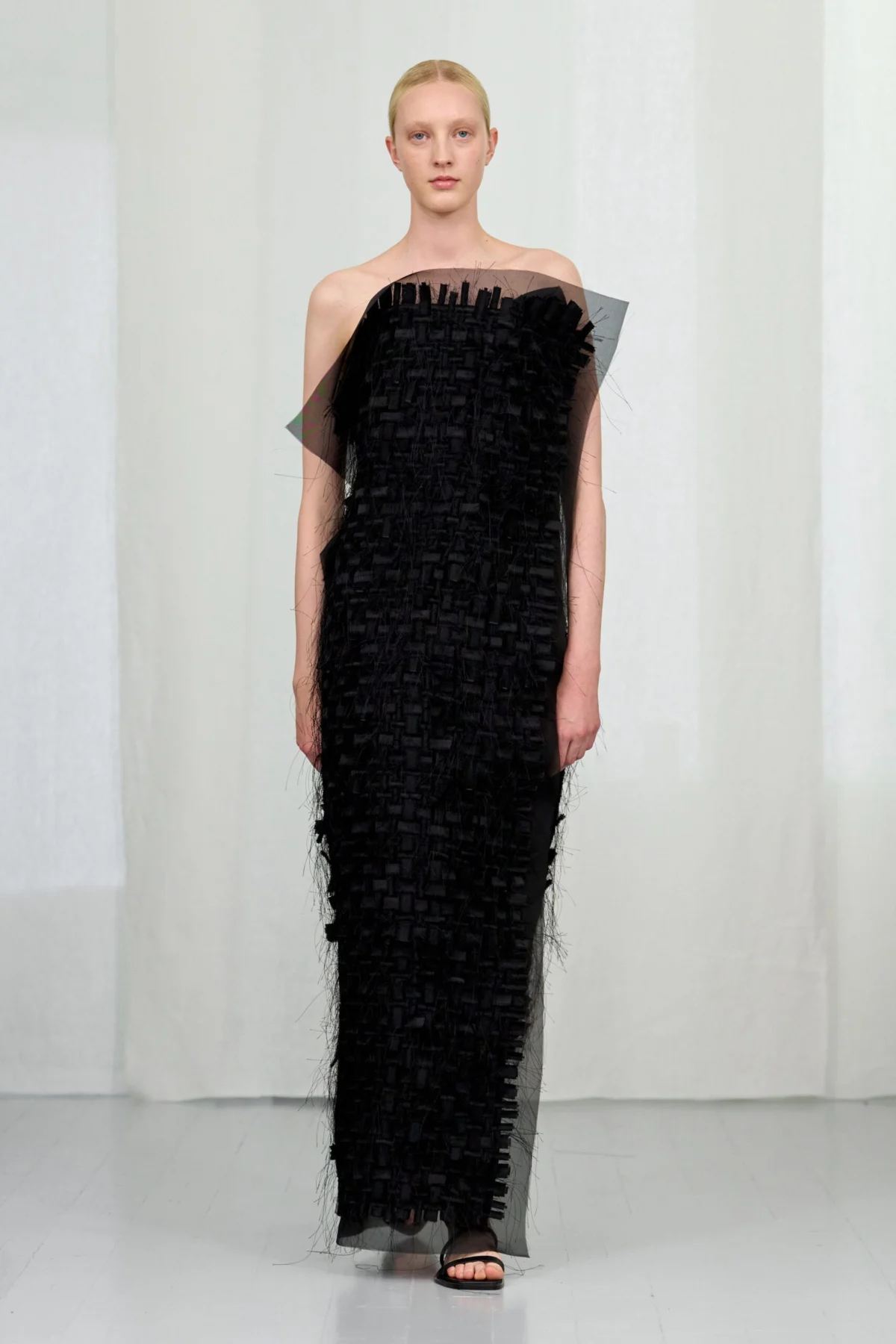
The show notes revealed an intriguing inspiration: a summer hat served as the genesis for one of the collection’s most remarkable woven pieces. Dalsjø pushed her signature basket weave technique to its absolute limits, meticulously cutting and fraying strips of fabric to construct an entirely new textile. This painstakingly created material was then expertly applied to vast expanses of wispy organza, with some of these draped pieces wrapped around the body with the simple elegance of a blanket. This innovative application of traditional techniques demonstrated a forward-thinking approach to textile development, where heritage methods are re-envisioned for contemporary expression.
The culmination of the show was a truly spectacular, albeit understated, final look. Crafted from the softest wool, this garment possessed an almost geometric order, resembling the intricate spiral of a nautilus shell. Dalsjø explained that her goal was to take the "over-under" weaving technique and "build up a piece fully in 3D." This monumental undertaking involved working directly on a mannequin from February until the day before the show, a testament to her dedication and experimental spirit. "It’s just like one big weave; it was sort of a technical experiment for me to see if it was possible," she shared. This ambitious creation served as a powerful "hero piece," concluding a collection that, for the most part, championed subtlety and a quiet confidence, deliberately shunning ostentatious displays.
Broader Implications and Industry Context
Freya Dalsjø’s collection at Copenhagen Fashion Week arrives at a crucial juncture for the fashion industry. As consumer awareness around sustainability and ethical production continues to grow, designers like Dalsjø, who champion slow fashion principles and intricate craftsmanship, are becoming increasingly relevant. The average lifespan of a garment has been a significant concern, with reports indicating a decline in the number of times clothing is worn before being discarded. Dalsjø’s focus on creating enduring, high-quality pieces directly addresses this issue. Her approach encourages a shift from a disposable mindset to one of investment and appreciation, where garments are seen as long-term companions rather than fleeting trends.
The designer’s commitment to seasonless fashion also has significant implications for supply chains and consumption patterns. By moving away from rigid seasonal collections, Dalsjø’s model can potentially reduce the environmental impact associated with the frequent production and distribution of new lines. This approach resonates with the growing demand for transparency and responsibility within the fashion ecosystem. The collection’s emphasis on wearability and the creation of a foundational wardrobe also speaks to a broader desire for practical yet sophisticated clothing that can integrate seamlessly into the lives of busy individuals. This focus on utility and timeless design is a powerful antidote to the often overwhelming and fast-paced nature of contemporary fashion.
The fashion industry, particularly in the Nordic region, has been at the forefront of advocating for more sustainable and ethical practices. Copenhagen Fashion Week, in particular, has implemented stringent sustainability requirements for participating designers, encouraging innovation in material sourcing, production processes, and waste reduction. Dalsjø’s collection, with its emphasis on meticulous craftsmanship, durable materials, and a seasonless approach, aligns perfectly with these evolving industry standards and values. Her work serves as a compelling example of how creativity and consciousness can coexist, proving that fashion can be both beautiful and responsible. The careful consideration of fabric quality, the innovative use of traditional techniques, and the focus on creating garments with longevity all contribute to a more mindful and sustainable fashion future, positioning Freya Dalsjø as a designer of significant influence in the contemporary fashion landscape.
