

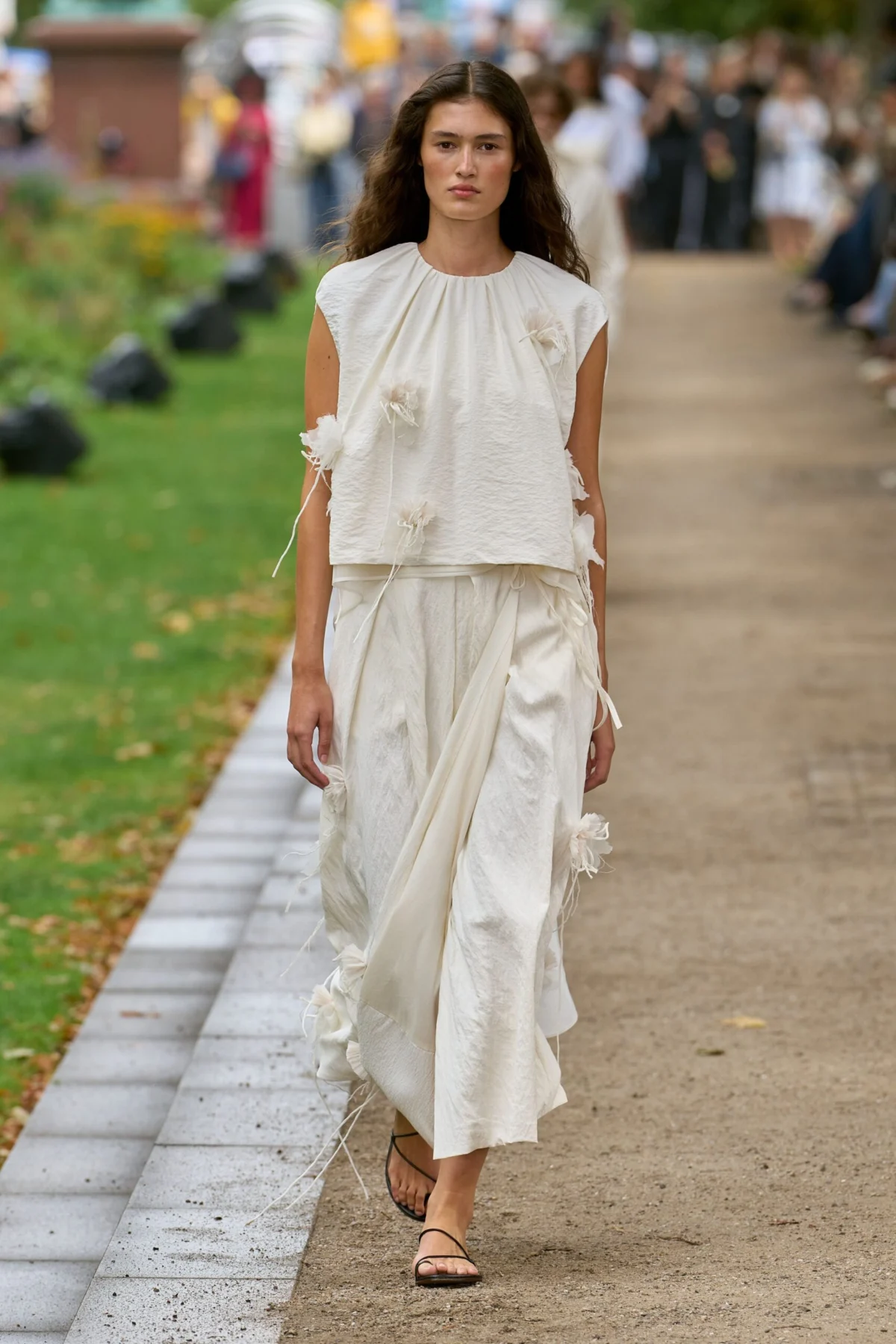
Copenhagen, Denmark – In a city that has firmly established itself as a global hub for practical, yet stylish, fashion, MKDT Studio presented its latest collection, a thoughtful exploration of duality and the essence of wearable clothing. Creative director Caroline Engelgaar’s vision for the season centered on building a cohesive wardrobe, with each collection serving as a continuation and conversation with its predecessor, a departure from the traditional seasonal reset often seen in the industry. This approach underscores Copenhagen’s distinct fashion ethos, which prioritizes longevity and considered design over fleeting trends, a stark contrast to the avant-garde experimentation often showcased in London or the heritage-driven opulence of Paris.
A Dualistic Inspiration: Hammershøi and Klein
For this collection, Engelgaar drew inspiration from two contrasting Danish artists: the early 20th-century painter Vilhelm Hammershøi and the contemporary photographer Kirsten Klein. This pairing allowed for a nuanced examination of womanhood, a deliberate movement "between wildness and calm." From Hammershøi, known for his introspective and often solitary interior scenes, Engelgaar absorbed a sense of contemplation and serenity. This influence was evident in the collection’s classic silhouettes and a restrained palette of black and white. However, these seemingly simple elements held a hidden complexity. Viewed from the back, a common perspective in Hammershøi’s work, the garments revealed their intricate details: a structured camisole gracefully cascaded to the ankle, and a relaxed linen blazer featured a discreet line of buttons down the spine, adding a subtle yet impactful design element.
Complementing this quietude, the spirit of Kirsten Klein’s photography offered a counterpoint. Klein’s evocative images often depict women in untamed natural landscapes, embodying a sense of unbridled freedom. Engelgaar translated this wildness into sculptural column skirts and simple tops layered beneath translucent jackets and double-layered dresses. These pieces created an impression of a woman who defies confinement, her silhouette softened by a "sheer shadow," suggesting an ethereal yet powerful presence. "The MKDT woman is a woman in motion," Engelgaar stated, encapsulating this dynamic spirit.
Textiles as a Canvas for Movement and Nature
The collection’s textile choices further amplified this theme of movement and the untamed. Blurred floral prints, developed in collaboration with visual creative Cecilie Ellerup, appeared to "sprint off the fabric," conveying a sense of urgent dynamism. Meanwhile, floral appliqués, meticulously crafted by embroidery artisan Thit Moses, were described as both "dainty and spindly," bursting forth with an organic vitality that mimicked the growth of living things. This connection to nature, particularly the raw, wind-swept plains often captured by Klein, was further translated into skirts and dresses adorned with abundant fringe, which swayed and danced with every movement of the wearer. This deliberate use of texture and embellishment not only added visual interest but also served to physically embody the collection’s thematic duality.
A City as a Stage: The Show’s Immersive Setting
The presentation’s venue was as integral to the narrative as the garments themselves. Engelgaar envisioned the show space as a reflection of "women passing through the city." This was subtly communicated through details like AirPods dangling from organza shopping bags and flowers casually slung underarms, elements that evoked the everyday lives of urban dwellers. The unexpected arrival of a summer shower during the event, far from being a disruption, enhanced the atmosphere, lending a serendipitous, almost poetic quality to the presentation.
MKDT Studio utilized its Nyhavn store as the backstage area, with seating extending onto the sidewalks of the tree-lined Sankt Annæ Plads. The historical backdrop of Hammershøi’s former residence, visible in the distance, further contextualized the artistic influences. Engelgaar commented on the choice of location: "It’s not as grand as our usual locations, but it’s extremely beautiful. You get to see the way women walk, the way they sit, the way they move through the city. The everyday setting becomes the stage." This approach democratized the fashion show, transforming a public space into an intimate runway and emphasizing the inherent beauty of ordinary moments.
Contextualizing Copenhagen’s Fashion Week
Copenhagen Fashion Week, which typically takes place in late January and August, has carved out a distinct niche in the global fashion calendar. It is renowned for its commitment to sustainability and a more grounded approach to design, often characterized by minimalism, functionality, and a strong connection to Scandinavian aesthetics. Unlike other major fashion weeks that often focus on aspirational luxury, Copenhagen champions "wearable luxury" – pieces that can be seamlessly integrated into a modern wardrobe. This season’s presentations, including MKDT Studio’s, reinforce this identity. Industry analysts have noted that Copenhagen Fashion Week’s emphasis on practicality and conscious consumption aligns with evolving consumer preferences, particularly among younger demographics who prioritize ethical production and timeless style.
MKDT Studio’s Wardrobe Philosophy
Caroline Engelgaar’s philosophy of building a wardrobe rather than creating discrete collections speaks to a broader trend towards mindful consumption in fashion. This approach is particularly relevant in an era where the environmental impact of the fashion industry is under intense scrutiny. By focusing on continuity and evolution, MKDT Studio encourages a longer lifecycle for its garments, promoting a "buy less, choose well" ethos. This strategy not only resonates with environmentally conscious consumers but also fosters brand loyalty by creating a sense of ongoing narrative and personal investment for the customer. Each collection becomes an extension of a curated personal style, rather than a disposable seasonal statement.
Broader Implications for the Fashion Industry
The success of designers like those showing in Copenhagen, who prioritize wearability and thoughtful design, suggests a potential shift in the industry’s focus. While high fashion and runway spectacle will undoubtedly continue to hold a place, there is a growing demand for clothing that serves a practical purpose and reflects a considered lifestyle. MKDT Studio’s collection, with its blend of artistic inspiration and everyday functionality, exemplifies this trend. The emphasis on craftsmanship, seen in the detailed embroidery and considered fabric choices, also highlights the enduring value of quality and attention to detail. This approach can be seen as a direct response to consumer fatigue with fast fashion and a growing appreciation for pieces that are both aesthetically pleasing and built to last.
The integration of urban environments into the show’s staging also reflects a growing trend in fashion presentations to connect with consumers on a more relatable level. By transforming public spaces into runways, designers are not only showcasing their collections but also inviting audiences to reconsider their surroundings and the role of fashion within them. This creates a more immersive and engaging experience, moving beyond the traditional confines of a fashion show and fostering a deeper connection between the brand and its audience. The success of this strategy at Copenhagen Fashion Week suggests that such innovative approaches to presentation will likely become more prevalent across the industry.
