

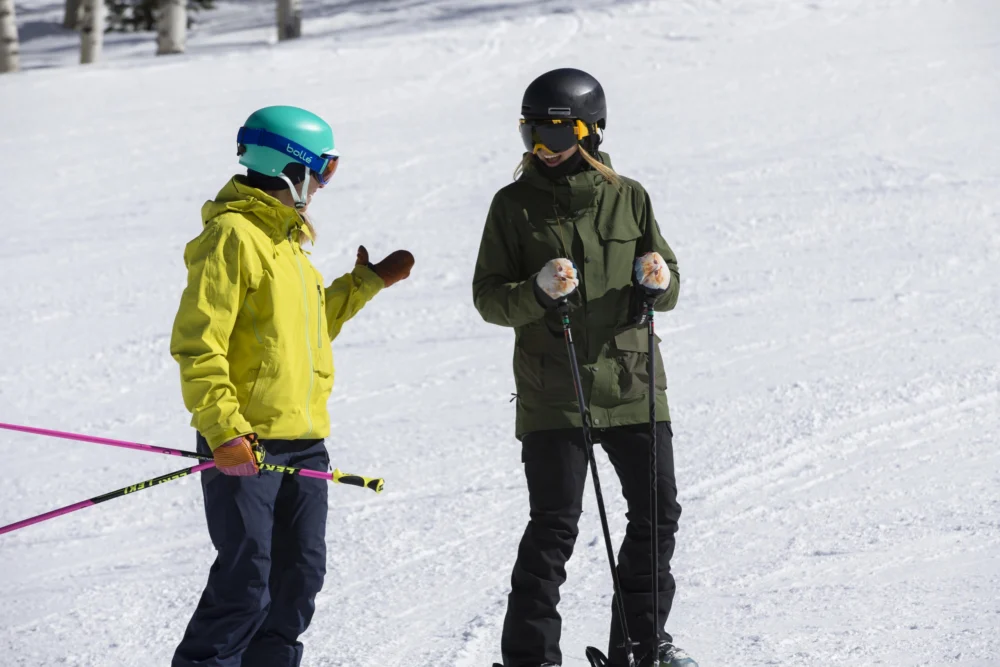
The critical role of mentorship in fostering professional growth, enhancing confidence, and building resilient communities within the snowsports industry is the central theme of a groundbreaking three-part series from the "First Chair" podcast. Hosted by George Thomas, the official podcast of the Professional Ski Instructors of America and American Association of Snowboard Instructors (PSIA-AASI), this series delves into diverse mentorship models, from structured regional programs to informal national initiatives, featuring insights from key figures across the organization. The discussions with Matthew Lyerly of the Eastern Region, Marisa Cooper from the Western Region, and former PSIA-AASI National Team member Carol Levine underscore a unified commitment to elevating the instructor experience beyond mere certification, addressing perennial challenges of retention, skill development, and leadership pipeline cultivation.
The Imperative of Mentorship in Snowsports Education
The snowsports industry, characterized by its seasonal workforce and dynamic skill requirements, faces unique challenges in fostering long-term professional commitment. Instructor turnover, while varying by region and resort, has historically been a significant concern, impacting the consistency of instruction, guest experience, and the overall health of ski and snowboard schools. Studies across various seasonal industries often indicate that a lack of clear career pathways, insufficient professional development opportunities, and a weak sense of belonging contribute to attrition rates that can sometimes exceed 20-30% annually for entry-level positions. PSIA-AASI, as the leading educational organization for snowsports instructors in the U.S., plays a pivotal role in addressing these issues by setting national standards for instruction and fostering a culture of continuous learning. Mentorship emerges as a crucial strategy in this context, moving beyond the transactional aspect of certification exams to build a supportive ecosystem that encourages instructors to view their profession as a viable, long-term career.
The "First Chair" podcast series, titled "Mentorship in Snowsports," provides a timely exploration of how PSIA-AASI and its regional divisions are actively developing solutions. By showcasing both formalized programs and organic mentorship cultures, the series aims to equip instructors, schools, and regions with actionable strategies to cultivate environments where every member feels supported, valued, and empowered to reach their full potential. This initiative reflects a broader organizational understanding that while technical skills are paramount, human connection and guidance are equally vital for instructor success and industry sustainability.
Part 1: Creating Community Beyond Certification – The Eastern Region’s Model
The inaugural episode, "Mentorship in Snowsports, Part 1: Creating Community Beyond Certification," sets the stage by exploring the foundational principles of mentorship through the lens of the Eastern Region’s "Next Steps Mentorship Program." George Thomas engages in a detailed conversation with Matthew Lyerly, a driving force behind the program, to uncover its genesis, structure, and profound impact. Lyerly articulates that the program was not merely conceived as a tool for exam preparation, but as a holistic initiative designed to address the broader professional development and community-building needs of snowsports instructors.
The Eastern Region, with its dense concentration of ski resorts and instructors, identified a need for a more robust support system that could bridge the gap between initial certification and sustained career progression. Matthew Lyerly elaborated on the program’s objectives, stating, "We recognized that many developing professionals, especially after achieving their initial certification, often felt a sense of isolation or uncertainty about their next steps. The ‘Next Steps’ program was born from a desire to formalize support, connecting these passionate individuals with seasoned education staff who could offer not just technical guidance, but also insights into career navigation, teaching philosophy, and leadership development."
The program’s design focuses on pairing newer instructors with experienced educators, fostering relationships that extend far beyond a typical student-teacher dynamic. These mentorships are structured to support long-term career growth, providing personalized feedback, goal-setting assistance, and networking opportunities. Lyerly highlighted the program’s success in building meaningful relationships across member schools, creating a cohesive community where knowledge and experience are freely shared. He emphasized that while advancing certification goals is a natural outcome, the true value lies in helping instructors find belonging, professional direction, and a deeper connection to the PSIA-AASI community.
The implications of such a structured program are significant. By providing clear pathways for advancement and sustained engagement, the "Next Steps" program serves as a powerful tool for instructor retention, particularly in a region where seasonal employment might otherwise lead to higher attrition. It cultivates a culture of continuous improvement and peer support, laying a strong foundation for future leadership within the snowsports industry. As Lyerly concluded, "It’s about demonstrating that PSIA-AASI is invested in our members’ entire journey, not just their certification exams. That commitment builds loyalty, expertise, and a stronger collective future for snowsports."
Part 2: Mentorship Doesn’t Have to Look One Way – Insights from the Western Region
Building on the comprehensive framework introduced in Part 1, the second episode, "Mentorship in Snowsports, Part 2: Mentorship Doesn’t Have to Look One Way," shifts the geographical focus to the Western Region. Here, George Thomas explores how mentorship can thrive even without a rigid, formal structure, demonstrating the versatility and adaptability required in diverse regional contexts. Marisa Cooper from the Western Region joins the discussion, offering insights into what she terms "mentorship with a small M" – an approach that prioritizes organic connection, shared best practices, and meeting members where they are.
The vast and geographically diverse Western Region presents different challenges and opportunities compared to the more concentrated Eastern Region. Cooper explained that while formal programs have their place, the Western Region often benefits from a more fluid, community-driven approach. "Our landscape is expansive, and our instructors are incredibly diverse in their backgrounds and needs," Cooper stated. "We found that the most impactful mentorship often emerges from fostering strong community ties, encouraging peer-to-peer learning, and empowering individuals to seek and offer guidance in less formal settings."
The conversation delves into the power of alignment and community as cornerstones of effective informal mentorship. Cooper highlighted how sharing best practices across regions and encouraging open communication among instructors, even those from different resorts, can create a powerful network of support. This includes informal leadership pathways, where experienced instructors naturally become guides for newer ones through shared experiences on the slopes, during clinics, or through digital forums. The emphasis is on cultivating an environment where connection and impact are prioritized over rigid frameworks, demonstrating that meaningful mentorship opportunities can arise from a culture that values collaboration and mutual support.
Cooper provided examples of how this "small M" mentorship manifests: senior instructors informally guiding less experienced peers through challenging teaching scenarios, peer groups forming to discuss specific technical aspects or teaching methodologies, and even digital platforms facilitating knowledge exchange. This approach recognizes that every interaction, from a casual conversation in the lift line to a shared meal after a clinic, holds the potential for mentorship. The key, according to Cooper, is to foster an organizational culture that validates and encourages these informal exchanges, making it clear that such contributions are valued and contribute significantly to the collective expertise of the region. This flexible model underscores that while the underlying principles of mentorship remain constant, their application can and should be adapted to the specific characteristics and needs of a given community.
Part 3: A Little Support Goes a Long Way – A National Pilot Program
The concluding episode, "Mentorship in Snowsports, Part 3: A Little Support Goes a Long Way," brings a national perspective to the discussion, featuring former PSIA-AASI National Team member Carol Levine. This episode illuminates how a seemingly simple idea, rooted in extensive research, blossomed into a powerful national mentorship experiment with far-reaching implications. Levine details a targeted pilot program designed to support women endorsed for National Team tryouts, an initiative that emerged directly from findings gathered by the Women’s Council for Equity and Inclusion.
The genesis of this pilot program lies in a comprehensive research effort undertaken by the Women’s Council, which included the analysis of nearly 500 mentorship-related survey comments from PSIA-AASI members. This data revealed common themes regarding the challenges faced by women in leadership and high-performance pathways within snowsports, including issues of confidence, access to experienced mentors, and a sense of belonging in a historically male-dominated sphere. The survey feedback underscored a significant demand for tailored support mechanisms to help women navigate these pathways.
Levine explained that the pilot program was designed as a time-bound, targeted intervention, focusing specifically on women preparing for the rigorous National Team tryouts. She outlined the four guiding principles that underpinned this innovative program:
- Peer-to-Peer Connection: Facilitating connections among participants to build a supportive network and reduce feelings of isolation.
- Access to Elite Mentors: Providing direct access to current or former National Team members and high-level educators who could offer specific guidance and insights into the tryout process and performance expectations.
- Confidence Building and Mental Preparation: Integrating strategies to enhance self-efficacy, manage performance anxiety, and cultivate a resilient mindset.
- Strategic Feedback and Skill Refinement: Offering targeted advice on technical and teaching skills, helping participants identify areas for improvement and develop actionable plans.
The results of this pilot program were compelling and immediate. Participants reported increased confidence in their abilities and readiness for the tryouts, a deeper sense of belonging within the elite snowsports community, and a stronger belief in their leadership potential. This experiment provided concrete proof that mentorship, even in a highly specialized and competitive context, does not need to be overly complicated or resource-intensive to be profoundly impactful. As Levine succinctly put it, "Sometimes, a little bit of support truly beats a whole lot of nothing. The data showed us that targeted, meaningful connections can unlock immense potential and address barriers that might otherwise derail talented individuals."
This episode resonates broadly, offering valuable lessons for ski and ride schools, regional divisions, and individual instructors on how to cultivate effective mentorship cultures. It highlights the importance of listening to member feedback, identifying specific needs, and designing interventions that are both practical and impactful. The success of this pilot program underscores its potential to elevate retention, foster resilience, and accelerate long-term professional growth for all members, particularly those from underrepresented groups, by ensuring that talent is nurtured and supported at every stage of their career journey.
Broader Impact and Future Implications
The "Mentorship in Snowsports" series on the "First Chair" podcast provides a comprehensive and timely exploration of a critical topic within the snowsports instruction landscape. By presenting diverse models from structured regional programs to informal community-driven approaches and targeted national initiatives, PSIA-AASI demonstrates a nuanced understanding of its members’ varied needs and the importance of adaptable strategies.
The implications of robust mentorship programs are far-reaching. For individual instructors, mentorship offers a clear pathway for skill development, career advancement, and a stronger sense of belonging. It can significantly reduce the feeling of isolation often experienced in seasonal work, fostering loyalty and encouraging longer tenures within the profession. For ski and ride schools, a strong mentorship culture translates into a more skilled, confident, and stable workforce, leading to higher quality instruction, improved guest satisfaction, and reduced recruitment and training costs associated with high turnover. Furthermore, the development of a strong leadership pipeline, nurtured through mentorship, ensures the ongoing evolution and vitality of snowsports education.
From an organizational perspective, PSIA-AASI reinforces its commitment to its members’ holistic development. By actively promoting and facilitating mentorship, the association strengthens its community, enhances its professional standards, and positions itself as a forward-thinking leader in professional development. The focus on equity and inclusion, particularly highlighted by Carol Levine’s work with the Women’s Council, further demonstrates a commitment to creating an inclusive environment where all members, regardless of background, have the opportunity to thrive and reach their highest potential.
The "First Chair" podcast, through this series, not only shares invaluable insights but also serves as a catalyst for action. It encourages regions to evaluate their own mentorship strategies, inspires individual instructors to seek out mentors and become mentors themselves, and prompts ski and ride schools to integrate mentorship principles into their operational frameworks. The episodes are available wherever listeners find their favorite podcasts, and video versions are also available on The Snow Pros YouTube channel, offering accessible resources for anyone looking to deepen their understanding and engagement with mentorship in snowsports. This initiative marks a significant step towards building a more connected, resilient, and professionally enriched snowsports community for years to come.
