

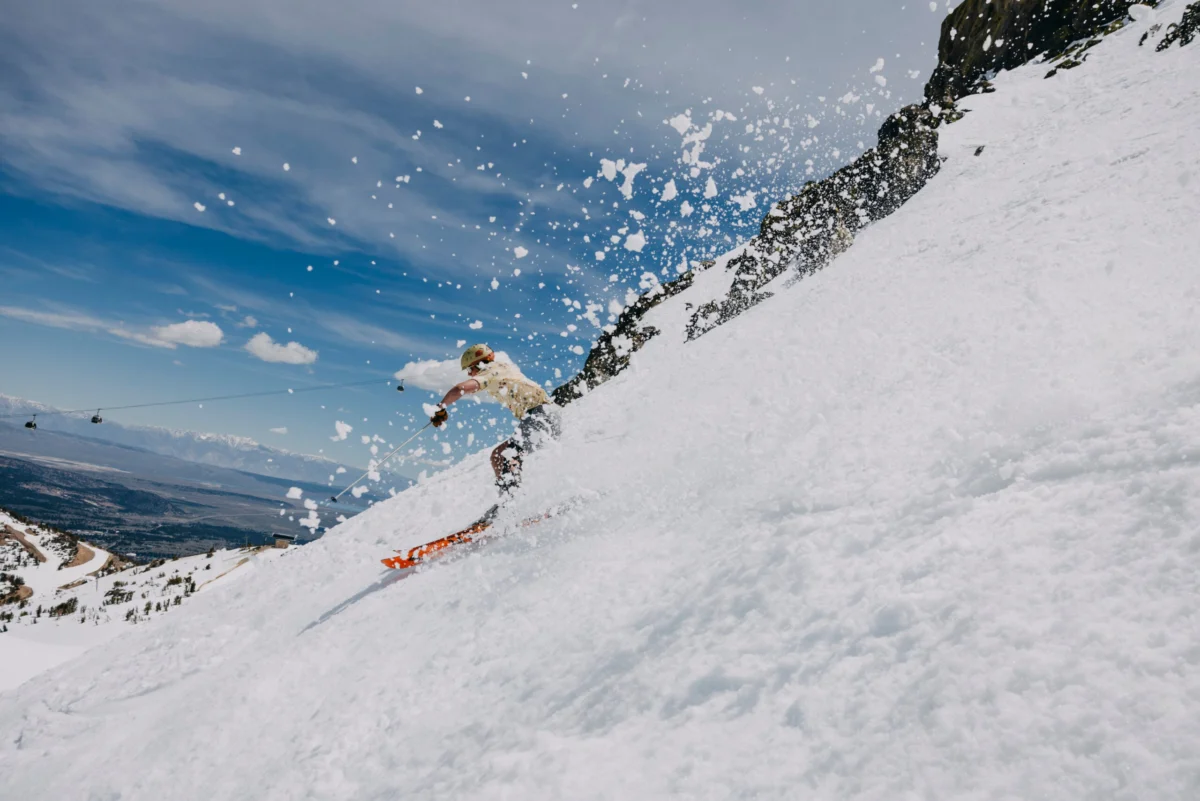
The ski season, often characterized by its unpredictable nature, has delivered a dramatic and welcome twist in mid-April, with a significant late-season storm system blanketing much of the Western United States. This unexpected bounty of fresh powder has revitalized the remaining open resorts, extending the season for eager skiers and snowboarders and, in one notable instance, resurrecting a resort’s prospects for continued operation. The snowfall, which began in earnest on Friday, April 17th, has provided a much-needed dose of winter to regions that had been experiencing unseasonably warm, spring-like conditions for weeks.
The timing of this meteorological event is particularly significant. As many resorts across the Western United States typically conclude their operations by early to mid-April, this late-season surge has offered a reprieve, allowing a select few to extend their seasons and providing a final burst of excitement for a passionate skiing community. This snowfall not only bolsters the base depths at already high-elevation resorts but also injects new life into the mountain experience, transforming groomed runs into soft, forgiving powder fields and offering challenging off-piste opportunities.
Sierra Nevada Resorts See Significant Snowfall
California’s Sierra Nevada region has been a primary beneficiary of the recent storm system. Palisades Tahoe reported an impressive two feet of new snow accumulation over the past week. This significant influx has allowed the resort to maintain operations on 39 trails, serviced by 11 lifts. The resort’s signature spring event, the Cushing’s Crossing pond-skim, is scheduled to take place on April 26th, and the fresh snow is expected to enhance the already festive atmosphere.
Mammoth Mountain, a perennial late-season favorite, is experiencing ideal spring skiing conditions. The resort announced packed powder across its 110 open runs, with a substantial base depth of 121 inches recorded at the summit. Mammoth Mountain has a full calendar of spring events planned, catering to a wide range of interests, from competitive skiing to relaxed spring festivities. The resort’s commitment to extending its season and hosting events underscores its status as a premier destination for spring skiing enthusiasts.
In a remarkable turn of events, Heavenly, which had initially planned to close on April 5th, has announced a surprise reopening for the weekend of April 18th and 19th. This decision was made possible by the significant snowfall. The resort’s mountain operations team worked diligently throughout the week to prepare a key access route, the Upper California run to Tamarack Return, accessible via the gondola. This will be the sole lift operating during this limited re-opening, demonstrating the resort’s responsiveness to favorable snow conditions and its dedication to providing its patrons with additional skiing opportunities.
Montana and Wyoming Benefit from Late-Season Storm
Big Sky Resort in Montana continues to offer a robust spring skiing experience, with over 1,300 skiable acres accessible across 57 trails and five lifts. The resort has benefited from eight inches of new snow, helping to preserve its conditions. Big Sky is operating on a weekend-only schedule through April 26th. Notably, lift tickets for the final weekend of operation (April 25th-26th) are being offered at a 40 percent discount, a strategic move to attract visitors for the season’s conclusion.
Grand Targhee, situated on the western slopes of the Tetons, has also received substantial snowfall. The resort reported 13 inches of new snow in the 48 hours leading up to the publication of this report, and a total of two feet over the preceding seven days. However, visitors are advised to act quickly, as Grand Targhee is scheduled to close for the season this weekend. As of press time, the resort had 52 trails and four lifts open, offering a final opportunity for skiers to experience its renowned powder.
Utah Resorts Extend Operations with Fresh Snow
The Little Cottonwood Canyon resorts in Utah are all still welcoming skiers, with Alta receiving seven inches of new snow in the past 24 hours and Snowbird reporting eight inches. Alta boasts an impressive 86-inch base depth and has 110 runs open. The resort is slated to close on April 26th. Snowbird has 90 of its 149 trails open, serviced by nine lifts. While Mineral Basin is accessible, The Cirque remains closed at this time.
In Big Cottonwood Canyon, Solitude and Brighton have also experienced beneficial snowfall, albeit slightly less than their neighbors in Little Cottonwood Canyon. Solitude received five inches from the latest storm and has 14 runs and four lifts open. The resort’s closing day is set for Sunday, April 18th. Brighton, with a planned closing date of May 3rd, has tallied four new inches of snow, with a seven-inch accumulation over the last week. To encourage continued visitation, Brighton is offering a special lift ticket price of $49 for the period between April 20th and the season’s end.
Colorado Resorts Embrace the Late-Season Powder
The Front Range resorts in Colorado are currently experiencing the full impact of the storm, promising excellent skiing conditions for the weekend of April 18th-19th at the resorts that remain open. These include Arapahoe Basin, Loveland Ski Area, Breckenridge, and Copper Mountain.
Copper Mountain has announced an extension of its season through May 3rd. The resort’s north-facing, high-elevation terrain has been instrumental in preserving snowpack, and the recent snowfall is expected to further enhance these conditions. As of the latest reports, Copper Mountain has 26 runs and four lifts operating. For the final week of the season, commencing April 27th, lift tickets will be available for $49.
Arapahoe Basin, a beloved local institution known for its extended season, currently has 11 open runs serviced by two lifts. It is important to note that there is no beginner terrain available for the remainder of the season. Following April 20th, ticket prices will be reduced from $79 to $64. Furthermore, parking reservations are no longer required, simplifying access for visitors looking to enjoy the spring tailgate atmosphere at "the beach."
Loveland Ski Area continues to offer over 500 skiable acres across 41 trails. With a few inches of new snow forecast for today and over the weekend, conditions are expected to be favorable. The mountain is scheduled to close on April 26th, providing a final window for skiers to experience its offerings before the lifts are put into summer storage.
Analysis and Implications of the Late-Season Snowfall
The timing and magnitude of this late-season snowfall carry significant implications for both the resorts and the skiing community. For resorts, it offers a crucial opportunity to recoup some of the revenue potentially lost during periods of less-than-ideal snow conditions earlier in the season. The extended operational periods can also boost local economies, supporting hospitality and retail sectors that rely on ski tourism.
For skiers and snowboarders, this event represents a valuable extension of their recreational opportunities. Many enthusiasts consider spring skiing a unique and enjoyable experience, often characterized by softer snow, warmer temperatures, and a more relaxed atmosphere. The unexpected powder adds an element of thrill and challenge, allowing for a more traditional winter experience even as the calendar suggests otherwise.
The ability of resorts like Heavenly to reopen after an initial closure highlights the resilience and adaptability of the ski industry. It also underscores the importance of flexible operational planning in response to variable weather patterns. The economic impact of such extended seasons, even for a limited duration, can be substantial, particularly for smaller communities that are heavily reliant on ski tourism.
Furthermore, this late-season event serves as a reminder of the inherent variability of mountain weather and the importance of staying informed about conditions. While climate change trends may point towards shorter seasons in the long term, significant snowfall events like this demonstrate that the West can still deliver exceptional winter experiences well into the spring. The data from these resorts, detailing accumulated snowfall and operational metrics, provides valuable insights into the current season’s performance and sets a benchmark for future years. The collective response from these resorts, from extending operating days to offering discounted tickets, reflects a strategic effort to maximize the benefit of this fortunate turn of weather, ensuring that the passion for skiing continues to thrive in the heart of the spring season.
