

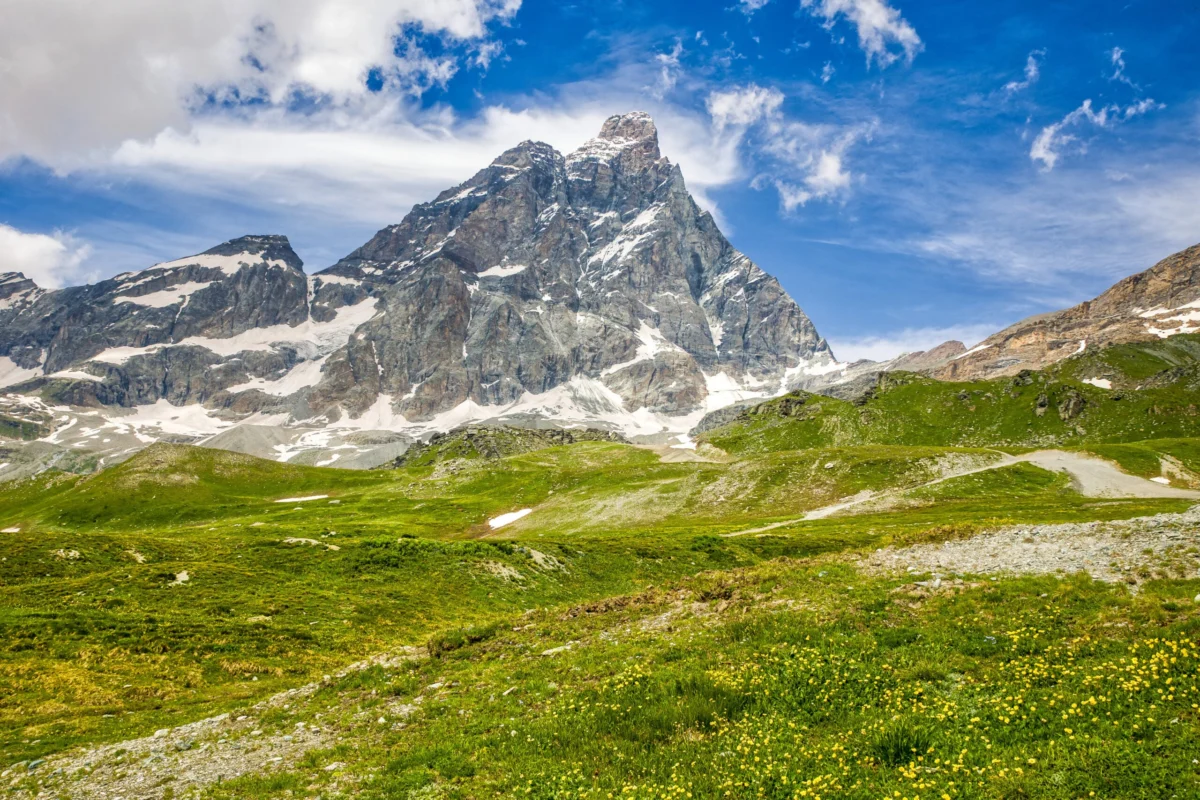
The iconic Matterhorn, a peak that has captivated climbers and onlookers for centuries, has recently served as a potent and unsettling reminder of the volatile nature of high-alpine environments. This week, a colossal rockfall dramatically reshaped a section of its southwestern face on the Italian side, sending an estimated thousands of tons of shattered granite cascading down the mountain. The event occurred in close proximity to the renowned Lion Ridge (Cresta del Leone) route, a classic ascent that has challenged mountaineers for generations.
The immediate aftermath of this geological event triggered a swift and coordinated response from local emergency services and alpine guide associations based in the picturesque border town of Breuil-Cervinia. These organizations, deeply invested in the safety of those who venture onto the mountain, immediately initiated assessments and issued advisories to manage the newly formed hazards. The sheer scale of the rockfall has led to the temporary closure of the Lion Ridge route, a decision driven by the imperative to protect climbers from the unpredictable consequences of such a significant geological shift.
The Unseen Forces: Heat, Permafrost, and Unstable Granite
The dramatic rockfall is not an isolated incident but rather a symptom of a broader, accelerating trend impacting mountain ranges worldwide. Scientists and alpinists alike have been increasingly vocal about the profound effects of rising global temperatures on high-altitude ecosystems. Across the European Alps, and indeed in many mountainous regions, persistent and often extreme heatwaves are accelerating the melt of permafrost. This frozen ground, typically found at high elevations, acts as a crucial binding agent, holding together the very rock faces that define these majestic peaks.
Permafrost, essentially rock and soil cemented by ice, plays a vital role in the structural integrity of mountains. As the planet warms, the ice within these frozen layers begins to thaw, often deep within the fissures and cracks that naturally exist in the granite. This thawing process compromises the stability of the rock, loosening its grip and creating conditions ripe for detachment. The resulting effect is a destabilizing cascade, where once-firm rock gives way, leading to rockfalls and avalanches of debris that can descend with terrifying force down the mountain’s steep gullies and faces.
Witnesses situated near the Carrel Hut, a key shelter for climbers on the Matterhorn, described the awe-inspiring yet terrifying spectacle. They reported observing vast plumes of dust billowing down the mountainside, a visual testament to the immense power of the rockfall. Eyewitness accounts detailed the descent of debris ranging in size from large boulders to smaller fragments, carving new paths and obliterating sections of the mountain’s terrain. Fortunately, initial assessments suggest that the rockfall occurred in an area that is not typically frequented by climbers, thereby mitigating the immediate risk to human life. However, the event serves as a stark warning about the increasing unpredictability of these environments.

A Timeline of Unstable Conditions
While the exact moment of the rockfall’s initiation is difficult to pinpoint with absolute precision, geological and meteorological data suggest a period of heightened risk leading up to the event. High-altitude temperature records for the region in the weeks preceding the rockfall likely indicate a trend of unseasonably warm weather, consistent with broader European heatwave patterns observed in recent years. Satellite imagery and ground-based monitoring systems, employed by geological survey organizations and local authorities, would have been observing subtle changes in the mountain’s mass and potential areas of instability.
The thawing of permafrost is a gradual but relentless process. It is influenced by diurnal temperature fluctuations, seasonal warming, and long-term climate trends. A significant rockfall event like the one on the Matterhorn is often the culmination of these slow-acting forces, with a trigger event – perhaps a particularly intense heat spike or a freeze-thaw cycle that expands existing cracks – initiating the final collapse.
The immediate aftermath would have involved the activation of emergency protocols. Local rescue teams, familiar with the terrain and potential hazards, would have been mobilized to assess the situation from a safe distance. Alpine guide associations, like the Società Guide Alpine del Cervino, would have been in constant communication, sharing information and coordinating advisories. The Carrel Hut, if occupied at the time, would have been a focal point for observations and immediate reporting. The subsequent days would have seen continued monitoring of the rockfall zone for further instability and the careful evaluation of the damaged route.
Route Closures and Expert Directives: Navigating the New Reality
In direct response to the immediate and ongoing hazards posed by the massive rockfall, local authorities and prominent guide societies have taken decisive action. The Lion Ridge, a route celebrated for its historical significance and challenging ascents, has been officially closed to all climbers pending a thorough assessment of its stability and the clearance of debris. This closure is a critical safety measure designed to prevent any potential tragedies.
The Società Guide Alpine del Cervino, a respected authority on mountaineering in the region, issued a clear statement on their official Instagram channel, underscoring the gravity of the situation. They emphasized that the rockfall, while significant, did not directly impact the Italian normal route, also known as the Lion Ridge. However, their advisory was unequivocal: "We would like to clarify that the rockfall did not affect the Italian normal route, known as the Lion Ridge. Pending an improvement in conditions, we strongly recommend exercising the utmost caution and advise climbers not to attempt the ascent." This statement highlights the nuanced nature of alpine hazards; even if a primary route remains physically intact, the increased instability of surrounding areas can render the entire ascent precarious.
Local rescue units remain on high alert, their operational readiness heightened by the increased risk. These dedicated professionals are actively engaged in continuous monitoring of the mountain. Their efforts involve tracking freeze-thaw cycles, which can further destabilize rock formations, and utilizing satellite telemetry to detect any subtle movements or shifts in the mountainside. This data is crucial for determining when the ridge might once again be considered safe for travel, a decision that will be guided by scientific evidence and a profound respect for the mountain’s inherent unpredictability.

The Broader Implications: Climate Change and the Future of Alpine Ascents
The Matterhorn rockfall is far from an isolated incident; it is a vivid illustration of a growing global phenomenon. The accelerating impacts of climate change on mountain environments are becoming increasingly undeniable. Scientific studies, such as those published by the Intergovernmental Panel on Climate Change (IPCC), consistently highlight the vulnerability of high-altitude regions to rising temperatures. These reports detail the observed retreat of glaciers, the thawing of permafrost, and the consequent increase in geohazards like rockfalls, landslides, and debris flows.
Data from meteorological agencies across Europe reveal a trend of rising average temperatures, with heatwaves becoming more frequent, intense, and prolonged. This directly translates to increased melting of high-altitude ice and snowpack, further exacerbating permafrost thaw. The structural integrity of mountains, built over millennia, is being compromised at an alarming rate. For instance, studies on the Alps have documented a significant increase in the frequency and volume of rockfalls in recent decades, directly correlating with observed temperature increases.
The implications of these ongoing changes are profound for the future of mountaineering and other high-alpine activities. Classic routes, once considered relatively stable, are becoming increasingly prone to unpredictable hazards. This necessitates a fundamental shift in how climbers approach their objectives, demanding greater reliance on real-time environmental data, enhanced risk assessment, and a willingness to adapt plans based on current conditions.
The incident on the Matterhorn serves as a critical call to action for the mountaineering community and for policymakers. It underscores the urgent need for continued scientific research into alpine geohazards, improved monitoring systems, and the development of adaptive strategies for managing these risks. Furthermore, it reinforces the undeniable link between global climate change and the physical alteration of our planet’s most iconic landscapes.
Respecting the Mountain’s Timeline: A Call for Patience and Vigilance
The events on the Matterhorn offer a powerful lesson in humility and adaptation. Pushing ambitious climbing objectives when the very environment is in a state of flux is a fundamentally precarious endeavor, often a losing battle against the forces of nature. Whether an individual is preparing for high-consequence alpine lines in the rugged Tetons, navigating the technical challenges of the European Alps, or embarking on a classic ascent in any mountainous region, the imperative of respecting objective hazards remains paramount.
This incident serves as a potent reminder that patience is not merely a virtue but a critical component of safety in the mountains. Climbers are urged to remain vigilant, to prioritize comprehensive research into regional mountain bulletins, and to actively seek out the most up-to-date information regarding current conditions. Giving unstable routes adequate time to freeze and stabilize, particularly during periods of thaw, is essential. Above all, listening to and respecting the knowledge of local guides and mountain professionals, those who possess an intimate understanding of these faces and their ever-changing moods, is crucial for navigating the challenges of a warming world. The Matterhorn, in its grandeur and its recent vulnerability, reminds us that the mountains will always dictate their own timeline, and our safety depends on our ability to respectfully adhere to it.
