

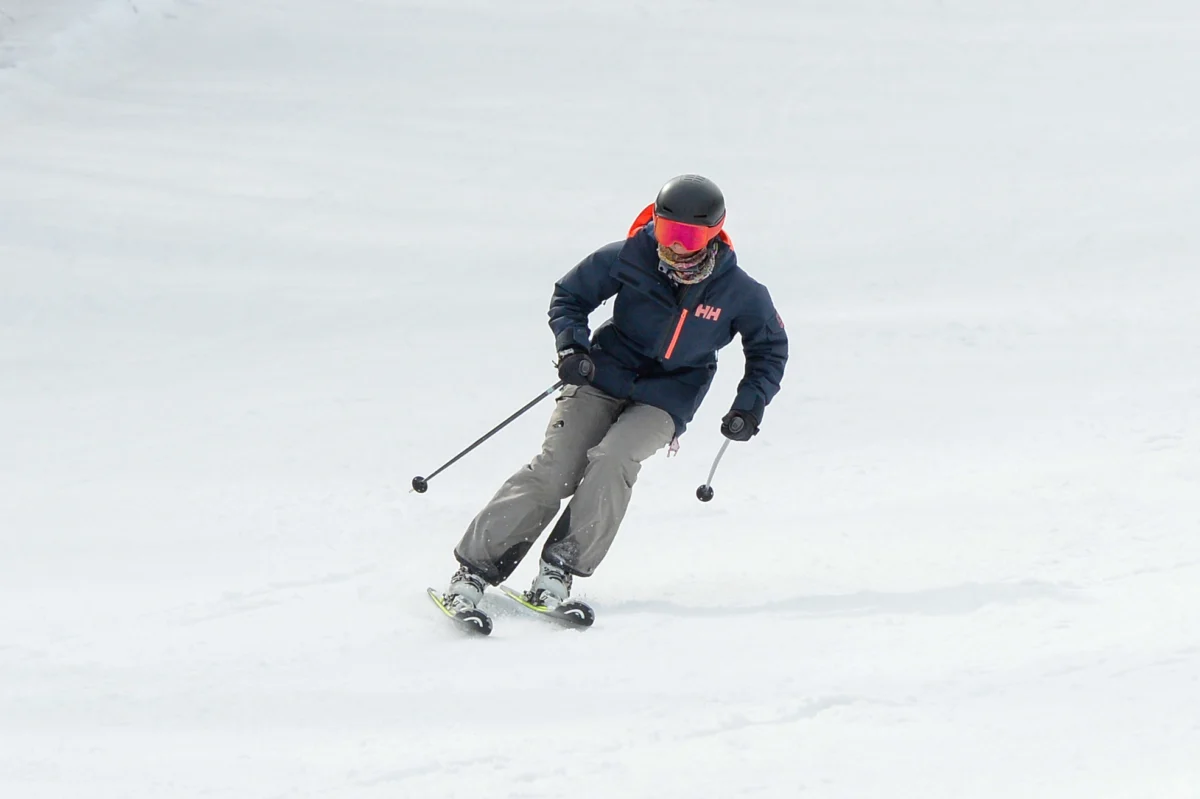
A pivotal development in snowsports instruction, originally detailed in the Fall 2025 Issue of 32 Degrees by J. Scott McGee and Jacob Crawford, introduces a dynamic reinterpretation of the Static, Simple, Complex, Applied (SSCA) teaching framework. This innovative approach, derived from the foundational Teaching Snowsports Manual, aims to empower instructors with a more flexible and effective methodology for movement analysis and the introduction of new movement patterns. The SSCA process, traditionally viewed as a linear progression, is now presented as a versatile set of tools, or "lenses," allowing instructors to precisely diagnose student challenges and tailor instruction to achieve optimal learning outcomes on the slopes.
The Foundation: The SSCA Framework and the Teaching Snowsports Manual
The Teaching Snowsports Manual serves as a cornerstone reference for professional ski and snowboard instructors across North America, primarily published by the Professional Ski Instructors of America and American Association of Snowboard Instructors (PSIA-AASI). This comprehensive guide outlines best practices in snowsports education, continuously updated to reflect evolving understanding of biomechanics, learning theory, and teaching methodologies. The SSCA framework, as detailed on page 51 of the manual, represents a structured, four-phase process designed to systematically introduce and ingrain new movements in students.
The original conception of SSCA outlines a clear, progressive path:
- Static Phase: This initial stage introduces a movement without the complicating factor of sliding on snow. By standing still, students can concentrate solely on the sensation and mechanics of the desired movement, building foundational awareness without the distractions of balance, speed, or external forces. This isolation is crucial for kinesthetic learning and muscle memory development.
- Simple Phase: Building upon the static foundation, this phase transitions the new movement onto snow, but in a simplified context. Activities like traverses, straight runs, or single, isolated turns allow students to experience the movement while sliding, without the added complexity of linking multiple turns or managing continuous changes in direction. This phase aims to foster comfort and initial control in a dynamic environment.
- Complex Phase: Here, the learned movement is integrated into linked turns. This is where students begin to practice and gain ownership of the new pattern within the context of continuous skiing. Drills and activities in this phase are designed to challenge students to apply the movement consistently across varied turning scenarios, solidifying their understanding and execution.
- Applied Phase: The final stage brings the learning full circle, integrating the new movement into the student’s "normal" skiing. This involves practicing in terrain and conditions that reinforce the acquired skills, allowing students to generalize their learning and apply it effectively in real-world skiing situations. The goal is seamless integration, making the new movement an intuitive part of their overall skiing repertoire.
For decades, this linear SSCA progression has been a powerful tool, providing instructors with a reliable roadmap for skill development. It ensures that students build skills incrementally, moving from basic understanding to confident application.
A Dynamic Evolution: SSCA as Lenses for Movement Analysis
While the traditional linear progression remains highly effective for introducing new movements, McGee and Crawford propose a more dynamic interpretation, particularly in its application to movement analysis (MA). They advocate for viewing the four SSCA phases not merely as a sequential teaching process, but as adaptable "lenses" through which instructors can both analyze existing movement patterns and construct highly targeted teaching progressions. This dynamic perspective significantly enhances an instructor’s ability to customize lessons, addressing specific student needs with greater precision.
The core of their dynamic approach lies in strategically utilizing the Applied and Static phases as primary tools for movement analysis, followed by the Complex and Simple phases for intervention.
The Applied Phase: The Initial Lens for Goal-Oriented Assessment
McGee and Crawford emphasize commencing movement analysis through the lens of the Applied Phase. This involves observing students in their natural skiing environment, executing the turns they typically perform and wish to improve, within the terrain they aspire to ski better. Whether it’s basic parallel turns, carving, or navigating moguls, this initial observation context is crucial because it directly aligns the instructor’s assessment with the student’s stated goals.
Conducting MA in an applied setting offers several advantages:
- Goal Alignment: By observing students where they want to improve, instructors can ensure that any identified areas for development are directly relevant to the student’s personal objectives. This fosters motivation and a clear sense of purpose for the lesson.
- Realistic Context: The applied phase captures the nuances of a student’s skiing in real-time, under conditions they typically encounter. This provides a holistic view of their current skill level and identifies performance gaps that might not be evident in isolated drills.
- Progress Benchmarking: As McGee and Crawford suggest, the initial applied observation can serve as a powerful benchmark. Repeating the same activity at the lesson’s conclusion vividly highlights the progress made, providing tangible evidence of learning and boosting student confidence.
While the applied lens is excellent for identifying broader areas for improvement, it often reveals a multitude of potential issues. For instance, a student struggling with carving might exhibit issues with edge angle, pressure control, and fore-aft balance simultaneously. Addressing all these at once can be overwhelming for both student and instructor. This necessitates a "higher resolution" lens to pinpoint the root cause.
The Static Phase: The High-Resolution Lens for Cause-and-Effect
To achieve this higher resolution, McGee and Crawford advocate for employing the Static Phase as the subsequent analytical lens. The static phase’s inherent ability to isolate movements makes it invaluable for identifying precise cause-and-effect relationships between specific body movements and ski performance outcomes. The guiding question for instructors becomes: "Can I replicate this movement while standing still?" If a movement cannot be isolated and replicated statically, it suggests that the observed issue has not yet been reduced to its most fundamental cause-and-effect relationship.
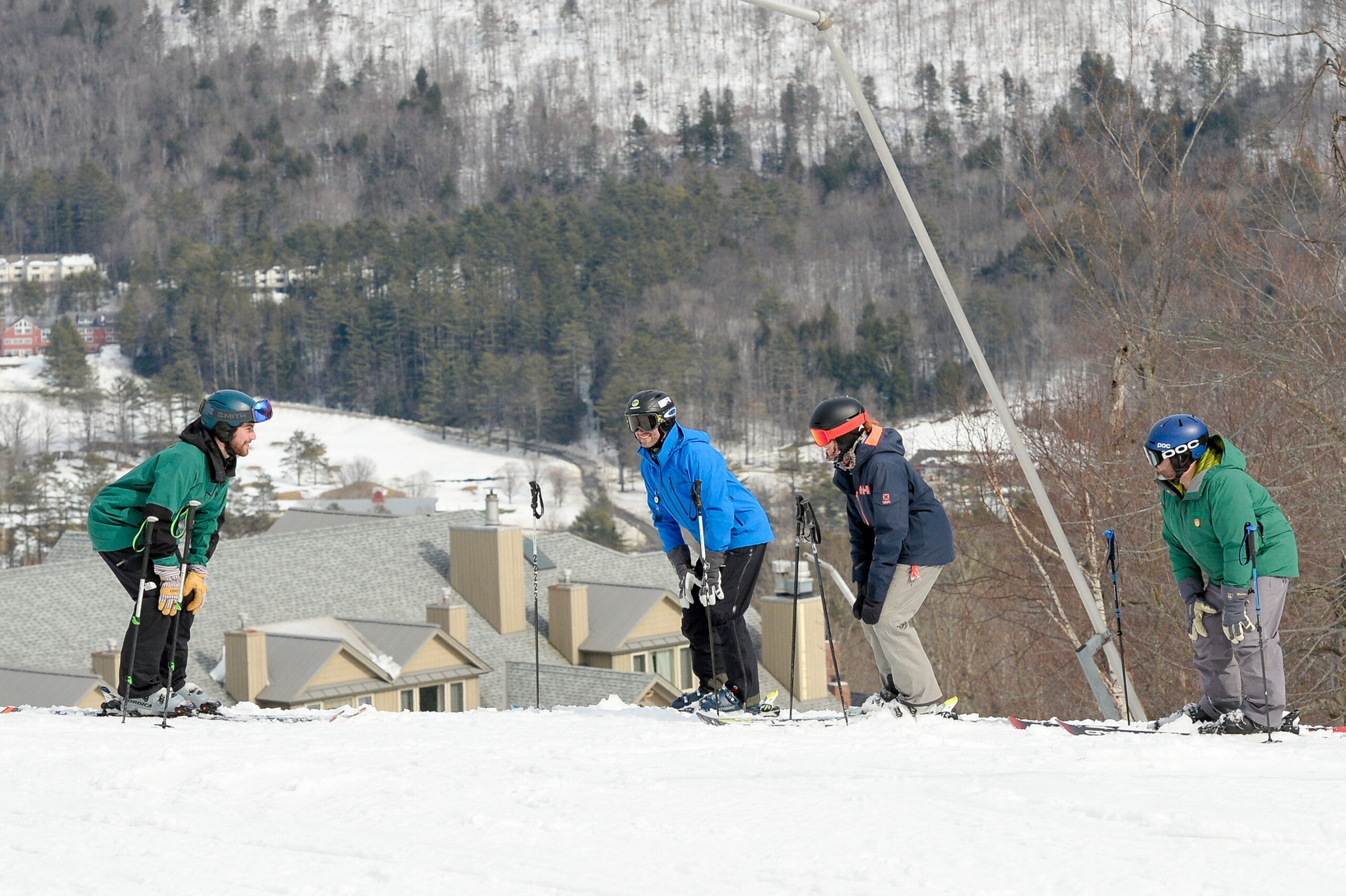
Consider the example provided: a student exhibiting different edge angles on their inside and outside skis, with unequal leg tipping. While this is observed in dynamic skiing, the underlying cause-and-effect can be explored statically. An instructor can ask the student to stand still and, using their hands, practice tipping their knees to different degrees, observing how this directly influences the imagined edge angle of their skis. This static replication allows for an immediate, tangible understanding of the physical action required.
Even movements that are dynamically untenable (i.e., positions one cannot hold indefinitely while standing still) can be approximated or reduced in magnitude in the static phase. The use of props, poles, or even a friend for support can facilitate these static explorations, ensuring the core movement’s sensation and mechanics are understood. This analytical application of the static phase allows instructors to precisely diagnose the single, most impactful movement pattern that, if altered, will yield the greatest improvement in the student’s skiing. It transforms a complex problem into a manageable, singular focus.
Transitioning from Analysis to Intervention: Complex and Simple for Skill Building
Once the critical movement to be changed has been identified through the Applied and Static lenses, the instructor then leverages the Complex and Simple phases to construct the teaching intervention. This dynamic approach means that the order of the SSCA phases is not rigid; rather, they are selected and sequenced based on the analytical insights gained.
The Complex Phase: Integrating New Movements in Turns
With a clear target movement in mind, the Complex Phase becomes the primary tool for introducing and practicing the change within a turning context. Instructors can draw from their "bag of tricks" – a repertoire of drills specifically designed to emphasize fundamental movement patterns. For instance, if the analysis revealed an issue with leg tipping for edge control, a drill like "railroad track arcs" could be employed. This drill encourages consistent leg tipping and angulation throughout the turn, directly addressing the identified movement deficiency in a dynamic, linked-turn environment. The complex phase challenges students to integrate the isolated static movement into continuous skiing, building proficiency and consistency.
The Simple Phase: Bridging Complex Drills to Core Movements
The Simple Phase, in this dynamic model, acts as a crucial bridge. If a student struggles to perform a complex drill, the simple phase can reduce that complex activity to its most basic components – a single turn, a traverse, or even a straight run. This reduction allows the student to isolate the specific challenge within the complex drill and connect it back to the newly learned movement from the static phase. For example, if "railroad track arcs" prove too challenging, the instructor might break it down to a single traverse with exaggerated leg tipping, or a single turn focusing solely on the tipping motion before attempting to link turns again. This ensures that the student can clearly understand and practice the connection between the new movement and its effect on the ski, building confidence before re-engaging with the complexity.
Practical Applications and Broader Implications
This dynamic SSCA framework offers profound benefits for snowsports instruction:
- Enhanced Precision in Teaching: By providing clear analytical lenses, instructors can move beyond generic advice to highly specific, targeted interventions. This reduces guesswork and increases the efficiency of lessons.
- Improved Student Engagement and Progression: When students understand why they are doing a particular drill and can immediately perceive its impact on their skiing, their motivation and learning retention significantly improve. The ability to revisit the applied phase for immediate feedback reinforces their progress.
- Instructor Professional Development: Embracing this dynamic model encourages instructors to deepen their understanding of movement analysis and expand their repertoire of drills. It fosters a more analytical and adaptive teaching style, moving beyond rote progressions. This aligns with PSIA-AASI’s ongoing commitment to fostering excellence and innovation among its certified professionals.
- Adaptability Across All Skill Levels: The SSCA framework, in its dynamic form, is scalable. It can be applied to beginners learning basic turning mechanics or advanced skiers refining carving techniques or tackling challenging terrain. The principle of isolating movements and building complexity remains consistent.
- Safety and Injury Prevention: By addressing fundamental movement patterns accurately, students develop better control and balance, which inherently contributes to safer skiing practices. Correcting inefficient or imbalanced movements can prevent long-term strain or injury.
Leading figures in snowsports education frequently underscore the importance of such structured yet flexible methodologies. Representatives from organizations like PSIA-AASI consistently advocate for instructional models that prioritize student-centric learning and evidence-based teaching strategies. This dynamic reinterpretation of SSCA exemplifies that commitment, offering instructors a robust framework to diagnose, prescribe, and facilitate profound improvements in student skiing. The goal is not just to teach a student how to perform a movement, but to enable them to understand and own it, transferring that knowledge across diverse skiing scenarios.
Continuing the Dialogue
The article by McGee and Crawford, initially published in 32 Degrees, is part of an ongoing dialogue within the snowsports instruction community aimed at refining teaching practices. The associated "First Chair Podcast" episode, "Build Better Lessons: A Smarter Way to Create Progressions," further delves into the practical application of this SSCA reinterpretation. These platforms serve as vital resources for instructors seeking to continuously enhance their skills and stay abreast of the latest advancements in educational psychology and sports science as applied to snowsports.
In conclusion, the dynamic application of the SSCA framework, as articulated by J. Scott McGee and Jacob Crawford, represents a significant evolution in snowsports instruction. By transforming the traditional linear model into a versatile set of analytical and instructional lenses, it empowers instructors to conduct more precise movement analysis, design more effective teaching progressions, and ultimately, foster deeper, more sustainable learning for their students. This approach reinforces the foundational principles of the Teaching Snowsports Manual while providing a modern, adaptable methodology crucial for the continued excellence and innovation within the snowsports education industry.
