

The instructional strategy known as mirroring, defined as copying someone with the intention of understanding them, stands as a best practice in teaching and learning, deeply rooted in both evolutionary biology and modern pedagogical theory. This technique, highlighted by a comment on a PSIA-AASI social media post about instructors replicating student movements to gain insight, offers a profound approach to fostering empathy, trust, and accelerated skill acquisition within snowsports education. Its efficacy was vividly demonstrated at Interski 2023 in Levi, Finland, and has since been championed by leading figures in American skiing.
The Evolutionary Roots of Observational Learning
Our inherent capacity to learn by imitating others is a testament to an ancient evolutionary survival strategy. The fundamental capability, termed motor resonance, which is the ability to match observed actions, is believed to have evolved over 100 million years ago and is present in a wide array of vertebrates. This primitive form of mirroring can be observed in phenomena such as dogs synchronizing their movements within a pack—matching speed, turns, and changes in pace—or young songbirds meticulously learning complex vocalizations by listening to and mimicking their parents. These examples underscore a deep-seated biological mechanism for transmitting vital behaviors across generations and within social groups.
Among primates, this observational learning evolved to a sophisticated degree tens of millions of years ago. It encompasses complex behaviors like chimpanzees’ strategic use of tools for termite fishing or the intricate social greetings and chasing games observed in bonobos. These behaviors are not merely instinctive but are learned through careful observation and imitation, demonstrating a higher cognitive processing of observed actions.
The emergence of intentional teaching is widely believed to have developed within our own genus, Homo. The production of stone tools, for instance, reached a level of complexity that strongly suggests it could not have been mastered through observation alone. Such intricate skills likely necessitated purposeful demonstration and guided practice, marking a crucial evolutionary step towards formalized instruction. This historical trajectory highlights that what we now call mirroring or observational learning is not a novel concept but a refinement of deeply ingrained human and pre-human learning mechanisms.
Modern learning theories, such as Albert Bandura’s influential Social Learning Theory, find strong compatibility with these evolutionary perspectives. Bandura’s theory, which posits that individuals learn from one another through observation, imitation, and modeling, can be seen as a contemporary psychological framework built upon these ancient evolutionary mechanisms. It emphasizes the importance of cognitive processes in learning, including attention, retention, reproduction, and motivation, all of which are engaged during mirroring. The integration of evolutionary biology and psychology provides a robust scientific foundation for the effectiveness of mirroring in educational contexts, particularly in dynamic physical activities like snowsports.
Interski 2023: A Global Platform for Innovation
Interski 2023, held in the picturesque setting of Levi, Finland, served as a global convergence for snowsports instructors, coaches, and researchers from around the world. Organized every four years, Interski is the premier international event for sharing and advancing snowsports teaching methodologies, technical innovations, and educational best practices. The event brings together national demonstration teams and experts to present clinics, workshops, and scientific papers, fostering cross-cultural exchange and collaborative development within the snowsports community. Levi, known for its pristine Arctic conditions and world-class ski facilities, provided an ideal backdrop for these discussions and on-snow demonstrations.
One of the most impactful sessions at Interski 2023 was led by the Czech Republic National Team, focusing on brain-based learning. This educational approach aligns instructional methodologies with contemporary neuroscience findings, aiming to optimize how the brain receives, processes, and retains information. The Czech team, recognized for their innovative research into sports pedagogy and cognitive science, presented a two-part session designed to illustrate the power of mirroring in fostering rapid connection and deep learning.
The On-Snow Mirroring Experiment
The on-snow component of the Czech team’s session was an innovative demonstration of brain-based learning principles. A diverse group of approximately 40 international participants was instructed to form a large circle. The initial challenge was to identify a partner through eye contact alone, without any verbal communication. This seemingly simple task created an initial atmosphere of awkward silence and darting glances, but within a minute, participants successfully established eye contact, signaled acknowledgment through subtle non-verbal cues, and naturally gravitated towards their chosen partners for introductions. This non-verbal icebreaker immediately engaged participants in a unique form of communication, setting the stage for deeper interaction.
One participant, Angelo Ross of the Eastern Alpine and Children’s Examiner, partnered with Angela Cesnik from the Australian National Team (APSI). After a brief, chuckle-inducing exchange of names (noting their near-identical phonetics), they received the next set of instructions: to stand face-to-face, about two feet apart, and again, without speaking, decide who would lead an upcoming activity and who would follow. Through unspoken agreement, Angela assumed the role of the leader.
The leaders were then instructed to perform the motions of their morning bathroom routine for 60 seconds. The followers’ task was to reproduce these movements exactly, like reflections in a mirror. This required a high degree of cognitive and motor coordination: if Angela "brushed her teeth" with her right hand, Angelo had to use his left; if she turned to face her left, he had to turn to his right. The scene, with 40 strangers emulating private morning rituals—from eliminating morning breath to applying deodorant and wiping away sleep from their eyes—was inherently comical. Yet, beyond the humor, it was profoundly insightful. Participants quickly learned to observe with intense focus, decipher non-verbal cues, and coordinate their movements with precision. This exercise not only fostered immediate connection and camaraderie but also provided a superficial yet personal insight into each other’s habits, all through eye contact and precise physical mirroring. The session, which could have been a standard "icebreaker," quickly transformed into a powerful demonstration of non-verbal communication and rapid rapport building.
Following this "reflective mirroring" exercise, the partners switched roles, allowing everyone to experience both leading and following. For the next phase, the group moved to the ski slope for "tandem mirroring." Here, the original leader made predictable medium-radius turns, with the follower skiing closely behind, facing the same direction, and striving to position every part of their body—limbs, poles, helmet, skis—to precisely copy the leader. At predetermined stopping points, the follower described how mirroring the leader altered their technical performance, providing immediate, actionable feedback. The roles were then reversed for the remainder of the run.
During the subsequent lift ride, participants engaged in deeper discussions. Ross and Cesnik, for example, explored similarities and differences in their skiing techniques, the impacts of mirroring on their performance, and shared insights into the values and methodologies of their respective organizations, APSI and PSIA-AASI. They even touched upon broader topics like global politics, underscoring the depth of connection forged in a remarkably short time. This holistic engagement—physical, cognitive, and social—made the on-snow session exceptionally high-impact.
The Brain-Based Science Behind Mirroring
In the corresponding afternoon indoor session, Czech researchers elucidated the neuroscientific principles underpinning the morning’s practical exercises. They explained that mirroring, especially when intentional, leverages several key brain functions. Central to this is the activation of mirror neurons, specialized brain cells that fire both when an individual performs an action and when they observe the same action being performed by another. This neural mechanism is believed to be crucial for understanding others’ intentions and emotions, as well as for observational learning and empathy.
The researchers highlighted how the exercises facilitated trust and empathy. By consciously mimicking another person’s actions, participants were compelled to step into their partner’s "shoes," both literally and figuratively. This process not only enhanced their observational skills but also deepened their understanding of their partner’s movement patterns and intent. The act of mirroring, they explained, creates a direct, non-verbal communication channel that bypasses language barriers and accelerates the development of interpersonal rapport.
Statements from the Czech team leader further clarified the session’s objectives: "Our goal was to empirically demonstrate how intentional mirroring can accelerate motor skill acquisition and, crucially, foster profound social connections and empathy among participants. By engaging the brain’s natural capacity for motor resonance and observational learning, we can create more effective and engaging educational environments." The scientific backing provided in the indoor session solidified the experiential learning from the snow, transforming a series of interesting exercises into a comprehensive understanding of brain-based pedagogical strategies.
Championing Mirroring in American Snowsports
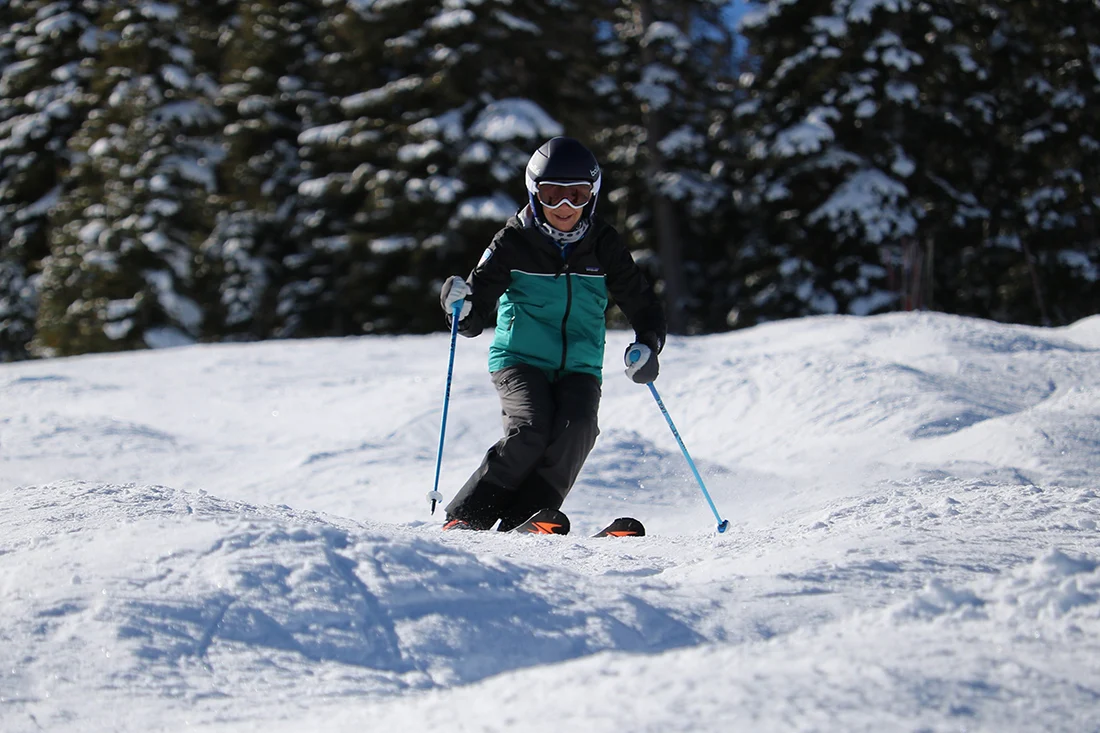
The principles of mirroring are not new to seasoned snowsports educators in the United States. Ellen Post Foster, a U.S. Ski & Snowboard Hall of Famer and a monumental figure in American skiing, exemplifies the profound value of this technique. Her illustrious career includes being the 1973 Junior National Champion of Exhibition Skiing, excelling in aerials, ballet, moguls, and combined freestyle competitions in 1975. A distinguished alumna of the 1980 and 1984 PSIA National Demonstration Teams, Foster was inducted into the U.S. Ski & Snowboard Hall of Fame in 2016 and the Colorado Snowsports Museum Hall of Fame in 2021. She is also a prolific snowsports author, whose insights have shaped generations of instructors. The accompanying image of Ellen Post Foster at Beaver Creek further underscores her commitment to understanding students through mirroring.
Foster’s approach to understanding a student’s skiing is a masterclass in subtle observation and empathetic engagement. When skiing with her, it is common for her to subtly position herself behind a skier, observing their movements without intrusion. As Angelo Ross recounts from his own experience, Foster once "disappeared" from his periphery, only to reappear at the lift, informing him that she had been following him specifically "to understand my skiing." This respectful, unobtrusive observation is key. After gaining permission, she then provided targeted, constructive feedback based on her keen observations, which Ross immediately accepted and still strives to integrate.
As a co-author of the current Teaching Snowsports Manual, a foundational text for PSIA-AASI instructors, Ellen Post Foster’s understanding of mirroring’s value for teachers to comprehend their students is explicitly integrated into the curriculum. The manual references following students as a critical teaching skill multiple times, emphasizing its role in gaining genuine insight into a student’s performance and challenges. Her advocacy highlights that mirroring is not just a theoretical concept but a practical, essential tool for effective instruction.
Practical Application and Broader Impact
Inspired by the Interski 2023 experience, Angelo Ross has actively incorporated mirroring into his instructional strategies, successfully creating more impactful learning environments. In November, at the Rocky Mountain Telemark Education Staff Training, he adapted the Czech team’s format, beginning with an indoor session designed to facilitate connection between paired partners, leading into an outdoor session that demanded careful observation and honest feedback. The feedback was overwhelmingly positive, with participants noting the speed with which they connected and the depth of learning achieved.
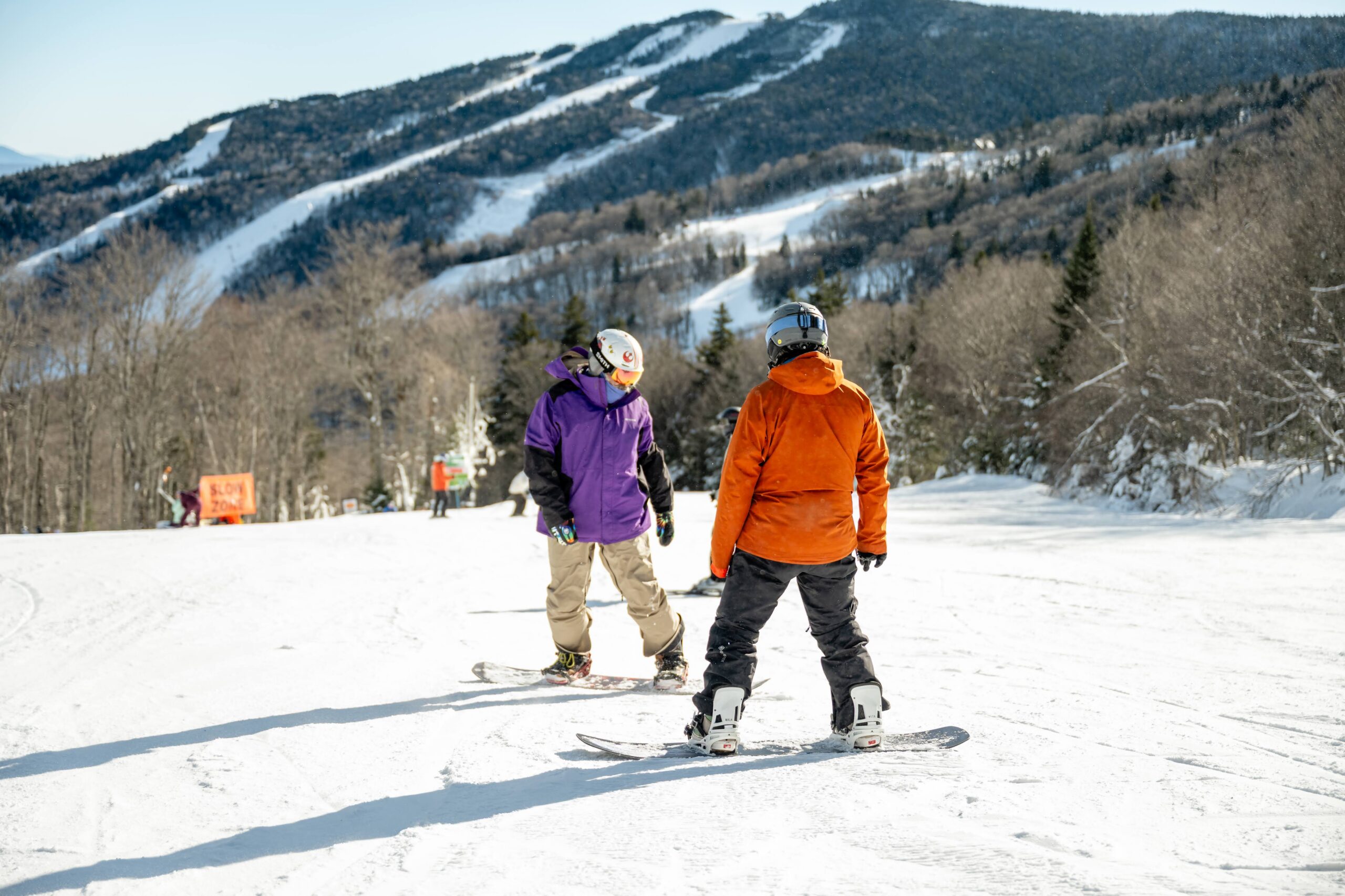
A modified on-snow version was also implemented in December with a group of National Ski Patrol leaders at the Outdoor Emergency Transportation Conference at Killington, Vermont. In this context, mirroring facilitated partner observation and subsequent discussions about how various movement patterns could have applicability in different emergency scenarios. The feedback from both sessions consistently highlighted rapid connection, development of trust, and deep learning, validating the versatility and effectiveness of mirroring across different snowsports disciplines and professional development contexts.
The integration of mirroring into teaching and learning strategies offers multifaceted benefits. For instructors, mirroring students provides invaluable insights into their understanding and performance of the sport, allowing for more precise and personalized coaching. When students are encouraged to mirror their instructors, it fosters clear communication, builds trust, and accelerates their skill development by providing a direct kinesthetic model. Furthermore, engaging peers in synchronized skiing and riding activities through mirroring is not only enjoyable but also profoundly educational. It offers insights into the value of varied movement patterns, challenging the "one-right-way" mentality that can sometimes permeate instructional approaches. By sharpening observational skills and providing empirical evidence for diverse effective techniques, mirroring broadens technical understanding and adaptability.
Incorporating this nuanced approach into common "Follow Me" activities can significantly increase student interest and engagement. By transforming simple imitation into games, explorations of movement patterns, and structured experiments, instructors can enhance learning outcomes and build stronger group camaraderie as students take turns leading and mirroring. These practices align perfectly with the best practices in teaching and learning and are deeply compatible with PSIA-AASI fundamentals, which advocate for dynamic, student-centered, and experiential learning.
In conclusion, mirroring, a practice time-tested by evolution and rigorously backed by modern research, stands as a powerful and indispensable tool in snowsports instruction. It helps both instructors and students to continuously evolve their understanding, refine their performance, and enhance the art of teaching snowsports, ensuring a richer, more effective, and more connected learning experience for all.
