

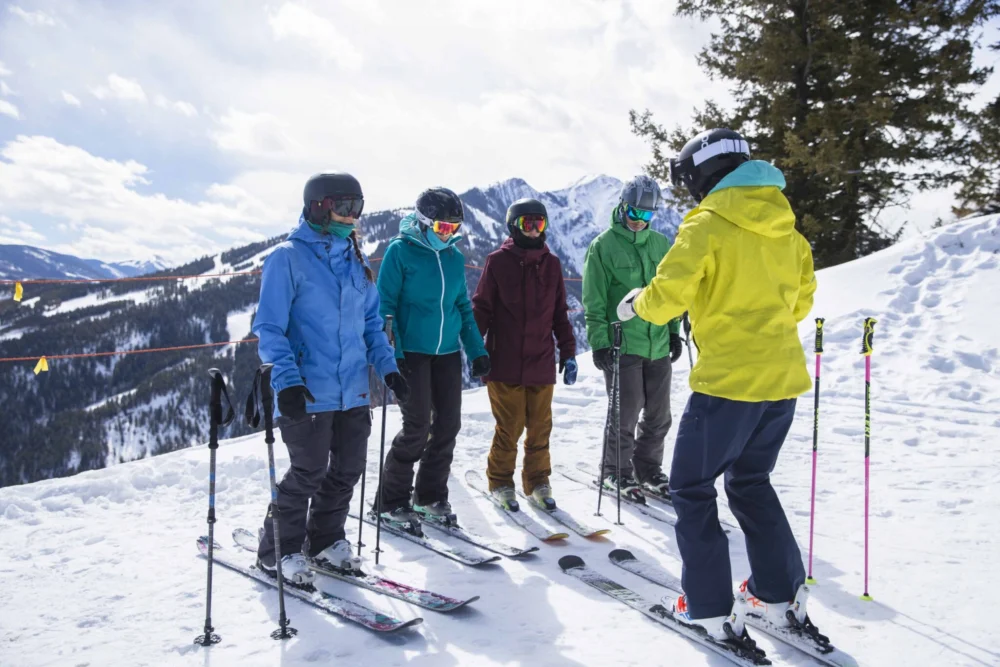
January annually marks National Ski Safety Awareness Month, a crucial initiative spearheaded by the National Ski Areas Association (NSAA) to champion responsibility, foster awareness, and promote common sense across North American ski slopes. This yearly observance serves as a vital reminder that comprehensive safety in snow sports transcends mere regulatory compliance; it is intricately woven through robust educational frameworks, a pervasive safety-first culture, and the unwavering commitment of shared responsibility among all mountain users. In an era where resorts face increasing visitation and evolving dynamics, leading institutions are pioneering innovative approaches to elevate safety standards, exemplified by Steamboat Resort’s recent establishment of a dedicated Mountain Safety Team, a move that underscores a growing industry-wide recognition of safety as an indispensable component of the guest experience.
The Foundational Pillars of Snow Sports Safety
For organizations like the Professional Ski Instructors of America and American Association of Snowboard Instructors (PSIA-AASI), safety is not merely a guideline but a fundamental principle embedded in their very identity and instructional philosophy. Their enduring motto, "Safety, Fun, and Learning," dictates the rigorous training regimen for certified instructors across all disciplines. These professionals are meticulously taught to embody the tenets of the Responsibility Code, adeptly manage speed and space on diverse terrain, and prioritize the well-being of their students and surrounding guests. This instructor-led modeling forms the bedrock of a safe mountain environment, yet the complexity of modern ski resorts necessitates a broader, collaborative effort.
The genesis of organized ski safety efforts traces back decades, with the National Ski Areas Association playing a pivotal role since its inception in 1962. The widely adopted "Your Responsibility Code" (often referred to simply as the Responsibility Code) was introduced by the NSAA in 1966, providing a concise, universally understandable set of guidelines for skiers and snowboarders. This code, comprising ten points, serves as the industry standard for promoting safe conduct, emphasizing personal accountability, and minimizing risks associated with snow sports. Over the years, the code has been periodically reviewed and updated to reflect changes in equipment, terrain, and user demographics, demonstrating a continuous commitment to evolving safety practices.
Addressing Modern Challenges on Crowded Slopes
Contemporary slope safety challenges often emanate not from a deficiency in technical skill but from a critical breakdown in awareness and spatial management. Factors such as excessive speed in congested areas, skiing or riding beyond one’s control, and a failure to maintain adequate space around other individuals significantly amplify the risk of collisions and accidents. According to NSAA statistics, collisions remain a leading cause of injuries on ski slopes, with lack of control and awareness frequently cited as contributing factors. While serious injuries and fatalities are statistically rare compared to the total number of participant days (often cited as less than one incident per million skier visits for fatalities), any preventable accident undermines the enjoyment and confidence of guests.
For many mountain visitors, the experience is already accompanied by inherent stressors: unpredictable snow conditions, variable weather, diverse terrain, and personal concerns regarding ability levels. When the pervasive fear of potential collisions enters this equation, anxiety can escalate dramatically, eroding confidence, diminishing enjoyment, and ultimately detracting from the overall mountain experience. Data from guest surveys across various resorts consistently highlight safety concerns, particularly regarding reckless behavior by others, as a significant area of feedback. This underscores a crucial insight: slope safety, at its essence, is about mitigating unnecessary stress and fostering an environment where all individuals can share and enjoy the mountain harmoniously. The psychological impact of perceived danger can be as detrimental to guest satisfaction as actual incidents.
Steamboat Resort’s Proactive Vision: The Mountain Safety Team
Recognizing these evolving dynamics, Steamboat Resort in Colorado has taken a decisive, proactive step this season by launching a dedicated Mountain Safety Team. This innovative initiative, driven by extensive guest feedback and a clear-eyed understanding of the complexities of modern mountain operations, signifies a paradigm shift in how resorts approach safety. Dave Schuiling, PSIA-AASI Director of Education & Credentialing, who lives and works in Steamboat and actively participates in instructor training and guest lessons, has observed firsthand the positive impact of this focused effort.
Nelson Wingard, Vice President of Mountain Sports at Steamboat and a distinguished alumnus of the PSIA-AASI National Team, articulated the increasing imperative to allocate focused resources to guest safety. He noted that guest safety consistently emerges as one of the most frequently reported categories of feedback the resort receives, signaling a clear demand from visitors for enhanced security measures. Traditionally, ski patrol units have borne the primary responsibility for enforcing safety protocols on the mountain. While this core duty remains unchanged, Wingard acknowledged a growing operational challenge: patrol teams are often extensively stretched, with their paramount duty of care centered on emergency response, injury management, and search and rescue operations. As Wingard emphasized, patrol’s immediate responsibility must always be the urgent care of injured guests. By introducing a dedicated Mountain Safety Team to complement patrol efforts—alongside other crucial departments such as resort ambassadors and the snow sports school—Steamboat has created a more robust and visibly present emphasis on guest safety. Since its inception, even amidst early season limitations on terrain and consequently higher traffic density, guests have responded with notable positivity to this tangible commitment to their well-being. This early success suggests a strong resonance with the skiing public, who appreciate visible efforts to manage risk.
A New Paradigm: Safety as an Integral Guest Experience
Corey Peterson, Vice President of Mountain Operations, identified guest experience as a pivotal catalyst behind the formation of the Mountain Safety Team. For Peterson, the concepts of safety and guest experience are intrinsically linked and inseparable. "Increasing guest safety on the mountain leads directly to a better, more positive overall guest experience," he emphasized. This philosophy reframes safety from a reactive, compliance-driven function to a proactive, experience-enhancing strategy.
Peterson champions a unified team approach across all resort departments, actively encouraging every employee to embrace safety as a collective responsibility. Under this comprehensive philosophy, the Mountain Safety Team engages in active collaboration with the snow sports school, ski patrol, resort ambassadors, lift operations, and other operational departments. This cross-departmental alignment ensures consistent messaging, reinforces shared objectives, and fosters a cohesive safety culture. When guests consistently encounter the same safety directives—whether from an instructor, a patroller, a lift operator, or a member of the new safety team—it begins to deeply shape the prevailing mountain culture, moving it towards a shared understanding and expectation of responsible behavior. This unified front helps to institutionalize safety as a core value rather than an isolated set of rules.
Education, Awareness, and Thoughtful Enforcement
Mountain Safety Team Manager Chia Basinger underscored a central theme echoed by all three leaders: this pioneering initiative transcends the simplistic role of being mere "speed police." Instead, its fundamental purpose revolves around education, fostering awareness, and cultivating genuine community connection. The team’s primary focus is to assist guests in comprehending how their actions might be perceived by others—particularly how factors such as speed, proximity, and unpredictable movements can generate anxiety and discomfort for those around them, even in the absence of an actual collision.
Basinger firmly believes that a harmonious shared experience is entirely attainable on even the busiest mountains when guests actively acknowledge and embrace their individual roles in co-creating that environment. This enlightened approach effectively reframes safety conversations, transforming them from potentially confrontational encounters into collaborative dialogues, fostering a sense of collective ownership over the mountain’s well-being. This educational emphasis aims to empower guests with the knowledge and understanding to make safer choices, rather than relying solely on punitive measures.

"Space and Speed": Cultivating a Culture of Courtesy
This guiding philosophy vividly materializes through the Mountain Safety Team’s concise yet powerful mantra: "Space and Speed." Aaron Sanford, one of the two dedicated full-time Mountain Safety Team supervisors, described its essence with remarkable clarity and impact. The overarching goal is to facilitate the development of a robust culture of safety, achieved through a synergistic combination of education, pervasive awareness, and, when absolutely necessary, judicious enforcement.
Sanford brings a uniquely valuable perspective to his pivotal role. As a former instructor and a seasoned winter sports club coach, he dedicated years to coaching U13 and U15 athletes. During this time, he intentionally instilled in them the profound importance of being exemplary role models—consistently skiing in control, demonstrating profound respect for others, and internalizing the understanding that athletic performance is inextricably linked with personal responsibility. Today, Sanford reports that the vast majority of guests he interacts with exhibit overwhelmingly positive reactions to the program, expressing genuine appreciation for the heightened focus on ensuring everyone’s safety. This feedback underscores the public’s desire for a more orderly and predictable mountain environment.
Community and Club Culture: Shaping Future Ambassadors
One of the most compelling and strategically significant facets of Steamboat’s comprehensive approach is its deep engagement with the renowned Steamboat Springs Winter Sports Club (SSWSC). Historically, a persistent perception at many resorts has been that athletes, particularly those identifiable by club jackets, often ski at high speeds and, at times, with a degree of perceived recklessness. Whether this perception is entirely accurate or not, its existence undeniably carries significant weight and impacts the overall mountain atmosphere.
What distinguishes Steamboat’s strategy is its direct and proactive engagement with this issue through open communication and collaborative partnership. The Mountain Safety Team has actively fostered connections with club coaches and athletes, consistently reinforcing the critical message that possessing high levels of skill inherently demands an equally high degree of responsibility. Athletes, by virtue of their heightened visibility and advanced abilities, are presented with a unique and powerful opportunity to lead by example—demonstrating impeccable control, unfailing courtesy, and acute awareness in all public areas of the resort.
This strategic alignment resonates profoundly with the broader work of U.S. Ski & Snowboard Coaches Education, where coaches are increasingly recognized not merely as developers of performance but as pivotal cultural leaders. Instilling proper etiquette, ensuring the conscientious application of the Responsibility Code beyond designated training venues, and fostering professional conduct on open terrain are now considered essential components of athlete development. When young athletes are taught that excellence encompasses both technical prowess and a profound commitment to awareness and respect, they transform from potential sources of conflict into powerful ambassadors for the sport, promoting a positive image for competitive snow sports.
Equipment Technology, Grooming, and Evolving Risks
Several other crucial factors significantly contribute to the complex landscape of slope safety, including rapid advancements in equipment technology and increasingly sophisticated slope preparation through grooming practices. Modern skis, snowboards, and boots empower many guests to achieve higher speeds, maintain greater stability, and navigate more challenging terrain than ever before—sometimes pushing them beyond the limits of their actual skills or sound decision-making capabilities. This technological advantage can inadvertently foster a false sense of security, leading individuals to believe they are more capable or safer than they truly are. Consequently, a precise understanding of the necessary stopping distance, the appropriate times to reduce speed, and effective strategies for avoiding excessive proximity to others has become more critical than ever before.
Furthermore, continuous improvements in grooming techniques can create exceptionally smooth, fast surfaces on slope pitches that might otherwise naturally encourage slower speeds. This can inadvertently place guests on terrain that exceeds their true control level. The Responsibility Code’s foundational first point unequivocally reminds all users to "always stay in control." However, not everyone fully grasps that true control encompasses a comprehensive management of speed, direction, and stability—enabling one to stop, turn, and adapt seamlessly to varying terrain and conditions, all while maintaining constant awareness of others. Therefore, educational initiatives centered around "Space and Speed" must continually evolve and adapt in tandem with the ongoing advancements in equipment and grooming technologies.
Learning from Industry Leaders and Future Expansion
While new this season, Steamboat Resort did not develop its Mountain Safety Team in isolation. The resort diligently researched and drew inspiration from established, successful programs at other prominent destinations, including Mammoth Mountain, Palisades Tahoe, Copper Mountain, and Vail, when meticulously designing its comprehensive approach. This collaborative learning process allowed Steamboat to integrate best practices and tailor them to its unique operational context.
Currently, the program boasts a dedicated team comprising seven paid employees and 28 committed volunteers, reflecting a significant initial investment. Looking ahead, Steamboat Resort has ambitious plans to at least double the size of this team in the coming years. This planned expansion serves as a clear indication of both the early successes observed by the program and the resort’s profound long-term commitment to enhancing guest safety and experience through this innovative model. The scalability of the program suggests a strong belief in its efficacy and potential to become a permanent fixture.
A Shared Responsibility for a Sustainable Snow Sports Future
Ultimately, slope safety is not the singular responsibility of any isolated group or department. It represents a profound, shared commitment that must be embraced by instructors, ski patrollers, coaches, all resort staff, club athletes, and, critically, every single guest who ventures onto the mountain. It is an intricate ecosystem of mutual respect and proactive engagement.
At PSIA-AASI, the commitment to developing instructors who consistently lead by exemplary conduct—modeling control, courtesy, and a genuine care for the well-being of others—remains unwavering. The organization applauds Steamboat Resort for its visionary investment in an education-driven safety culture and for vividly demonstrating how a community-based, collaborative approach can significantly enhance the guest experience for absolutely everyone. Keeping the slopes safe and enjoyable for all will undeniably necessitate a concerted, industry-wide effort to truly move the needle and cultivate a lasting culture of responsibility.
As the snow sports community observes National Ski Safety Awareness Month, the collective imperative is to continue working harmoniously together. The goal is to ensure that mountains across the globe remain cherished places where the foundational principles of "Safety, Fun, and Learning" not only coexist but truly thrive, fostering a sustainable and enjoyable future for generations of snow sports enthusiasts. This proactive, collaborative model, as exemplified by Steamboat Resort, offers a promising blueprint for achieving that vision.
