

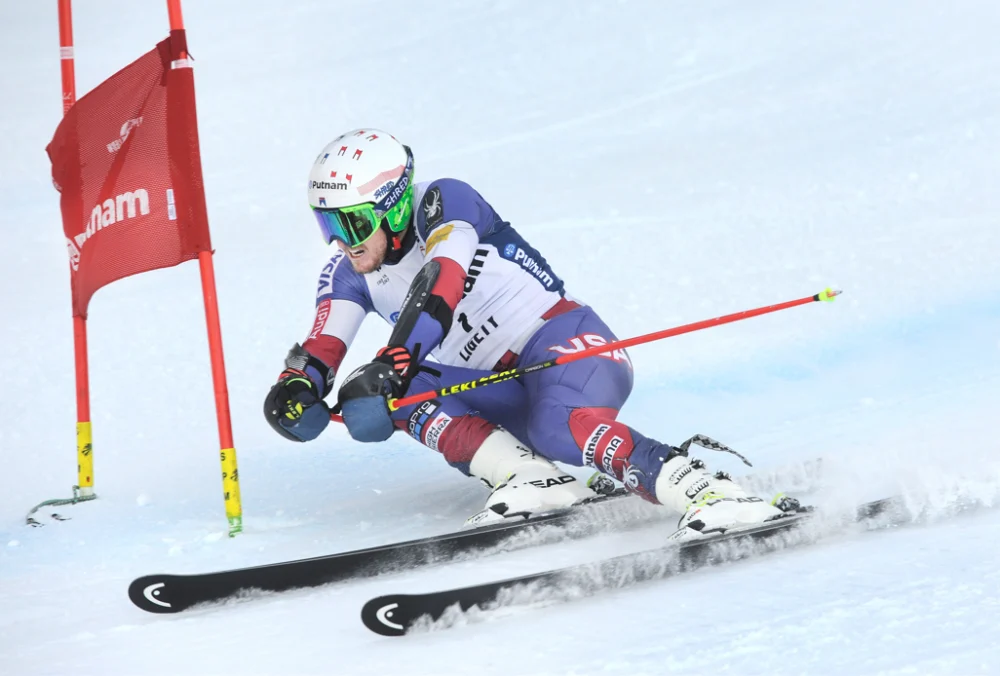
When a then 21-year-old Ted Ligety burst from the starting gate for the second run of slalom in the men’s combined event at the 2006 Winter Olympics in Turin, Italy, it was immediately apparent that he possessed an extraordinary talent. Skiing commentators, captivated by his precision and audacious style, were astounded by the sheer extent to which he could lay his skis on edge, creating angles previously thought impossible as he arced, turn after turn, to seize the lead and ultimately, a historic Olympic gold medal. This seminal victory in Turin was not merely a singular triumph but a powerful harbinger of a career that would redefine giant slalom (GS) skiing. Weeks later, Ligety secured his inaugural World Cup event win in GS, initiating a remarkable trajectory that would encompass an unparalleled 24 GS victories, a second Olympic gold medal in GS at the 2014 Sochi (Russia) Olympics, and an astonishing five World Cup GS Championship titles. These achievements firmly cemented his legendary status and earned him the fitting moniker, "Mr. GS."
A Career Defined by Innovation and Dominance
Ted Ligety’s journey to becoming "Mr. GS" began in Park City, Utah, a renowned hub for winter sports. From an early age, Ligety displayed a natural aptitude for skiing, honing his skills on the challenging slopes of his home state. His progression through the junior ranks was marked by consistent performance and a clear ambition, but it was his senior debut that truly announced his arrival on the global stage.
The 2006 Turin Olympics represented a pivotal moment, not just for Ligety, but for the sport of alpine skiing. The men’s combined event, a demanding test of versatility requiring both a downhill run and two slalom runs, often favored all-around skiers. Ligety, primarily known for his technical prowess in giant slalom and slalom, was an underdog in the combined discipline. However, his performance in the slalom portion of the event was nothing short of revolutionary. He executed turns with such aggressive edge engagement and body inclination that it appeared as though he was defying gravity. His skis, biting deep into the snow, propelled him through the gates with a velocity and control that left rivals scrambling. The gold medal was a testament to his raw talent and an early glimpse into the innovative technique he would later perfect.
Following his Olympic success, Ligety’s focus increasingly shifted to giant slalom, a discipline where his unique carving style could be fully exploited. His first World Cup GS win shortly after Turin signaled the beginning of an era of dominance. The late 2000s and early 2010s saw a significant evolution in ski equipment, particularly in the sidecut of GS skis. While many racers struggled to adapt to these changes, Ligety embraced them, utilizing the increased carving potential to his advantage. He wasn’t just adapting; he was dictating the terms of engagement for GS racing. His method, often referred to as the "Ligety Loop" or "Ted’s Turn," involved an extremely early initiation of the turn, maximizing edge angle and maintaining constant pressure throughout the arc, resulting in a remarkably clean and powerful carve that carried immense speed.
The period between 2011 and 2015 witnessed Ligety at the absolute zenith of his powers. He clinched an unprecedented five World Cup GS Championship titles, a feat that underscored his consistent mastery of the discipline. The crowning jewel of this era arrived at the 2014 Sochi Olympics, where he secured his second gold medal, this time in his signature event, giant slalom. This victory solidified his legacy as one of the greatest GS skiers of all time, an athlete who didn’t just win races but fundamentally altered the perception and execution of his chosen discipline. His later career, while still featuring strong performances, saw him battle injuries and the emergence of new talent. He eventually retired in 2021, leaving behind an indelible mark on ski racing.
The Thrill of Observation: A Unique Perspective
To witness Ligety ski in person was an experience often described as thrilling, even mesmerizing. Kevin Jordan, a PSIA Alpine Team member and children’s program supervisor at Aspen Snowmass Ski and Snowboard School, recounts a particularly insightful observation. "What was interesting to me was that Ted would literally fall down as he approached the rollers," Jordan noted. "Think of a hard boot carving snowboarder who lays it over. When they are on their toeside edge, they can be so inclined that it looks like they are falling on the snow. This is what Ted did."
Amazed by this seemingly counter-intuitive maneuver, Jordan once remarked to Ligety about how he dragged his hips over these terrain features. Ligety’s response was as direct as his skiing: "Ted basically said, ‘You’ve got to. It is the only way I can stand back up.’" This simple statement encapsulates a profound principle of high-performance carving – that extreme inclination, often perceived as a loss of control, is in fact a calculated act necessary to generate the forces required to complete a powerful turn and transition to the next. It’s a delicate dance with gravity and centripetal force, where leaning excessively into the turn prevents falling out of it.
Sasha Rearick, a PSIA-certified Level III alpine instructor and former head coach of the U.S. Men’s Alpine Team during Ligety’s tenure, further elaborated on what set Ligety apart. "He could carve a clean turn better than any other athlete I’ve worked with," Rearick affirmed. "Seeing him redefine GS was amazing. He was incredibly creative in how he approached the line – finding a way to ski on a clean edge while being direct and fast. Some athletes skied a clean line but were too round; others were too direct and too early. Ted found this perfect balance where he could express himself freely on a clean, powerful edge." Rearick’s analysis highlights Ligety’s genius: the ability to marry aggressive, precise edge engagement with a direct, efficient line down the fall line, optimizing both speed and control in a way few others could.
Deconstructing the Gold Medal Turn: Expert Analysis
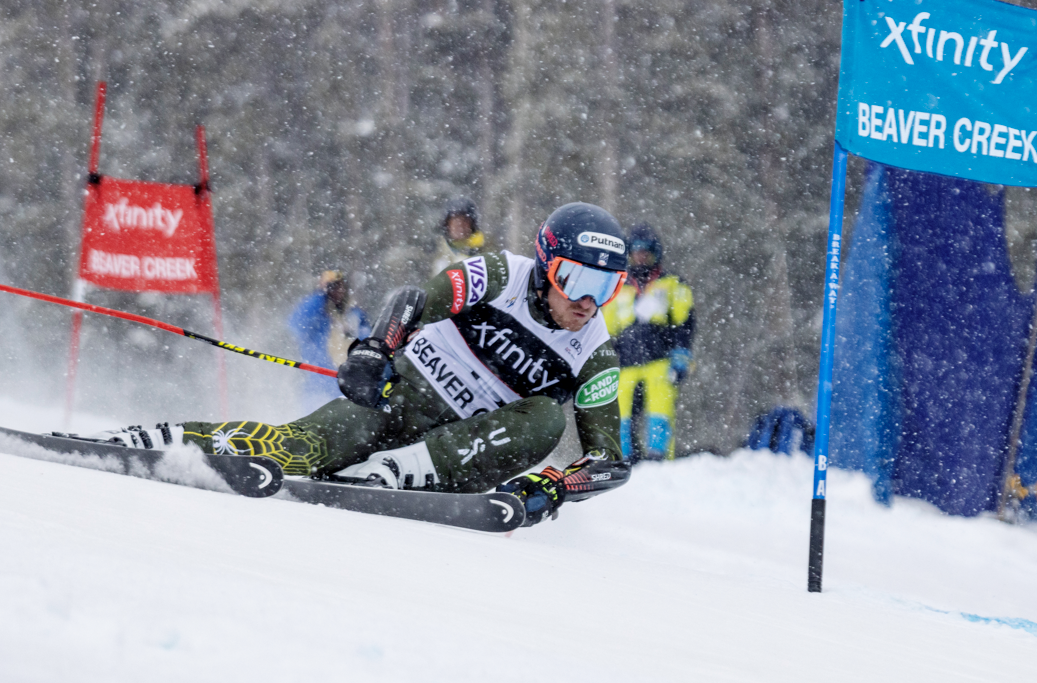
The question naturally arises: Is it realistic to compare the performance of an average skier, or even an aspiring student, to a titan like "Mr. GS"? While the sheer speeds and extreme angles Ligety achieved might seem unattainable, there are fundamental principles underpinning his technique that offer invaluable lessons for skiers of all levels. To delve deeper into these mechanics and extract actionable insights, we turn to the expertise of PSIA Alpine Team member Joshua Fogg, the training director for Aspen Snowmass Ski and Snowboard School, who has meticulously observed Ligety’s career.
The Physics of Extreme Edge Angles: Speed and Inclination
Fogg identifies Ligety’s exceptional "tolerance for speed and an acute sensation of preserving momentum" as the primary enabler of his high edge angles. This isn’t just about going fast; it’s about understanding and manipulating the physics of turning. "That unlocks a principle of physics that’s the key to the high edge angle," Fogg explains. "We know from riding bicycles, but it’s hard to grasp, that the faster you go, the further you can lean over."
This concept is rooted in centripetal force. When a skier turns, they are constantly fighting the tendency to be thrown outwards. To counteract this, they must lean into the turn, creating an angle of inclination. The faster the speed and the tighter the turn radius, the greater the centripetal force required, and thus, the greater the lean needed to maintain balance. Fogg observes a common pitfall among skiers attempting high edge angles: "When I see people try to get high edge angles, many do not have the requisite speed that they need. They may lean really far over, but if you incline really far without enough speed, odds are you won’t fall over, but your body will do things to save you without you realizing it." These compensatory movements might include the inside ski diverging or both skis pivoting, ultimately flattening the edge angle and reducing control. Ligety’s mastery lay in having the speed, the confidence, and the physical capacity to maintain the necessary inclination without these compromises.
The Unsung Hero: Gear and Alignment
Beyond raw athleticism, Fogg underscores the critical role of meticulously optimized equipment, particularly boot alignment, in Ligety’s ability to execute his turns. "The odds are good that Ted started with good alignment. He looks pretty balanced while standing," Fogg states, acknowledging the genetic component. However, he quickly adds, "Perfect boot alignment is pretty uncommon in the skiing public in general. It’s not something you can physically overcome with your body, and often you have to adjust the equipment to get it to work."
The alignment of the boot, both fore/aft (forward/backward lean) and lateral (side-to-side canting), plays a crucial role in maintaining balance when the ski is engaged at extreme edge angles. If a skier’s natural leg alignment (e.g., bowlegged or knock-kneed) isn’t corrected by boot canting, the force transmitted through the leg to the ski edge will be misaligned, hindering effective edge engagement. For a bowlegged skier, as they lean over, their ski might engage too aggressively on the inside edge, causing an uncontrolled bite. Conversely, for a knock-kneed skier, the ski might tend to skid away, failing to bite effectively. Ligety, like all top racers, undoubtedly had his boots meticulously adjusted to ensure perfect alignment, allowing for optimal force transmission and balance through every phase of his high-angle turns.
Physiological Prowess: Strength, Mobility, and Mental Fortitude
Fogg also highlights Ligety’s exceptional physical attributes. "The angle of Ted’s inside upper leg (visually, his knee is in his chest) is like he’s doing a really deep pistol squat, and he doesn’t lose his body positioning in that. That is so key to his success." This extreme flexion of the inside leg creates a significant "long leg/short leg" differential, crucial for achieving and maintaining high edge angles. It requires immense strength in the core and supporting muscles, as well as remarkable mobility in the hips, knees, and ankles. Ligety’s ability to hold this powerful, compressed position under the immense G-forces of a GS turn, and then dynamically transition to the next, speaks volumes about his physical conditioning.
Furthermore, Fogg touches on the psychological aspect: "He has great strength and mobility and doesn’t get freaked out by speed." This mental composure at blistering speeds is a hallmark of elite racers. The ability to process information, anticipate terrain changes, and execute precise movements while traveling at incredible velocities is a skill honed through years of practice and a deep trust in one’s own capabilities.
Lessons for the Slopes: Bridging the Gap from Elite to Everyday
While most skiers will never replicate Ted Ligety’s gold medal-winning technique, his approach offers profound insights that ski instructors can adapt and share with their students. The goal is not to mimic, but to understand and apply the underlying principles.
1. The Power of Consistent Speed and Momentum Management:
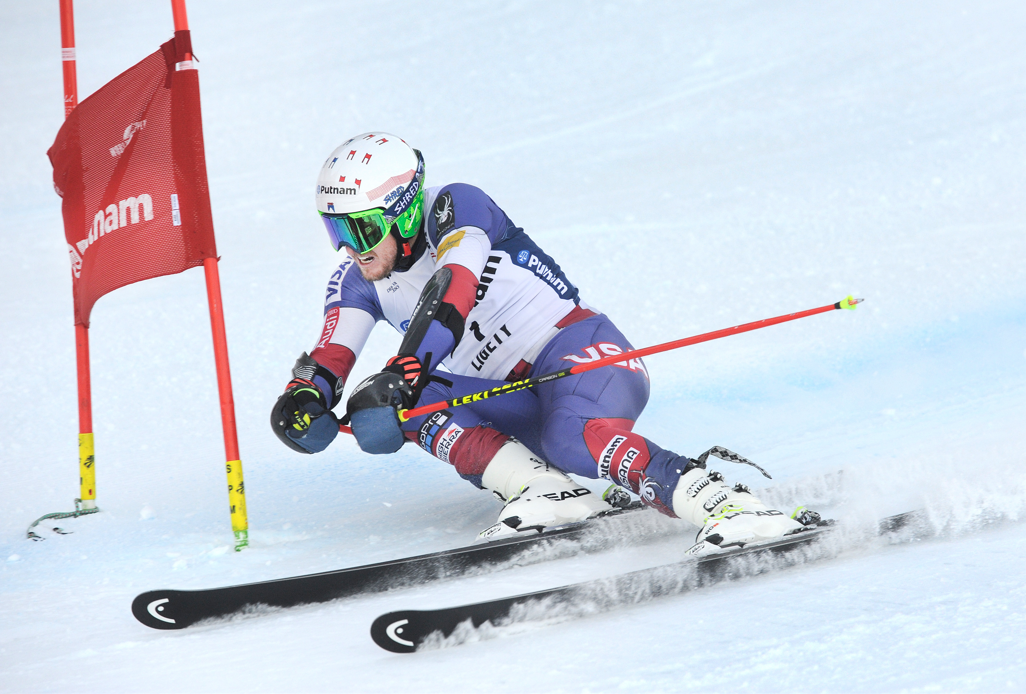
"Ted releases a turn sooner than most ski instructors, and he’s not constantly gaining speed as he goes," Fogg observes. "He gets up to a speed and maintains it, as close to consistent as possible. That’s speed control, and it’s one gift I wish I could give every ski instructor." Fogg illustrates this with a compelling analogy: "Imagine you are on a bus and can only stand. The driver hits the accelerator, then the brake, and you’re constantly getting lurched, and you have to hold on to maintain your balance. If the driver is smooth and goes one speed, you can walk around the bus without holding on."
For recreational skiers, learning to ski with consistent, controlled speed has immense benefits for balance and confidence. Instead of constantly accelerating and braking, which creates instability, instructors can teach students to manage their momentum through earlier turn initiation, consistent pressure on the edges, and flowing transitions. This allows skiers to anticipate movements, maintain a more stable platform, and ultimately ski with greater ease and control.
2. Early Turn Release and Balanced Weighting:
Ligety’s tendency to release a turn earlier than many instructors means he initiates the next turn before the previous one is fully completed. This smooth, continuous transition is key to maintaining momentum and flow. Instructors can guide students toward this by focusing on continuous movement, encouraging them to think about initiating the next turn as they exit the current one, rather than coming to a complete stop or drifting between turns.
Furthermore, Ligety exhibits "more equal weight foot-to-foot than most before he releases his edges." While recreational skiers often lean heavily on the outside ski, a more balanced weighting during the transition phase can lead to greater stability and a more effective setup for the subsequent turn. This doesn’t mean equal pressure throughout the entire turn, but rather a more symmetrical distribution of weight during the critical moment of edge change, facilitating a smoother and more powerful engagement of the new outside edge.
3. Understanding Inclination and Edge Angle:
While extreme edge angles are reserved for high speeds, the principle of inclining the body into a turn is universal. Instructors can teach students to progressively lean more into their turns as their speed and confidence grow, helping them understand how to use their body’s mass to create edge angle rather than just relying on ankle flexion. Drills focusing on hip angulation and inclination can help skiers develop this sensation in a controlled environment.
4. The Foundational Importance of Equipment and Alignment:
Fogg’s emphasis on boot alignment underscores a critical, yet often overlooked, aspect of ski performance for all skiers. Instructors can advocate for proper boot fitting and, if necessary, professional alignment (canting) for their students. A well-fitting, correctly aligned boot improves comfort, enhances control, reduces fatigue, and allows the skier to transmit forces to the ski more efficiently, unlocking greater potential for carving and balance.
5. Developing Physical Attributes:
While not every skier needs to train like an Olympic athlete, the general importance of core strength, leg strength, and mobility cannot be overstated. Instructors can encourage students to engage in off-snow conditioning that supports their skiing, leading to better performance, greater endurance, and reduced risk of injury.
A Lasting Legacy
Ted Ligety’s impact extends far beyond his impressive medal count. He inspired a generation of skiers and coaches, demonstrating that creativity and a deep understanding of physics could unlock new levels of performance. His "Mr. GS" moniker is not merely a title; it is a recognition of his profound influence on how giant slalom is skied. His technique, initially viewed with awe and perhaps some skepticism, ultimately became a benchmark, influencing other racers to push the boundaries of edge angle and efficiency.
In retirement, Ligety remains connected to the sport, often sharing insights through various platforms and potentially contributing to equipment development or coaching initiatives. His legacy serves as a powerful reminder that while only a select few reach the pinnacle of athletic achievement, the underlying principles of their success offer a rich vein of knowledge for anyone seeking to improve their craft. By distilling the complexities of Ligety’s gold medal turns into teachable concepts, ski instructors can empower their students to develop a deeper understanding of ski mechanics, enhance their balance, and ultimately, find greater joy and proficiency on the snow.
