

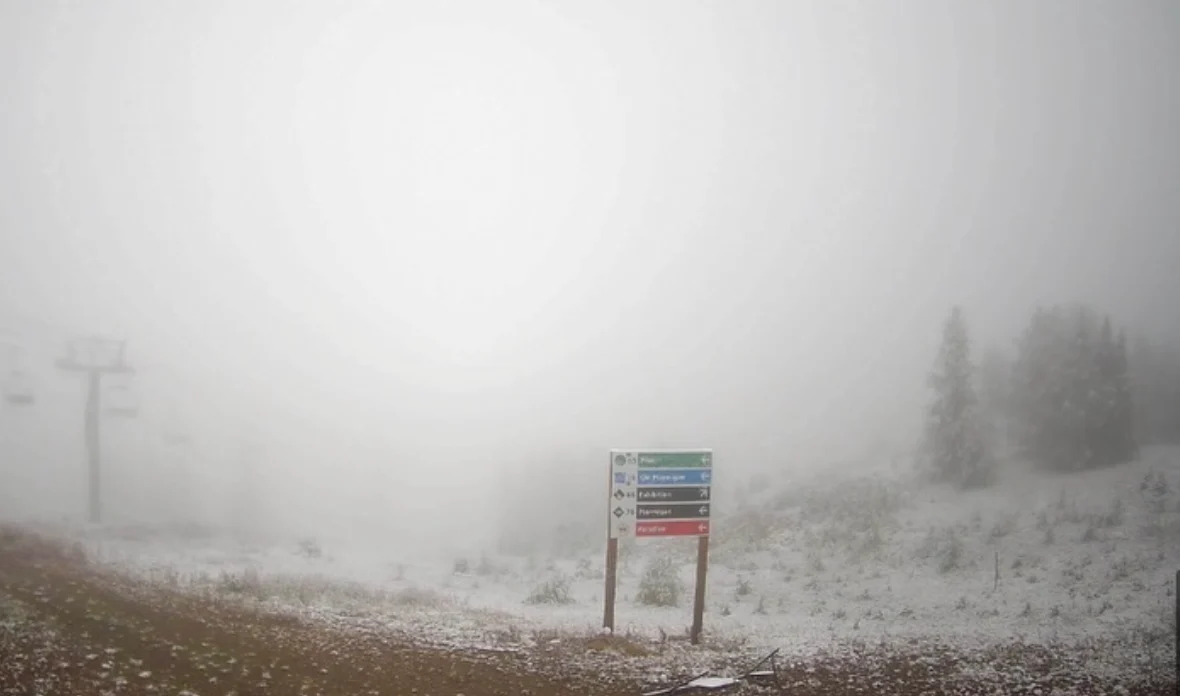
As the calendar inch closer to September, a familiar yet always exciting phenomenon has begun to paint the highest peaks of North America with the delicate brushstrokes of winter. While the lingering warmth of late summer still embraces valleys and lowlands, a handful of prominent ski resorts, from the rugged Cascades of Washington to the majestic Canadian Rockies, have reported their first snowfall of the 2026-2027 ski season over the past weekend. This early dusting, though largely ephemeral, serves as a potent reminder for snow enthusiasts and the ski industry alike that the transition from green to white is underway, igniting anticipation for the months of exhilarating descents and pristine powder that lie ahead.
The initial reports of snow began to surface on Sunday, August 30th, 2026, signaling a premature flirtation with winter across several key mountain destinations. This phenomenon, while not uncommon for high-altitude resorts, invariably captures the attention of skiers and snowboarders who have endured a lengthy off-season. The stark visual contrast between late-summer foliage and a fresh blanket of white atop the mountains provides a compelling preview of what is to come, even if current conditions are not conducive to actual skiing. Experts caution against drawing definitive conclusions about the upcoming winter’s severity based on these early flurries, as late August and early September temperatures often rebound, leading to melt-off. Nevertheless, these early snow events offer a psychological boost and a tangible sign that the eagerly awaited ski season is indeed on the horizon.
Chronology of Early Snowfall
The first significant reports of snowfall emerged from the Canadian Rockies on Sunday morning. Banff Sunshine Village in Alberta, a resort renowned for its high elevation and extended season, experienced snow across its upper reaches. Situated at elevations nearing 9,000 feet within Banff National Park, Sunshine Village is accustomed to receiving early snow. The visual evidence, captured through resort webcams and shared on social media platforms, showcased a picturesque scene of white blanketing the peaks, sparking widespread interest among the skiing community. This event is particularly noteworthy given that Sunshine Village typically opens its slopes in mid-November, meaning the first true skiable snow is still approximately two months away.
Simultaneously, resorts in British Columbia also reported early winter precipitation. Kicking Horse Mountain Resort near Golden, B.C., greeted Sunday morning with snow accumulation in its high alpine zones. Reports indicated several centimeters of snow had fallen, notably around the Eagle’s Eye restaurant, perched at approximately 7,700 feet. The resort itself acknowledged the event through its social media channels, stating, "First snow has entered the chat," while also humorously reminding followers that summer activities like mountain biking were still available. Much of this snow, like that at other locations, was expected to melt as temperatures rose.
Further west, Panorama Mountain Resort, also in British Columbia, appeared to receive one of the more substantial early snowfalls of the weekend. The resort reported a "solid dusting" on its upper mountain, creating a distinctly winter-like appearance despite the calendar still indicating August. With an expansive 3,000 acres and over 4,600 feet of vertical drop, Panorama’s early winter display was a significant visual marker for the region.
Across the border in the United States, Crystal Mountain in Washington State also joined the early snow chorus. The resort’s high alpine terrain, including areas around Northway, Mountain Top, Chair 6, and the 7,012-foot summit of Silver King Peak, was dusted with snow over the weekend. This made Crystal Mountain the first reported U.S. destination to witness snow for the nascent 2026-2027 ski season. However, similar to its Canadian counterparts, Crystal Mountain is not slated to open for skiing until December, underscoring the symbolic rather than practical nature of this early precipitation.
Lake Louise, another iconic Canadian Rockies destination in Alberta, also reported snow on its upper mountain on Sunday. This phenomenon, characteristic of its high elevation, served as a timely reminder for skiers that the opening of Lake Louise, typically in early November, was drawing nearer.
Supporting Data and Context
The occurrence of late August and early September snowfall at high-altitude ski resorts is a recurring event, driven by meteorological patterns that allow colder air masses to descend upon mountainous regions while lower elevations remain temperate. These early snow events are typically associated with the passage of a strong cold front or an upper-level trough that brings precipitation and a significant drop in temperature at higher elevations.
For instance, the summit of Banff Sunshine Village is situated at approximately 8,954 feet (2,730 meters). At this altitude, temperatures can drop well below freezing even during summer months, especially when accompanied by a weather system that draws colder air from the north or pushes a low-pressure system through the region. Similarly, Crystal Mountain’s summit at 7,012 feet (2,137 meters) and Kicking Horse’s base elevation of around 7,700 feet (2,347 meters) are sufficiently high to experience freezing temperatures and snowfall during transitional seasons.
The timing of these events is particularly interesting in the context of early-season ski industry planning. Resorts often use these early snowfalls as opportunities for marketing and to generate excitement among their customer base. While these initial dustings are unlikely to contribute to base depth for skiing, they provide visually appealing content for social media campaigns and early winter forecasts. The prolonged periods between these early snows and actual resort openings—often two to three months—underscore the delicate balance of mountain weather and the reliance on substantial winter storm cycles for a successful ski season.
Official Responses and Industry Reactions
While specific official statements from resort management regarding these particular early snowfalls were not detailed in the initial reports, the general sentiment within the ski industry is one of cautious optimism and enthusiasm. Resort operators and marketing teams frequently leverage these events to engage with their communities. For example, Kicking Horse’s playful social media announcement, "First snow has entered the chat," is indicative of the lighthearted yet effective way many resorts acknowledge and share these occurrences.
Industry analysts note that while early snow is a positive sign, it is the consistency and volume of snowfall throughout the fall and winter months that ultimately determine the success of a ski season. "These early dustings are fantastic for generating buzz and keeping our target audience engaged during the off-season," commented an unnamed marketing representative from a major ski resort association. "However, our operational planning and the actual experience for our guests are entirely dependent on sustained winter weather patterns. We look forward to these glimpses of winter, but we also monitor long-range forecasts very closely for indications of what the full season might bring."
The broader ski industry, including equipment manufacturers, retailers, and tourism boards, also takes note of these early signs. Increased online searches for ski gear and early booking trends for winter travel can often be correlated with reports of early snowfall. This phenomenon helps to galvanize interest and reinforce the anticipation of winter sports.
Broader Impact and Implications
The early arrival of winter’s first snow on North American ski slopes carries several implications for the industry and its patrons. Firstly, it serves as a powerful psychological cue, transitioning minds from summer leisure to winter anticipation. For dedicated skiers and snowboarders, these images of snow-capped peaks are akin to the first blossoms of spring for gardeners—a promise of future enjoyment. This early psychological engagement can influence purchasing decisions, from ski apparel to season passes, potentially leading to increased early sales for resorts.
Secondly, these events provide valuable data points for meteorologists and climate scientists studying mountain weather patterns. While a single event is not indicative of long-term trends, consistent patterns of early snowfall in certain regions can contribute to broader analyses of seasonal shifts and their potential impact on the ski industry. This is particularly relevant in an era of heightened awareness regarding climate change and its influence on snowpack reliability.
Thirdly, the early snowfall highlights the diverse geographical and altitudinal factors that influence weather across North America. The fact that resorts in both the Canadian Rockies and the U.S. Pacific Northwest are experiencing these conditions simultaneously underscores the vastness of the continent and the complex interplay of weather systems.
Finally, for the resorts themselves, these early snow events are a low-cost, high-impact marketing opportunity. The visually appealing nature of snow on mountains translates effectively to digital media, reaching a global audience of winter sports enthusiasts. This engagement is crucial for maintaining brand visibility and fostering a loyal customer base throughout the year. While the snow may melt, the memory and anticipation it generates can linger, setting a positive tone for the approaching ski season. The 2026-2027 ski season, though still in its nascent stages of anticipation, has already received its first, albeit fleeting, winter greeting.
