

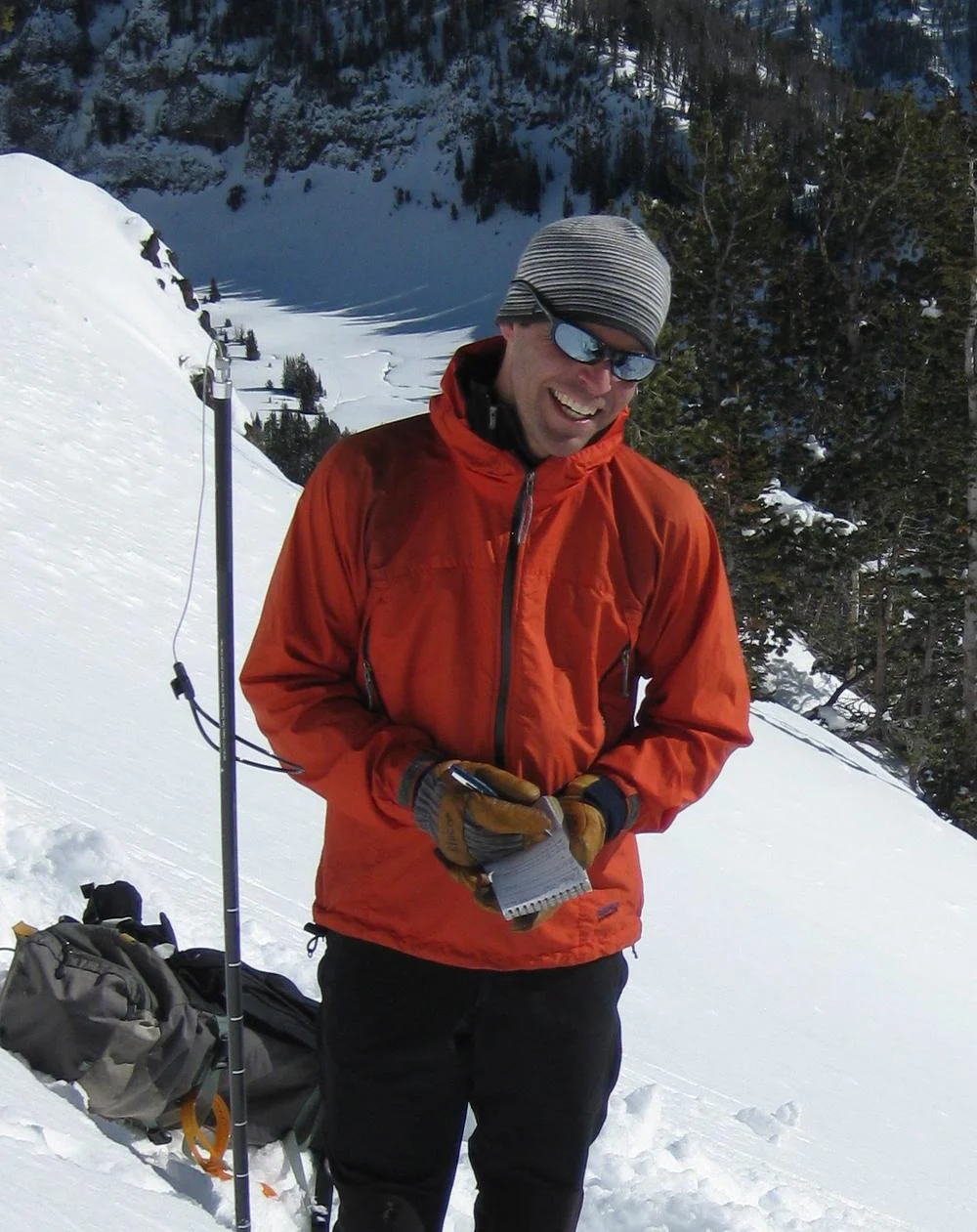
The landscape of winter safety and avalanche forecasting in the United States is undergoing a significant transition as the Utah Avalanche Center (UAC) announces the retirement of its long-standing Director, Bruce Tremper. After nearly three decades at the helm of one of the world’s most respected avalanche forecasting agencies, Tremper will officially step down from the United States Forest Service at the end of August. His departure marks the end of a 29-year tenure characterized by radical innovation in how avalanche information is communicated to the public and a deep commitment to backcountry education. To ensure a seamless transition for the upcoming winter season, the UAC has confirmed that Mark Staples, a veteran forecaster from the Gallatin National Forest Avalanche Center, has been selected to succeed Tremper as the new Director.
Bruce Tremper’s career has been synonymous with the evolution of modern avalanche science. When he first took the lead at the Utah Avalanche Center in 1986, the field was in a state of relative infancy regarding public outreach. Over the ensuing three decades, Tremper’s influence moved beyond the borders of the Wasatch Range, shaping international standards for danger scales, educational curricula, and the conceptual models used by professionals worldwide to analyze snowpack stability. His retirement represents not just a change in personnel, but a milestone for the entire North American avalanche industry.
The Foundations of a Career in Snow Science
Bruce Tremper’s journey into the world of snow and ice began long before he arrived in Utah. A native of the mountain West, he pursued his academic interests at Montana State University in Bozeman, an institution renowned for its contributions to snow science. Under the mentorship of Dr. John Montagne, a pioneer in the field, Tremper earned his Master of Science degree. This academic rigor provided the theoretical framework that would later allow him to bridge the gap between complex geophysics and practical mountain safety.
Following his graduation, Tremper immediately applied his knowledge in the field, working in avalanche control at two of Montana’s premier ski destinations, Bridger Bowl and Big Sky Resort. These early roles were critical in developing his "boots on the ground" understanding of snow mechanics and the high-stakes nature of mitigation work. His career then took him north to the Alaska Avalanche Center, where he collaborated with iconic figures in the industry, including Doug Fesler, Jill Fredston, and Jim Woodmency. Alaska’s massive terrain and extreme weather patterns served as a final proving ground before he accepted the directorship of the Utah Avalanche Center in 1986.
Three Decades of Innovation at the Utah Avalanche Center
When Tremper assumed his role in 1986, the Utah Avalanche Center functioned in a vastly different technological landscape. At that time, backcountry enthusiasts primarily received information through recorded telephone advisories. These updates were often limited by the constraints of the medium, offering brief summaries of conditions without the visual aids or detailed breakdowns common today.
Under Tremper’s leadership, the UAC became a global leader in digital innovation. As the internet became a household utility, Tremper recognized the potential for a more robust, visual, and interactive method of information delivery. He spearheaded the development of the UAC’s website, which became a blueprint for other centers. One of his most significant contributions was the introduction of icons to represent different types of "avalanche problems"—such as wind slabs, persistent weak layers, or wet snow. This move toward a more intuitive, graphic-based advisory system allowed users to quickly grasp the specific nature of the danger they might encounter, rather than relying solely on a single danger rating.
This shift was more than just a matter of convenience; it was a fundamental change in the philosophy of forecasting. By identifying specific "problems," Tremper encouraged backcountry users to engage in more nuanced decision-making, moving the industry toward a more sophisticated "Conceptual Model of Avalanche Danger."
Literary Contributions and the 2002 Winter Olympics
Beyond the daily operations of the UAC, Bruce Tremper has been a prolific contributor to the literature of the field. He served as the editor for The Avalanche Review for six years, a professional journal that serves as the connective tissue for researchers and practitioners. However, he is perhaps best known to the general public as the author of Staying Alive in Avalanche Terrain. First published in 2001, the book is widely considered the "bible" of avalanche safety, translating complex science into accessible, life-saving advice for skiers, snowboarders, and snowmobilers.
His expertise was also called upon on the world stage during the 2002 Salt Lake City Winter Olympics. As the person in charge of backcountry avalanche safety for the games, Tremper was responsible for ensuring that the massive influx of international visitors and athletes remained safe in the rugged terrain surrounding the Olympic venues. His ability to navigate the logistical and media pressures of a global event further solidified his reputation as a steady and authoritative voice in the industry.

Shaping National and International Standards
Tremper’s influence extended into the policy and standardization realms as well. In 2010, he was a key member of the working group that revamped the North American Avalanche Danger Scale. This effort was aimed at creating a more consistent and scientifically grounded system for communicating risk across different regions and agencies. The resulting conceptual model has since been adopted by virtually every major forecasting center in North America, ensuring that a "High" danger rating in Utah means the same thing as a "High" danger rating in Colorado or British Columbia.
For decades, Tremper has also been a staple instructor at the National Avalanche School, where he helped train generations of professional patrollers, guides, and forecasters. His commitment to education ensured that his methodology and emphasis on human factors—the psychological traps that lead people into dangerous terrain—remained central to the professional discourse.
The Appointment of Mark Staples
The selection of Mark Staples as the new Director of the Utah Avalanche Center signifies a commitment to maintaining the high standards set during the Tremper era while bringing in fresh perspectives from a similarly high-traffic region. Staples comes to the UAC from the Gallatin National Forest Avalanche Center (GNFAC) in Bozeman, Montana, where he spent eight seasons as a backcountry forecaster.
Staples’ resume mirrors the blend of academic and practical experience that defined his predecessor. He holds a Master of Science degree in Engineering from Montana State University, where his research focused on the mechanics of snow and avalanches. His professional background includes extensive work as a ski patroller and snow safety officer at Big Sky Ski Area, as well as several high-level projects for the National Avalanche Center.
The Gallatin region, like the Wasatch, is known for its complex snowpacks and a highly active backcountry community. Staples’ experience in Bozeman—balancing public safety, education, and detailed forecasting—makes him an ideal fit for the Salt Lake City-based role. In a statement following the announcement, Staples expressed his enthusiasm for joining the UAC team, noting the center’s reputation for excellence and its role as a pioneer in the field.
Implications for the Future of Avalanche Safety
The leadership transition at the UAC comes at a time when backcountry recreation is seeing unprecedented growth. The "Wasatch backcountry" is one of the most heavily used winter recreation areas in the world, and the demand for accurate, real-time data is higher than ever. The UAC, under new leadership, will face the challenge of managing this increasing volume of users while continuing to adapt to a changing climate that is altering traditional snowpack patterns.
Industry analysts suggest that Staples is likely to continue the UAC’s trajectory of technological integration. With the rise of mobile apps and social media, the next decade of avalanche forecasting will likely focus on hyper-local data and real-time user-generated observations. Staples’ engineering background and his history with the National Avalanche Center position him well to lead these technical advancements.
While Bruce Tremper is retiring from his official capacity with the Forest Service, his involvement in the community is expected to continue. He has indicated plans to remain active in teaching, writing, and consulting on safety projects. In the local community, there is a sense of profound gratitude for his 29 years of service. For many in Utah, Tremper has been the "voice of the mountains," providing the critical information that allowed thousands of people to enjoy the Wasatch snow safely.
As the August deadline for the transition approaches, the Utah Avalanche Center stands as a testament to Tremper’s legacy. He leaves behind an organization that is better funded, more technologically advanced, and more integrated into the public consciousness than it was in 1986. With Mark Staples taking the reins, the center is poised to continue its mission of saving lives through forecasting and education, ensuring that the legacy of safety established over the last three decades remains the foundation for the future.
