

Published August 26, 2026 09:50AM
For years, the discourse among ski enthusiasts, particularly those who consult veteran gear testers like myself for SKI Magazine, often revolves around the perennial quest for the next big innovation in skis, boots, and bindings. The curiosity is palpable: what new technologies are emerging, what design philosophies are shaping the future, and where is the market truly heading? In these conversations, a consistent, often provocative, starting point for my guidance remains a simple query: "Have you ever genuinely explored the capabilities of a full rocker ski?" The typical response, delivered with a mix of intrigue and dismissal, is frequently: “Pretty cool, but that’s not for me.” This reaction, while understandable, underscores a significant misperception that has long overshadowed one of skiing’s most revolutionary and, increasingly, versatile designs.
Challenging the Icon: Full Rocker Beyond Extreme Imagery
The ingrained image of full rocker skis—also known as reverse camber skis—is often inextricably linked to the legendary Shane McConkey. Visions of McConkey, perched on a colossal face in Bella Coola, British Columbia, on what appear to be literal water skis, initiating gravity-defying sideways slides through exploding powder, are indelible. This iconic imagery, while celebrating the pinnacle of freeskiing and McConkey’s audacious spirit, has inadvertently branded full rocker skis as highly specialized tools, exclusively for elite skiers tackling the most extreme conditions. This perception, while rooted in a historical reality, fails to capture the profound evolution and broadened applicability of modern full rocker designs.
However, my extensive experience testing a vast array of ski equipment reveals a different narrative. Some of the most profoundly enjoyable and effective skis I have ever encountered have been full rocker models. Their inherent design allows for a unique blend of performance characteristics: they are effortlessly drifty when the terrain or conditions demand it, yet capable of railing into powerful carves when tipped on edge. This dual nature—a feeling of being loose and swervy, distinctly different from the hundreds of skis with conventional camber profiles—provides an unparalleled sense of control and playfulness. Crucially, full rocker skis excel in "grabby" or variable snow, a common challenge in the backcountry, making them my preferred choice for off-piste exploration. In virtually any depth of soft snow, from fresh powder to wind-buffed stashes, a full rocker ski consistently outperforms anything with even a hint of traditional camber.
The Philosophy of Sensation: Why Skiers Seek More Than Just Thrills
The true appeal of full rocker, I contend, transcends mere adrenaline. There is a common misconception that skiers are primarily thrill-seekers, driven by the rush of danger or speed. While exhilaration is undoubtedly a component, a more accurate characterization identifies skiers as sensation-seekers. We are drawn to the novel feelings that the mountain environment and the act of skiing provide: the almost weightless pull of gravity as one glides through untracked snow, the satisfying pressure buildup through a perfectly executed carved turn, or the unexpected joy of finding days-old powder hidden beneath an icy cornice. It is not solely the adrenaline we pursue, but rather a profound sense of freedom and engagement, distilled into unique physical and emotional sensations.
This quest for novel sensation is precisely what full rocker skis unlock. They offer a fundamentally different feel, an alternative language for interacting with the snow and terrain. This distinct "feeling of skiing" is the core argument for their re-evaluation and wider adoption.
A Brief History: The Radical Genesis of Full Rocker
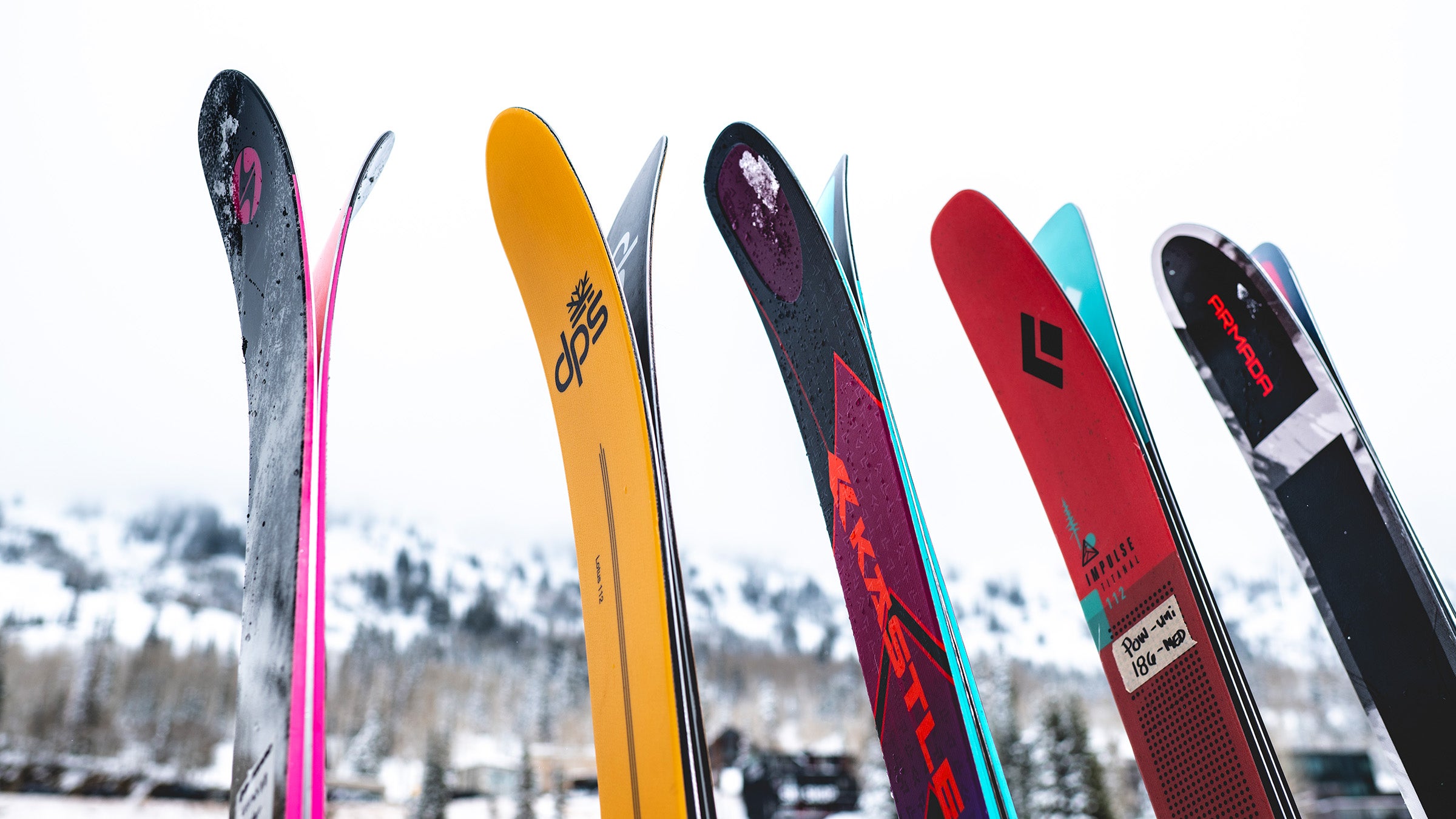
To understand the modern full rocker ski, it is essential to revisit its revolutionary origins. Full rocker skis are characterized by their "banana-like" profile; unlike traditional camber skis that arch upwards underfoot, full rocker skis are either completely flat beneath the bindings or exhibit a visible upward curve along their entire length. This design minimizes the ski’s contact points with the snow, especially in softer conditions.
The conceptual genesis of rockered skis is widely attributed to Shane McConkey. Inspired by fellow freeskiing pioneer Scott Gaffney’s observation that his skis performed better in deep snow after their traditional camber pocket had worn down, McConkey envisioned a ski designed from the ground up for optimal float and maneuverability in powder. This vision materialized in 2002 with the launch of the Volant Spatula, the first commercially available full rocker ski. McConkey’s objective was not merely to create a superior powder ski; it was to fundamentally challenge skiers to reimagine what a ski could do and how they could interact with it.
Each pair of Spatulas came with an accompanying essay by McConkey, a manifesto urging skiers to "open their minds" and discard conventional wisdom regarding ski technique. The Spatula, with its pronounced full rocker and revolutionary reverse sidecut, was purpose-built for deep snow—designed to slip, slide, and "slarve" (a portmanteau of slide and carve) rather than adhere to the rigid carving mechanics of traditional skis. McConkey’s provocative advice underscored its radical departure: "Take most everything you have ever learned about skiing and stick it where the sun don’t shine," he wrote, "Or at least in the garage next to your shaped skis."
The Volant Spatula was, by all accounts, an extreme proposition, both conceptually and in its physical design. Its pronounced full rocker and reverse sidecut ensured unparalleled floatation, making it virtually impossible to submarine in the deepest powder. However, the reverse sidecut also meant it struggled significantly with edge hold, even in slightly firmer or "mank" snow, cementing its reputation as a powder-only tool. This specialized nature, while groundbreaking, limited its appeal to a niche segment of highly dedicated powder hounds.
The Evolution of Ski Design: From Camber to Rocker and Hybrid Profiles
For decades, traditional camber was the undisputed standard in ski design. This upward arch underfoot, when weighted, distributed pressure evenly along the ski’s edge, providing powerful grip, rebound, and stability, particularly on hard snow. The late 20th century saw incremental refinements to camber, but the fundamental profile remained.
The introduction of the Spatula marked a pivotal moment, catalyzing a broader industry conversation about ski geometry. While initially viewed as an outlier, McConkey’s radical experiment gradually influenced mainstream ski design. The mid-2000s saw the emergence of "tip rocker" and "tip and tail rocker" profiles, where only the extremities of the ski were upturned, while a traditional camber section remained underfoot. This hybrid approach sought to blend the float and easy turn initiation of rocker with the edge hold and stability of camber, making it a widely adopted and successful compromise for various conditions. Skis with slight tip rocker and traditional camber became the industry standard, offering a "best of both worlds" solution that appealed to a broad consumer base.
However, even as hybrid profiles dominated, a smaller contingent of designers and skiers continued to explore the full rocker concept, striving to retain its unique playful characteristics while addressing its initial limitations.
The Modern Full Rocker Ski: A Different Animal
Today’s full rocker skis represent a significant evolution from the Spatula era, offering far greater versatility and balance than their predecessors. Contemporary designers have embraced McConkey’s core principle of effortless float and maneuverability but have refined the geometry to mitigate the drawbacks of extreme reverse sidecut.
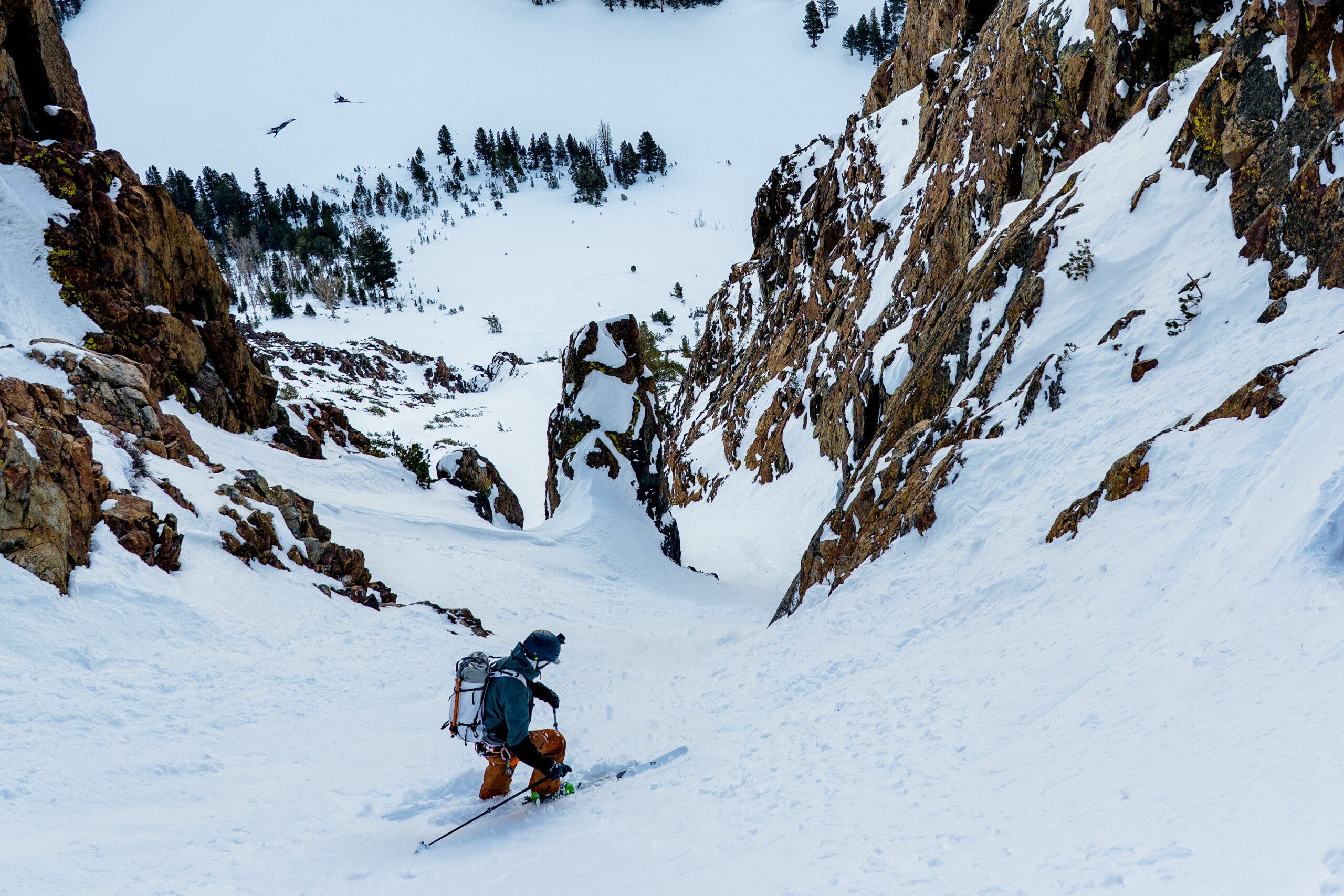
In recent years, I have extensively tested a new generation of skis that ingeniously integrate the reverse camber profile with nuanced sidecut variations. Skis like the Moment Meridian 107 and the 4FRNT Devastator exemplify this modern approach. These models retain the quintessential loose, freeriding spirit of full rocker, allowing for easy pivots and drifts when skied flat. However, by incorporating an appropriate amount of traditional sidecut, they are also capable of locking into strong, precise carves when tipped onto their edges. This innovative combination allows the ski to feel playful and agile in soft snow while providing surprising grip and stability on firmer terrain, a stark contrast to the uncompromising nature of the original Spatula.
This design philosophy reflects a crucial learning from the early days of rocker: while full rocker provides exceptional float and turn initiation, sidecut is essential for hard-snow performance. Modern manufacturers have realized that instead of pursuing extremes, combining these elements thoughtfully can create a ski that offers a truly unique and adaptable experience. For example, the 4FRNT Devastator, with its 108mm waist, stands as a testament to this versatility, embodying a true freeride spirit while being a capable all-mountain tool. These skis don’t feel like they were engineered by a focus group; they possess a distinct character and feel that sets them apart from the homogenizing trends in ski design.
Industry experts confirm this trend. "The early full rocker designs were visionary but perhaps ahead of their time in terms of broad usability," states Dr. Lena Hansen, a renowned ski dynamics engineer. "What we’re seeing now is a sophisticated integration of those core ideas with decades of sidecut and flex pattern research. The goal is to provide the unique sensation of full rocker without sacrificing the all-mountain competence that most skiers demand." This evolution has seen a gradual increase in acceptance and market share within the freeride and backcountry segments, as skiers discover that these profiles offer a distinct advantage in variable, un-groomed terrain.
Why Embrace Full Rocker Now? Breaking the Mold
The question of why a skier should consider a full rocker ski today is, to me, straightforward. For the better part of the last decade, the ski market has largely converged around a "grey-beige" standard: a 95-underfoot ski with some tip rocker, modest traditional camber, and perhaps a whisper of tail rocker. While undeniably versatile, this widespread adherence to a specific template stems from a combination of factors, including risk aversion from both producers and consumers.
The economics of skiing play a significant role. Skis are expensive to manufacture, and the retail price point—often approaching or exceeding a thousand dollars for a pair—represents a substantial investment for consumers. In an era of tighter family budgets, the reluctance to "shell out nearly a grand on a weird shape they’re not sure they’ll like" is entirely understandable. This economic reality, coupled with powerful marketing of established "all-mountain" categories, has created a comfort zone that often discourages experimentation.
However, McConkey’s original call to "open their minds" remains profoundly relevant. The modern full rocker landscape is no longer about forcing skiers into extreme choices, such as purchasing 138-underfoot, reverse-sidecut powder boards that demand a complete relearning of technique. The current market offers a much subtler, more accessible range of options. These skis serve as a powerful reminder that the sensation of skiing does not have to be monotonous; it doesn’t have to feel the same every time one clicks into bindings.
Data from major ski retailers indicates a slow but steady growth in the niche market for alternative ski geometries, including full rocker, especially among experienced skiers seeking to diversify their quiver or optimize for specific backcountry conditions. "We’ve seen an uptick in inquiries for these more ‘playful’ or ‘surf-oriented’ skis," notes Mark Jensen, owner of a prominent ski shop in Colorado. "Once people demo them, they often realize the unique fun factor and versatility they offer, especially off-piste. It’s about expanding their personal experience of the mountain."
If skiers confine their entire experience to variations of the same conventional shape, they risk missing out on an entire spectrum of sensations and capabilities that the sport has to offer. Trying a specialized tool—or simply a ski with a shape that initially feels a little unconventional—is not about abandoning proven techniques but about expanding one’s horizons. It is an invitation to unlock an entirely new dimension to one’s ski abilities and deepen the connection with the mountain environment.
In conclusion, the full rocker ski, once a radical outlier, has matured into a sophisticated and surprisingly versatile option. Its evolution from a purely powder-specific tool to a design capable of delivering unique performance across varied soft-snow conditions, while maintaining respectable hard-snow capabilities, warrants a fresh look. For skiers eager to explore new sensations and expand their on-snow repertoire beyond the conventional, embracing the modern full rocker could very well be the key to rediscovering the inherent freedom and joy of skiing.
