

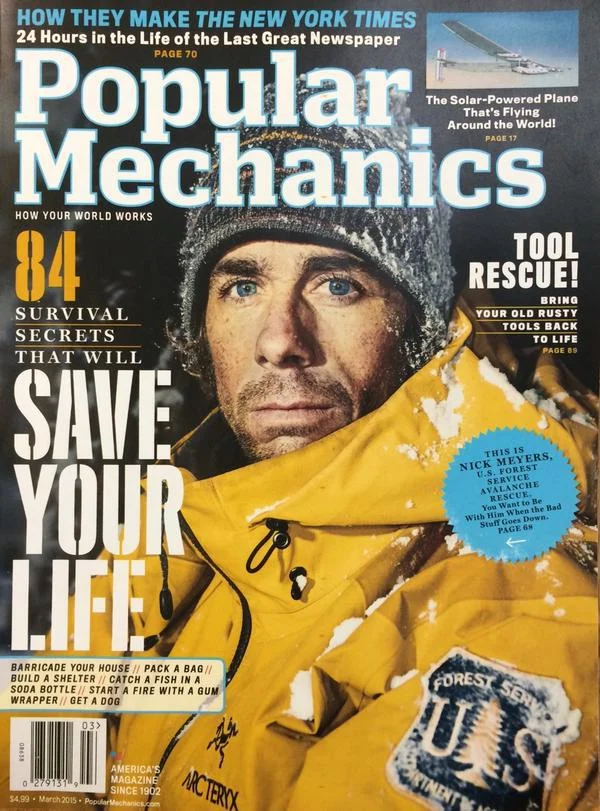
Nick Meyers, the Director of the Mount Shasta Avalanche Center and the Lead Climbing Ranger for the Shasta-Trinity National Forest, has achieved a significant milestone in public safety advocacy after being featured on the cover of Popular Mechanics magazine. This recognition highlights Meyers’ dual role as a professional rescuer and a foremost expert in snow science, bringing national attention to the critical importance of avalanche awareness and backcountry preparedness. The feature article in the venerable publication delves into the technical gear and survival strategies that Meyers employs during his high-stakes operations on one of California’s most prominent and dangerous volcanic peaks.
The Popular Mechanics feature serves as a comprehensive look at the intersection of technology, human endurance, and environmental science. By highlighting Meyers, the magazine underscores the professionalization of mountain safety and the rigorous standards required to manage public lands in the modern era. The article specifically focuses on the "10 Survival Essentials" that an avalanche rescue expert considers indispensable, providing a blueprint for both recreational climbers and professional responders who navigate the unpredictable terrain of the Cascade Range.
The Popular Mechanics Feature and the Survival Blueprint
The cover story, titled "10 Survival Essentials an Avalanche Rescue Expert Always Carries," offers readers a rare look into the pack of a professional who spends the majority of his winter and spring months above the tree line. Meyers, who has spent over a decade patrolling the slopes of Mount Shasta, emphasizes that survival in avalanche-prone terrain is not merely about having the right gear, but about the mastery of that gear under extreme psychological and physical stress.
The essentials listed in the feature include a mix of traditional survival tools and modern technological advancements. Among the items highlighted are the "Holy Trinity" of avalanche safety: the digital transceiver, the collapsible probe, and the lightweight aluminum shovel. Meyers explains to the publication that these tools are useless without a deep understanding of snowpack stratigraphy and the ability to perform a rescue in a matter of minutes. The feature also covers less obvious but equally vital equipment, such as satellite communication devices, emergency bivouac sacks, and specialized first-aid kits designed for cold-weather trauma.
The inclusion of Meyers on the cover of a mainstream technology and science magazine represents a shift in how the general public perceives mountain safety. It moves the conversation from "extreme sports" to a more analytical, gear-focused discipline where data-driven decision-making is the primary tool for risk mitigation.
A Profile of Leadership: Nick Meyers and the Mount Shasta Avalanche Center
Nick Meyers’ career is defined by his commitment to the Shasta-Trinity National Forest. As the Director of the Mount Shasta Avalanche Center (MSAC), he oversees a program that provides daily avalanche advisories, educational workshops, and real-time weather data to thousands of backcountry enthusiasts. His role as the Lead Climbing Ranger further complicates his responsibilities, as he is often the first point of contact for search and rescue (SAR) operations on the mountain’s 14,179-foot peak.
Mount Shasta is unique among California peaks due to its isolation and its massive vertical relief. Rising nearly 10,000 feet above the surrounding valley, the mountain creates its own weather patterns, often leading to rapid snow accumulation and high-wind events that create prime conditions for avalanches. Meyers’ work involves the daily assessment of these conditions, often requiring him to skin up thousands of vertical feet in the early morning hours to dig snow pits and analyze the bonding of different snow layers.
Under Meyers’ leadership, the MSAC has modernized its outreach efforts. The center now utilizes sophisticated mapping software and social media platforms to ensure that the latest safety information reaches the public before they arrive at the trailhead. This proactive approach is credited with reducing the number of incidents on the mountain, even as the popularity of backcountry skiing and splitboarding continues to surge.
Chronology of Excellence: From Field Ranger to National Expert
The path to national recognition for Meyers has been built on years of field experience and institutional growth.
- Early 2000s: Meyers began his tenure on Mount Shasta, working as a seasonal climbing ranger. During this time, he developed a deep familiarity with the mountain’s unique terrain traps and weather cycles.
- 2010–2012: Meyers ascended to the role of Director of the MSAC. During this period, he focused on expanding the center’s funding through partnerships with the Friends of the Mount Shasta Avalanche Center, a non-profit organization dedicated to supporting safety education.
- 2014: The Shasta-Trinity National Forest saw a spike in backcountry usage, prompting Meyers to implement more rigorous educational programs and a more robust daily advisory system.
- 2015: Popular Mechanics identified Meyers as a leading voice in the field of survival technology. The magazine conducted extensive interviews and photo sessions on the slopes of Mount Shasta to capture the reality of his work environment.
- Present: Meyers continues to serve as a bridge between the USDA Forest Service and the recreational community, using his national platform to advocate for increased funding for avalanche centers across the United States.
Supporting Data: The Rising Stakes of Avalanche Safety
The recognition of Meyers comes at a time when avalanche safety has become a national priority. According to data from the Colorado Avalanche Information Center (CAIC), which tracks national statistics, the United States averages approximately 27 avalanche fatalities per year. However, as backcountry equipment becomes more accessible, the number of people entering "uncontrolled" terrain has grown exponentially.
In the 2014-2015 season—the period surrounding Meyers’ feature—the importance of professional forecasting was underscored by several high-profile incidents across the Western U.S. Data indicates that nearly 90% of avalanche victims trigger the slide themselves or are caught in a slide triggered by someone in their party. This statistic highlights why Meyers’ emphasis on "human factors" and decision-making is so critical.
On Mount Shasta specifically, the MSAC tracks thousands of climbers annually. During peak season, the mountain can see hundreds of summit attempts in a single weekend. The center’s ability to provide accurate, localized data is the primary defense against large-scale tragedies in high-traffic areas like Avalanche Gulch or the Whitney Glacier.
Official Responses and Professional Impact
While the USDA Forest Service generally maintains a neutral stance on individual media features, officials within the Shasta-Trinity National Forest have expressed that Meyers’ visibility serves the agency’s mission of "Caring for the Land and Serving People." By appearing in Popular Mechanics, Meyers has provided the Forest Service with a platform to demonstrate the high level of technical expertise maintained by its staff.
Colleagues in the snow science community have also noted that Meyers’ feature is a win for the industry. "Having a professional forecaster on the cover of a major magazine validates the science we do every day," said one peer from the American Avalanche Association. "It shows that what we do isn’t just about skiing; it’s about physics, meteorology, and public health."
The "Friends of the Mount Shasta Avalanche Center" also leveraged the media coverage to bolster their fundraising efforts. The visibility helped secure grants and donations that have since been used to install new weather stations and provide free "Avalanche 101" clinics to the local community and visiting tourists.
Broader Implications for Mountain Safety and Public Education
The implications of Nick Meyers’ feature in Popular Mechanics extend beyond a single magazine cover. It represents a broader movement toward the democratization of specialized knowledge. In decades past, the secrets of mountain survival were often held by a small elite of professional guides and rangers. Today, through features like this, that knowledge is being distilled into actionable advice for the general public.
Furthermore, the focus on "essentials" emphasizes a culture of self-reliance. As search and rescue resources are often stretched thin, particularly during peak winter months, the message from experts like Meyers is clear: the best rescue is the one that never has to happen. By educating the public on what to carry and how to use it, Meyers is effectively building a more resilient backcountry community.
The technical analysis provided in the article also highlights the evolving nature of the gear itself. From the transition from analog to digital transceivers to the development of airbag packs that can prevent a person from being buried, the "technology" of survival is a rapidly moving target. Meyers’ role as a gatekeeper of this information ensures that the public is not just buying gear, but buying the right gear and understanding its limitations.
Conclusion: The Lasting Legacy of the Lead Ranger
Nick Meyers’ appearance on the cover of Popular Mechanics is a testament to his career-long dedication to the safety of those who recreate on Mount Shasta. It elevates the status of the Mount Shasta Avalanche Center and reinforces the importance of the USDA Forest Service’s role in managing high-risk recreational environments.
As the Director and Lead Climbing Ranger, Meyers continues to navigate the balance between encouraging public enjoyment of the wilderness and ensuring that the public respects the inherent dangers of the mountain. Through his expertise, his leadership, and now his national platform, he remains a pivotal figure in the effort to ensure that every climber and skier who ventures onto the slopes of Mount Shasta returns home safely. The feature in Popular Mechanics is not just an individual accolade; it is a vital contribution to the ongoing narrative of American mountain safety and the professionalization of the wilderness experience.
