

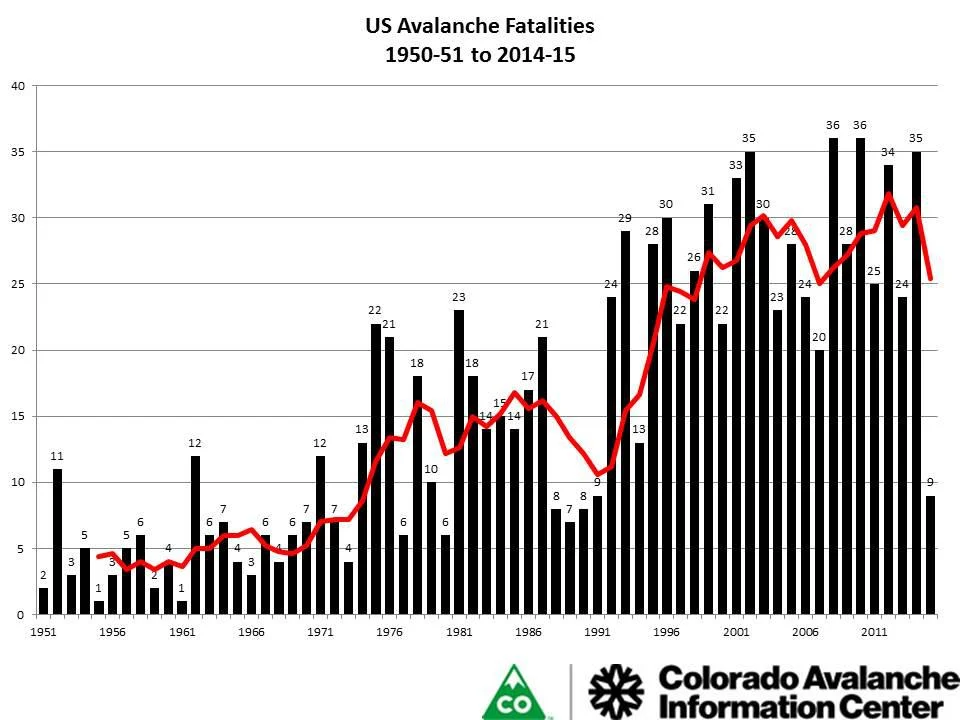
As the 2014-2015 winter season draws to a close on April 30, preliminary data from across the United States reveals a significant and encouraging trend in backcountry safety. While the avalanche season technically continues into the spring and early summer months in high-altitude regions, the current statistics represent a historic low in winter-related fatalities. With only nine recorded deaths as of late April, this season marks the fewest avalanche-related fatalities in the United States since 1991. This sharp decline comes at a time when backcountry participation is reaching record highs, suggesting a complex interplay between meteorological conditions, improved forecasting, and a more informed public.
The 2014-2015 season stands in stark contrast to the previous decade, where annual fatalities often fluctuated between 20 and 35. The decline to single digits is being viewed by experts at the Colorado Avalanche Information Center (CAIC) and the United States Forest Service (USFS) as a combination of natural environmental factors and the success of long-term educational initiatives. However, safety officials remain cautious, noting that while the numbers are low, every fatality represents a profound loss for the outdoor community.
Chronology of the 2014-2015 Avalanche Season
The trajectory of the 2014-2015 season was defined largely by anomalous weather patterns that dictated snowpack stability across the Mountain West and the Pacific regions. The early season, beginning in October and November 2014, saw typical early-season snowfall in high-elevation areas of Colorado and Montana, leading to the initial development of basal weak layers. These layers are often the primary culprits in deep-slab avalanches later in the winter.
However, as the calendar turned to 2015, the anticipated mid-winter storms failed to materialize in several key regions. Throughout January and February, the West Coast—particularly the Sierra Nevada in California and the Cascades in Washington and Oregon—experienced a historic "snow drought." The lack of significant accumulation meant that the primary medium for avalanches was missing in areas that traditionally see high traffic. In the Intermountain West, including Utah and Wyoming, temperatures remained unseasonably warm. These warm spells helped to settle and bond the existing snowpack, preventing the prolonged periods of high instability that often characterize the mid-winter months.
By March 2015, the "avalanche cycle" that usually accompanies spring transitions was moderated by the overall lack of deep snow. While isolated incidents occurred, the massive, wide-scale avalanche cycles that often trap multiple recreationists were largely absent. As of April 30, the season is concluding with a statistical profile that has not been seen in over two decades.
Meteorological Drivers: The Impact of a "Poor Snow Year"
A primary driver behind the record-low fatality rate was the underperforming winter across the Western United States. For much of the West Coast, the 2014-2015 winter was one of the driest on record. In California, the snowpack was measured at a mere fraction of its historical average, leading to the closure of many ski resorts and a significant reduction in backcountry touring opportunities. Without a deep, layered snowpack, the mechanical requirements for large-scale avalanches—specifically a slab, a weak layer, and a trigger—were rarely present simultaneously.
Further inland, in states like Colorado, Utah, and Montana, the snowpack was more substantial but was influenced by unseasonably warm temperatures. In a typical year, deep cold can preserve "facets"—sugar-like snow crystals that form a weak foundation for future storms. In 2015, the warmth allowed the snowpack to undergo "isothermal" transitions earlier and more frequently, which often leads to a more stable, albeit thinner, snow cover. While "wet slides" became a concern during the warm afternoons, these are generally more predictable and easier for backcountry travelers to avoid than the "persistent slabs" that characterize colder, more volatile winters.
The Role of Education and Forecasting Infrastructure
While the weather played a significant role in reducing the number of accidents, officials with the Forest Service avalanche centers and the Colorado Avalanche Information Center point to the increased efficacy of education as a vital secondary factor. Over the last decade, the infrastructure for providing real-time avalanche information has expanded significantly.
The CAIC, which maintains the national database for avalanche accidents, has spearheaded efforts to make technical data accessible to the general public. Through mobile applications, social media updates, and daily localized forecasts, recreationists in 2015 had more information at their fingertips than at any point in history. This "information age" of backcountry travel allows users to plan routes that avoid specific aspects or elevations identified as high-risk by professional forecasters.
Furthermore, the standardization of avalanche education—specifically through the American Institute for Avalanche Research and Education (AIARE)—has created a more disciplined culture among skiers, snowboarders, and snowmobilers. The emphasis has shifted from merely reacting to an avalanche to the proactive "human factor" management, where groups are taught to recognize social pressures and heuristic traps that lead to poor decision-making in the backcountry.
Statistical Trends: Reconciling High Participation with Stable Mortality
One of the most remarkable aspects of the 2014-2015 data is the context of backcountry usage. Industry reports from organizations like the Snowsports Industries America (SIA) indicate that sales of alpine touring (AT) boots, splitboards, and climbing skins have skyrocketed over the past 15 years. The "backcountry boom" has brought thousands of new participants into uncontrolled mountain terrain.
Statistically, one might expect a linear increase in fatalities as the number of people in the terrain increases. However, the five-year moving average for avalanche fatalities has remained remarkably stable, fluctuating between 25 and 30 deaths per year. The drop to nine fatalities in 2014-2015 is an outlier that brings that moving average down, but the overall trend suggests that the rate of accidents per capita is actually decreasing.
This stability in the face of rising participation is attributed to several factors:
- Improved Gear: The widespread adoption of avalanche transceivers, probes, and shovels, along with the emergence of avalanche airbags, has improved the chances of survival during an incident.
- Strategic Forecasting: Forecasting centers have become better at identifying the "Avalanche Problem" of the day (e.g., wind slab vs. persistent deep slab), allowing users to make more nuanced choices.
- Community Policing: The rise of online forums and community-based observation platforms has fostered a culture where backcountry users share "near-miss" stories, providing valuable peer-to-peer learning.
Regional Variations and Official Responses
Despite the low national total, the distribution of incidents provided key insights into regional risks. Colorado, which traditionally leads the nation in avalanche fatalities due to its thin, "continental" snowpack, saw a reduction in fatal incidents that mirrored the national trend. Spencer Logan, a prominent researcher with the CAIC, noted that the maintenance of the US avalanche accident database is crucial for understanding these shifts.
Official responses from the USFS National Avalanche Center have emphasized that the low numbers should not lead to complacency. "While we celebrate the fact that more people returned home safely this year, we must recognize that the danger is inherent to the terrain, not just the weather cycle," a representative noted in a summary of the season’s findings. The sentiment among professionals is that the 2014-2015 season was a "reprieve" provided by the climate, rather than a permanent end to the threat of high-fatality winters.
In the Pacific Northwest, where snow totals were historically low, search and rescue (SAR) teams reported a shift in the type of calls received. Instead of avalanche recoveries, many teams were tasked with assisting hikers and climbers who ventured into high-altitude areas that are usually inaccessible during the winter, highlighting how weather patterns shift the nature of mountain risk rather than eliminating it entirely.
Broader Impact and Long-term Implications
The 2014-2015 season serves as a case study for the future of mountain recreation in a changing climate. As winters become more volatile—characterized by "whiplash" events of extreme drought followed by intense storms—the avalanche community must adapt. The low fatality count this year provides a benchmark for what is possible when environmental conditions align with robust public information campaigns.
However, the analysis of this season also highlights a potential "complacency trap." Experts worry that a season with only nine deaths might lead novice backcountry users to underestimate the lethality of the mountains in subsequent years. The "persistent weak layer," which was less prevalent this year due to the warmth, remains the most dangerous element of the American snowpack and is expected to return with more traditional winter cycles.
As the industry looks toward the 2015-2016 season, the focus remains on sustaining the 5-year moving average’s stability and further reducing the per-capita accident rate. The data provided by Spencer Logan and the CAIC continues to be the backbone of this effort, ensuring that every accident is analyzed to prevent future tragedies.
In conclusion, the 2014-2015 avalanche season will be remembered as a year of historic lows. While the "poor snow year" across the West was a significant contributor to this safety record, the tireless work of avalanche centers and the growing sophistication of the backcountry community cannot be overlooked. As of April 30, the mountains are beginning to transition to summer, leaving behind a season that, despite the inherent risks of the high country, saw the fewest lives lost in nearly a quarter-century. The challenge moving forward will be to maintain this momentum of safety even when the heavy snows inevitably return.
