

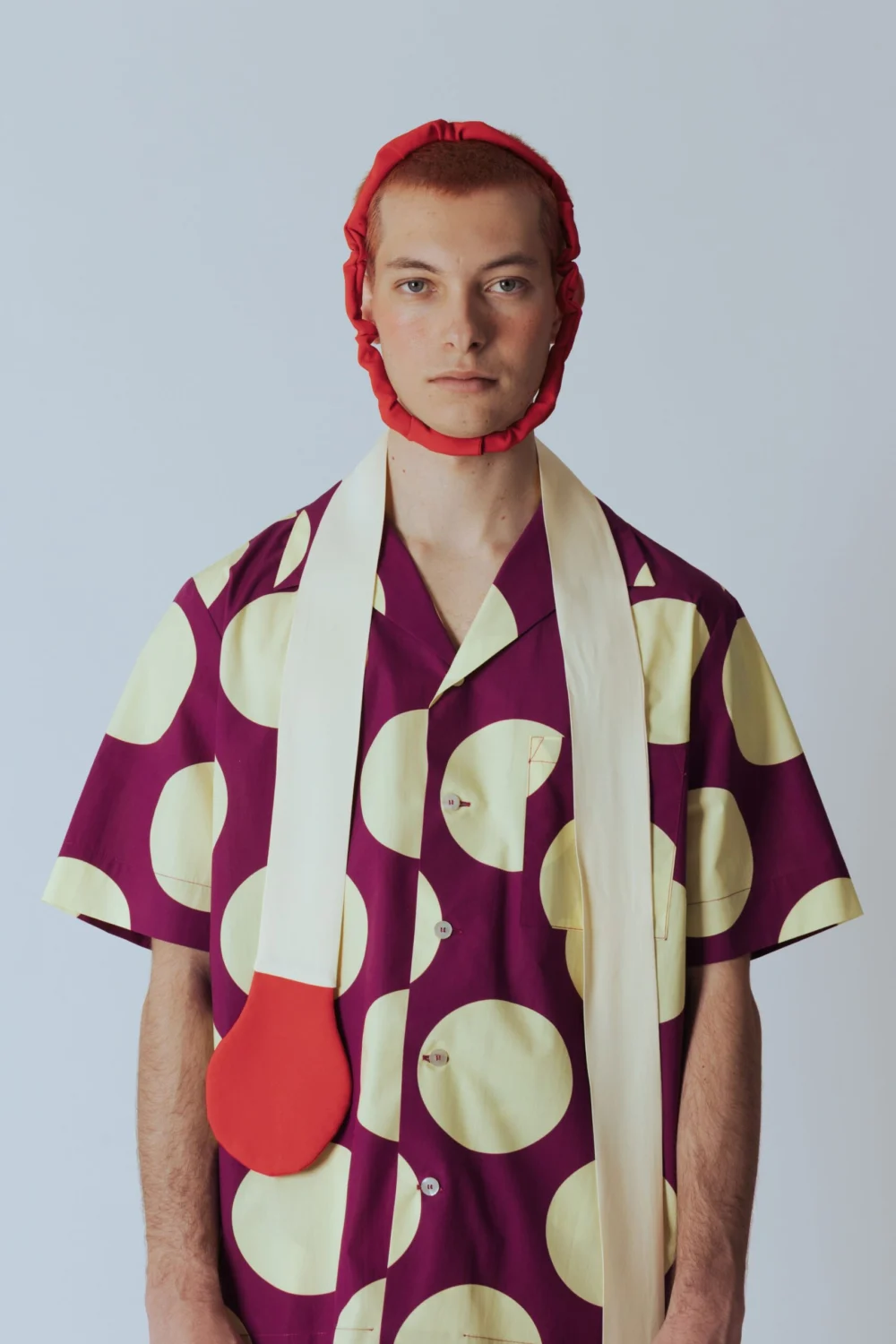
Arthur Arbesser’s Spring 2026 ready-to-wear collection is a deeply personal and evocative exploration of artistic legacy, drawing inspiration from the profound impact of his neighbor, the pioneering Austrian artist Maria Lassnig. Rather than merely designing garments, Arbesser imbues each piece with a narrative, a testament to his belief that fashion can serve as a powerful storytelling medium. This season, the designer delves into the life and work of Lassnig, an artist who defied convention and carved out a singular path in the 20th-century art world, demonstrating how personal connections can translate into compelling sartorial statements.
The genesis of this collection lies in Arbesser’s childhood memories in Vienna, where Maria Lassnig, born in 1919, lived as his next-door neighbor. Lassnig came of age during a period when women artists faced significant barriers to recognition, a struggle that she articulated through her art with unyielding honesty. Arbesser recalls the visual contrast between Lassnig’s distinct attire and the conventional dress of Viennese women, a subtle yet powerful observation that underscored her unique identity and artistic persona. He often assisted Lassnig with simple errands, such as carrying groceries, a seemingly mundane activity that would later inspire a key print in the collection.
The collection’s visual language is a direct homage to Lassnig’s artistic output and philosophical outlook. A recurring motif, the humble grocery bag filled with green apples and lemons, has been transformed into a vibrant print, symbolizing the intersection of everyday life and artistic inspiration. This personal anecdote serves as a microcosm of Arbesser’s design philosophy, where the extraordinary is often found within the ordinary.
Lassnig’s artistic journey is marked by a profound engagement with the body and identity, particularly evident in her series of short films from the 1970s. In these works, she frequently employed the motif of the clown, a symbol that Arbesser has masterfully translated into sartorial elements. The collection features playful yet sophisticated interpretations of circus-inspired aesthetics: sharp diamond-patterned collars evoke the jester’s traditional garb, while bold stripes and oversized polka dots inject a sense of whimsical energy. Checkerboard jersey sets offer a contemporary take on classic game board imagery, and the vivid, often acidic color palettes directly reference the nuanced hues found in Lassnig’s paintings.
A particularly striking element of the collection is the use of color, drawing from the characteristic faded, green-tinged patina that often characterizes Lassnig’s works. Arbesser translated this subtle palette into bold, instinctive brushstrokes painted onto a white canvas, which were then rendered as a striking print. This process highlights Arbesser’s collaborative approach, not just with his atelier, but with the spirit of the artist he is honoring.
The influence of Lassnig’s 1975 work, Sleeping with a Tiger, is palpable in the collection’s animalier motifs. This marks a significant departure for Arbesser, as he has historically shied away from such overt animalistic imagery. However, in this context, the motifs are executed with a sophisticated touch, appearing on fabrics like cotton drill, poplin, and stretch tulle, lending them a contemporary and refined appeal. These motifs are not merely decorative; they speak to the primal energy and untamed spirit that Lassnig explored in her art.
The Artist and the Designer: A Shared Pursuit of Depth
Arbesser articulates a shared artistic sensibility with Lassnig, stating, "The vision of an artist unfolded with a depth that was hard to reach. Clothes remain on the surface, but I wanted to convey a personality that had left a mark on me." This sentiment underscores the designer’s intention to move beyond superficial aesthetics and tap into the deeper essence of his subject. Lassnig’s relentless self-portraits, a testament to her profound exploration of bodily awareness and selfhood, resonate with Arbesser’s own artistic expression. Through his clothing, he seeks to not only articulate his own identity but also to foster a connection with his audience, mirroring Lassnig’s introspective yet universally relatable artistic practice.
The collection’s unveiling occurred against the backdrop of the Spring 2026 ready-to-wear fashion week circuit, a highly anticipated event in the global fashion calendar. This season, the industry has shown a growing interest in collections that offer a narrative beyond fleeting trends, emphasizing craftsmanship, heritage, and meaningful inspiration. Arbesser’s approach aligns perfectly with this shift, offering a collection that is both visually compelling and intellectually stimulating.

A See-Now-Buy-Now Approach: Bridging Art and Commerce
A notable aspect of Arbesser’s operational strategy, adopted since the previous season, is his commitment to a see-now-buy-now model. This approach, while presenting its own logistical challenges, allows for a more immediate engagement between the collection and its audience. For a collection so deeply rooted in immediate inspiration and personal connection, this model feels particularly apt, enabling consumers to acquire pieces that reflect the collection’s narrative shortly after its presentation. This strategy also allows for a more direct feedback loop from consumers, potentially influencing future design directions and fostering a stronger brand-consumer relationship.
The fashion industry has been increasingly grappling with the environmental impact of its production cycles. The see-now-buy-now model, when managed efficiently, can contribute to reducing overproduction and waste by aligning production more closely with actual demand. While the specifics of Arbesser’s supply chain are proprietary, his adoption of this model suggests a consideration for more sustainable practices, a growing imperative within the fashion world.
Maria Lassnig: A Life of Artistic Defiance
Maria Lassnig (1919-2014) was a groundbreaking Austrian artist whose work consistently pushed the boundaries of self-representation and explored the complexities of the female body and psyche. Born in Carinthia, she studied at the Academy of Fine Arts Vienna in the late 1930s and early 1940s. Her early career was marked by her association with Surrealism and her involvement in the post-war art scene in Paris, where she befriended artists like Yves Klein.
However, Lassnig soon forged her own path, developing her distinctive style characterized by a raw, often unsettling, yet deeply honest depiction of the human form. She is particularly renowned for her “body awareness paintings,” where she used herself as a subject to explore sensations, emotions, and the physical experience of being alive. Her move into film in the 1970s allowed her to further experiment with animation and explore themes of identity and self-perception in new ways. Lassnig’s recognition grew significantly in her later years, culminating in major retrospectives and her becoming the first woman to hold a professorship for contemporary art at the Academy of Fine Arts Vienna in 1980. Her legacy continues to inspire artists and thinkers, emphasizing the enduring power of personal truth in art.
Analysis of Implications: Fashion as a Medium for Artistic Dialogue
Arthur Arbesser’s Spring 2026 collection transcends the typical seasonal offering by engaging in a rich dialogue with art history and personal narrative. By translating the essence of Maria Lassnig’s work into fashion, Arbesser not only honors a significant artist but also elevates the discourse surrounding fashion as a legitimate medium for artistic and cultural commentary. The collection serves as a case study for how designers can draw inspiration from diverse fields, enriching their work and offering consumers a more profound connection to the garments they wear.
The success of this collection could encourage other designers to explore similar cross-disciplinary collaborations, fostering a more intellectually engaged fashion landscape. Furthermore, it highlights the potential for fashion to act as a bridge, introducing broader audiences to the work of influential artists like Lassnig, thereby contributing to a wider appreciation of art and culture. The integration of a see-now-buy-now model further democratizes this artistic dialogue, allowing for a more immediate and accessible engagement with the collection’s narrative.
The fashion industry is constantly seeking new avenues for expression and relevance. Collections like Arbesser’s, which are deeply rooted in personal history and artistic legacy, offer a refreshing counterpoint to the fast-paced, trend-driven nature of the industry. They remind us that fashion can be a vehicle for storytelling, a means of connecting with the past, and a powerful expression of individual and collective identity. The impact of this collection will likely be felt not only in its commercial success but also in its contribution to a broader conversation about the role of art and narrative in contemporary fashion.
The collection’s thematic depth and artistic integrity are likely to resonate with a discerning clientele who value not just aesthetics but also the story and intention behind their clothing. As the fashion industry continues to evolve, designers who can artfully weave together personal narratives, artistic influences, and a commitment to craftsmanship will undoubtedly lead the way. Arthur Arbesser’s Spring 2026 collection stands as a compelling example of this forward-thinking approach, proving that fashion, at its best, is an enduring testament to human creativity and connection.
