

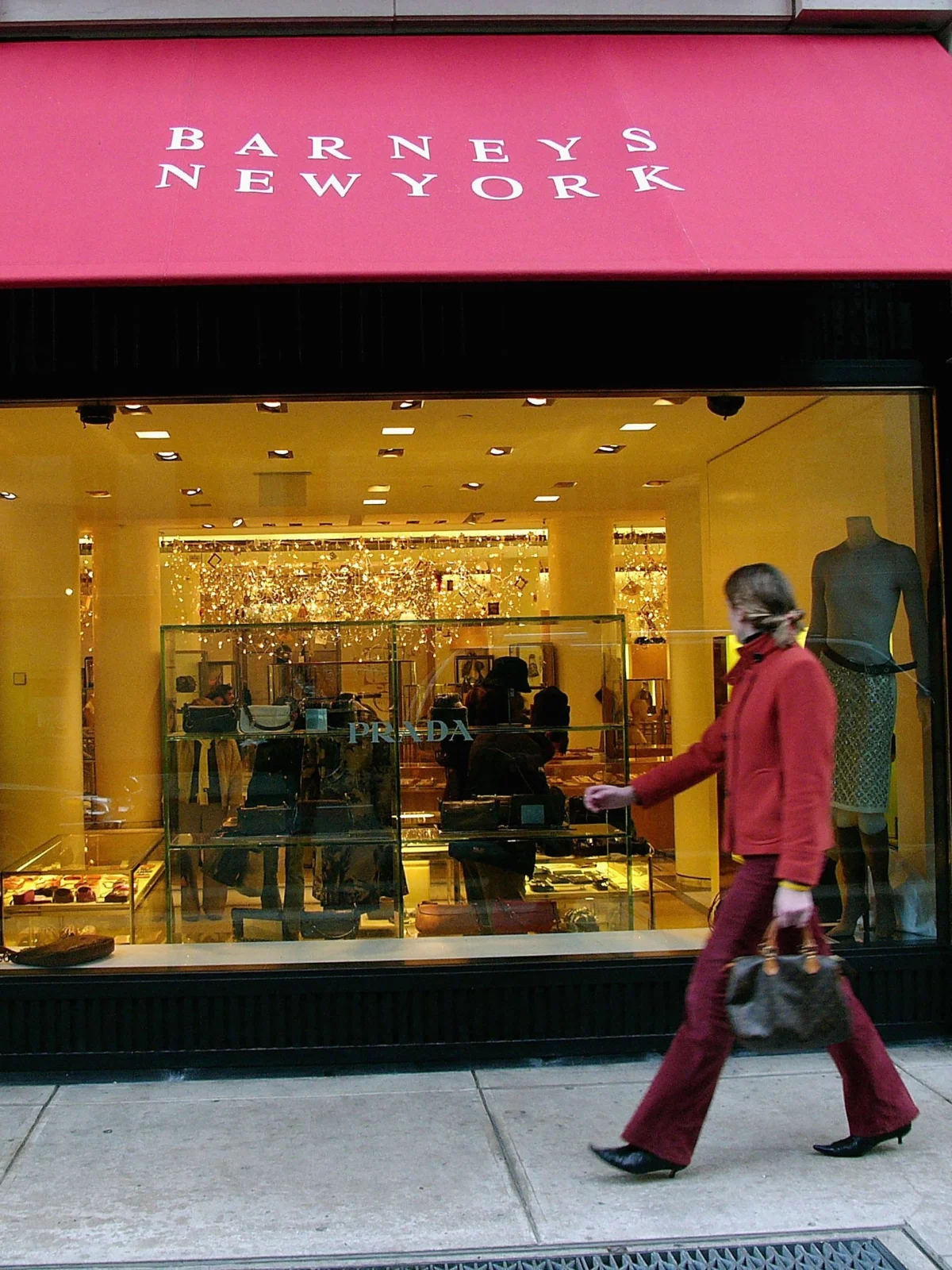
When Plum Sykes, a prominent fashion writer during the opulent 1990s era at Vogue, reminisces about her Saturdays, a singular destination invariably surfaces: Barneys New York. Her vivid recollections transport us to the heart of what made the iconic department store a cultural touchstone. "We’d book a table at [Barneys’ restaurant] Freds, where we’d have these amazing chopped Cobb salads, and just sit and run into all our friends like we were in a private club, because that’s where everyone went on a Saturday lunchtime," she recalls. This wasn’t merely a retail experience; it was a social ritual, a weekly pilgrimage to a hallowed ground of fashion and fellowship.
Post-salad, Sykes would immerse herself in the curated collections of avant-garde designers like Yohji Yamamoto, Dries Van Noten, and Helmut Lang—brands that Barneys had championed, introducing them to the American market. "They always had the newest, coolest designers," Sykes remembers, underscoring Barneys’ role as a tastemaker and a gateway to global fashion innovation.
Gene Pressman, former co-CEO, creative director, and a pivotal figure in merchandising and marketing for Barneys, whose grandfather founded the venerable institution, echoes this sentiment in his memoir, They All Came to Barneys. He encapsulates the store’s enduring allure: "Barneys was about dreams and it really was a club." This notion of Barneys as both a aspirational destination and an exclusive community has fueled much of the discussion surrounding its potential revival.
The Whispers of a Comeback
Recent reports, citing informed sources, have ignited speculation about the future of the Barneys New York brand. Authentic Brands Group (ABG), the entity that acquired Barneys’ intellectual property for approximately $271 million in 2019, is reportedly exploring plans to resurrect the flagship location on Madison Avenue. Furthermore, ABG is allegedly considering the establishment of smaller Barneys concept stores in other key U.S. markets. While Authentic Brands Group has not issued a formal comment on these developments, the mere prospect of Barneys’ return has sent ripples through the fashion industry.
ABG, a conglomerate known for its prowess in brand licensing and management, already presides over a diverse portfolio that includes brands such as Juicy Couture, Vince, and Hervé Léger. Since its acquisition of the Barneys name, ABG has pursued various avenues to leverage its new asset. This has included a partnership with Laox Holdings for retail and outlet locations in Japan, the development of Barneys New York Residences in Tulum, Mexico, and a temporary shop-in-shop arrangement with Saks Fifth Avenue. However, the latter arrangement concluded with Saks Global’s bankruptcy filing, a stark reminder of the volatile retail landscape.
This marks a significant shift from ABG’s previous stance. Just two years prior, the company had explicitly stated that there were no plans to reopen the iconic Barneys flagship. The reported change in strategy, however, raises a critical question: in the current retail climate, can Barneys truly recapture its former glory?
Nostalgia and the Void: The Enduring Appeal of Barneys
The emotional resonance of Barneys remains potent. In 2026, the nostalgia for what many considered the ultimate fashion insider’s emporium is as palpable as it was when the store shuttered in 2020. Robert Burke, a seasoned luxury consultant, observes, "Barneys has left an enormous void in the retail landscape and people do miss it. They miss the exclusive brands, the sense of discovery. And it also had very much a social element; it was the place to be seen." This sentiment highlights a multifaceted loss – not just of a retail space, but of a cultural hub and a curated point of reference.
The question then becomes whether a reimagined Barneys can effectively fill this void. While former executives and ardent admirers are not entirely dismissive of the possibility, their optimism is tempered with significant reservations. "The essence could be brought back. Could it be made cool again? Yes," acknowledges Gene Pressman. "But it would come in a different iteration. The fashion industry is a lot different now. Who is going to create [the magic?] Now people just want to sell products." This critique points to a fundamental challenge: replicating the intangible magic of Barneys in an industry that has become increasingly transactional.
.jpg)
The "Secret Sauce": Passion Over Profit?
Julie Gilhart, who spent 18 years as SVP, Fashion Director at Barneys, emphasizes that the store’s initial success was not merely a product of astute business strategy, but of a profound love for retail and a genuine passion for people and talent. "Barneys started out of a love and a passion for retail, and for people and talent. That was the secret sauce," she asserts. "The business followed that." This perspective suggests that a revival driven solely by financial objectives might miss the crucial ingredient that defined Barneys.
For a relaunched Barneys to thrive, it must navigate a delicate balance between honoring the deeply ingrained nostalgia within the fashion industry and forging a novel identity relevant to contemporary retail. Malcolm Carfrae, founder of Carfrae Consulting and formerly Calvin Klein’s chief communications officer, believes the current wave of 1990s nostalgia, amplified by cultural phenomena, presents a propitious moment for Barneys’ return. "With the 90s nostalgia at its peak after Love Story, it feels like a great time to revive Barneys – as long as they don’t dilute or cheapen the original vision," he advises. "It needs to be relevant for now, not a copy of what worked decades ago."
Gilhart concurs, expressing skepticism about the return of the "old" Barneys. However, she firmly believes that the store’s operational philosophy offers valuable lessons. "If you put the right partners together, you could probably come up with a Barneys-esque store – but you would have to have real, true merchants and retailers that have their finger on the pulse, are willing to take risks and aren’t looking at how their neighbors did it," she states. "If they wanted to do something fun and inspiring, that would create business." This underscores the imperative for bold, innovative leadership capable of anticipating rather than merely reacting to market trends.
Financial Foundations: The Crucial Investment for Revival
The ultimate determinant of Barneys’ success in a potential 2026 relaunch hinges on substantial investment, according to Gene Pressman. "Whoever is financing this [must be] willing to infuse enough capital to make it happen. There’s no cutting corners," he insists. This pragmatic outlook acknowledges the significant financial outlay required to establish a retail presence that can compete in today’s market.
While ABG has indicated a willingness to explore smaller concept stores, Pressman maintains a strong conviction that if Barneys were to operate larger, flagship-style stores, its presence should be confined to two key metropolises: New York and Los Angeles. He also concedes the necessity of a robust online presence.
Robert Burke expresses skepticism regarding ABG’s reported intention to reopen at the original Madison Avenue location. "It would be compared to the original Barneys, which was built over decades," he notes. Burke advocates for a phased approach, suggesting that a smaller, more controlled launch could facilitate better execution of curation and brand strategy.
Merchandise Matters: Rediscovering Emerging Talent
The cornerstone of any revived Barneys will undoubtedly be its merchandise. The strategy, experts suggest, must draw inspiration from the store’s pre-2000s playbook, with a dedicated focus on discovering and nurturing young, emerging designers. "It’s about energy, belief, commitment and working with young designers – but it needs capital," Pressman emphasizes. In the current economic climate, characterized by thin margins and a demand for swift returns, the willingness to invest the time and capital required to identify and support unknown talent is a significant undertaking. Yet, it is precisely this commitment to the unconventional that could distinguish a new Barneys.
Plum Sykes articulates this point forcefully: "You don’t want another rack of Chloé, another rack of LVMH [brands]," she argues. "They’ve got to go out there and find the cool, smaller brands that get people excited because they haven’t seen them on every single person they know." This sentiment resonates with the core of Barneys’ historical appeal – its ability to present fashion that felt fresh, exclusive, and ahead of the curve.
Burke, who witnessed Barneys’ competitive spirit firsthand during his tenure at rival Bergdorf Goodman, highlights the store’s historical commitment to exclusivity. "The demands of exclusivity by Barneys were very important to them, and they would get behind the brands and support them," he recalls. In 2026, this competitive landscape is even more intricate. Independent boutiques are increasingly adept at discovering and championing early-stage brands, while legacy retailers like Bloomingdale’s and Nordstrom are also expanding their focus on emerging designers. This heightened competition necessitates a more substantial investment from Barneys to secure and promote distinctive talent.

The Human Element: Curating Vision and Expertise
Experts also point to the significance of Barneys’ origins as a family business, questioning whether a capital group or investment fund can replicate the same level of dedication and curatorial acumen. "These corporations need to hire the right people to find the good stuff – not everyone has a fabulous eye," observes Sykes. She notes a contemporary tendency to be "cheap on that stuff now," suggesting a potential dilution of quality in hiring decisions.
Ultimately, the ability to identify and secure the brands that define a store’s identity rests on the vision and expertise of its leadership. Gene Pressman firmly believes that Barneys must be helmed by a true merchant. "Not an accountant, not a politician, not a department store or wholesale executive," he stipulates. This emphasizes the need for someone with an intrinsic understanding of fashion, an innate sense of style, and a passion for the retail craft.
Sykes fondly remembers Pressman as a "fashion-crazed" businessman whose discerning taste and drive for innovation were instrumental in Barneys’ success. Pressman himself acknowledges the scarcity of individuals capable of orchestrating such a revival, hinting at his own potential involvement. "I’m very expensive," he states, "Whether it’s me or somebody else, it’s not getting done unless those people really, really live it, love it, and are true merchants with great taste." This highlights the crucial need for leadership that embodies the very spirit of the brand.
However, Pressman also stresses the importance of assembling a balanced team, comprising both seasoned professionals and emerging talent. "I could assemble very talented people that would follow," he suggests, underscoring the collaborative nature of a successful retail venture.
A Future Clubhouse: Reimagining the Experiential
In its heyday, Barneys operated akin to an entertainment enterprise, a concept that Pressman believes a modern iteration must elevate. "Things are so dour, there’s no sense of humor. That was one of the great things that Barneys had, was a wonderful sense of humor," he laments. This suggests that a new Barneys should infuse its offerings with a playful, engaging sensibility to counter the often-somber tone of contemporary retail.
In an era dominated by AI-driven personalization and an incessant focus on fulfilling consumer demands, Pressman advocates for a different approach. "I used to have an expression: never give the customer what they want because they don’t know what they want. You have to show them," he asserts. In a landscape where genuine discovery is increasingly challenging and consumer fatigue is prevalent, an authoritative yet enjoyable space that showcases new fashion could indeed fill a significant void.
Plum Sykes, who consistently likens Barneys to a private club, believes consumers are seeking an experience that extends beyond the merchandise itself. "Barneys did that way before the word experiential shopping existed," she observes. Freds, the in-store restaurant, was central to this immersive experience. Malcolm Carfrae fondly recalls holding all his lunch meetings at Freds a decade ago, describing it as "fashion and social central – always more my vibe than the other power media lunch spots." The enduring appeal of such integrated experiences is evident, with some even holding out hope for the return of Freds itself.
The question of whether Authentic Brands Group possesses the vision and resources to orchestrate a successful Barneys comeback remains open. Gene Pressman offers a conditional endorsement: "If they supplied the money, gave the freedom to be creative, didn’t second guess and had the right person at the helm, yes, I think there would be a chance."
Crucially, Pressman reiterates that a mere rebranding exercise will not suffice. "If, in fact, ABG is legitimate in this, the new Barneys can’t be the old Barneys," he concludes. The challenge lies in evolving the brand’s essence for a new generation while retaining the core values that made it a beloved institution. The resurrection of Barneys is not simply a business transaction; it is a complex endeavor that requires a deep understanding of its legacy, a bold vision for its future, and an unwavering commitment to the principles of curation, passion, and experiential retail.
