

Alterra Mountain Company, the parent entity of the Ikon Pass and a dominant force in the global ski industry, has confirmed a capital investment exceeding $350 million aimed at enhancing its North American portfolio for the 2026-2027 winter season. This multi-million dollar commitment represents a strategic pivot toward long-term operational resilience, focusing on foundational infrastructure, snowmaking capabilities, and significant terrain expansions. While the investment includes high-visibility projects such as new chairlifts and dining facilities, a substantial portion of the capital is dedicated to the "unseen" elements of resort management—systems that ensure consistent snow quality and operational reliability in an increasingly volatile climate.
The Strategic Context of Alterra’s Capital Expenditure
The $350 million investment follows a trend of massive capital infusions by major resort operators like Alterra and its primary competitor, Vail Resorts. As the ski industry continues to consolidate, the competition for season pass holders—specifically between the Ikon Pass and the Epic Pass—has moved beyond mere acreage to encompass the total guest experience and "opening day" reliability.
Industry analysts note that Alterra’s decision to prioritize infrastructure over purely cosmetic upgrades is a response to shifting weather patterns. By investing in automated snowmaking and water storage, the company is attempting to "de-risk" the early and late seasons, providing a more predictable window for destination travelers who book months in advance. This strategy is essential for maintaining the value proposition of the Ikon Pass, which now provides access to over 50 destinations worldwide.
Tremblant’s Multi-Year Expansion and Beginner Integration
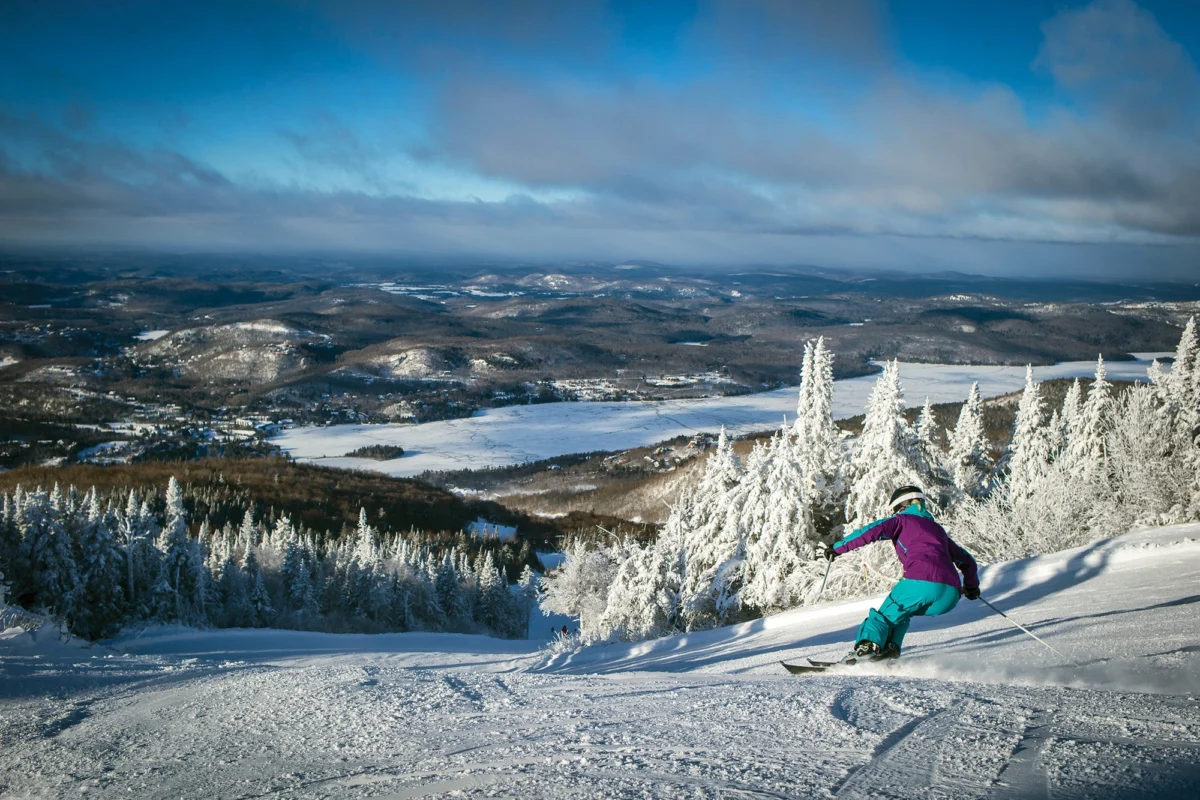
Mont Tremblant, located in the Laurentian Mountains of Quebec, is currently the site of one of Alterra’s most ambitious long-term projects. The resort is in the midst of its most significant terrain expansion in over twenty years. The centerpiece of this initiative is the Timber Summit project, a $42.5 million CAD investment that will eventually add 62 acres of skiable terrain and eight new trails.
According to the master plan, the Timber Summit expansion will include a new high-speed chairlift, which is expected to increase the resort’s total hourly lift capacity by 10 percent. However, the full completion of this zone, including the lift installation, is slated for the 2027-2028 season. In the interim, for the 2026-2027 season, the resort is focusing on a critical demographic: the entry-level skier.
A new dedicated learning area is set to open at the base of Versant Soleil, adjacent to the Casino Express Gondola. This zone is designed to isolate beginners from the high-traffic flow of the main base areas. By providing first-time skiers with dedicated infrastructure and gentle, low-consequence terrain, Tremblant aims to improve retention rates among new participants. Industry data suggests that the "conversion rate"—the percentage of first-time skiers who return for a second or third time—is a primary challenge for the North American market. Dedicated learning zones are a proven method for reducing the "intimidation factor" of large-scale resorts.
Deer Valley’s Transformation into a Mega-Resort
In Utah, Deer Valley Resort is undergoing a transformation that is reshaping the geography of Wasatch Range skiing. Under the "Expanded Excellence" initiative, Deer Valley is transitioning from its historic status as a mid-sized, boutique luxury resort into one of the largest ski destinations in North America.
For the 2026-2027 season, Alterra is adding 200 skiable acres and seven new runs to the Deer Valley footprint. This brings the resort’s total to 4,500 skiable acres served by 32 chairlifts. This growth is part of a multi-year partnership with the Extell Development Company, which facilitated the integration of the former Mayflower Mountain Resort land into Deer Valley’s operations.
A key addition for the upcoming season is the Hail Peak Express. Unlike high-alpine expert lifts, this chairlift is designed to service a "family-friendly pod." The terrain under Hail Peak will feature rollers, berms, and gentle ski-cross elements. This design philosophy reflects a broader industry move toward "adventure skiing" for intermediates, providing playful terrain that goes beyond traditional groomed runs without the high stakes of steep chutes or cliff bands.

The Snowmaking Revolution: Resilience through Automation
While terrain expansions garner the most media attention, the most critical investments for the 2026-2027 season are found in snowmaking technology. As natural snowfall becomes less predictable, the ability to manufacture snow at high temperatures and in shorter windows of time has become the industry’s primary safeguard against climate variability.
Solitude Mountain Resort
Following a $5 million investment in the previous season, Solitude is continuing to overhaul its snowmaking system. The resort is adding a mix of fixed-position and mobile snow guns. The goal is to increase both "coverage" (the total area that can be covered) and "capacity" (the speed at which that coverage can be achieved). By upgrading pump houses and piping, Solitude can now capitalize on brief "cold snaps" to coat its primary arteries in a matter of hours rather than days.
Deer Valley’s Water Management
Infrastructure at Deer Valley is receiving a massive boost with the construction of a new 10-million-gallon reservoir. This facility will work in tandem with the existing Summit Pump House to ensure that the resort can open its expanded terrain even during dry Decembers. Significantly, Deer Valley has released data regarding its environmental impact, stating that 80 to 90 percent of the water used in snowmaking eventually returns to the local watershed—either the Jordanelle Reservoir or the Provo River—during the spring melt. This "non-consumptive" use of water is a key talking point for resorts facing scrutiny over resource management.
Winter Park’s Automated Future
Winter Park Resort in Colorado is entering the next phase of a multi-year project to rebuild its snowmaking system from the ground up. The focus here is on automation. New automated fan guns can be triggered remotely as soon as wet-bulb temperatures reach the necessary threshold, eliminating the lag time required for manual crews to traverse the mountain. The resort expects to double its snowmaking capacity on the critical Lower Hughes run, a move designed to ensure a reliable "top-to-bottom" experience for early-season visitors.
Enhancements to Guest Services and Luxury Offerings
Beyond the slopes, Alterra is directing funds toward the "apres" and auxiliary experiences that define luxury ski travel. These upgrades are designed to increase the "per-capita" spend of visitors and improve overall guest satisfaction scores.
- Dining Infrastructure: Several resorts are seeing renovations to mid-mountain lodges. The focus is moving away from traditional cafeteria-style service toward higher-quality, diverse culinary options that can accommodate the increased volume of Ikon Pass holders.
- CMH Heli-Skiing Upgrades: Alterra’s premier heli-skiing operation, CMH (Canadian Mountain Holidays), is receiving a facelift for several of its remote lodges. These upgrades aim to maintain CMH’s position as a world leader in luxury backcountry experiences, focusing on both interior aesthetics and mechanical reliability for its transport fleet.
- Terrain Park Refinements: Investments are also being funneled into park-building technology, including new snow-cats specifically designed for precision grooming and the construction of halfpipes and large-scale features.
Analysis of Implications: The Future of the Ski Industry
Alterra’s $350 million investment signals a maturation of the "Pass Wars" era. The focus is no longer just on acquiring more resorts, but on maximizing the efficiency and reliability of the ones already in the portfolio.
For the consumer, these investments suggest a future where the "ski season" is more insulated from the whims of weather. However, the high cost of these infrastructure projects also underscores the increasing divide between corporate-owned mega-resorts and small, independent ski areas. Independent mountains often lack the capital to invest in the 10-million-gallon reservoirs or automated fan guns necessary to compete in a warming climate.
Furthermore, the expansion of Deer Valley and Tremblant reflects a shift in resort design. By creating "pods" of terrain (like Hail Peak or the Versant Soleil beginner zone), resorts are better able to manage "crowd flow." This is a direct response to complaints regarding overcrowding on Ikon Pass mountains. By spreading skiers across more acreage and providing specialized zones for different ability levels, Alterra hopes to mitigate the friction between high-speed expert skiers and families.
Chronology of Alterra’s Major Milestones
- 2018: Alterra Mountain Company is formed by KSL Capital Partners and Henry Crown and Company; the Ikon Pass is launched.
- 2020-2022: A period of rapid acquisition and the initial announcement of the "Expanded Excellence" project at Deer Valley.
- 2024-2025: Significant investments in snowmaking at Solitude and initial groundwork for the Tremblant Timber Summit.
- 2026 (September): Announcement of the $350 million CapEx plan for the 2026-2027 season.
- 2026 (November/December): Scheduled opening of the Deer Valley Hail Peak Express and the Tremblant beginner zone.
- 2027-2028: Projected completion of the Timber Summit high-speed lift at Tremblant.
As the 2026-2027 season approaches, the success of these investments will be measured not just by ticket sales, but by the operational uptime of the resorts. In an era where "snow reliability" is the most valuable commodity in the industry, Alterra’s $350 million bet on infrastructure is a clear indication of where the future of skiing lies. The company is betting that while skiers come for the new lifts, they stay—and return—because of the pipes and pumps that keep the mountain white.
