

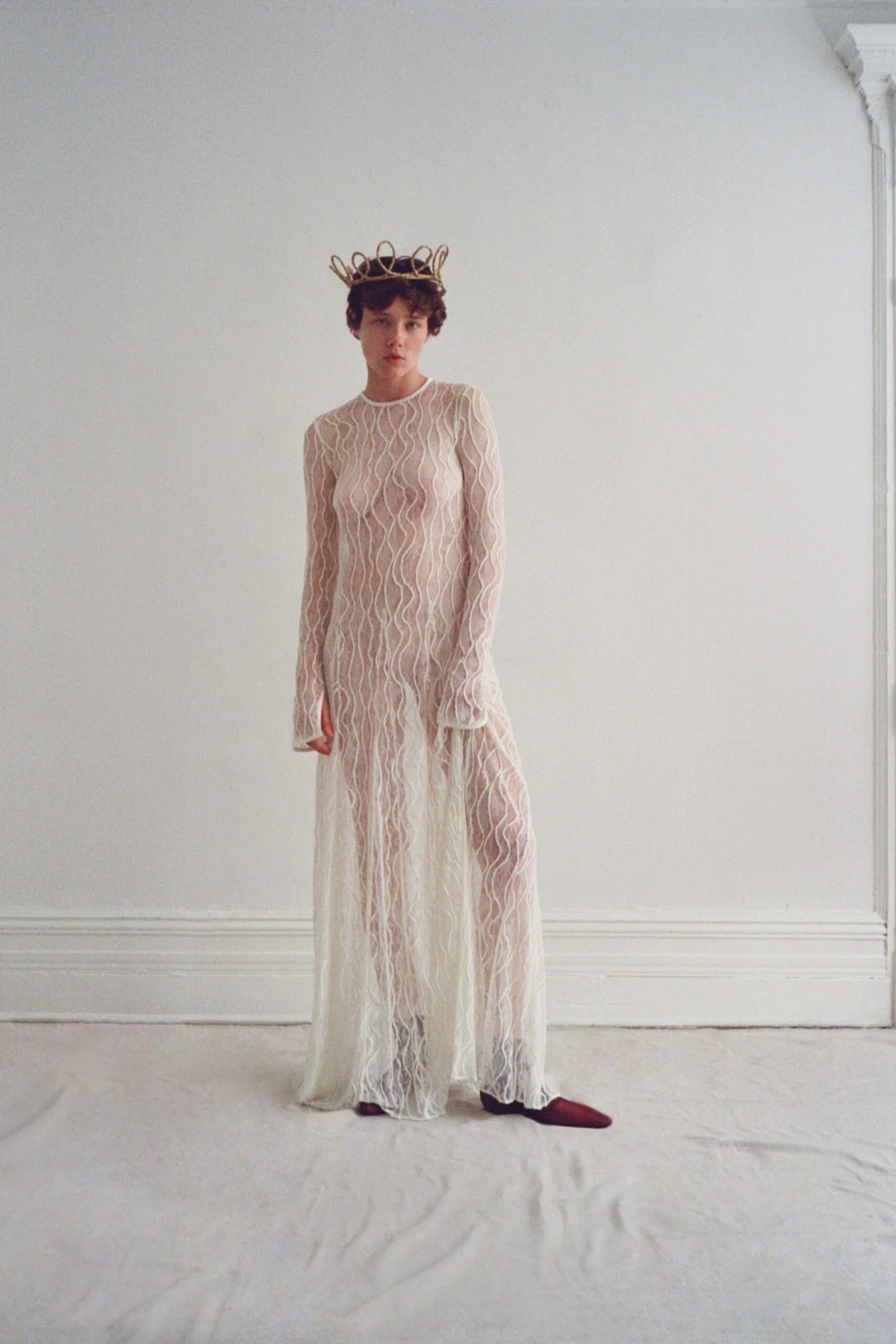
Stephen Biga, the creative force behind the brand Melusine, has unveiled a collection that delves deep into the rich tapestry of the Middle Ages, drawing inspiration from the enchanting legend of Melusine, a mythical water nymph he encountered during a visit to the Metropolitan Museum of Art. This encounter, rooted in the 14th-century French narrative recorded by Jean d’Arras, serves as the philosophical bedrock for a brand that seeks to translate historical romance into wearable art. The tale of Melusine, a nymph who married a mortal on the condition of never witnessing her bathing, only to transform into a dragon upon the breach of this pact, offers a complex narrative of secrecy, love, and inevitable transformation. Biga, a graduate of Parsons School of Design with a pedigree forged through apprenticeships at Rodarte, Proenza Schouler, and Gabriela Hearst, possesses a unique ability to distill such intricate historical accounts into a compelling aesthetic that resonates with contemporary fashion sensibilities. His design filter, described as akin to the stained-glass windows of a Gothic cathedral, imbues his creations with a spiritual and artistic gravitas, effectively bridging the gap between historical allegory and modern sartorial expression. The brand’s conceptual framework, therefore, is not merely about historical homage but about extracting the enduring essence of romance and chivalry, juxtaposing the perceived vulnerability of "lovely ladies" with the stoicism of "gallant knights."
This season, Biga pivots from the unicorn tapestries that informed his Fall collection, turning his gaze to the stark and powerful imagery of Theodore Dreyer’s 1928 silent film, The Passion of Joan of Arc. This cinematic masterpiece, renowned for its visceral portrayal of faith and martyrdom, has long held a hallowed place in both fashion and popular culture. Joan of Arc, a figure of enduring fascination, has seen a resurgence of interest in recent years, with Hlynur Pálmason releasing his own interpretation of her story last year and Baz Luhrmann reportedly developing a new cinematic venture. Biga’s fascination with the historical figure stems from her profound "he/she aspects" – her unwavering faith and the androgynous, yet powerful, menswear she donned in her pursuit of divine purpose. This duality of strength and vulnerability, faith and defiance, forms a critical undercurrent in the collection, allowing Biga to explore themes of identity and conviction through a modern fashion lens.
The designer’s inherent inclination towards prettiness, a hallmark of his aesthetic, is carefully balanced with a conscious effort to avoid saccharine overtones. This season’s collection introduces a deliberate "disruption" through the strategic use of raw edges, a technique that, while perhaps appearing somewhat deliberate, aims to inject a sense of lived experience and imperfection into the otherwise refined garments. This approach underscores Biga’s intention to move beyond purely idealized beauty towards a more nuanced and relatable aesthetic. A notable example of this edgier sensibility is a jacket constructed from two soft layers of fabric, designed to be paired with the brand’s popular leggings, which feature a distinctive ruffle at the ankle. The introduction of a thin burgundy inner belt on a pair of trousers, creating an effect of the garment seemingly peeling away from the body, is a particularly striking detail. Biga attributes this element to a direct inspiration from "a Thrasher-kind of shoelace skateboarder belt from the ’90s," demonstrating a keen eye for incorporating subcultural references into high fashion. This fusion of historical gravitas with contemporary youth culture elements highlights Melusine’s evolving identity as a brand that is both rooted in tradition and forward-looking in its design philosophy.
Melusine’s commitment to gradual evolution is evident in the continued presence of its signature "chain mail" – a metallic knit fabrication that has become a bestseller in the form of dresses. These pieces, reimagined with new asymmetrical details, continue to showcase the brand’s ability to innovate within its established vocabulary. A cap-sleeve armor top further reinforces the collection’s thematic exploration of strength and protection, offering a contemporary interpretation of medieval weaponry. Perhaps the most captivating piece is a T-shirt and cape hybrid, designed for maximum dramatic impact, embodying the spirit of a modern-day warrior. The collection also features a poetic and highly sought-after blouse, crafted from a print Biga developed from a fabric swatch dating back to the 1700s. This historical textile motif is also applied to a ruched dress, available in a solid hue as well, which elevates the slip dress silhouette to new heights of sophisticated allure. These garments exemplify Biga’s meticulous approach to fabric selection and his ability to imbue historical textiles with a contemporary relevance.
Historical Context and Inspirations
The brand Melusine, established by Stephen Biga, draws its name and foundational mythology from a beguiling water nymph featured in medieval folklore. The tale, first chronicled by French author Jean d’Arras in 1393, recounts Melusine’s marriage to a human who pledged never to witness her bathing. The tragic unraveling of this promise, leading to her transformation into a dragon and subsequent departure, serves as a powerful metaphor for themes of hidden identities, the consequences of broken trust, and the inherent duality of existence. Biga’s encounter with representations of this myth at the Metropolitan Museum of Art sparked a deep artistic connection, leading him to establish Melusine as a brand dedicated to exploring the romantic and chivalric underpinnings of the Middle Ages. This era, often referred to as the Age of Chivalry, is characterized by a complex interplay of courtly love, religious devotion, and martial prowess, all of which find echoes in Biga’s design sensibilities.
The brand’s previous collections have showcased a clear lineage of inspiration. The Fall lineup, for instance, was notably influenced by the imagery of unicorn tapestries, a motif deeply embedded in medieval art and literature, symbolizing purity, grace, and the unattainable. This focus on the fantastical and the ethereal set a precedent for Biga’s exploration of historical narratives through a romantic lens.
The Joan of Arc Influence: Faith, Androgyny, and Rebellion
For the Spring collection, Biga’s inspiration shifts to the compelling figure of Joan of Arc, particularly as depicted in Theodore Dreyer’s seminal 1928 film. The Passion of Joan of Arc is celebrated for its stark realism, its intense focus on the human face, and its powerful portrayal of faith in the face of persecution. Joan of Arc, a national heroine of France, remains one of history’s most enigmatic and inspiring figures. Her story, marked by divine visions, military leadership, and a tragic martyrdom at the stake, has captivated artists, writers, and filmmakers for centuries.
Biga’s interest in Joan of Arc is multifaceted. He is drawn to her unwavering faith, a conviction that allowed her to defy societal norms and lead armies. Furthermore, her adoption of menswear, a practical choice for a soldier but also a symbolic act of challenging gendered expectations, resonates with Biga’s exploration of the "he/she aspects" of the figure. This duality of strength, traditionally associated with masculinity, and the spiritual devotion often linked to femininity, provides a rich source of inspiration for a collection that seeks to blur traditional boundaries. The contemporary resurgence of interest in Joan of Arc, evidenced by recent film projects, underscores her enduring relevance as a symbol of courage, conviction, and rebellion against oppressive forces.
Design Innovations and Materiality
Stephen Biga’s design philosophy at Melusine is characterized by a meticulous attention to detail and a sophisticated understanding of fabric manipulation. While the brand is recognized for its inherent prettiness, Biga actively works to temper this with elements of grit and unexpectedness, ensuring his creations possess a depth that transcends mere aesthetic appeal.
The introduction of raw edges in the Spring collection marks a departure from purely pristine finishes, offering a visual texture that suggests organic wear and a connection to the raw materials of creation. This technique, while appearing deliberate, is intended to evoke a sense of authenticity and imperfection, mirroring the complexities of historical narratives and the human experience.
The collection features innovative garment constructions, such as a jacket composed of two distinct, soft fabric layers. This design element offers a contemporary take on layering and texture. It is often paired with Melusine’s signature leggings, which are distinguished by a delicate ruffle at the ankle, adding a touch of feminine detail to an otherwise utilitarian piece.
A particularly striking detail is observed in a pair of trousers featuring a thin, burgundy inner belt. This design choice creates an optical illusion, suggesting the garment is partially detached or "peeling off" the body. Biga cites inspiration for this detail from the utilitarian belts worn by skateboarders in the 1990s, a nod to subcultural style that he artfully integrates into a high-fashion context. This approach demonstrates Biga’s ability to draw from diverse sources of inspiration, from historical epics to contemporary street style.
The brand’s enduring success is also attributed to its signature "chain mail" dresses, crafted from a metallic knit fabric. These pieces, which have become a bestseller, are reinterpreted each season with updated asymmetries and detailing, showcasing Melusine’s commitment to refining its core aesthetic. This season also introduces a cap-sleeve armor top, a subtle yet powerful nod to medieval protective wear, recontextualized for the modern wardrobe.
The collection’s emphasis on statement pieces is evident in a T-shirt and cape hybrid, designed to create a dramatic and impactful silhouette. This garment embodies a sense of theatricality and empowerment, suitable for making a strong sartorial declaration.
Further enhancing the collection’s historical resonance is a blouse made from a print derived from a 1700s fabric swatch. This historically informed textile is also applied to a ruched dress, which offers a sophisticated interpretation of slip dressing. The dress is available in both a patterned and solid rendition, demonstrating Biga’s versatility in presenting his designs. These pieces underscore Melusine’s dedication to sourcing and reinterpreting historical textiles, infusing them with contemporary relevance and artisanal craftsmanship.
Brand Evolution and Market Position
Melusine, under Stephen Biga’s direction, is charting a course of deliberate and thoughtful evolution. The brand’s philosophy centers on a slow, organic growth, allowing each collection to build upon the established foundations of the previous ones. This approach is not only reflective of Biga’s personal creative process but also strategic in establishing a distinct and recognizable brand identity within the competitive fashion landscape.
The continued presence and reinvention of Melusine’s popular "chain mail" knit dresses underscore the brand’s ability to identify and capitalize on signature pieces. These garments, which have garnered a loyal following, are consistently re-examined and updated with new asymmetries and design elements. This strategy ensures that core offerings remain fresh and desirable while reinforcing the brand’s recognizable aesthetic. The introduction of pieces like the cap-sleeve armor top and the T-shirt/cape hybrid further demonstrate an expansion of the brand’s conceptual vocabulary, moving beyond its established strengths to explore new forms of sartorial expression that align with its historical and thematic inspirations.
Biga’s ability to seamlessly integrate diverse inspirations – from medieval folklore and Renaissance textiles to 1990s subcultures and cinematic masterpieces – positions Melusine as a brand that offers intellectual depth alongside aesthetic appeal. This multifaceted approach is crucial in attracting a discerning clientele that values not only design but also the narrative and conceptual underpinnings of their clothing choices.
The fashion industry, particularly in the realm of luxury and designer wear, is increasingly looking towards brands that can offer a compelling story and a unique perspective. Melusine, by grounding its collections in rich historical narratives and translating them through a modern, romantic, and sometimes rebellious lens, is well-positioned to capture the attention of consumers seeking more than just ephemeral trends. The brand’s commitment to artisanal craftsmanship, evident in the meticulous fabric selection and intricate detailing, further solidifies its place in a market that increasingly values quality and substance.
The implications of Biga’s approach extend beyond individual collections. By consistently drawing from historical wells of inspiration and reinterpreting them for a contemporary audience, Melusine contributes to a broader conversation about the enduring relevance of historical aesthetics and narratives in shaping modern culture. This approach not only enriches the fashion landscape but also offers consumers a way to connect with history through wearable art, fostering a deeper appreciation for the past while embracing the present. The brand’s measured pace of evolution suggests a long-term vision, aiming to build a legacy rather than chasing fleeting market demands. This commitment to thoughtful development and conceptual depth is likely to ensure Melusine’s continued success and influence in the years to come.
