

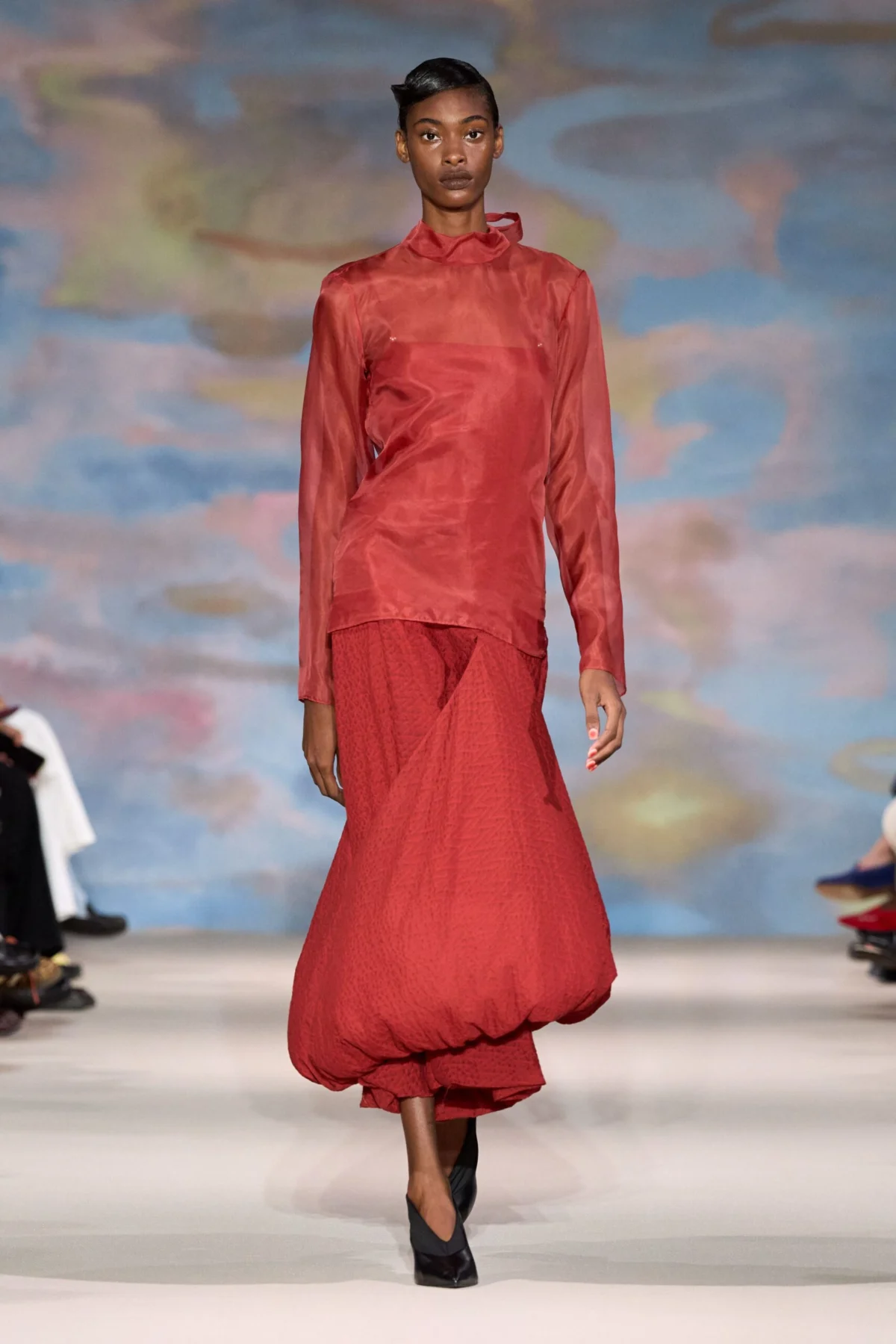
Priya Ahluwalia’s latest collection, unveiled in the opulent basement of the Rosewood London, was a testament to her relentless drive and profound artistic vision. Speaking after the show, Ahluwalia articulated her ethos: "I’m going to hustle as much as I can to make my dreams come true. Basically, I think that’s all you can do." This sentiment resonated through every meticulously crafted piece, a collection that not only showcased her design prowess but also delved into the rich tapestry of Pan-African history and identity. The presentation was a carefully orchestrated symphony of brand collaborations and curated experiences, featuring a notable partnership with Puma, whose athletic wear was integrated seamlessly into Ahluwalia’s aesthetic. The runway itself was transformed into an immersive environment, adorned with dreamy, custom-designed wallpaper by Calico, a visual extension of the collection’s narrative. The luxurious setting of the Rosewood London provided a sophisticated backdrop, while complimentary low-sugar sodas by Poppi added a touch of fruity refreshment, underscoring a conscious approach to modern event planning. Despite the layered sponsorship and elaborate staging, the fashion itself stood firm, a powerful embodiment of Ahluwalia’s undeniable talent.
The Genesis of Design: Festac ’77 as a Muse
The collection’s narrative anchor was an arresting abstract print, a dynamic interplay of red and green against a crisp white background. This distinctive motif graced an array of garments, including a striking off-the-shoulder wiggle dress, a deconstructed soccer jersey, and a coordinated Bermuda shorts and shirt ensemble. Ahluwalia revealed that this print drew its inspiration from the very essence of the venue’s architectural past, specifically from aerial photography and floor plans of the structures erected for Festac ’77.
Festac ’77, formally known as the Second World Black and African Festival of Arts and Culture, was a landmark event held in Lagos, Nigeria, in January 1977. This month-long festival was a monumental gathering, bringing together approximately 16,000 artists, intellectuals, and cultural practitioners from across the Black diaspora. Its primary objective was to celebrate and promote Black and African culture, foster unity, and assert a collective identity on a global stage. The festival encompassed a vast spectrum of artistic expressions, including music, dance, literature, visual arts, and theater, drawing participants from over 56 African nations and the diaspora. Photographs from the era vividly capture the vibrant atmosphere, depicting a period of immense cultural exchange and intellectual ferment. Festac ’77 is widely regarded as one of the most significant coalescences of Pan-African expression, a powerful demonstration of cultural solidarity and artistic achievement. It is within this vibrant and historically significant context that Priya Ahluwalia envisioned her collection, exploring the potent intersection of revelry and resistance.
Intertwining Celebration and Resistance: A Visual Dialogue
Ahluwalia’s research extended beyond architectural plans, delving into the socio-political landscape that informed Festac ’77 and the broader Black liberation movements of the era. Her exploration included a careful study of candid photographs of Black Panther members "off duty." This intimate glimpse into the lives of activists outside their public roles informed the collection’s silhouette and styling. The influence is evident in the sharp, angled berets that crowned models’ heads, a subtle nod to revolutionary iconography, paired with unexpectedly fluid, double-layered suiting and slouchy, top-stitched denim. These pieces spoke to a duality of purpose – the readiness for action and the comfort of personal expression.
The designer masterfully metabolized the political undercurrents of resistance into wearable postures of pleasure and celebration. This was achieved through the introduction of garments that evoked a sense of joyful liberation. Fringed dresses swayed with an undeniable rhythm, echoing the spirit of celebration. Soccer tops, a recurring motif that signifies both global sport and cultural identity, were reinterpreted with an artistic flair. For men, tuxedo-hemmed tunics offered a sophisticated blend of formalwear and casual ease, while for women, minidresses exuded playful confidence. The collection also featured loosely attractive, casualized military shirting, a subtle reference to the uniform, but reimagined for everyday wear and personal empowerment. Dresses crafted from silk organza were sculpted into striking, sculptural silhouettes, or artfully divided at the midriff, evoking the formal uniforms associated with celebratory occasions, effectively blurring the lines between everyday wear and occasion wear.
The Ahluwalia Woman: A Multitude of Experiences
When asked about the archetype of the "Ahluwalia girl," Priya Ahluwalia articulated a philosophy of radical inclusivity. "Sometimes people say to me, ‘Who is the Ahluwalia girl?’ And I’m like, well, it’s a myriad of people and their own experiences," she stated. This profound understanding of individuality and the richness of diverse lived experiences served as the guiding principle for the collection. The result was a body of work that was simultaneously broad in its conceptual scope and remarkably specific in its stylistic voice.
This plurality of identity was not merely an abstract concept but was visually manifested through the varied silhouettes, fabric choices, and styling. The collection embraced a spectrum of expressions, from the bold and assertive to the subtly nuanced, allowing each wearer to find a personal connection. The use of varied fabrics, from structured suiting to ethereal silk organza, further emphasized this breadth, catering to different moods and occasions. The integration of athletic-inspired pieces alongside more formal attire underscored Ahluwalia’s belief that modern dressing is about fluidly navigating different aspects of one’s life and identity.
Supporting Data and Broader Context
The influence of Festac ’77 cannot be overstated in understanding the cultural significance of Ahluwalia’s collection. The festival was a pivotal moment in the post-colonial era, aimed at solidifying cultural independence and fostering a sense of shared heritage among people of African descent. The estimated budget for Festac ’77 was around $200 million (in 1977 USD), a substantial investment reflecting the importance placed on cultural diplomacy and artistic expression by participating nations. The festival’s success was measured not only in attendance but also in the lasting impact it had on artistic movements and cultural dialogues across the continent and in the diaspora. It served as a powerful counter-narrative to colonial perceptions of African culture and provided a platform for artists to showcase their work to a global audience.
The Puma collaboration further contextualizes Ahluwalia’s approach within the contemporary fashion landscape. Puma, a global sportswear giant, has increasingly engaged with designers who bring a unique cultural perspective to their products. This partnership allows Ahluwalia’s design language to reach a wider audience, bridging the gap between high fashion and accessible streetwear. The success of such collaborations is evident in the growing market for designer-infused athletic wear, a trend that has seen significant growth in recent years, with market analysts projecting continued expansion in this segment.
Analysis of Implications and Future Trajectory
Priya Ahluwalia’s collection at the Rosewood London represents more than just a seasonal offering; it signifies a deliberate and thoughtful engagement with history and identity. By drawing inspiration from Festac ’77, Ahluwalia positions herself as a designer who is not only attuned to current trends but also deeply rooted in cultural heritage. This approach has significant implications for the fashion industry, encouraging a more nuanced and inclusive narrative that moves beyond superficial aesthetics.
The successful integration of multiple brand collaborations, from Calico’s wallpaper to Poppi’s beverages and Puma’s sportswear, suggests a forward-thinking model for fashion presentations. This integrated approach creates a richer sensory experience for attendees and potential consumers, aligning with the growing trend of experiential marketing. It also demonstrates a strategic understanding of how to leverage partnerships to amplify brand messaging and reach diverse demographics.
Furthermore, Ahluwalia’s commitment to exploring themes of "revelry and resistance" through her designs speaks to a broader cultural moment where fashion is increasingly used as a tool for social commentary and personal expression. The collection’s ability to resonate with a "myriad of people and their own experiences" underscores the power of authentic storytelling in fashion. This focus on plurality and individual experience is likely to be a key driver in shaping future fashion narratives, as consumers seek brands that reflect their values and diverse identities. The enduring relevance of Festac ’77 as a touchstone for Pan-African identity ensures that Ahluwalia’s work will continue to inspire and resonate, solidifying her position as a significant voice in contemporary fashion. Her hustle, it seems, is not just about making dreams come true, but about weaving them into a rich and meaningful tapestry that reflects the world around us.
