

The realm of professional ski instruction is witnessing a significant evolution in pedagogical strategies, with a new dynamic interpretation of the Static, Simple, Complex, Applied (SSCA) framework emerging as a key tool for instructors. Spearheaded by seasoned educators J. Scott McGee and Jacob Crawford, this refined methodology, detailed in the Fall 2025 issue of 32 Degrees, offers a more flexible and student-centric approach to diagnosing movement patterns and structuring learning progressions. This innovation promises to address long-standing challenges faced by instructors in tailoring lessons to individual student needs, ultimately enhancing the learning experience and accelerating skill acquisition on the slopes.
The Evolving Landscape of Ski Pedagogy
Professional ski and snowboard instruction has a rich history, evolving from rudimentary "follow-the-leader" methods to highly sophisticated, science-backed pedagogical models. Organizations like the Professional Ski Instructors of America and American Association of Snowboard Instructors (PSIA-AASI) play a pivotal role in setting industry standards, developing educational resources, and certifying instructors. Their Teaching Snowsports Manual stands as a foundational text, providing comprehensive guidance on everything from safety and group management to advanced movement analysis and technical skills.
One of the persistent challenges for instructors is the sheer volume of drills, games, and activities available. While a "veritable cornucopia" of options exists, as McGee and Crawford articulate, the difficulty lies in selecting the most effective intervention for a given student at a specific moment. Instructors often struggle to pinpoint the exact movement deficiency, connect it to a performance outcome, and then devise a clear, progressive path for change. This complexity is compounded by the diverse learning styles, physical capabilities, and motivational levels present within any student group. The traditional approach, while structured, sometimes lacked the inherent flexibility to adapt seamlessly to these dynamic on-hill realities.
Understanding the Traditional SSCA Framework
The Static, Simple, Complex, Applied (SSCA) model, as originally outlined in the Teaching Snowsports Manual, provides a structured, linear progression for introducing new movements. Each phase builds upon the last, gradually increasing the complexity and contextual relevance of the skill being taught.
-
Static Phase: This initial stage focuses on introducing a movement without the added challenge of sliding on snow. Students practice the new motion while standing still, allowing them to concentrate solely on the sensation and mechanics of the movement. This minimizes cognitive load by removing variables such as balance, speed, and gravitational forces, making it easier for students to internalize the desired body actions. An example might be practicing ankle flexion or knee angulation while standing stationary on flat ground.
-
Simple Phase: Once the student has a basic understanding and feel for the movement in a static environment, the simple phase introduces it while sliding on snow. This typically involves activities like traverses, straight runs, or single, isolated turns. The goal here is to integrate the new movement into a basic sliding context without the added complexity of linking multiple turns. This allows students to gain comfort and initial proficiency with the movement under controlled, predictable conditions.
-
Complex Phase: In this stage, the new movement is integrated into linked turns. This is where students begin to practice and gain ownership of the skill within a more realistic skiing scenario. Drills are often employed here to emphasize the specific movement pattern within a series of turns, helping to solidify the neurological pathways and motor patterns required for consistent execution.
-
Applied Phase: The final phase brings the learning experience full circle. Students practice the newly acquired movement in their "normal" skiing context, within terrain that reinforces the learning from the previous stages. This ensures that the skill is not just learned in isolation but can be effectively applied and adapted across various conditions and situations, becoming an integral part of their overall skiing repertoire.
The traditional SSCA progression offers a robust, systematic method for skill development. Its linear nature provides a clear roadmap for instructors and students alike, ensuring that foundational elements are in place before advancing to more challenging applications. However, as McGee and Crawford highlight, a more dynamic interpretation can unlock even greater efficiency and adaptability in the teaching process.
The Dynamic SSCA: A Paradigm Shift in Instruction
McGee and Crawford’s proposed dynamic view of the SSCA phases represents a significant refinement, transforming the framework from a rigid linear sequence into a set of flexible lenses and building blocks. This approach acknowledges that learning is rarely a purely linear process and that instructors often need to diagnose and intervene at different points in the learning cycle. The core of their innovation lies in using the SSCA phases not just for progression, but also as powerful analytical tools.
Movement Analysis Through Dynamic SSCA Lenses
Traditionally, movement analysis (MA) might involve observing a student and then, based on those observations, formulating a teaching plan that starts with the static phase. McGee and Crawford invert this, suggesting that the initial observation for MA should begin with the Applied Phase.
-
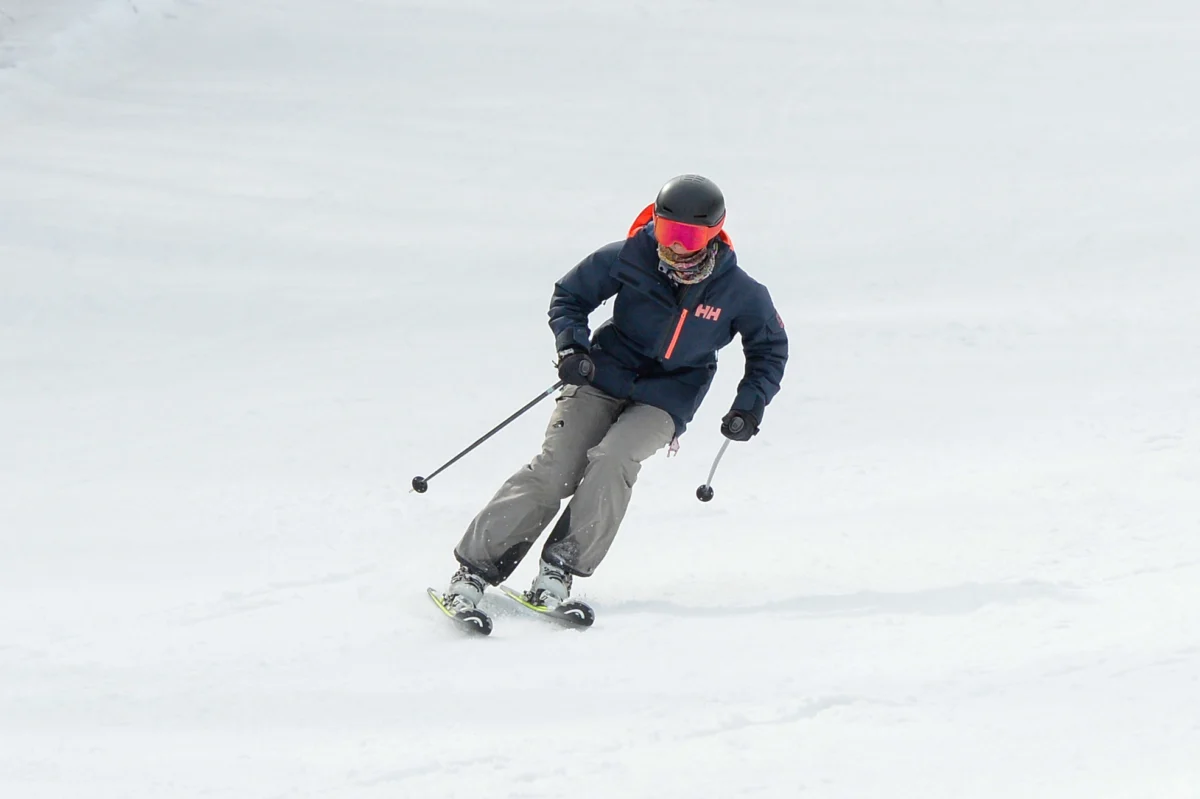
Applied Phase as the Initial Diagnostic Lens: When conducting MA, instructors are essentially observing students performing an applied phase activity. Students are typically skiing the turns they want to improve, in the terrain they wish to master. By observing them in their natural skiing environment – whether it’s basic parallel turns, carving, or bumps – instructors can ensure that their analysis is directly aligned with the student’s stated goals. This holistic view provides crucial context, revealing how various movements interact and contribute to the overall performance outcome. It allows the instructor to identify the most impactful areas for improvement, avoiding the trap of addressing isolated issues that may not be central to the student’s ultimate objective. Furthermore, repeating this "applied" activity at the end of a lesson can powerfully highlight the progress made, providing tangible evidence of improvement and boosting student motivation.
-
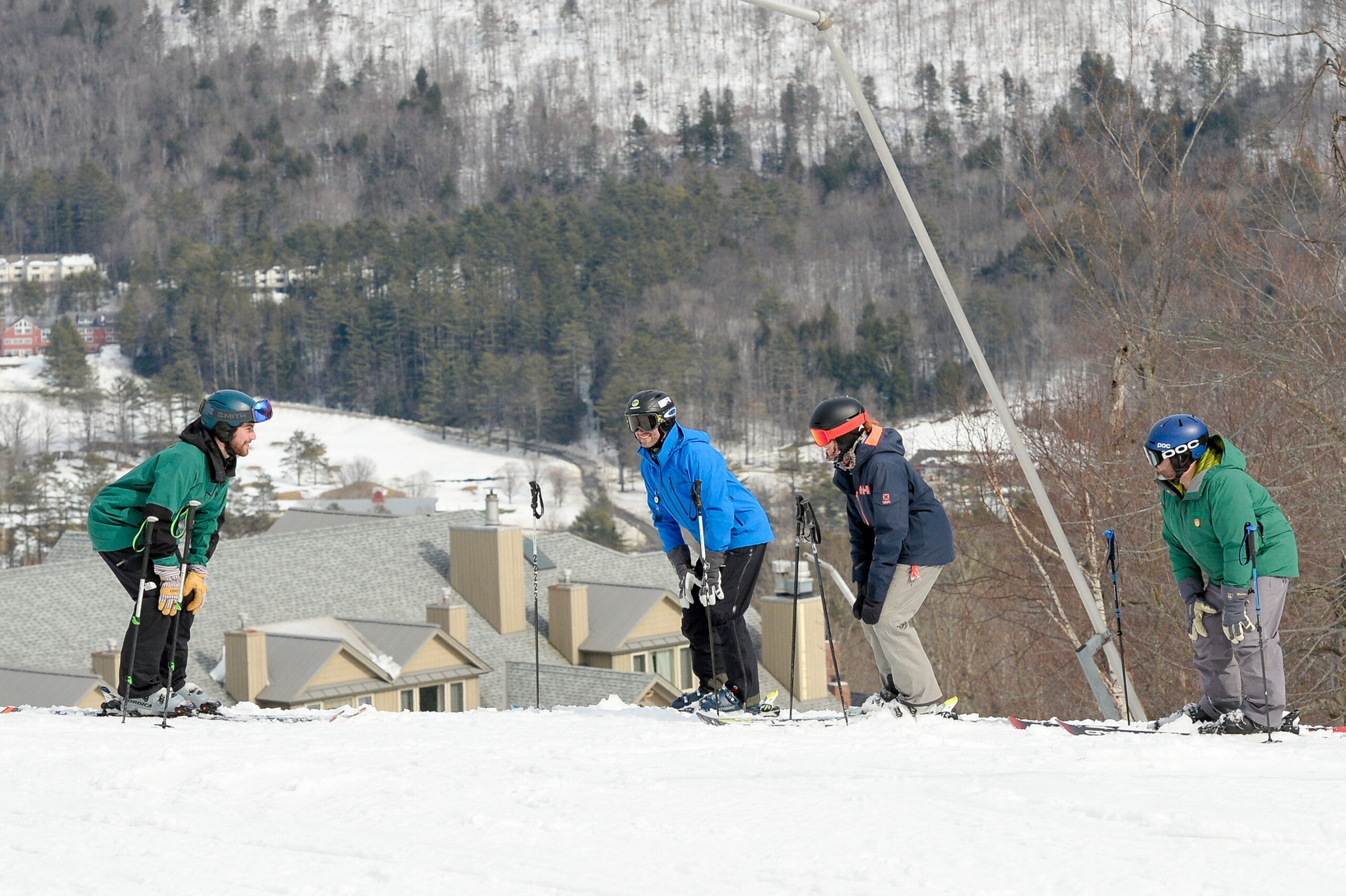
Static Phase as a High-Resolution Diagnostic Tool: While the applied phase helps narrow down the most impactful areas, it often reveals a complex interplay of movements. To achieve higher resolution, McGee and Crawford advocate using the Static Phase as a precise diagnostic lens. The question an instructor should ask is: "Can I replicate this observed movement while standing still, isolating a single cause-and-effect relationship?" If the movement cannot be replicated statically, it suggests that the observation has not yet been reduced to its most fundamental component.
For instance, if a student exhibits uneven edge angles, as illustrated in the example of "Heather" in the original article, an instructor might observe that her legs are not tipped symmetrically. The cause-and-effect relationship between tipping the legs and the resulting edge angles can be precisely demonstrated in the static phase. By standing still and using one’s hands to tip the knees, the instructor can clearly show how this action directly influences the ski’s edge angle. While some movements might require a reduced magnitude or the use of props (like a ski pole or a friend for support) to be demonstrated statically, the principle remains: isolate the movement to understand its singular impact. This static analysis is crucial for identifying the precise motor pattern that needs adjustment, preventing instructors from chasing symptoms rather than root causes. Other examples include:
- Ankle Flexion: To address a student leaning too far back (aft balance), a static drill involving flexing the ankles forward to press against the boot tongues can isolate this movement and its sensation, demonstrating its direct impact on fore-aft balance.
- Rotary Movements: If a student struggles with turn initiation, practicing isolated rotary movements of the legs and feet while standing still can highlight the direct link between these actions and how the skis might pivot or turn.
This dynamic MA process, moving from the broad context of the applied phase to the granular detail of the static phase, enables instructors to identify the most critical movement to address with unparalleled precision.
Structuring Instruction with Dynamic SSCA Building Blocks
Once the specific movement for change has been identified through this dynamic analysis, McGee and Crawford’s approach suggests a flexible sequence for intervention, leveraging the SSCA phases as adaptable building blocks rather than a fixed progression.
-
Complex Phase as the Starting Point for Intervention: Having precisely diagnosed the core movement issue (e.g., inadequate leg tipping for edge angles), the instructor can often jump directly to the Complex Phase for initial intervention. This involves pulling out a drill from their "bag of tricks" that specifically emphasizes the fundamental or movement pattern within a turning context. For example, if the goal is to improve edge angle through leg tipping, a drill like "railroad track arcs" – where skis remain parallel and close together throughout the turn – can be highly effective. This drill forces the student to engage leg tipping and angulation more actively to create edge angle, rather than relying on less efficient movements. By starting here, the student immediately begins to integrate the new movement into a more realistic skiing context, addressing the issue within the flow of linked turns.
-
Simple Phase as the Bridge to Mastery: Following a complex phase drill, the Simple Phase becomes a crucial bridge. If a student struggles to integrate the new movement in linked turns, the complex activity can be reduced to a single turn, a traverse, or a straight run. This simplification helps to clearly connect the specific movement (e.g., leg tipping) to the desired outcome (e.g., higher edge angle) without the added cognitive and physical demands of continuous turn linking. It allows the student to refine the new movement in a less demanding environment, reinforcing the precise motor pattern before reintroducing it into complex turning scenarios. This iterative process of simplifying and then re-complexifying is fundamental to motor learning, ensuring that the skill is mastered incrementally.
-
Returning to the Applied Phase for Integration: After working through the complex and simple phases, the student returns to the Applied Phase to integrate the newly acquired skill into their overall skiing. This could involve skiing familiar terrain, but with a conscious focus on incorporating the learned movement. The cyclical nature of this process allows for continuous assessment and refinement, ensuring that the new skill becomes second nature and transferable across varying conditions.
Pedagogical Principles and Broader Implications
This dynamic SSCA approach is deeply rooted in contemporary pedagogical and motor learning theories. By starting with the applied phase for diagnosis, it aligns with principles of goal-oriented learning and contextual relevance. Students are more engaged when they understand how a specific intervention directly addresses their personal skiing aspirations.
The use of the static phase for high-resolution diagnosis taps into the concept of cognitive load theory, reducing extraneous cognitive load by isolating movements. This allows learners to focus attention on the most critical elements without being overwhelmed by the complexities of dynamic motion. Furthermore, the flexible sequence of intervention—starting with complex and then simplifying—mirrors principles of deliberate practice, where specific skills are targeted, practiced intently, and then integrated. This adaptive structure also caters to diverse learning styles, allowing instructors to adjust the progression based on immediate student feedback and progress.
The implications of McGee and Crawford’s dynamic SSCA model extend beyond individual lessons. For professional ski instructor organizations like PSIA-AASI, this refined methodology offers a powerful framework for enhancing instructor training programs. Emphasizing the analytical power of the SSCA phases can equip instructors with more sophisticated diagnostic tools, leading to more precise and effective teaching. This could translate into:
- Improved Instructor Efficacy: Instructors will be better equipped to identify root causes of movement deficiencies and design targeted interventions.
- Enhanced Student Learning Outcomes: Students are likely to experience faster progress, greater satisfaction, and increased retention in snowsports.
- Greater Adaptability: The flexibility of the dynamic SSCA allows instructors to cater to a wider range of student abilities and learning styles, fostering a more inclusive learning environment.
- Standardization of Excellence: While promoting flexibility, the framework also provides a common language and structure for instructors, fostering a consistent standard of high-quality teaching across the industry.
The article in 32 Degrees serves as a catalyst for discussion and adoption within the professional community. The accompanying "First Chair Podcast" episode, "Build Better Lessons: A Smarter Way to Create Progressions," further amplifies the message, providing a platform for McGee and Crawford to delve deeper into their insights and share practical applications. This multi-platform dissemination strategy ensures that this valuable pedagogical innovation reaches a broad audience of instructors, coaches, and trainers.
Ultimately, the dynamic SSCA framework represents a progressive step in ski instruction. By reframing the traditional model, McGee and Crawford provide instructors with a more agile and effective approach to movement analysis and skill progression. This evolution promises to empower instructors to build better lessons, leading to more profound and lasting improvements for their students on the snow, solidifying the professional standing and educational impact of snowsports instruction for years to come.
