

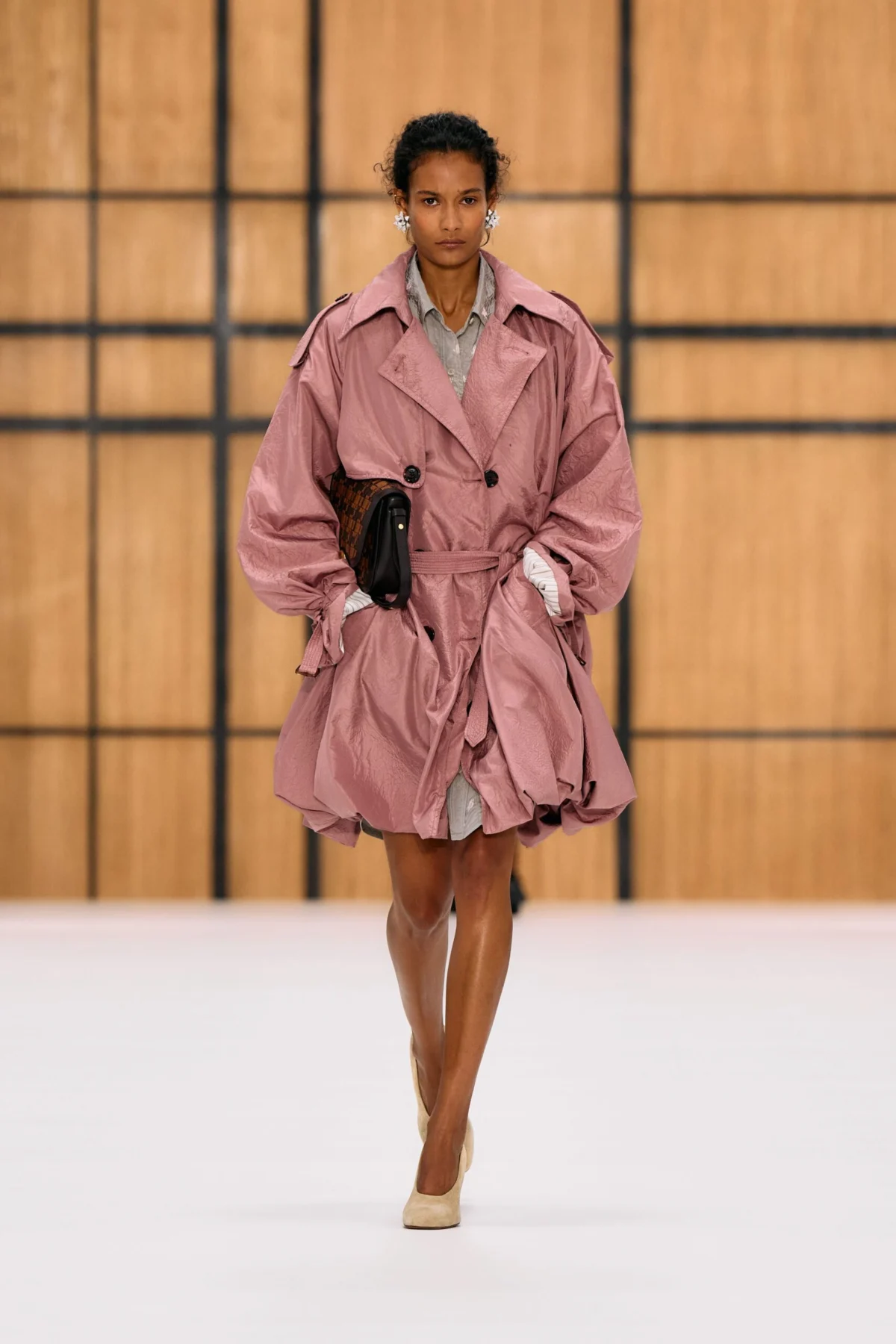
Daniel Lee, the creative force behind Burberry, has steered the iconic British brand into a new era, marked by a deliberate departure from its signature polished perfection. In a collection that celebrated youthful energy and a refreshing embrace of the imperfect, Lee revealed a nuanced vision for Burberry, drawing inspiration from the legendary textile artist Celia Birtwell. The runway debut, held at the esteemed Chelsea College of Arts, underscored a commitment to heritage while injecting a contemporary, art-infused sensibility that resonated throughout the presentation.
A Shift from Polished to Provocative
Lee’s candid admission—"I like when things don’t feel perfect. I like things to feel cool, youthful"—serves as the guiding principle for his latest collection. This philosophical shift is evident in the subtle yet significant details: glimpses of material tarnish, intentional rumples, and a lived-in smudge that contrasts sharply with Burberry’s historical reputation for immaculate sheen. This deliberate imperfection is not merely an aesthetic choice; it’s a strategic move to connect with a contemporary audience that values authenticity and individuality over unblemished flawlessness.
The collection’s youthful exuberance was also personified by the surprise runway appearance of Central Cee, a prominent figure in the UK’s drill music scene. His presence, described as "sagging past in hard Shepherd’s Bush style," injected a raw, street-level cool that mirrored Lee’s broader artistic direction. However, the ultimate subversion of Burberry’s customary self-possession and polish came from an unexpected source: Celia Birtwell, an 85-year-old icon of British fashion, who occupied a coveted front-row seat. Her presence was more than symbolic; it was the artistic bedrock upon which much of the collection was built.
The Celia Birtwell Collaboration: A Meeting of Minds
"She’s the epitome of British fashion," Lee remarked, highlighting Birtwell’s profound influence. Birtwell, alongside her late former husband Ossie Clark, was instrumental in defining the visual texture of fashion in the United Kingdom and beyond during the late 1960s and early 1970s. Her distinctive textile designs became synonymous with an era of creative explosion, imbuing garments with a unique artistic narrative. The choice of Chelsea College of Arts, an institution where Birtwell herself once taught, as the venue for the show was a fitting tribute to her legacy and a testament to the deep artistic connection Lee sought to forge.
Backstage, Lee revealed the genesis of this significant collaboration, stating, "We first met in May. I’ve never really collaborated with anyone on a collection before. It’s difficult—you find it when you find it." This sentiment underscores the rarity and significance of finding a creative partner with whom such a seamless artistic dialogue can occur. He further lauded Birtwell’s prints as "incredible" and "timeless," noting their enduring appeal across generations, stating, "Whether you wear them today or you wore them in the ’70s, they’re amazing." This endorsement speaks to the universal power of Birtwell’s artistic vision.
This collection marked a significant moment for Birtwell’s work on the global fashion stage, with the last notable runway appearance being a brief cameo in Valentino’s Fall 2015 collection, which was largely overshadowed. Lee’s integration of Birtwell’s art was described as "marvelous," particularly the striking face print worn by a male model in look 31. The punchy colors and flattened artistic style of this print, Lee explained, served as a broader inspiration for the collection. This stylistic approach also evoked the iconic "Painted Lady" portrait of Birtwell by David Hockney, a painting that graced the cover of Vogue France in December 1985, further cementing the artistic pedigree of the collaboration.
A Legacy of Artistic Influence
Lee’s embrace of Birtwell’s artistic legacy echoes the precedent set by his predecessor at Burberry, Christopher Bailey. Bailey, known for his deep appreciation of David Hockney’s personal style and color palette, orchestrated several highly acclaimed Burberry shows inspired by the artist. In the stark, white expanse of the fashion show venue, Birtwell’s influence allowed Lee to deviate from the highly controlled gabardine aesthetic that had characterized his previous seasons, even as Burberry has strategically focused on commercial consolidation.
Merchandising with a Human Touch
While the collection was undeniably "remorselessly merchandised," a strategic imperative for a luxury house like Burberry, the focus shifted from an almost singular emphasis on the trench coat to a more expansive and confident aesthetic. The "rumple" and roughened textures, initially noted as a departure from perfection, became the source of this newfound confidence. Shirting and shorts crafted from taffeta, intricately embroidered with Birtwell’s floral motifs, featured prominently. Taffeta trenches with artfully puffed hems and denim pieces in washed pink, trench taupe, and black all possessed a tactile quality that invited touch and engagement. Even the white edging of vulcanized sneaker soles bore a subtly smudged finish, reinforcing the collection’s embrace of a less-than-pristine reality.
Reimagining the Iconic Check
The collaboration saw the iconic Burberry check reimagined as a canvas for Birtwell’s vibrant florals, which flourished in a multitude of richly colored arrangements. These floral motifs, along with Birtwell’s distinctive doodled faces, were later translated into three-dimensional forms, appearing as appliquéd badges and intricate beaded embellishments. This artistic layering resulted in moments of captivating color, such as the swimming-pool blue of the parka in look 31 and the sunset orange of the blueberry-embellished trench in look 47.
The collection also showcased a broader approach to styling and reference. The footwear, a notable highlight of the show, ranged from ’70s-reminiscent strapped clogs to modern climbing moccasins, paired unexpectedly with chiffon gowns. This juxtaposition of styles—technical wear with delicate dresses, rugged footwear with ethereal fabrics—further underscored the collection’s playful and experimental spirit.
The Emotional Resonance of Imperfection
Lee articulated his design philosophy, stating, "I think when we’re buying a luxury garment, a luxury product, we’re all searching for something that we have an emotional attachment to. It’s not a necessity product: it’s an emotional thing. For me, the ruffles and the imperfections, they ultimately make things feel human." This statement encapsulates the core of his vision for Burberry: to create luxury that resonates on a deeper, emotional level, imbued with a sense of individuality and human connection.
The collaboration with Celia Birtwell served as a potent catalyst, channeling Lee’s creative energy in a new and fertile direction. It demonstrated that true luxury can be found not in sterile perfection, but in the richness of artistic expression, the warmth of human touch, and the enduring beauty of imperfection. The collection signifies a confident stride forward for Burberry, one that honors its heritage while boldly embracing a future defined by art, authenticity, and a touch of delightful disarray.
Supporting Data and Context
The fashion industry, particularly the luxury segment, is increasingly seeking ways to connect with consumers on an emotional level. Market research consistently shows that millennials and Gen Z, key demographics for brands like Burberry, prioritize authenticity, sustainability, and brands that align with their values. A 2023 report by Bain & Company projected that the personal luxury goods market would continue its growth trajectory, with a significant portion of this growth driven by younger consumers who are less concerned with traditional status symbols and more interested in unique experiences and personal expression.
Burberry, under Lee’s direction, appears to be tapping into this evolving consumer landscape. The brand has historically held a strong position in the outerwear market, with its trench coat being a globally recognized icon. However, diversification and a refreshed brand identity are crucial for sustained relevance. The integration of artistic collaborations, like the one with Celia Birtwell, allows Burberry to transcend its product-centric image and position itself as a curator of culture and art, thereby fostering deeper emotional connections with its audience.
Chronology of Influence
- Late 1960s – Early 1970s: Celia Birtwell, in collaboration with Ossie Clark, defines a generation’s aesthetic with her distinctive textile designs. Her work becomes synonymous with the vibrant, artistic spirit of the era.
- 1985: David Hockney’s portrait of Celia Birtwell, "Painted Lady," is featured on the cover of Vogue France, cementing her status as a muse and an artistic icon.
- 2015: A minor runway appearance of Birtwell’s work at Valentino’s Fall collection is noted, but largely overshadowed by other events.
- Early 2023: Daniel Lee reportedly meets Celia Birtwell, initiating discussions for a potential collaboration.
- May 2023: Lee confirms the commencement of the collaboration, expressing the rarity and significance of finding such a creative partner.
- September 2023: The Burberry Autumn/Winter 2024 collection, heavily influenced by Celia Birtwell’s artistic contributions, debuts at Chelsea College of Arts.
Broader Impact and Implications
The success of Daniel Lee’s latest collection at Burberry has implications that extend beyond the immediate fashion cycle. By embracing imperfection and forging a genuine artistic partnership, Lee has signaled a potential shift in the luxury fashion paradigm. This approach can foster greater brand loyalty by creating products that feel more personal and less mass-produced, even within a large commercial framework.
Furthermore, this collaboration highlights the enduring power of heritage artistry in contemporary design. It demonstrates that drawing inspiration from established artists can lend credibility and depth to a brand, while simultaneously introducing that artist’s legacy to a new generation of consumers. For Burberry, this strategy not only revitalizes its brand image but also strengthens its connection to British culture and its artistic roots, a narrative that resonates strongly with both domestic and international audiences. The emphasis on "human" elements like ruffles and imperfections suggests a move towards more relatable and emotionally resonant luxury, a trend that is likely to gain momentum in the coming seasons.
