

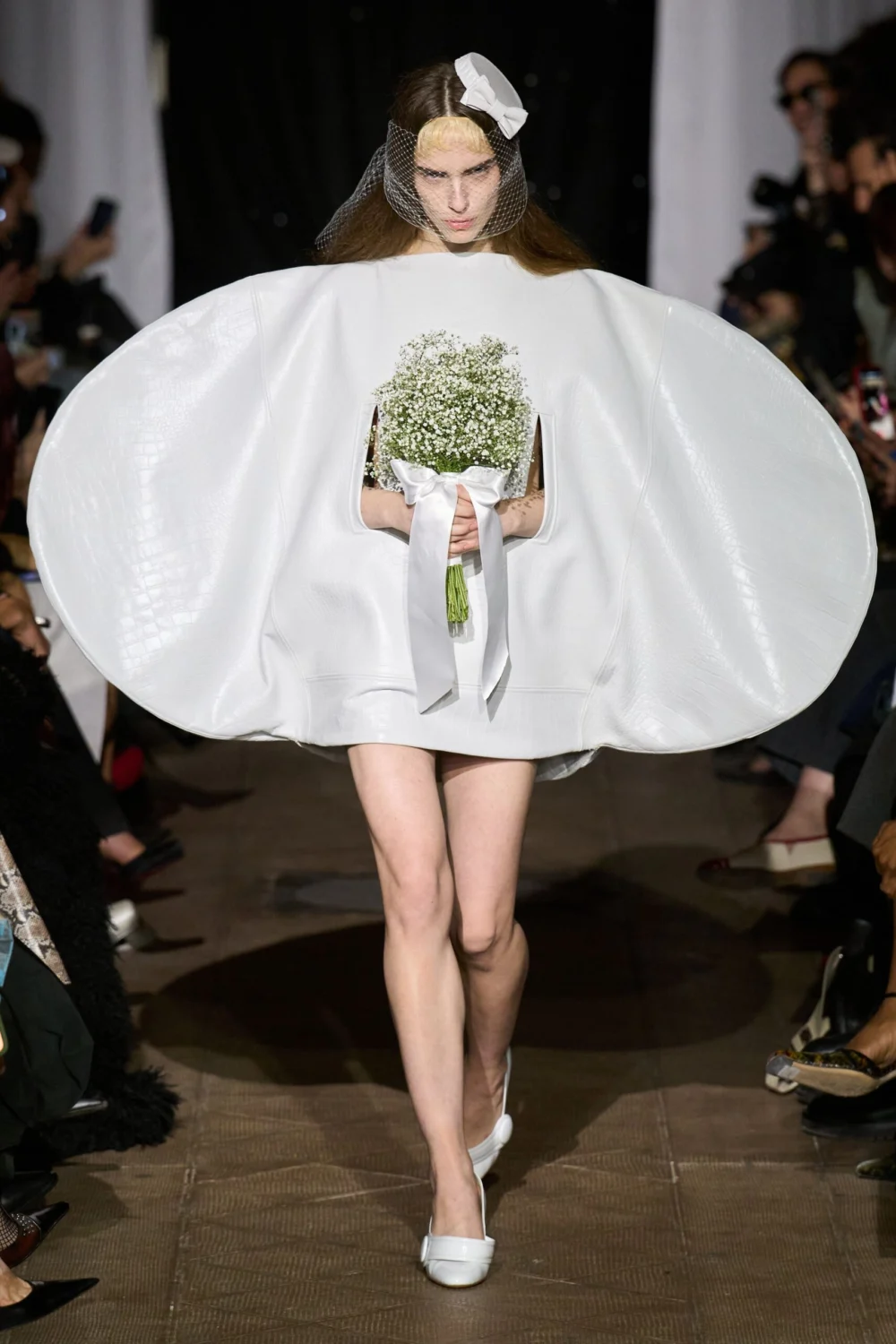
The hallowed grounds of the Église Protestante Unie de l’Oratoire, typically a sanctuary for quiet contemplation and spiritual reflection, transformed into a vibrant, avant-garde runway on Sunday evening as Vaquera unveiled its latest collection. Far from a solemn service, the event was a fervent testament to the designers Bryn Taubensee and Patric DiCaprio’s singular vision, drawing a devoted congregation of fashion aficionados. This duo has cultivated a reputation for attracting a crowd that embraces audacious self-expression, where no accessory is too extravagant and no garment too daring to be worn with uninhibited confidence. Taubensee and DiCaprio themselves are deeply immersed in the world of fashion, self-described as purveyors of "fashion fan fiction," a concept that resonates powerfully in their meticulously crafted collections. This season, their homage to fashion history was less explicit than their Fall 2018 show, where they directly celebrated the legacies of Vivienne Westwood, Miguel Adrover, and André Walker. Yet, for those with a keen eye for sartorial lineage, born within the 20th century’s rich fashion tapestry, the echoes of iconic designers and moments were unmistakably present.
The show’s commencement immediately evoked the bold, often provocative, aesthetic of Gucci under Tom Ford’s direction. The grand entrance of a bridal figure set the stage, but it was the subsequent model who truly captured attention. Clad in a daringly low-cut thong, her pubic hair meticulously sculpted into a vivid, fluorescent green heart—or perhaps an expertly applied merkin—she presented a striking visual. This bold statement served as a potent callback to the indelible imagery of Tom Ford’s era at Gucci, specifically referencing advertisements that pushed boundaries and challenged conventional notions of sensuality. The daring presentation immediately brought to mind the revolutionary spirit of Rudi Gernreich and his groundbreaking 1964 monokini, a garment that, even over six decades later, retains its capacity to shock and provoke discourse on body politics and societal norms.
Further into the collection, subtle yet unmistakable nods to pivotal moments in fashion history emerged. A 1965 Yves Saint Laurent haute couture cocoon dress, a silhouette that redefined elegance and volume, was reinterpreted through Vaquera’s lens. Similarly, Nicolas Ghesquière’s transformative Fall 2006 Balenciaga collection, which masterfully revisited Cristóbal Balenciaga’s pioneering experiments in form and structure, seemed to inspire elements of the collection. One particularly striking piece, an inverted triangle top adorned with a prominent bow tie, bore a clear resemblance to the distinctive style of the otherworldly performer Klaus Nomi. Nomi, known for his white-face makeup and avant-garde stage presence, projected an image that was both alien and captivating. Alternatively, this aesthetic could also be traced back to William Klein’s iconic 1966 film Qui êtes-vous, Polly Maggoo?, a cinematic exploration of the fashion world that provided a rich source of visual inspiration for the models’ theatrical face paint.
Beyond these specific historical references, a prevailing theme of daring skin exposure permeated much of the collection. Trousers with exaggerated hip cutouts were paired with trompe l’oeil thongs, creating an illusion of uninhibited freedom. Leather dresses and skirts featured strategically placed zippers that artfully revealed glimpses of skin, tracing the curves of hips and breasts. The designers employed the motif of the harlequin, with exposed flanks appearing on lustrous duchesse satin dresses, adding a playful yet provocative dimension.
In a statement released by Taubensee and DiCaprio, they articulated the collection’s core philosophy: “The collection confronts the tension between perfection and chaos.” They further elaborated, stating, “Its cast of characters all seem to suggest that the most covetable clothes for your future are those that mirror our fractured present.” This sentiment underscores Vaquera’s commitment to reflecting the complexities and fragmentation of contemporary society through their designs, while simultaneously acknowledging that the most original and enduring ideas often draw from the past. The collection’s ability to synthesize historical influences with a forward-looking perspective highlights the enduring relevance of groundbreaking fashion concepts.
The Vaquera Phenomenon: A Deeper Dive
Vaquera, established in 2013, has rapidly ascended the ranks of the fashion industry, carving out a niche for itself with its provocative designs and a fearless approach to challenging conventional beauty standards. Founded by Bryn Taubensee and Patric DiCaprio, both graduates of the Fashion Institute of Technology (FIT), the brand emerged from a desire to subvert the polished, often unattainable ideals prevalent in high fashion. Their collections are characterized by a deconstructive aesthetic, playful yet potent social commentary, and an embrace of what might be considered "ugly" or unconventional by mainstream standards.
The designers’ background is crucial to understanding their creative output. DiCaprio has spoken about growing up in a working-class environment in Staten Island, a contrast to the affluent circles often associated with fashion. Taubensee, hailing from a more suburban upbringing, shares a similar sentiment of observing and reinterpreting societal norms through a critical yet imaginative lens. This grounding in lived experience fuels their ability to infuse their designs with a raw authenticity that resonates with a growing segment of the fashion-conscious public.
Their early shows, often held in unconventional venues, further cemented their reputation for creating immersive and thought-provoking experiences. These events were not merely about showcasing clothing; they were about building a community and fostering a dialogue around fashion’s role in identity and expression. The "fashion fan fiction" concept, which gained particular traction around their Fall 2018 collection, encapsulates this approach. It signifies a deep engagement with fashion history, not as a rigid set of rules to be followed, but as a rich source of inspiration to be creatively recontextualized and reimagined. This iterative process of homage and subversion has become a hallmark of the Vaquera brand.

Historical Echoes in Modern Design
The references observed in the Vaquera Fall 2018 collection, and indeed in many of their subsequent works, are not mere appropriations but rather sophisticated dialogues with fashion’s past. The deliberate evocation of Vivienne Westwood, a titan of punk fashion and a relentless provocateur, speaks to Vaquera’s own rebellious spirit. Westwood’s work consistently challenged the establishment, advocating for individual expression and a critical stance against consumerism. Vaquera’s embrace of this ethos, albeit through a contemporary lens, demonstrates a commitment to fashion as a form of social activism.
Miguel Adrover, another designer honored by Vaquera, was known for his innovative use of unconventional materials and his focus on cultural dialogue in fashion. His work often blended global influences with a streetwise sensibility, a characteristic that can be seen in Vaquera’s willingness to experiment with textures and silhouettes that defy easy categorization. André Walker, though perhaps less widely known than Westwood or Adrover, was also a significant figure whose work often explored themes of individuality and artisanal craftsmanship. By referencing these designers, Taubensee and DiCaprio are not only paying tribute but also aligning themselves with a lineage of creative pioneers who dared to be different.
The specific references in the collection—the Gucci-esque provocation, the Rudi Gernreich monokini, the YSL cocoon dress, and the Balenciaga reinterpretations—each represent a pivotal moment in fashion history where boundaries were pushed, and new aesthetic paradigms were established. The resurgence of these ideas within Vaquera’s framework suggests a cyclical nature to fashion, where contemporary designers draw upon the past to inform the present and shape the future. The designers’ ability to weave these disparate threads into a cohesive and compelling narrative is a testament to their sartorial intelligence and artistic vision.
The "Fractured Present" and Fashion’s Role
Taubensee and DiCaprio’s assertion that their collections mirror "our fractured present" is a particularly pertinent observation in today’s socio-political climate. The world is characterized by rapid technological advancements, shifting cultural landscapes, and a growing awareness of societal inequalities. Fashion, as a powerful form of visual communication, has the capacity to reflect and even influence these dynamics. Vaquera’s willingness to confront the "tension between perfection and chaos" through their designs—offering garments that are simultaneously meticulously crafted and provocatively unfinished, revealing and concealing—speaks to the inherent contradictions of modern life.
The collection’s emphasis on skin-baring elements, while undeniably daring, can also be interpreted as a reclaiming of the body and a rejection of restrictive societal expectations. In an era where discussions around body positivity and self-acceptance are gaining momentum, Vaquera’s designs offer a space for radical self-expression. The "harlequins of exposed flanks" and the strategically unzipped garments can be seen as a celebration of the human form in all its complexity, challenging notions of what is considered acceptable or desirable.
The broader implication of Vaquera’s approach is the democratization of fashion. By challenging the exclusivity and often unattainable ideals of traditional luxury, they are making fashion more accessible and relatable to a wider audience. Their "fashion fan fiction" concept encourages a more personal and engaged relationship with clothing, where individuals can interpret and adapt designs to express their unique identities. This shift from passive consumption to active participation is a significant development in the contemporary fashion landscape.
Broader Impact and Future Implications
Vaquera’s continued success and influence signal a broader shift in the fashion industry, one that values authenticity, individuality, and a willingness to engage with complex social issues. As consumers become increasingly discerning and seek brands that align with their values, designers like Taubensee and DiCaprio, who are unafraid to take risks and provoke thought, are poised to lead the way.
The Fall 2026 Ready-to-Wear season, where this collection is situated, is a critical period for establishing trends and signaling future directions. Vaquera’s contribution to this season underscores the growing importance of designers who can offer not just aesthetics but also meaningful commentary. The collection’s success in drawing connections between historical fashion movements and contemporary concerns suggests a future where fashion is increasingly recognized as a vital form of cultural expression and social dialogue. The ability to synthesize past inspirations with present realities is a hallmark of enduring design, and Vaquera has demonstrably mastered this art. The brand’s trajectory indicates a sustained impact on how fashion is perceived, created, and consumed, pushing the boundaries of what is possible and desirable in the ever-evolving world of style.
