

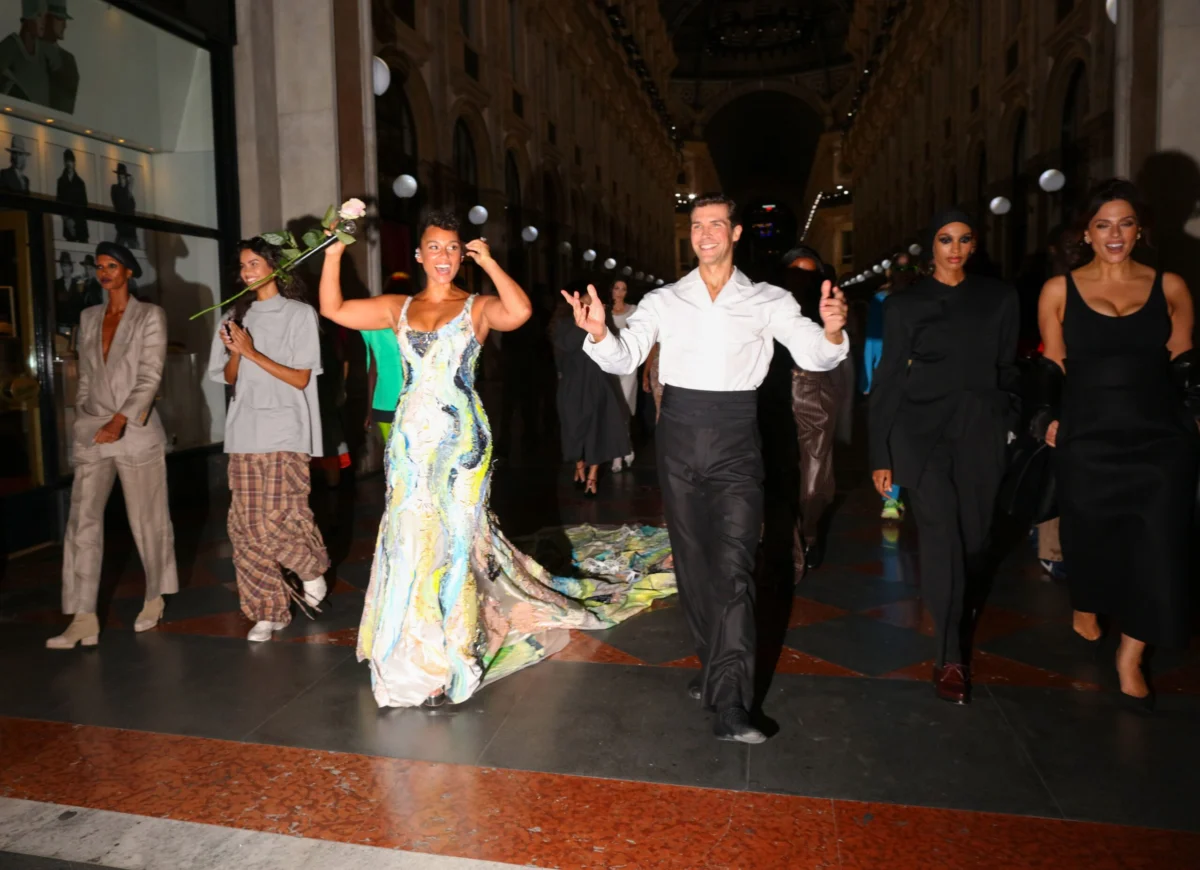
Mere minutes after Vogue World: Milano wrapped, Chloe, Nicole, and Vogue Italia’s Francesca Ragazzi gathered in a nearby ristorante to recap the evening’s goings-on. The retrospective conversation, held in the heart of Milan, offered an intimate glimpse into the immense effort and intricate planning that culminated in a spectacular celebration of Italian design and artistry. The event, which served as a grand opening for Milan Fashion Week, transformed the historic Galleria Vittorio Emanuele II into a breathtaking stage, honoring the rich legacy and vibrant future of Italian fashion.
The Genesis of a Grand Spectacle
The journey to Vogue World: Milano began earlier in the day with the highly anticipated Prada and Diesel shows, setting a sophisticated tone for the week ahead. These foundational events within Milan Fashion Week provided a crucial backdrop to the evening’s main event. The core of Vogue World, however, was its ambitious undertaking to showcase the breadth of Italian design across different eras, all within the iconic Galleria Vittorio Emanuele II. This architectural marvel, a testament to 19th-century Italian craftsmanship, provided a uniquely fitting venue for an event dedicated to celebrating enduring style and innovation.
Francesca Ragazzi, whose role in orchestrating the event was likened to that of a “mayor of Milan” by her colleagues, detailed the monumental logistical challenges involved. Securing the Galleria for a private event of this magnitude required extensive negotiation and collaboration with a multitude of stakeholders. “It’s all about being curious about their stories,” Ragazzi explained, reflecting on the process of engaging with every restaurateur and shop owner within the historic complex. “I could write a book,” she added with a smile, hinting at the myriad of "secrets and mysterious things" that unfolded behind the scenes during the planning phase. This meticulous engagement ensured that the event not only proceeded smoothly but also fostered a sense of community and shared pride among the Galleria’s long-standing businesses.
The planning for Vogue World was a dynamic process, with certain elements coming together just days before the show. Ragazzi highlighted the spontaneous nature of some casting decisions, describing a process that involved street-casting models for specific segments of the performance. This element of "curated chaos," as she termed it, added an authentic and unexpected layer to the meticulously planned spectacle. The blend of established talent and fresh faces underscored the event’s commitment to showcasing the diverse tapestry of Italian fashion and modeling.
A Night of Unforgettable Moments
The evening itself was a multi-sensory experience, designed to be "over the top" in its tribute to Italian excellence. The fashion, the models, and the performances all converged to create a narrative that spanned the history of Italian design.
For Nicole, a significant highlight was observing the esteemed designers present in the front row. Witnessing Miuccia Prada, Donatella Versace, and other titans of the Italian fashion industry watching their creations come to life on the runway offered a unique perspective. "It was really fun to watch everyone watching their designs in the show," she remarked. This intimate observation provided a powerful testament to the enduring influence and legacy of these creative visionaries, who continue to shape the global fashion landscape. The presence of these design luminaries underscored the event’s status as a pivotal moment in the fashion calendar, drawing the industry’s most influential figures.
Chloe found particular delight in the musical and performance elements of the show. The inclusion of the young choristers from La Scala, the powerful performance by Alicia Keys, and the captivating artistry of Roberto Bolle were standout moments for her. These performances not only added a layer of artistic depth but also highlighted the rich cultural heritage that underpins Italian creativity. The collaboration with institutions like La Scala and the involvement of internationally acclaimed artists like Keys and Bolle amplified the event’s prestige and its dedication to a holistic celebration of Italian arts.
Ragazzi, in turn, expressed profound gratitude towards the myriad teams who contributed to the event’s success. "I’ve never seen such harmony and teamwork," she stated, emphasizing the seamless collaboration that characterized the extensive production. This sentiment speaks volumes about the dedication and professionalism of the hundreds of individuals, from designers and stylists to stagehands and technicians, who worked tirelessly to bring Vogue World: Milano to fruition. The event’s smooth execution, despite the inherent complexities, was a direct result of this unified effort.

Supporting Data and Industry Context
Vogue World: Milano’s ambitious scope reflects a broader trend in the fashion industry towards experiential events that transcend traditional runway shows. These spectacles aim to engage audiences on multiple levels, blending fashion, entertainment, and cultural heritage. Milan Fashion Week, in general, is a significant economic driver for the Lombardy region and Italy as a whole. The Italian fashion industry is a cornerstone of the national economy, with exports of clothing and accessories contributing billions of euros annually. Events like Vogue World not only showcase this economic power but also serve to bolster Milan’s reputation as a global fashion capital, attracting international attention, investment, and tourism.
The choice of the Galleria Vittorio Emanuele II as the venue was not merely aesthetic; it was a strategic decision that imbued the event with historical resonance. Opened in 1877, the Galleria is one of the world’s oldest shopping malls and a symbol of Milanese elegance and entrepreneurial spirit. Its intricate mosaics, soaring glass roof, and opulent architecture provided a breathtaking backdrop, connecting contemporary fashion with the city’s rich past. The estimated value of retail space within the Galleria is substantial, and securing its closure for an evening underscores the significant investment and planning required to host such an event, estimated to involve hundreds of thousands of euros in operational and logistical costs.
The inclusion of street-cast models alongside established professionals speaks to a growing industry emphasis on inclusivity and diversity. This approach not only offers opportunities to a wider range of individuals but also injects a fresh, authentic energy into the fashion narrative. The integration of established performance artists like Alicia Keys and Roberto Bolle, alongside emerging talents from institutions like La Scala, highlights a commitment to showcasing the full spectrum of Italian artistic expression, from operatic traditions to contemporary music and dance.
Analysis of Broader Impact and Implications
Vogue World: Milano’s success has several key implications for Milan Fashion Week and the broader fashion industry. Firstly, it reinforces Milan’s position as a leading global fashion hub, capable of hosting large-scale, high-profile events that attract international media and industry professionals. The event’s ability to seamlessly integrate fashion, culture, and performance sets a new benchmark for fashion week programming, potentially influencing future event formats.
Secondly, the celebration of Italian craftsmanship and design across different eras serves as a powerful reminder of the industry’s heritage and its ongoing relevance. In an era of rapid trend cycles, emphasizing enduring quality and historical context can resonate deeply with consumers and industry insiders alike. This focus on legacy, coupled with a forward-looking approach to talent and innovation, provides a robust framework for the continued growth and evolution of Italian fashion.
Furthermore, the intricate planning and collaborative spirit highlighted by Francesca Ragazzi underscore the importance of strong industry partnerships and stakeholder engagement. The successful negotiation with numerous businesses within the Galleria demonstrates that ambitious projects can be realized through open communication and a shared vision. This model of inclusive event planning could serve as a valuable blueprint for future large-scale cultural and fashion events.
The event also serves as a significant marketing and promotional platform, not only for the featured designers and brands but also for Milan itself. The extensive media coverage generated by Vogue World: Milano contributes to the city’s allure as a destination for fashion, culture, and tourism, with potential long-term economic benefits. The engagement with local businesses and communities ensures that such events are not just exclusive industry affairs but also contribute to the fabric of the host city.
As Milan Fashion Week continues, the reverberations of Vogue World: Milano are likely to be felt. The event has demonstrably showcased the enduring power of Italian creativity, the meticulous nature of high-level event production, and the profound connection between fashion, art, and cultural heritage. It stands as a vibrant testament to what can be achieved when ambition, collaboration, and a deep appreciation for artistry converge.
